Transmigrated into the Notorious Supporting Female Character - Reviews

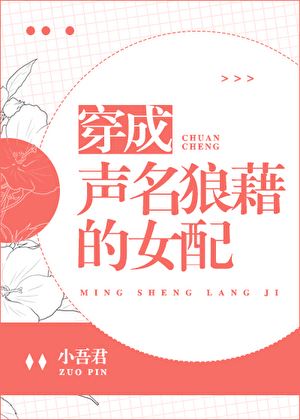
Transmigrated into the Notorious Supporting Female Character
+Add to Custom List
Sort
Add review
... Read More
There's something really cinematic about how this scene is staged. You've got Que Yining in her wheelchair, scars visible but fading, the fluorescent hospital lighting doing its thing, and then Gu Shanxue sweeping in like a plot twist. The visual of Gu Qianqian and Que Yining practically exploding apart from each other — 'neither wanted to be near the other, each treating the other like a germ' — that's such a vivid physical description of mutual disgust. And then the contrast: Gu Shanxue tucking hair away from Que Yining's forehead, her hand over Que Yining's hand to soothe her, the whole composition shifting from hostile to intimate in one beat. The hospital setting itself feels meaningful too — this is where Que Yining is recovering from something traumatic (a car accident, apparently), a place of vulnerability and healing, and yet it becomes the battlefield for these family tensions. Even the background character Kunna serves a purpose — she's the audience surrogate, standing awkwardly to the side, wondering when she'll be acknowledged. The whole scene moves like a short film.
... Read More
There's this recurring idea running through these chapters that I can't shake — the concept of being replaced and what that does to a person's sense of self. Que Yining is living with the terror that her adoptive parents will discover she's not their biological daughter, and that their love was built on a mistake. Every act of kindness from You Lanqing — the carefully prepared congee, the wiped face, the swollen eyes — becomes almost painful because Que Yining feels she doesn't deserve it. She's trapped in a lie that's slowly consuming her from the inside. And then on another level, Fan Zhengwen's entire existence is built on deception — hiding money, buying property under fake names, covering up a hit-and-run. He traded his integrity for two million and now he's paying for it with his freedom. The idea of value runs through everything: what is a life worth? What is money worth? What is a family worth? Gu Shanxue is willing to burn everything down to protect Que Yining, while Fan Zhengwen would sacrifice anyone to save himself. I keep thinking about how the car accident itself is symbolic — it's not just an attempt on Que Yining's life, it's an attempt to erase her, to remove the person who disrupted everyone's carefully constructed plans. The fact that she survived and is already plotting her next move feels like the author's way of saying some people simply cannot be destroyed.
... Read More
I need to talk about this phone call because I literally had to stop reading and stare at the wall for a minute. Que Yining calling Que Hanyi and having the word 'Papa' stuck in her throat — that is one of the most devastating moments I've read in a long time. She has a father right there, doting, sweet, telling his daughter he'll do anything for her, and she can't even let herself feel it because she's busy mourning the parents she actually lost in a fire. The line 'She said what the original owner would say every time' broke me. She's performing affection for a man who is giving her genuine love, and the tragedy is she doesn't know how to receive it. But then she says 'Papa, take care of yourself. Drink a little less.' And even though she's reciting lines from someone else's life, it comes out real. The father-daughter dynamic here is so warm it aches — he's still treating her like a little girl in her twenties, coaxing her to bed early. Meanwhile she's sitting upstairs gripping her desk corner, throat dry, breathless. This author understands something most writers miss: the most painful emotional scenes aren't about dramatic declarations. They're about a daughter who can't cry for the dad she lost while sitting right in front of the dad she has.
... Read More
Can we just talk about how these two people TALK to each other? Because the dialogue here is doing something incredibly sophisticated. On the surface, this is caretaker-patient interaction. Gu Shanxue is checking vitals, calling nurses, contacting family, offering comfort. But read the subtext and it's a conversation between two people who are desperately trying NOT to say what they actually mean. 'I'm so ugly' — Que Yining says this and what she's REALLY saying is 'I'm scared you'll see me differently now.' Gu Shanxue's response? 'In my heart, you are the most beautiful.' She doesn't say 'don't say that.' She doesn't dismiss it. She goes straight to the emotional truth. That's not a caretaker's line. That's a person who has been holding these words for a long time. And the line that wrecked me: 'In my eyes, you are the most beautiful.' Wait, she SAYS IT TWICE? First 'in my heart' then 'in my eyes'? That repetition isn't redundancy — it's escalation. The first is private, the second is spoken OUT LOUD. She's building to something. Then there's the Gu Shanxue-ism: 'Let me blow on it, and it won't hurt anymore.' That is such a SPECIFIC kind of tenderness. It's childish in the most adult way possible — the kind of thing someone says when they want to fix pain but can't, so they offer metaphorical magic instead. It reveals everything about Gu Shanxue's character in one line. Even the parents' dialogue is distinct. You Lanqing's 'My Ningning! You're finally awake! You scared Mom to death' — that's a mother's voice, immediate and unfiltered. Que Hanyi's practical 'she needs to rest first' — that's a father's voice, protective and functional. They don't sound like the same person, which is actually rare in novels. The author's narrative voice throughout is restrained but loaded. Short sentences. understated emotion. The kind of prose that lets the dialogue carry the weight instead of drowning it in description.
... Read More
I keep coming back to two images from this chapter and I think they're connected in a way the author might not even fully realize yet. The first is the hot water. Que Yining holding a paper cup, nearly dropping it because her hands are shaking from her own flashback trauma. Then she pours water for Gu Shanxue—warm, gentle, domestic. The act of giving someone water in a hospital room is one of the oldest gestures of care in literature, and here it feels loaded because Que Yining herself is barely holding it together. She's bleeding internally from her own memories and still managing to be someone's caretaker. Then there's the locked door. Que Yining locking the hospital room from the inside after Jiang Xiaowan leaves. A door locked against the world. A threshold between safety and danger. Earlier in the chapter, Gu Shanxue was dragged FROM somewhere (a banquet, a hotel room) into this space of relative safety. But the mole means safety is an illusion. The deeper theme I keep circling is betrayal—not just the obvious plot-level betrayal (the mole, the drugging, the kidnapping), but the quieter kind. The betrayal of trusting someone to have your back and finding out they're somewhere else entirely. Que Yining's memory of arguing with Fu Wenjing before everything went wrong—that unresolved conflict, that last moment before violence—feels like its own kind of betrayal. The kind where you didn't even know it was coming because you thought you were on the same side.
... Read More
QUE YINING DIDN'T ARRIVE IN TIME. I need to sit with that for a second. 'Fortunately, she hadn't arrived late. If Gu Shanxue had been taken advantage of even slightly by that person, she would have crippled him.' The casualness of that sentence is devastating. The author doesn't dramatize it with exclamation marks or all-caps—they just state it as a matter of fact, like we're supposed to understand that Que Yining's capacity for violence on behalf of someone she cares about is both normal and terrifying. And that's the pacing masterclass right there. The chapter starts with Que Yining recovering from her own trauma (the memory of arguing with Fu Wenjing, being hit, thrown into a river) and without missing a beat pivots to Gu Shanxue's near-tragedy. Two women, both attacked, both surviving, both carrying invisible wounds. The transitions between scenes—the elevator, the hospital room, Jiang Xiaowan making calls outside—these aren't filler. They're deliberate breathing room between explosions. And then at the very end, the reveal of the mole. Just one sentence. No fanfare. 'There's a mole among my people.' That's it. The chapter essentially detonates itself on that final note and leaves every character—and every reader—reeling.
... Read More
I want to unpack how this chapter moves because the rhythm is genuinely masterful. It opens with almost domestic normalcy—mahjong, kids showing off math skills, casual family banter. You could skim this part. And that's the trap, right? Because the author lulls you into feeling cozy before pivoting hard. The moment Que Yining sits next to Xiaoxiao and starts playing games with her for two straight hours—that's where the pace shifts. It's deliberately slow, almost tedious in its persistence. Two long hours of building trust. The author makes us FEEL that duration. And then the drawing scene happens, and suddenly we're in something deeper. The pacing accelerates emotionally even as the physical action stays contained. Then BAM—Xiaoxiao's drawing reveal. The black line splitting the paper. The parents on either side, the child trapped in the middle. This is the chapter's emotional core and the author doesn't rush it. They let you sit with it. Let you process what that image means before moving to the conversation that follows. And the Xiaoxiao confession? Perfectly timed. Right when you think the scene has peaked emotionally, she says the thing about her dad pretending. The pacing gives you space to feel shocked, then immediately moves to Que Yining's reaction—soothing her, making it a secret. No filler. No wasted words. The return trip to the city compresses everything. Car ride, questions about Que Chuling, the drive home. It's brisk, almost dismissive, which mirrors Que Yining's own emotional state—she got what she needed, time to move on. But that final line about Gu Shanxue? It lands like a punchline. The chapter ends on a note that makes you want to keep reading immediately.
... Read More
Okay so let me just say — the way Que Yining corners Hou Manni about that golf course is absolutely brilliant plotting. She pretends to be casually curious, drops the line about how Big Brother goes there "almost every week" and never mentioned it before, and you can just SEE Hou Manni's smile freeze. The author is layering this investigation like a proper puzzle. Que Yining isn't just recovering from an accident — she's actively digging. Her dad already found something wrong with the company's direction, and now she's picking up the thread herself. Two separate investigations running in parallel, converging toward the same dark truth. And then there's the Zhu Wanqi reveal — a complete stranger who looks exactly like Que Chuling? That's not coincidence, that's a setup. "Such strange coincidences do happen in the world" — yeah, but not in this story. Every detail is connected, and I am HERE for it. The plot has been building toward this moment of exposure for chapters and the satisfaction is unreal.
... Read More
I CANNOT stop thinking about Xie Yanhuai listing his enemies like he's at a hot pot restaurant. "Boss, if you put it that way, there are quite a few." And then he just goes on to name them? This man has zero dramatic tension in his voice when discussing his possibly dangerous former employer connections. He's so casual about it that it became COMEDY. Que Yining's voice, on the other hand, is all sharp edges and hidden warmth. Her lines to Li Suyin about using her personal account for employee care, then casually adding "you can just drop by each other's places for that"—she's giving very competent boss energy but also clearly trying to make sure her two secretaries aren't competing. She's managing people in a way that shows she notices everything. And the dialogue between Lin Yuan and the group? So natural. Lin Yuan nervously clutching her clothes while explaining, then the awkward silence when everyone looks at Que Yining after she finishes. That beat of silence without narration? That's dialogue writing at its finest. The author trusts the reader to feel what's unspoken.
... Read More
I need to talk about how this chapter controls time because it's genuinely remarkable. We start with the most mundane business transaction imaginable — signing contracts, choosing office floors, the whole corporate_setup thing. Ten dollars of tension per paragraph. Then the lunch. Still mundane. Still controlled. Que Yining is performing normalcy, and the prose matches that performance: clean, efficient, almost clinical. And then Fu Wenjing appears and the tempo SHATTERS. The sentences get shorter. The physical reactions pile up faster. Dry heaving. Trembling voice. Ice-cold hands. The narrative speed mirrors her physiological spiral. What's brilliant is that the author doesn't slow down the emotional crash — she accelerates INTO it. By the time Que Yining is alone in the restroom, the pace has shifted into something much more introspective and rapid-fire, a cascade of questions and half-formed theories. The flashback of the river comes in as a sudden interrupt — no warning, just straight into memory — and then we're back to the mirror, back to reality, back to Gu Shanxue's footsteps approaching. High heels from far to near. The sound pulls her OUT of the flashback and back into the scene. This structural technique — using sound as a anchor between memory and present — is subtle but effective. The chapter ends on that applied lipstick, that composed smile, and the quiet satisfaction of a plan working. The structural arc goes: business normalcy → romantic normalcy → trauma disruption → investigative fever dream → controlled restoration. Four movements in one chapter, and each one earns its place.
... Read More
Okay, I need to process what I just read because the symbolism in this section is NOT subtle and I respect that. The central metaphor — the wild chicken attempting to become a phoenix — runs through this entire passage like a vein of gold. 'Take my advice, even if you dye those few strands of yours, you'll never become a phoenix.' This isn't just a savage insult; it's a complete thematic statement about class, authenticity, and the violence of aspiration. Gu Qianqian is the wild chicken. She's grasping, performative, constantly trying to elevate herself through surface transformations — hair dye, mannerisms, social positioning. The text has been building this reading since her introduction. She's not evil in some cartoonish way; she's desperate. And that's what makes her dangerous — desperation without self-awareness is a force of nature. But here's what I think the author is really saying: the phoenix metaphor cuts BOTH ways. Yining calls Gu Qianqian a wild chicken, but Yining herself is undergoing a visible transformation in this scene — getting her hair dyed smoky grey, choosing to wear red. Is Yining the phoenix? Or is she something else entirely? The text seems to suggest that Yining doesn't NEED to transform because she was never chicken to begin with. She's the predator. Gu Qianqian is the one performing elevation because she believes herself inadequate. Then there's the mirror motif — mirrors everywhere in this scene. Yining watching herself in the mirror, Allen watching Yining in the mirror, Gu Qianqian seeing her own frozen smile reflected. Mirrors are about self-recognition, and both women are confronting versions of themselves they'd rather not see. Gu Qianqian sees her inadequacy laid bare. Yining sees her own power for the first time in this particular configuration. The red lips detail — 'Que Yining's red lips parted' — that's symbolic too. Red throughout this novel has been associated with danger, passion, consequences. Wang Ruiyuan is in the hospital (red alert), Gu Qianqian's mother's health is questionable, and now Yining's red lips are delivering the killing blow. Color as narrative technology. And the final line — 'Is your mother's health alright?' — this connects to the welcome banquet mentioned earlier, which suggests that family, health, and social obligation are all entangled threads in this story's thematic web. The personal IS political, and the domestic IS battlefield.
... Read More
You Lanqing coming in with a fruit platter and immediately asking why her daughter wants to move out — this interaction is everything. On the surface, it's just a mom being a mom. But look closer. Que Yining's response is performative: she puts on a "perfectly petulant act" and codes her words carefully. The text literally says she wasn't afraid of revealing her different self to anyone except her parents, because she feared they'd become suspicious and hurt. That one sentence crushed me. This woman who can stare down headhunters and ignore wounded enemies can't afford to let her MOM know she's not really her daughter. And You Lanqing — bless her — she's genuinely concerned, offering Nanny Liu to come along, worrying about dinner schedules. She has no idea. The tragedy here is that this mother-daughter bond is real, even if one of them is playing a role. How long can Que Yining keep this up? And when the truth comes out, will her mother's love survive it?

Leave a comment

You must be logged in to leave comments. or
