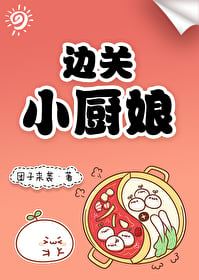
Transmigrated into a Villainous Character, I become a Little Chef in the Boarderland
+Add to Custom List
Novel Info

Summary

... Read More

Jiang Yanyi, a modern woman who owned a hotpot restaurant with her family, dies in a traffic accident and transmigrates into the body of a villainess in a novel she once read. The original owner of the body was the legitimate daughter of Minister Jiang, a woman driven to madness by her father’s favoritism toward his illegitimate daughter, who was later revealed to be the last princess of a fallen dynasty. After being humiliated by a broken engagement and framing the female lead, the original Jiang Yanyi was sentenced by the Emperor to serve as a prostitute in the Western Border military camp. Upon waking in the camp, Jiang Yanyi finds herself in a desolate, brutal environment where criminal women are forced into sexual servitude. The original body had attempted suicide by banging her head against a wall, leaving her with a severe wound. Jiang Yanyi, realizing she cannot return to her previous life, decides to survive by any means necessary.

Her first challenge comes from Chunxiang, a dominant woman in the camp who blames Jiang Yanyi for the new general’s strict ban on soldiers visiting the women’s quarters. When Chunxiang attacks her, Jiang Yanyi fights back with a shard of porcelain, establishing a reputation for ruthlessness that silences her bullies. Soon after, the women are relocated to the kitchen camp to serve the massive army stationed there. Jiang Yanyi uses her culinary skills to distinguish herself. When the head chef’s apprentice ruins a batch of tofu intended for the general, Jiang Yanyi steps in and successfully prepares the dish. She also creates a spicy oil sauce, introducing flavors that are novel to this era. Her cooking impresses the camp’s leadership, and she is promoted to assist the head chef, Chef Li.

The general in charge is Feng Shuo, the King of Liaonan, a powerful and feared royal uncle of the Emperor. Feng Shuo suffers from a condition where he lost his sense of taste after surviving a poisoning attempt in his youth. However, after tasting Jiang Yanyi’s spicy tofu pudding, he experiences a return of his senses. This discovery intrigues him, and he rewards her with coins, marking her as a valuable asset in the kitchen. Jiang Yanyi also uses her knowledge to create hot and sour noodles from sweet potato starch, which become popular among the soldiers. Her competence and beauty begin to draw attention, including from Chi Qing, the general’s strategist, who is known as the "Smiling Fox in Green Robes."

As Jiang Yanyi settles into her role, she faces new threats. Chunxiang, jealous of Jiang Yanyi’s rising status, poisons Chef Li’s tea, causing the old man to fall seriously ill. Jiang Yanyi suspects Chunxiang’s involvement but must navigate the camp’s dangerous politics carefully. She also takes on the task of registering the women in the camp to secure her own identity. Fearing exposure as an undocumented person, she fabricates a backstory about being a survivor of a plague-stricken village, claiming her father was a chef. Her story is believed, partly because of her demonstrated cooking skills and the general’s favor.

The narrative shifts to explore the political tensions in the capital and the frontier. Feng Shuo’s arrival at the Western Border is part of a larger power struggle with the Emperor. He is tasked with cleaning up corruption left by the previous general, Fan Wei, who embezzled military funds. Jiang Yanyi’s presence in his camp becomes a point of interest, not just for her cooking but for her mysterious background. The original novel’s plot, involving the Emperor’s obsessive pursuit of the female lead and the tragic fate of the second male lead, Lu Linyuan, looms in the background, but Jiang Yanyi’s focus remains on her immediate survival and escape from the camp’s grim fate.

Jiang Yanyi’s journey is one of adaptation and resilience. She leverages her modern knowledge of food and cooking to gain favor and protection in a hostile environment. Her interactions with Chef Li, Chi Qing, and the soldiers reveal a complex social hierarchy where skill and ruthlessness are essential for survival. The story sets the stage for her potential rise in status and her eventual confrontation with the forces that condemned her to the border. As she navigates the kitchen camp, Jiang Yanyi begins to carve out a new identity, far removed from the villainess she was destined to be in the original story.

Latest Release
DateGroupRelease
2026-08-11shanghai fantasy c200
2026-08-11shanghai fantasy c199
2026-08-11shanghai fantasy c198
2026-08-11shanghai fantasy c197
2026-08-11shanghai fantasy c196
2026-08-11shanghai fantasy c195
2026-08-11shanghai fantasy c194
2026-08-11shanghai fantasy c193
2026-08-11shanghai fantasy c192
2026-08-11shanghai fantasy c191
2026-08-11shanghai fantasy c190
2026-08-11shanghai fantasy c189

Community Reviews

Rating(4.2 / 5.0, 31votes)
5 stars
16(52%)
4 stars
5(16%)
3 stars
10(32%)
2 stars
0(0%)
1 stars
0(0%)

Popular reviews

... Read More
Okay so I need to talk about Feng Shuo and Chi Qing because their dynamic is genuinely one of the most entertaining things in this whole book. Chi Qing is basically the chaos element to Feng Shuo's order, and I love it. The way he devours his noodles like he hasn't eaten in days while Feng Shuo sits there visibly suffering from secondhand embarrassment? Chef's choice. Literally and figuratively. But here's the thing that actually got me — it's not just comic relief. Chi Qing is genuinely sharp. When Feng Shuo lays out his plan about the Lu family, Chi Qing immediately grasps the full implications. The exile is a test, the gifts are a trap, and Feng Shuo is basically letting the emperor take care of the problem without lifting a finger. Chi Qing's response — "Your Highness, with your wisdom, there's no need to keep strategists around" — is both genuine admiration AND a setup for the perfect burn. And then Feng Shuo immediately counters with "the stables are still short of a groom. You can go brush the horses from now on." I literally laughed out loud. That is such a Feng Shuo move. What I find really interesting is how their relationship works on multiple levels. Feng Shuo clearly finds Chi Qing's eating manners unbearable — he throws a book at him, he loses his appetite after seeing Chi Qing eat — but he also keeps him close. He needs him. And Chi Qing, for all his casual slouching and loud slurping, is the one person who can speak to Feng Shuo without fear and actually get away with it. That's rare in this kind of story. The moment that stuck with me the most though was when Chi Qing, after being dismissed, picks up his empty bowl and gulp down the remaining soup before leaving. Feng Shuo's eyelid twitches. This man cannot catch a break. But somehow, despite all of this, they work. They're not friends — not yet, anyway — but there's a trust underneath the bickering that feels real.
... Read More
I need to talk about the coffin scene. Not because it's dramatic, but because it's the opposite of dramatic. Feng Shuo orders a coffin for Jiang Yanyi—the girl his political enemies sent to die in his camp—and he does it with this almost casual mercy. 'When the Jiang family's legitimate daughter is buried, provide her with a coffin.' That's it. No speech, no sentimentality. Just a practical act of dignity for someone everyone has already written off. And Jiang Yanyi has no idea. She's out there peeling taro, rolling her eyes at Chunxiang, worrying about firewood, completely unaware that somewhere in this vast, brutal camp, a man on a black horse just ensured she wouldn't become a wandering ghost. That dramatic irony is killing me. But the emotional core of this batch isn't really about romance—it's about the quiet, aching moments of connection and disconnection. The way the text describes Jiang Yanyi's hands: 'pale, delicate hands that had never seen hard labor.' She's a noblewoman in a body that doesn't match her memories, and there's something deeply sad about that. She remembers knife skills from a past life, a family restaurant, the warmth of a kitchen that no longer exists. She's grieving a home she can't go back to, and she's doing it while standing in a smoky barrack surrounded by enemies. The soy milk scene is where it really hits me. She's boiling raw soy milk, and the text says 'if it weren't for the fact that there were so many people in the barracks, Jiang Yanyi would have wanted to taste what the ancient, pure, natural soy milk was like.' That little detail—wanting to taste something simple and pure in the middle of all this chaos—is devastating. It's not about survival anymore. It's about the small, human desire to just... enjoy a moment. To taste something good. To remember what normal feels like. I'm not okay.
... Read More
Okay so this whole batch is just a masterclass in how to layer a heist plot without anyone actually stealing anything—metaphorically speaking, of course. Jiang Yanyi's genius moment with the century eggs is honestly the kind of thing that makes you want to slap the table. Here's this woman, surrounded by spoiled duck eggs because the camp is short on salt, and she just casually drops, "I have a way to make these eggs just as delicious as salted duck eggs and just as long-lasting!" Like she's not about to single-handedly revolutionize military rations. The fact that she immediately pivots from noodle girl to preservation expert shows how the author is steadily expanding her skill set without it feeling forced. Each chapter she unlocks a new competency. But then—AND THIS IS WHAT GOT ME—the braised pork scene. Chunxiang, the absolute gremlin, sees an officer with a bowl of braised pork and decides, in the span of approximately zero seconds, to claim it was HER dish. "It was me." She said it. Out loud. And the officer just... hands it to her? My girl is living on borrowed time at this point and I am HERE for it. The plot twist that Feng Shuo somehow senses the recipe is wrong without even understanding why? That's not just good writing, that's the author winking at us. He's clearly going to find out, and when he does—oh, the drama. Meanwhile Jiang Yanyi is completely oblivious, still happily making century eggs, while Chunxiang is walking around with fifty taels of silver and a recipe that's basically a work of fiction. This is a ticking bomb and I cannot wait to see it explode. Also, the subplot of Chef Li recovering from his illness and then immediately offering Jiang Yanyi a permanent position? That's not filler, that's the author making sure we know she's building something real while the other woman is building a house of cards. The narrative is playing 4D chess here and I'm just sitting here sweating.
... Read More
This section does something I didn't expect: it shifts genres mid-stream and pulls it off. We start in the realm of high politics — military training regimes, secret informants, imperial exiles, loyalty tests — and then we drop into what is essentially a cooking competition with a murder mystery subplot. Most authors would stumble here, but the transition is surprisingly smooth. The key is that both threads are about control and competence. Feng Shuo is trying to impose military discipline on undisciplined troops. Chi Qing is trying to navigate a political minefield set by a paranoid emperor. Meanwhile, in the kitchen, Head Zhao is trying to maintain standards under impossible pressure, and Jiang Yanyi is trying to prove herself. The parallel structure holds the section together even as the setting changes. What I appreciate most is how the author uses pacing to build tension in the kitchen scene. We get the crisis (Chef Li is down), the failed solutions (no one else can make the dish, buying from an inn is impossible, bringing in an outside chef won't work), the reluctant hope (Head Zhao lets Jiang Yanyi try), the doubt (the chubby cook's objection, the other cooks' internal skepticism), the labor (the detailed cooking process), and finally the payoff (Chef Li's approval, the other cooks' astonishment). It's a complete narrative arc compressed into a single scene, and it doesn't drag at any point. The Feng Shuo thread, meanwhile, moves at a different pace — more deliberate, more cerebral. His realization about the Lu family unfolds through dialogue rather than action, and the author lets the reader connect the dots alongside Chi Qing. This contrast in pacing between the two threads is actually a strength. One is fire, the other is ice. The section ends on a note of suspended mystery — who poisoned Chef Li, why, and what does Feng Shuo's summons mean? — which is exactly the right place to leave a reader. Not a cliffhanger that screams, but one that whispers.
... Read More
Let me just say this: the hand-shaved noodle sequence is one of the most perfectly paced scenes I have read in any novel, and I am not exaggerating. It starts with Jiang Yanyi being pulled away from her dough work because someone needs another pair of hands. The cooks are skeptical — they reference her sour and spicy noodles from the night before, they make jokes, they underestimate her completely. And then she picks up the knife. "Her knife moved quickly, as if she were peeling a radish, sending thin slices of dough gracefully into the boiling water. The noodles fell into the pot like silver fish darting through water." This is where the pacing shifts. The prose slows down just enough for you to feel every motion. The cooks go from mocking to stunned to speechless. And then she makes the sauce — pork, ginger, yellow wine, garlic, green onions, broth — and the entire kitchen camp is transformed by aroma. What could have been a simple cooking scene becomes a moment of pure triumph, and the generals end up eating what was meant for the junior officers. That detail matters. It means her skill cannot be contained, it keeps rising to the top no matter where she is placed. But the author does not let us linger too long on the high. Right after the noodle triumph, we cut to the soldiers gossiping about her beauty, then Chi Qing appears, then Feng Shuo's entire backstory drops on us like a hammer. The pacing is relentless. Every scene earns its place, every transition pushes the story forward, and I stayed up way too late reading this batch because I could not stop.
... Read More
This batch moves like a runaway horse and I am not complaining. We open with Chunxiang's audacity, jump to Jiang Yanyi's confusion, then immediately into the cooking scene which is basically ASMR for the soul. The chestnut chicken preparation alone took me three reads because the sensory details are that good. Then BAM - Feng Shuo subplot, then BAM - Chunxiang and Liu Cheng in the poplar grove, then BAM - back to camp life with the hot and sour noodles. The author knows exactly when to speed up and when to slow down. The Chunxiang-Liu Cheng scene is fast and tense, all sharp dialogue and hidden threats. But then we cut to Jiang Yanyi carefully cutting slits in chestnut shells, showing Qiu Kui how to bury them in hot ashes. The pacing shift is so deliberate it's almost aggressive. After the murder conspiracy, we get candied chestnuts. That's not a mistake, that's craftsmanship. And the cliffhanger - well, there isn't a traditional one, but the underlying tension is everywhere. Chunxiang knows Jiang Yanyi saw her. Liu Cheng wants Jiang Yanyi silenced. Feng Shuo suspects someone is feeding him bad food intentionally. The doctor is too scared to tell the truth. Everything is building toward something and the author is just casually making noodles while the world burns around them. I love it.
See all reviews

Characters

See all characters

Custom lists

See all custom Lists