Transmigrated as the Top Scholar’s Humble Wife, I Had an Affair with the Villain. - Reviews

Transmigrated as the Top Scholar’s Humble Wife, I Had an Affair with the Villain.
+Add to Custom List
Sort
Add review
... Read More
The stakes in this passage are deceptively simple on the surface—two people in a cabin during a snowstorm—but they're actually ticking like a bomb. On the external level, we have Chuncao. She saw Duan Wujiu, she knows he's not who Liu Zhiheng said he was, and that look he gave her? 'Chuncao quickly hid, but she still felt a murderous glare piercing through her.' This woman is now a loose end. She knows something. And Duan Wujiu is the kind of person who eliminates loose ends. The reader knows this because of the title 'The Villain's Love-Struck Brain'—this man is a VILLAIN. Whatever he was before his amnesia, he's dangerous. And Chuncao is walking home in the snow completely unaware. On the internal level, the stakes are even higher. Liu Zhiheng knows that Duan Wujiu will forget everything about Peach Blossom Village in a few months. She's been keeping him here under false pretenses, and she knows it's temporary. Every moment of intimacy they share is borrowed time. She's building a relationship she knows will be erased. That's not just guilt—that's grief for something that hasn't even ended yet. And Duan Wujiu? His stakes are existential. He's discovered that he wants something he's never wanted before—a deep, unbreakable connection. But his very nature (as suggested by the 'scent of decay' and his murderous glare at Chuncao) makes him dangerous to the people he loves. The conflict isn't just 'will he remember who he is'—it's 'when he remembers, will he still want to stay, and if not, what will he do?' The most tense moment is when Liu Zhiheng says 'you can leave anytime' and his expression darkens. He's literally one sentence away from revealing his true nature. She's offering him freedom and his instinct is to chain himself to her. The power dynamic has completely shifted—she thinks she's in control because she's the one lying, but he's the one who's truly dangerous, and he knows it.
... Read More
"A Heng, do you know? All the memories in my mind are gone, but there are still many scents lingering. Yet, among so many scents, not a single one brings me comfort. Most of them make me nauseous, cause me pain, fill me with rage, and make me want to destroy this world. Except for A Heng's scent. Only A Heng's scent brings me peace." I am not okay. I am literally not okay. This man has amnesia and the ONE thing that anchors him to sanity is her smell? That's not romantic, that's existential. He's drowning in a world that reeks of corruption and she's the only breath of fresh air. The metaphor is so thick I could choke on it and I am HERE for it. And then there's Liu Zhiheng's side of things, which is honestly so much more complicated. She's lying to him constantly—calling him her child groom, making him dependent on her, treating him almost like a pet—and yet she's the one who feels guilty about it. She keeps trying to confess and every time something interrupts. First it's his abs (okay fair), then he asks about stars, then she tries to tell him the truth and he just... accepts it so easily that she feels worse. She's trapped in her own guilt. The moment that wrecked me was when she says his past 'smells of decay, foulness, and the depths of an abyss' and then immediately after, he's pressing his face against her neck asking her not to drive him away. The physical intimacy of it—the warmth of his breath, her body going limp before her mind can catch up, that 'Brewing and Fermenting Constitution' acting up at the worst possible moment—everything is layered with tension. She's terrified of what she's doing to him, and he's terrified of losing her, and somehow their bodies understand each other even when their minds don't. I need a minute.
... Read More
There's so much going on beneath the surface of these chapters and I can't stop thinking about it. Let me start with the hair. When Duan Wujiu says they'll need to braid their hair together for marriage because ordinary knots won't hold, that's not just romantic fluff. Hair in Chinese literature has ALWAYS been symbolic—intimacy, union, destiny. The fact that their hair is so smooth it tangles and separates repeatedly? That's their relationship in miniature. They keep getting close, tangled up, but also slipping apart. And Liu Zhiheng's philosophical musings while drying her hair—Confucius, the omnipotent God, the liar's paradox—these aren't random. They're about TRUTH and KNOWLEDGE. Can you truly know something? Can a statement be both true and false? Is knowing nothing actually knowledge? She's literally using philosophy to avoid confronting her own feelings, and Duan Wujiu interrupts her by taking the towel. The water symbolism is equally rich. Her bathwater becomes infused with her scent, and he wants to soak in it—this is about possession, about absorbing someone completely. But then her constitution means her body reacts to ANY man's touch, which raises the question: is her desire truly hers, or is it biological programming? The 'special constitution' could be read as a metaphor for how women's bodies are often treated as puzzles to solve rather than expressions of genuine desire. And Duan Wujiu's dual nature—the gentle Xuelang versus the jealous killer outside—symbolizes the central tension of the story: can innocence coexist with darkness, or will one consume the other? The snow itself is symbolic. It isolates them, covers everything in white purity, but underneath it's cold and dangerous. This story is about the lies we tell ourselves to survive, and the truths we're terrified to speak aloud.
... Read More
Okay so this bathing scene is honestly one of the most tense moments in the entire arc. Let me just say it straight: the author absolutely weaponized a mundane activity. A bath? Really? But think about it—the screen between them, the water sounds, the gradual escalation from innocent ginger soup to 'can I use your bathwater?' This is plot progression disguised as domestic fluff. And then Liu Zhiheng's special constitution reveal? That's not just a romantic beat, that's a MAJOR plot device. It explains why she's been so resistant to Xie Tinglan, why her body betrays her, and it gives Duan Wujiu a tangible reason to claim exclusivity. The plot twist here is that Duan Wujiu's jealousy over Xie Tinglan arriving at the Liu household—it comes right after he says 'only let me touch you,' and the timing is surgical. He's already imagining chopping off someone's hands before Xie Tinglan even steps foot in the courtyard. The narrative is weaving together the romantic subplot and the underlying danger of Duan Wujiu's true nature in one seamless motion. What I love is how the author makes you forget you're reading plot mechanics because the scene is so intimate. By the time Xie Tinglan shows up with his charcoal basket, you're already on edge. And that final image—Duan Wujiu closing the courtyard gate deliberately, making Xie Tinglan notice—what is that if not a territorial claim? The plot is moving faster than it appears.
... Read More
Let me just say: the pacing in these chapters is absolutely ruthless and I respect it. We start with what seems like a sweet, slow-burn domestic scene—geomancy maps, walking in the snow, light banter. Very cozy. Very 'slice of life in a remote village.' And then Chuncao appears and suddenly we're in thriller territory. One look from Duan Wujiu and she's hiding like he's going to kill her. The tonal shift is so abrupt it's jarring, and that's exactly what makes it work. Then we get seven days of compressed time—rest, recovery, indoor conversations, the slow build of intimacy. The author could've stretched this out for twenty chapters, but instead we get the essence: the star lessons, the flattery, the late-night conversations on the kang bed. Every scene earns its place. Nothing is wasted. And then—BAM—the confession. Liu Zhiheng finally tells him the truth about being a lie from the start. And the structure of this reveal is brilliant because it's not the climax the reader expects. She thinks the big moment is 'I lied to you.' But Duan Wujiu's actual reaction is 'So you were worried I'd be in danger?' The misdirection works on two levels: Liu Zhiheng is confused because she thought HE would be mad, and the reader is confused because we expected drama. Instead we get something far more interesting—a man who knew he was being lied to the entire time and chose to stay anyway. The pacing of his confession is even better. He doesn't just say 'I like you.' He builds it: 'I wish A Heng wanted something from me. I wish A Heng had ulterior motives toward me.' Each sentence is a step deeper into his obsession, and by the time he's talking about dying together, the reader is completely trapped in the emotional gravity of the scene. Then the chapter ends mid-action with Liu Zhiheng's body going limp and Duan Wujiu catching her, and the narration cuts off at 'which made Liu Zhiheng feel a bit as'—leaving us hanging. Classic cliffhanger. I immediately opened the next chapter.
... Read More
I need to be honest with you - the father scene in Chapter 1 is the kind of moment that makes you put the book down and just sit with it for a while. Liu Zhiheng's backstory is heartbreaking in the most quiet way possible. She lost her blind father in her original life to a drunk driver, right when she was finally able to start repaying all his sacrifices. The nightmares she has of him tapping his white cane through traffic are the kind of detail that stays with you. So when she transmigrates and sees her father alive and well, standing in her doorway with that weathered face and the same voice she remembers from home, the emotional impact is enormous. The author doesn't overdo it with melodrama. Liu Yigu just walks in, sits by her bedside, and talks about the wedding plans with this deep melancholy in his voice. He is worried about his daughter. He is worried about the engagement. He is carrying the weight of a promise he made to the county magistrate. And Liu Zhiheng, who has lost her father once already, gets to have him back. When she says 'Father, your daughter is back' while hugging his arm, it is such a simple line but it carries so much grief and relief and love all at once. I also loved the small detail about her packing his luggage the night before he left, tucking silver into the inner lining. She is being careful and thoughtful, making sure he has money only when he reaches a safe place. That is the kind of daughter she wants to be, and it shows how much she has grown since taking over the original character's body. The family bond between Liu Zhiheng, her father, and her younger brother is the emotional anchor of this story. Everything she is doing - breaking off the engagement, trying to protect her family, sending her brother back to school - it all comes from this deep love for the people around her. It is not about romance or power or revenge. It is about survival and family. And that makes every decision she makes feel so much more meaningful.
... Read More
The pacing here is masterful. The author starts slow and intimate - Duan Wujiu grinding ink, leaning close, the quiet moments of domesticity. You can feel the tension building with every line. Then Xie Tinglan appears and everything accelerates. The confrontation is sharp, quick, almost brutal in its directness. Short dialogue exchanges that hit like punches. Then the walk to the courtyard gate gives us a breather - a transition scene that lets the reader process what just happened. And then the return to the house where the pacing slows down again for the emotional climax of Duan Wujiu's fake tears. Each scene ends on a note that makes you want to turn the page. The drawing scene ends with Liu Zhiheng mesmerized. The confrontation ends with Duan Wujiu's dark smile. The courtyard scene ends with Xie Tinglan's warning. And the final scene ends with Liu Zhiheng realizing she needs to be more careful. The author understands that tension isn't just about big dramatic moments - it's about the spaces between them, the silences, the unspoken thoughts. That's where the real suspense lives.
... Read More
The visual storytelling in this section is incredible. Let me break down the key scenes. First, the drawing room - Liu Zhiheng by the window, Duan Wujiu behind her, almost encircling her. The window is important because it represents the boundary between inside and outside, safety and danger. When he opens it, cold air rushes in, breaking the intimate moment. Then there's the courtyard gate - left slightly ajar, almost inviting Xie Tinglan to spy. It's like the house itself is conspiring against Liu Zhiheng's attempts at a normal life. The willow tree by the gate where she meets Xie Tinglan is such a classic Chinese novel setting - it immediately places us in this world without needing exposition. And the return to the house where Duan Wujiu is waiting by the window, gazing into the distance, looking like he might shatter. The author uses these settings to mirror the emotional states of the characters. The cold outside represents Xie Tinglan's harsh judgment. The warm inside represents Duan Wujiu's suffocating affection. Liu Zhiheng is constantly moving between these spaces, never quite comfortable in either one.
... Read More
I have to admit, I was not expecting this book to pull a fast one on me right out of the gate. The transmigration premise is standard fare, sure, but the timing of when Liu Zhiheng arrives is genuinely clever. She shows up right at the moment the original character jumps into the river to force a marriage, which means she gets to rewrite the entire tragic arc from the ground up. If she had arrived even a few days later, she would have already been married into the Xie family and trapped in that ten-year nightmare of abuse and death. The author basically gives her a narrow window of opportunity, and the tension of knowing exactly what fate she is trying to dodge is woven into every scene. What really sold me was the father's departure. Liu Yigu says he will be gone for three months, but the reader who has read the original novel knows he will actually be away for two years. That dramatic irony is delicious. Every time Liu Yigu mentions the short trip, I am sitting there thinking about what is actually going to happen to him. The plot is setting up this incredible arc where the father becomes the wealthiest man in the country, only to be drained dry and die begging on the streets. The Liu family is walking into a trap, and Liu Zhiheng knows it. The engagement breakup strategy is smart too. Instead of just running away, she is trying to navigate this carefully, making sure Xie Tinglan does not hold a grudge. But can she really outsmart a character who is described as having near-demonic intelligence? The story has me hooked because every decision she makes feels like it could either save her family or doom them completely. What happens when she actually confronts him about breaking the engagement?
... Read More
I need to talk about this one scene where Duan Wujiu's tear falls on Liu Zhiheng's hand. The author describes it like a star dropping from the sky - such a beautiful, devastating image. And it works because it's so intimate. A tear is personal, vulnerable, raw. When it lands on her skin, it's like he's marking her, claiming her in the most subtle way possible. Liu Zhiheng's reaction shows how deeply she's affected - she feels guilty, she feels responsible, she immediately starts pouring on the sweet words to make it better. But here's the thing that got me: she's genuinely confused about her own feelings. She thinks she's just being polite to an outsider, but her body language tells a different story. She's flustered around Duan Wujiu, her face flushes, her heart races. Meanwhile, with Xie Tinglan, she's guarded, distant, careful. The emotional line between them is so thick you could cut it with a knife. Every time he calls her 'A Heng' instead of her full name, it's like he's creating a private world just for them. And she's falling into it, one sweet word at a time.
... Read More
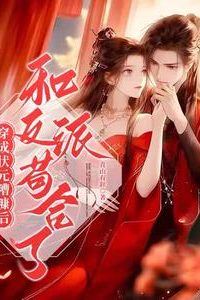
Okay, I need to talk about Duan Wujiu because this man is genuinely unhinged in the best way possible. Let me set the scene: he has amnesia, he's been rescued by Liu Zhiheng, she lies to him and says he's her child groom, and instead of being mad about it, he's like... yeah, I knew you were lying but I was willing to be deceived by you. WILLINGLY. Like, bro, you just met this person and you're already choosing the lie over the truth? That's not love, that's something else entirely. But here's what really got me: when Liu Zhiheng tries to remind him of his past by showing him the jade pendant with the dragon pattern—royal blood, clearly—he just tosses it aside. 'I don't want it.' He'd rather stay a nobody in a village than reclaim whatever status he had. And when she asks why, he says his past 'smells of decay, foulness, and the depths of an abyss.' That line hit me like a truck. Whatever this man was before, it was BAD. Like, morally corrupt, soul-rotten bad. And he's not even sorry about forgetting it. The most chilling part is his obsession. When Liu Zhiheng says he can leave anytime, his expression literally changes—'that sinister expression reappeared.' He says 'I don't want a choice.' He's flexing his wrist and considering that if she doesn't want him, 'they might as well die together.' This is not a healthy attachment, friends. This is the kind of love that consumes. And yet... I can't look away from it. There's something almost tragic about a man who found the only thing that makes him feel alive in someone who's been lying to him from day one. Also, Chuncao's scene with him? One look and she felt a 'murderous glare piercing through her.' The man is dangerous. Like, genuinely threatening. But he turns around and for Liu Zhiheng he's just... soft. Gentle. 'A Heng is so silly.' The duality is insane.
... Read More
I have been thinking about this 'Brewing Sauce Constitution' and what it really represents in the story. On the surface, it is this ridiculous novel trope - a woman born with an innate seductive quality that makes her irresistible to men. The original character's entire existence in the male-oriented novel was reduced to her body and her bedroom scenes. She was a plot device, a vessel for the male lead's darkest desires. But the transmigrated Liu Zhiheng sees this constitution for what it is: a curse. Every time she gets close to a man, her body reacts involuntarily. When she stands near Xie Tinglan, she feels this electric shock of desire that she has to fight against by reciting mantras. The constitution is a metaphor for how women's bodies are treated as objects in this world, how their very existence is reduced to their sexual appeal. But Liu Zhiheng refuses to be defined by it. She actively avoids physical contact with Xie Tinglan. She uses her knowledge of the original plot to navigate situations strategically. She is trying to reclaim her agency in a world that wants to use her body as a tool. The father's story is another layer of this theme. Liu Yigu is also used as a tool - first by the county magistrate, then by Xie Tinglan as a wallet and blood bank. His martial skills and business acumen are exploited until there is nothing left. Both the father and the daughter are trapped by systems that see them as resources to be drained. The transmigration itself is symbolic of escape - Liu Zhiheng escapes from her tragic fate by escaping into a different body and a different story. But can she really escape? The original novel's fate seems inescapable. The author is setting up a question about whether knowing the future is enough to change it, or whether the story has its own momentum that will pull everyone back toward their destined endings. And then there is the imagery of the river. The original Liu Zhiheng jumped into a river to force a marriage. Water as a symbol of desperation and transformation. Liu Zhiheng now stands near that same river, but instead of jumping in, she is trying to redirect the flow. What happens when the current fights back? The whole premise makes you wonder: if you knew your story was going to end in tragedy, would you still try to change it, or would you accept your fate? And more importantly, can a person really rewrite their destiny when the world keeps pushing them back toward the same script?

Leave a comment

You must be logged in to leave comments. or
