To My Beloved Spring - Reviews

To My Beloved Spring
+Add to Custom List
Sort
Add review
... Read More
The stakes in this book are quietly catastrophic. Let me explain what I mean. On the surface, Olivia is a noblewoman dealing with a family arrangement. Her father is considering a marriage alliance. There are political maneuvering, social expectations, the usual贵族 drama. But the REAL conflict — the one the author keeps pulling toward the center of every page — is this: Olivia loves a man who is already dead. Not currently dying. Not possibly dying. DEAD. And yet she is in love with him. The conflict isn't whether they'll end up together — it's whether her love is madness or fate. And the author forces us to sit with that question without giving us an easy answer. The bullet scene — which we only learn about through Freddy's letter — raises the stakes to something almost unbearable. Olivia took a bullet meant for Freddy's heart, and it pierced her head instead. She died for him. And he received her final letter. The conflict here isn't just physical danger — it's the horror of surviving someone you love and not being able to tell them anything. When Olivia agrees to travel to Silvest, the external conflict shifts. She's moving toward Freddy's world, but she's also moving toward her own death — the carriage crash, the snow, the explosion. Every step she takes gets her closer to him AND further from life. The author is building tension like a spring coiling tighter and tighter. And then Chapter 6. Olivia wakes up in 1819. Freddy is alive. The final letter she wrote — the one signed "Freddy, who couldn't wait for the end of spring in 1821" — is probably still in someone's possession, unread, waiting. The temporal paradox creates a conflict that hasn't even started yet. The story is about to explode and we're sitting here holding our breath.
... Read More
The imagery in these chapters is doing a LOT of heavy lifting and I need to acknowledge it. 'Spring sunlight' keeps appearing like a motif—Freddy's pupils 'blended with the sunlight of spring,' the warm air wafts through the open window, golden hair 'shimmered in the sunlight,' and later, 'dim sunlight filtered through the hallway' and 'beyond the drawn curtains, the rising sun peeked through.' Spring is supposed to mean renewal, right? New beginnings? But both of these characters are stuck in this cold, stagnant loop of miscommunication and loneliness. The contrast is intentional and it aches. Then there's the physical environment of the mansion itself. Servants gathering outside Liv's door like ghosts. The head maid Angela giving precise, crisp responses. Simon hovering nervously in Freddy's office. Everyone is walking on eggshells around these two people who can't seem to function in the same space without creating tension. The house itself feels like a character—big, watchful, full of secrets being passed through walls and corridors. And the letters. The pink paper, the faint floral scent, the messy handwriting 'as if a child had written it.' Someone is moving through this mansion like a phantom, slipping notes under doors, bypassing guards, appearing and disappearing. Who has this kind of access? The worldbuilding detail here—the security of a duke's residence being apparently permeable—raises so many questions. Is it a servant? A court insider? Something supernatural given the tone? The sickroom scene specifically is filmed like a movie. Sunlight piercing through eyelids. The shadow falling over Liv as Freddy kneels. The floral scent. The hand on the forehead. Every sensory detail is dialed up. This author knows how to paint a scene.
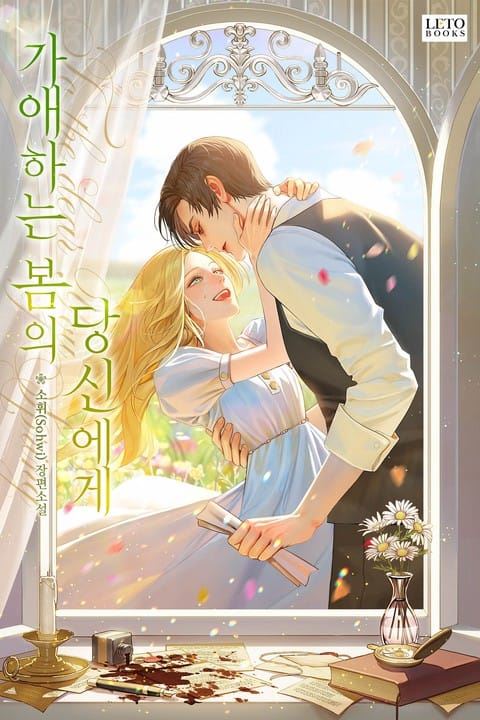
... Read More
Okay so can we talk about how the plot deliberately set up that office moment for maximum damage? Olivia picks daisies, practices being sweet, prepares to knock—and then overhears the conversation about separate rooms. The author didn't even let her knock once before everything imploded. That's not just dramatic timing, that's surgical.
... Read More
Freddy's dialogue is doing something really special in these chapters. On paper, he says very little. His lines are short, functional even—'You must have been very tired.' 'Are you all right?' 'I'll call for the physician.' But the subtext is carrying so much weight it's almost comical. And then there's the moment where Olivia tells him he smiles a lot, and his response is this awkward '...Did I?' while wiping the corners of his mouth? That's such a specific, human gesture that completely defines his character. He's not used to smiling, he's embarrassed by it, he tries to hide it, and Olivia notices all of this. The contrast between his usual clipped, controlled speech and these tiny cracks is where the voice lives. Olivia's internal monologue is sharper and more self-critical—'I hadn't realized how impulsive, selfish, and childish I could be'—while her spoken dialogue is softer, almost tentative. 'Please stay like this for a moment.' That's not the Liv she's replacing; that's Olivia herself breaking through. The exchange about the hat at the end is pure comedic relief after all the emotional weight: 'You mentioned wanting to step out of the carriage and explore the streets.' 'If you had asked, I might have stayed in the carriage quietly.' 'Do you dislike wearing the hat?' He prepared a matching hat in advance and she's mad she didn't tell him she wanted to get off the carriage. The author's narrative voice sits right between them, observant but never intrusive. It's restrained, which makes the moments that break through—like that faint smile Freddy keeps after promising to try—hit even harder.
... Read More
I need to talk about how this section is structured because it's actually really clever even if I didn't fully appreciate it on first read. Chapter 20-ish starts with Freddy READING a letter. End of March 1817. He's irritated but dismissive. Then we CUT to him visiting Liv—she's unresponsive, he's awkward, she breaks down, he flees. Back to his office. Works through the night. Morning comes. ANOTHER LETTER on his desk. Same date almost. 'From the last day of March, 1817.' The timeline is tight—barely any gap between these events—and that compresses the emotional pressure like a pressure cooker. The author doesn't give us breathing room. Each scene ends on a note of unresolved tension: Liv crying alone, Freddy retreating, the letter appearing like an accusation. No scenes of domestic normalcy, no comic relief, no easy moments. It's relentless in a way that keeps you turning pages but also kind of exhausting—which maybe is the POINT. These two are drowning and the reader drowns with them. The structure also plays with perspective in interesting ways. We get Freddy's POV mostly—his irritation, his confusion, his reluctant concern. Then we get Liv's interiority for a few paragraphs where she's convinced she's hallucinating Freddy because she thinks she's dying. The shift between 'he's real' and 'this is my deathbed delusion' creates this delicious uncertainty. Is he actually there? Is she actually ill? Or is the illness psychological? The pacing of these revelations—dropping hints but never confirming—keeps the narrative engine running. If I had one complaint, it's that the transition between the bedroom scene and Freddy returning to his office feels a bit abrupt. But that might be intentional—his retreat is the point.
... Read More
'At the end of October 1820.' Then 'At the end of November 1820.' The dates aren't just signatures - they're anchors, weights dragging Olivia between two worlds. This story is fundamentally ABOUT the tension between what is known and what is hoped for, and the letters are the physical manifestation of that tension. Think about it: Olivia lives in 1817. The letters come from 1820. Three years ahead. Three years of a life she hasn't lived yet - a marriage, a child named Lerry, a stillbirth, a war, death. The gentleman writes about losing their child and calls it 'the worst decision of my life' that he couldn't let her go. He's confessing sins that haven't happened yet. What is more powerful than that? The letters themselves are becoming scarcer, heavier, more devastating as they progress. They start with polite Frenchian practice and minor daily observations and escalate into emotional confessions about a shared life that exists only in his timeline. Olivia's handwriting improves with every letter she writes - not because she's studying, but because she's DESPERATE to communicate. Her improvement mirrors her emotional investment. She's literally writing herself into a future. And the most terrifying question this story poses: if the letters predict the future, can they change it? Or does reading them CREATE the future? When Olivia learns that Frenchia lost the war because Silvest didn't help, and the gentleman blames 'them' for losing her - who is 'her'? Her mother? Herself? The text leaves us hanging on that cliffhanger of a question, and I am NOT okay with this.
... Read More
I have to talk about the imagery in these chapters because wow. The scene where Freddy carries Olivia to bed and the moonlight hits her golden hair—I literally had to pause because it was so cinematic. 'Her golden hair spread out across the bed. Moonlight streaming through the window danced on her hair.' That's not just description, that's a painting. And then Freddy brushing a strand from her face and catching himself because she smiled in her sleep? Chilling. Actually chilling. But the other scene that stuck with me way more than I expected was the church. Two trees on a hill—one golden luminous, one dark nearly black—and they're intertwined. The elder tells her this represents the soul of happiness and the soul of unhappiness that God chose to clash so that fragments of both emotions would scatter through the world. I kept staring at that image. It's so on the nose thematically but also so beautiful, and Olivia's reaction is just... silence. She thinks God sounds irresponsible and wouldn't dare say it out loud. The church itself is described as solemn and sacred, white-painted, very similar to the one in Frenchia but with this one distinct theological difference that matters enormously. The capital city of Silvest is mentioned too—well-organized streets, flat apartment-style housing, more orderly than Frenchia. These small details make the world feel lived-in rather than backdrop-y.
... Read More
Okay I need to talk about the cedar tree moment because honestly I've been thinking about it nonstop. You've got Olivia standing there frozen in front of that window, and Freddy just... appears? Like the universe orchestrated it and he didn't even realize he was walking toward her. And then he says this completely casual line about the tree being ugly and she can have it removed if she wants. BUT THE TREE IS SYMBOLIC OF LIV'S LOVE FOR HIM THROUGH THOSE LETTERS RIGHT? And Olivia, who is essentially wearing Liv's memories like a second skin, just looks at him and says "I think it's something I'll grow to love the most." That's when it hit me—she's not just accepting the title of Grand Duchess, she's accepting him. The actual person standing in front of her, not the ghost from letters. And then—THEN—the bit where they're both shielding each other from the sunlight. She stands on tiptoe to block his eyes and his hand comes up to cover hers. The text literally says "the sight was so radiant that it was etched into their memories for a long time." Radiant. Not romantic, not passionate, but radiant. Like they both just became brighter versions of themselves in that exact second. I literally gasped. But here's what gets me—the dinner scene after. She's chattering the entire time, asking questions about his voice, his scent, everything. And he's just sitting there giving one-word answers because apparently Freddy's emotional vocabulary is "nod" and "is that so?" And then the moment she notices he hasn't asked her a single question all dinner long, and when he finally opens up about wanting to know what she'd like, she goes quiet. Goes completely dark. Because she realized he was only performing caretaking because he felt obligated, not because he actually wanted to know her. That silence after "I'll think about it" was devastating. Then the next day she asks for theology books and requests dinner and he just... ignores it? Sends books instead of himself? And Olivia's over there literally thinking "I might forget what his face looks like" while also justifying not spending the wedding night together because pregnancy could lead to death and tragedy. Like her brain is simultaneously crushing on him and building a firewall. That tension between wanting closeness and needing self-preservation is what makes these two absolutely lethal as a couple.
... Read More
Okay first of all—can we just appreciate the VOICE of this anonymous correspondent? Because whoever wrote these letters has ABSOLUTELY no filter and it is comedy gold wrapped in emotional manipulation. "You didn't consummate your marriage even after the wedding night? No matter how much of an alliance it is, your choice was a disaster!" This person is reading like a furious matchmaking auntie who somehow has insider knowledge of the Grand Duke's bedroom. The tone is outrageous. The exclamations! The rhetorical questions! "What a foolish thought!" "Your decision was nothing short of rude!" "If I were by your side, I would've told you to apologize to her immediately!" This is such a distinct narrative voice that it almost feels like a character in its own right. And the second letter is even better: "Yesterday, I might have been a bit harsh with my words. But honestly, I couldn't think of anything kind to say." BRO. You're apologizing for being rude while doubling down on being rude. This is peak passive-aggressive energy and I am obsessed. Then contrast that with Freddy's actual dialogue, which is barely there. "Madame." "Leave for the day." "They're annoying." "Simon, you may leave." The man speaks in three-word sentences half the time. His dialogue with Liv is equally stilted: "It seems I startled you by approaching too suddenly." That's not how a husband talks to his crying wife. That's how a man talks when he has no idea what to say and is desperately trying to sound reasonable. The letters are the most vibrant dialogue in the entire text, and they're from someone we've never met. Meanwhile the actual characters can barely string a sentence together. The author is making a point here and I'm here for it.

Leave a comment

You must be logged in to leave comments. or
