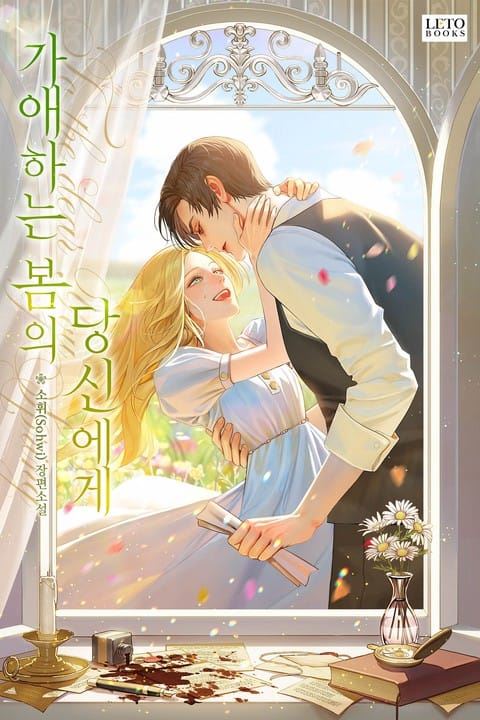
'To My Beloved Olivia. Liv. How have you been?' Four words and I'm already sobbing. The genius of this entire epistolary framework is that the Unnamed Gentleman has a voice so DISTINCTIVE that you know it's him on every single page, even though we never see his face, never hear his actual voice in the narrative. His letters walk this impossible line between tenderness and guilt, between a man who loves his wife and a man who caused her suffering through his own desperate refusal to let her go. 'Even knowing that, I couldn't let you go. Even as I watched you broken after losing our child, I thought it was better for you to live by my side, even in such a state.' That's not romantic. That's obsessive. That's complicated and uncomfortable and TRUE. And Olivia's voice is equally distinct - she mutters to herself, she talks to nonexistent recipients ('If you lived with me, you'd be happier, Mr. Unnamed Gentleman'), she catches herself mid-thought and redirects ('Oh dear, I wrote a letter in a fit of anger. I don't even remember what I wrote.'). The internal monologue is where her real personality lives. In public, she's the lively noble daughter; in private, she's calculating, lonely, desperate for connection, and dangerously susceptible to the fantasy those letters provide. The dialogue between Olivia and her family is almost painfully real - the father who indulges her, the mother who tries to read beneath the surface, the brother who immediately starts strategizing. Everyone speaks their role, but only Olivia speaks her truth, and she can only speak it to paper.