This Quick Transmigration Experience Is a Bit Sweet - Reviews

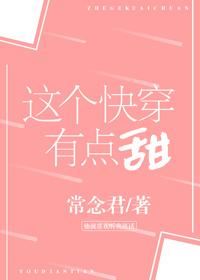
This Quick Transmigration Experience Is a Bit Sweet
+Add to Custom List
Sort
Add review
... Read More
The chapter opens at maximum tension—Mr. Sun restrained, dagger fallen, the strategist revealing himself. You're leaning forward, heart racing. Then—quietly, almost lazily—the children are tucked into bed. The strategist makes his suggestion about the General needing heirs. Three words: 'I decided not to bring it up.' And suddenly the pacing breathes. That's the author's signature move: spike the adrenaline, then let you exhale. Because the real suspense isn't in the interrogation—it's in what happens next. The walk to the bedroom. The hesitation before 'tonight, let's share a bed.' The three days of aftermath. The strategist's suspicious visit. Then—BAM—Zong Yuan single-handedly captures the enemy commander. The battle montage that follows is nearly comedic in its speed: 'less than the time it takes for an incense stick to burn.' But here's what I love: the author doesn't treat the intimate scene and the military action as separate beats. They're the same rhythm. Qi Hanguang 'recklessly took a deep breath'—and then the narrative cuts to the battlefield, where Zong Yuan charges forward with the same reckless energy. One is surrender; the other is conquest. They mirror each other perfectly. The chapter ends with court news—good news, urgent news—and your pulse spikes again. But by then, you're not thinking about the emperor or the realm. You're thinking about three days in bed and a strategist who asked about kidney deficiency like it was a routine check-up.
... Read More
This chapter does something really interesting with its structure. It starts at maximum tension — Zong Yuan confronting his mother about their relationship, the future hanging in the balance, Jiang Shengyan literally frozen outside. This is the climactic moment where everything could go wrong. And then what does the author do? They resolve it relatively quickly and pivot into... domestic comedy about cooking and scheduling sex? I know what you're thinking, but hear me out — it actually works. The plot arc here is about securing their future, and Zong Yuan methodically dismantles every one of his mother's concerns: children (surrogacy), relatives (hire an actor), money (Boss Jiang is wealthy). It's almost clinical in how he handles it, which fits his characterization as someone who can be 'cold and unfeeling' when needed. But the real plot genius is the rebirth element dropped in casually. 'Whether in the previous life or this one, his mother always had a special fondness for Fu Xin and Jiang Shengyan.' This confirms that Zong Yuan has memories of a past life, and those memories shaped his strategy. He knew his mother would ultimately accept them because he'd seen it before. That recontextualizes the entire scene — it's not just persuasion, it's confirmation of something he already knew would work.
... Read More
Okay so here's what's been sitting with me since I finished this batch: the surveillance camera in the study that isn't activated, and the fact that Zong Yuan specifically notices it. Jiang Shengyan's house is full of these half-measures—cameras that don't record, guests who show up uninvited, a man who pretends to sleep to avoid having to be honest about how he feels. The whole place feels like a set where the props aren't quite real, and Jiang Shengyan is the only actor who hasn't realized the play's over. Then there's the wheat field—actual honest labor, sun and dirt and physical exhaustion that produces real results. Chen Hongmei doesn't pretend anything there. She just works and feeds her family and worries about her son going fishing instead of helping with the harvest. It's the antithesis of Jiang Shengyan's world: warm, messy, transparent. Zong Yuan exists between both worlds now. He belongs to the farm, the family, the honest life—but he's carrying Jiang Shengyan through the dark, literally and figuratively. The story seems to be asking: what happens when these two ecosystems collide? Can someone raised in sunlight survive in a house full of unmonitored rooms? And what about 0046? Is it a guardian, a captor, or something else entirely? Because if Zong Yuan is a transmigrator—which the text keeps hinting at—then the entire setup might be about choice versus fate, and whether you can write a different ending even when you've already read the book.
... Read More
There's this line—maybe the most important line in the whole passage—that comes from nowhere and hits like a truck: ‘Zong Yuan had only been in this world for just under four months. Yet, those four months could save a person's entire life.' Think about what that means. Zong Yuan isn't even fully human; he's some system‑born entity (0046 talks to him). But his presence has already rerouted Fu Xin's trajectory from drift to purpose. The theme here is transformation through connection, but it's framed in almost economic terms—‘save a life' like it's a transaction. Except it's not. It's the opposite. The more Zong Yuan gives, the more Fu Xin gives back. And then there's the wheat. Hardly a subtle symbol, but it works. Zong Yuan is out there, sweating, cutting grain, carrying bundles on his shoulder. It's labor. It's rootedness. It's the antithesis of the capital's high‑society whispers and exam‑hall anxiety. While Fu Xin is aiming for a university in the capital to ‘marry Zong Yuan,' Zong Yuan is physically tied to the land that shaped him. The two settings—the urban pursuit and the rural reality—are pulling him in opposite directions, yet they're both necessary. The wheat harvest isn't just background; it's a motif of cyclical return. Summer, heat, exhaustion, then rest under the old tree. And when Chen Hongmei fills his cup and worries about her son, it's a reminder that Zong Yuan's humanity isn't just defined by his relationship with Fu Xin; it's also woven into family duty, soil, and sweat. The story keeps asking: what does it mean to be ‘bound'? To Fu Xin, binding is imprisonment. To Zong Yuan, binding is responsibility. To the wheat, binding is growth. I keep coming back to that four‑month claim. It suggests that even a borrowed life can become essential.
... Read More
'I just drank his water and forgot to clean the rim.' — this detail absolutely made me choke on my tea. Not even kidding. The author just painted Zong Yuan as this stoic, capable, almost mythical figure — he's survived trauma, he's got a system talking in his ear, he's got muscular arms and a sharp jawline and the kind of quiet intensity that says 'I've seen things' — and then Jiang Shengyan does the most mundane, human thing possible and accidentally kisses Zong Yuan's cup rim. The fact that Zong Yuan notices it and Jiang Shengyan turns bright red and almost trips over himself? That's gold. Pure gold. And Zong Yuan himself — there's something really interesting about how the author handles him. On the surface he's this laid-back rural guy who smokes cheap cigarettes and sleeps under trees. But the text keeps peeling back layers. He was in the army. His comrade died protecting him and now he carries that ghost with him. He's thinking about Fu Xin constantly. And this system called 0046 that talks to him like a cold, logical partner? It felt genuinely unsettled watching it observe the exchange between Zong Yuan and Jiang Shengyan like it couldn't compute human friction. What I love most is how the power dynamic flips between them. Jiang Shengyan arrives as this entitled city boss expecting service, and gets absolutely dismantled by a guy who doesn't care at all. Zong Yuan doesn't flinch at his curses, doesn't bend to his status, just lies there smoking and telling him to get lost. And then Jiang Shengyan has to swallow his pride and beg for water. There's a whole essay in that dynamic but I'll just say — I am HERE for it.
... Read More
I need to talk about Zong Yuan's entire energy in these chapters because WOW. The way he handles Fu Xin is... I don't even know how to describe it without sounding dramatic. He's got this机车 kid aesthetic—fitted black jeans, long leg bent awkwardly, helmet in hand—but underneath all that cool exterior he's literally arranging a job for Fu Xin's father. And when 0046 asks him why, his response is so deceptively simple: "A man has to mature eventually. After forty wasted years, it's about time to rise up." That's Zong Yuan in one sentence. He doesn't coddle. He doesn't baby. He sets conditions and believes people will meet them because that's how growth actually works. But then there's the small stuff. The hair thing. Fu Xin comes out of the house with a strand of hair sticking up, Zong Yuan reaches to smooth it down and it stays stubborn. And instead of being annoyed, he chuckles. Fu Xin looks confused and somehow that makes him "endearing." This is the kind of detail that reveals SO much about how Zong Yuan sees Fu Xin—not as a project, not as someone to fix, but as someone whose little quirks are genuinely attractive to him. And Fu Xin wrapping his arms around Zong Yuan's waist instinctively? Pressing close? That's not just physical closeness—that's the culmination of months of trauma and isolation finally finding a safe harbor. The fact that he spent the morning trying to learn from a neighbor's kid just to figure out how to hold onto someone properly? That broke me a little. Then there's the whole friend group dynamic shift. Yang Fan and the others finally realize Fu Xin never had romantic feelings for Zhang Zhi-liang. They thought they understood him and they were WRONG. Now they're feeling guilty and trying to make up for it by taking care of him. But Fu Xin? He's only lively around Zong Yuan. The isolation is narrowing, not expanding—and that's kind of heartbreaking in its own way.
... Read More
The dialogue in these chapters is genuinely funny and each character has a clearly distinct voice. Zong Yuan's lines are short, dry, and always slightly more than he's letting on. His 'Nice car' and then 'I prefer the motorcycle series' is the literary equivalent of a shrug that destroys a man's ego. But the best stuff is Zhuang Feiyu's dialogue because he's barely saying anything and it's ALL character. 'Shut up.' directed at Guan Haoyu. 'No next time.' to the secretary. 'Since my friend is under your treatment, Dr. Zong, come with me to observe him for a few days.' That last one is spoken so flatly that you almost miss the underlying demand. And Guan Haoyu's voice is perfectly chaotic - 'Oh! Zhuang-ge, your secretary is still so efficient.' followed by his deadpan internal panic. The narration itself has a great tonal balance too. It can be serious one sentence and then undercut it immediately: 'Zhuang Feiyu, repeatedly bothered by these matters, pursed his thin lips.' I love how the author lets silence do work. Zhuang Feiyu staring at Guan Haoyu for 'fifteen seconds' without saying anything tells us everything about his mood.
... Read More
There's a visual language running through these chapters that I think deserves more attention. Let me walk you through it. The Zong Yuan and 0046 conversation takes place in moonlight. Zong Yuan's figure is literally SHIMMERING—he's not entirely grounded in this world, which is fine because he's basically a system operative or ghost or whatever. But the moonlight framing makes him ethereal, untouchable. Like Fu Xin's guardian angel who happens to drive a motorcycle. Then we cut to the inside of the house. Fu Xin pushing food in front of his father, the two bottles of alcohol hidden under the table, the whole domestic tension playing out in a cramped kitchen. This is gritty, grounded realism. No shimmering, no moonlight—just a kid and his alcoholic father at a table, and the space between them is a chasm. But the real standout scene for me is the streetlights. When 0046 reads the original world file, "the surrounding streetlights flickered in sync." This is such a small detail but it does SO much atmospheric work. It's the environment itself reacting to the horror of what that file contains. The world is trembling along with 0046. It's a classic horror technique—having the setting itself respond to dread—and it elevates what could have been a purely expository moment into something visceral. And then we transition to morning. The school intersection. Zong Yuan waiting on his motorcycle under bright daylight, the guard watching him push through the gates, students gasping. The world opens up from the claustrophobic apartment to the bright, public space of school. It's a visual metaphor for Fu Xin's journey—step by step, he's emerging from shadows into light. The recruitment poster on the wall—"still clean paper"—is another detail that hits hard. This is Fu Dongqiang's first real attempt at change, and the paper is pristine because he's been too broken to even look at it before now. The world is waiting for him, and he's finally ready to tear it down.
... Read More
The structural rhythm of this passage is what got me. It opens at maximum intensity—liquor pouring, threats with a lighter, a man on his knees—and then it does this almost impossible thing: it slows down without losing momentum. The confrontation with Fu Dongqiang takes up roughly half the text, but within that, there are micro-pauses. Zong Yuan pacing back and forth. The lighter clicking. The silence after 'Just like that?' Each beat breathes. Then the cut to the restaurant is genius pacing—it's a pressure release valve that immediately builds a different kind of tension. The alcohol-smell discovery, the close proximity, the blush, the deflection about ordering food. It's all so deliberately paced, each moment lingering just long enough. And then—boom—we drop into Fu Dongqiang's head for the finale, and the pacing changes again. Time stretches. Hours pass. The wind blows. Thoughts clarify. The chapter doesn't end with action; it ends with stillness, and that stillness lands because of everything that came before. The author understands that the most powerful beats aren't always the loudest. Sometimes they're the ones where someone just lies in the cold and remembers.
... Read More
The links are not working dear
... Read More
I see.. so that’s why.. tqsm for the clarification ?
... Read More
You can find the previous chapters at https://www.novelupdates.com/series/this-quick-transmigration-experience-is-a-bit-sweet/

Leave a comment

You must be logged in to leave comments. or
