This Quick Transmigration Experience Is a Bit Sweet - Reviews

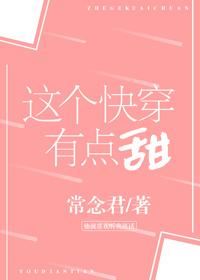
This Quick Transmigration Experience Is a Bit Sweet
+Add to Custom List
Sort
Add review
... Read More
The stakes in this chapter are SIMPLE but EXTREMELY high: they need to catch a flight and get a marriage certificate before the office closes. That's it. No villains, no threats, no external drama. Just two people racing against the clock to formalize their relationship. And yet the author makes you CARE so deeply. Every sentence about timing creates urgency — "we have a flight in two hours," "one hour and fifty-five minutes left," "as long as the plane wasn't delayed, as long as the staff handling marriage certificates didn't leave early." The repetition of time references is deliberate. It's a countdown. But the real conflict here is INTERNAL. Both of them feel impatient but they conceal it. They're trying to act normal while their hearts are probably racing. That restraint is what makes the tension work. If they had just been screaming excitedly the whole time, it would be less powerful. The fact that they're sitting there having breakfast normally while internally losing their minds? That's good writing. The airplane boarding scene is the payoff — Zong Yuan holding Zhuang Feiyu's hand as they walk together. After everything they've been through, this simple gesture carries so much weight. They made it. Against all odds, bureaucratic hurdles, and questionable transportation choices, they are about to become legally married. What could go wrong? (Everything, probably. But not in this chapter.)
... Read More
I keep coming back to this tiny detail: Fu Xin clutching Zong Yuan's jacket the entire time he's playing basketball. It starts as a practical thing—Zong Yuan tells him to hold it—but it becomes this whole loaded symbol without the text ever acknowledging it directly. Fu Xin is standing in the crowd, separated from everyone else, holding the one physical object that connects him to Zong Yuan on that court. When Zhang Zhi-liang asks about it, Fu Xin's first instinct is to grip it tighter. Nervous habit? Or territorial response? Both, obviously. The jacket mirrors the food earlier too. First Zong Yuan brings food to Fu Xin (warmth given), then Fu Xin holds Zong Yuan's jacket (proximity earned). It's this exchange system where care is expressed through objects, not words. Neither of them can just say what they mean. And Zong Yuan using that jacket as an excuse to pull Fu Xin behind him—'grabbed Fu Xin's wrist and pulled him behind him'—the jacket is what brings them into physical contact. Everything physical between these two goes through an intermediary object. There's something deeply sad and also deeply romantic about that. They're building intimacy through proxy, layer by layer, and the reader is the only one watching the wall come down brick by brick.
... Read More
Okay so this scene is genuinely brilliant from a plotting standpoint. Let me tell you why. You have Chi Xu — a trained assassin — bursting into someone's bathroom mid-shower with a gun, intending to kill them. That's already a high-tension setup. But what makes it work is the power reversal. Zong Yuan doesn't panic. He doesn't reach for a weapon. He basically treats Chi Xu's arrival like a date. The narrative pivots from 'will he survive the assassination' to 'will he survive the flirting,' which is so much more interesting. There's also this subplot thread with 0046 — mentioned only in passing ('He really came. Did his IQ decrease a lot after soaking in seawater?') — that adds world-building without slowing things down. I appreciate when authors can do that. And then the interruption by the cleaning staff is a masterclass in timing. You've built all this heat between the two characters, Chi Xu is half-naked and completely flustered, and then *knock knock* — 'Sir, do you need cleaning?' The reader is screaming internally. And Zong Yuan, being absolutely ruthless, answers about condoms in front of the staff member. I want to throw the book across the room but I also cannot look away.
... Read More
The visual composition of these chapters is insane. Start with the breakfast table—close-ups of hands, foam rings on tea cups, the deliberate lick of silverware. Then cut to the riding scene: white shirt, black waistcoat, fitted knight's attire against the forest backdrop, maids blushing in the periphery like extras in a period drama. The color motif keeps coming back to blue—Grad's sapphire eyes, the matching cufflinks Zong Yuan chose without knowing why, that deep blue almost-black mermaid tail that haunts his thoughts. Blue as a connector between everything. And then the forest itself opens up, the horse's hooves, the sudden dash of the doe, Sino's voice crackling with indignation from a few paces behind. There's this constant push-pull between intimate close-ups (brushed palms, warm breath near an ear on a moving horse) and wide shots (the whole party spread through the trees, the Countess waving, servants trailing behind). The chapter ends mid-conversation with Sino's accusation hanging in the air like smoke. I read that last exchange and immediately flipped ahead just to see if anyone addresses it, then realized there was nothing and had to close the app.
... Read More
Mr. Sun thought he was hunting a traitor. He found one—but it wasn't who he expected. The strategist, the person Mr. Sun trusted, was feeding him information that led directly into a trap. That's the chapter's opening conflict, and it's resolved in minutes. But the real stakes—the ones that actually keep you up at night—are far more personal. What does Qi Hanguang stand to lose? His position. His secrets. The children's safety. Zong Yuan's trust. His own composure—in every possible sense of the word. He enters that bedroom as a General who controls armies, and leaves as a man who can't walk for three days. The power dynamic has completely inverted, and the narrative doesn't apologize for it. Zong Yuan's stakes are equally high. He's about to lead a surprise attack. His life is on the line. But the chapter implies something darker: that his greatest risk isn't death in battle—it's the realization that he enjoys being wanted, being needed, being the one who decides when to stop and when to continue. 'Whether it was General Qi, who was experiencing intimacy for the first time, or Zong Yuan, who had been holding back for a while, they were completely immersed in each other.' Completely. Not partially. Not cautiously. The word choice is deliberate. The final stakes? The Emperor waits for news. The neighboring country doesn't know what's coming. The strategist is smiling. And somewhere in a capital city, a eunuch takes a message from a soldier whose face is tired and dirty. Good news. Urgent good news. And you're sitting there thinking: what happens when the General can barely walk to receive his own victory?
... Read More
What are the stakes here? On the surface, nothing dramatic—a mysterious guest arrives at a noble estate. But underneath? Everything. Grad is literally starving, desperate enough to endure rain and wait for the 'most delicious moment.' Zong Yuan is completely unaware of the danger he's in, treating Grad like any other guest. That dramatic irony is TORTURE. Every polite exchange between them is layered with impending violence. The stakes escalate quietly but relentlessly: Grad doesn't open his suitcase to check for wet clothes because he doesn't need to—he has preserved blood cans. He licks his lips when food is mentioned. He stares at Zong Yuan's neck. The internal conflict for Zong Yuan is also fascinating—he feels an 'inexplicable resistance' to people, even as he's drawn to them. Who is Grad going to hurt? Will Zong Yuan discover the truth in time? The suspense is maintained perfectly through this slow burn. We KNOW something bad is coming. We just don't know when, and that uncertainty is what keeps us turning pages.
... Read More
I keep coming back to the question of what Zong Yuan is actually risking here. On the surface it's a mystery about bite marks and possible identity connections across lifetimes — that's the external conflict, and it's genuine. But the internal conflict is what keeps me up at night. Zong Yuan is investigating someone who, by all accounts, has been... generous to him? Protective? He's looking for answers about Fu Xin and he's finding clues on Jiang Shengyan's body. How do you confront someone when the evidence points to them being connected to the person who shaped your entire past, but they're also the one currently standing beside you at a riverbank brushing willow leaves on your face? The stakes escalate quietly but relentlessly. First it's just a question — why do these marks match? Then it becomes a confrontation where Zong Yuan deliberately provokes Jiang Shengyan by bringing up the black spot on his butt cheek. That's not investigation, that's emotional warfare. And Jiang Shengyan's reaction — flushing crimson, clenching fists, calling him a spy — but he doesn't actually push him away. He engages. That tension between suspicion and attraction is the real conflict here, and it's so much more interesting than any external threat could ever be. Then there's Zong Xiaomo's comment about finding a sister-in-law who knows how to take care of people, and Zong Yuan's response that he just needs to like the person. Is he deflecting? Is he being genuine? Or is he already knowing something he won't admit out loud? Every conversation in these chapters is layered with what's unsaid, and that's where the real stakes live.
... Read More
The sensory world of this passage is so vividly rendered that I can practically feel the humidity on my skin. The author has created a rural setting that feels alive without ever stopping to describe it outright. We learn about Pear Village through action rather than exposition—everyone knows everyone, young girls with braids rush past calling out 'Brother Zong Yuan,' the scent of homegrown vegetables being sorted. The village itself is characterized by absence: no restaurant, no fridge, no air conditioning, no processed food. These absences tell us more than any description could. The dinner scene is where the worldbuilding reaches its peak. That bowl meant for rice and soup now being used for beer—this single detail captures the entire essence of rural resourcefulness. Jiang Shengyan, the epitome of upper-class refinement, ends up grabbing an oily steamed bun with his bare hands and drinking from a rice bowl. The humiliation is palpable, but the author treats it with warmth rather than mockery. The heat is another character in this scene. Hot dishes hitting an empty stomach, sweat breaking out immediately, the slight evening breeze doing nothing to help. And then Zong Yuan rolls up his shirt and reveals those six-pack abs glistening with fine beads of sweat. The text explicitly compares it to 'a model preparing for a hard photo shoot,' which is both funny and slightly unsettling from Jiang's perspective. He nearly drops his bun. This moment—half comic, half erotic—is perfectly calibrated. The setting is mundane (a village dinner), but the imagery is charged. Chen Hongmei's shyness as she serves the food, her apology about having hardly any meat and wishing she'd killed a chicken—these details ground the scene in authentic rural hospitality. The homegrown vegetables, unprocessed with chemicals, the excellent cooking skills that make the aroma waft through the air. You don't need to taste the food to know it would be delicious. The world here is built through food, through heat, through the intimate compression of bodies around a small table. It's a world that feels earned, not invented.
... Read More
What I love about this scene is the layered stakes. On the surface, it's simple: assassin arrives to kill target, target talks him out of it through sheer charisma. But the real conflict is internal, and it's so much more interesting. Chi Xu came in wanting to prove he could kill Zong Yuan. By the end of the scene, he can't even prove he wants to leave. The assassination mission becomes secondary to his own emotional confusion — and that's where the real stakes live. Every physical moment raises the tension. Zong Yuan trapping him against the door with his thigh between Chi Xu's legs — that's not just sexy, it's a power move disguised as intimacy. When Zong Yuan lifts him and carries him into the bathroom,Chi Xu could fight back. He could do anything. But he doesn't. The reader holds their breath. And then the cleaning staff knocks. The stakes go from personal to public in one second. If someone walks in now, everything changes — the power dynamic, the sexual tension, possibly the entire mission. Zong Yuan's response about condoms is simultaneously the most cruel and most strategic thing he could do. He's forcing Chi Xu to either confirm they're together or deny it in front of a stranger. Either way, Chi Xu loses. The final image of Chi Xu muttering about disposable underwear and smelling his own socks is perfect. He's completely defeated, but on his own terms. He still has his pride, just... questionable hygiene habits. And honestly? That's the most romantic ending this scene could have.
... Read More
Let me talk about the pacing because this chapter is a MASTERCLASS in stretching tension across a fake time skip. The author writes 'Eleven days passed completely.' Eleven DAYS. And in those eleven days, Zong Yuan is working through the night while Grad sits beside him, half-shy half-expectant, saying 'Zong...' repeatedly. The repetition is deliberate—the reader feels every single moment of those eleven days passing. It's not just 'time passed,' it's 'time dragged, and we were RIGHT THERE with them.' And then the chapter ends on what I can only describe as the most perfectly timed cliffhanger in recent memory. Grad asks 'Can you... finish inside...' and the author responds with 'I, f*ck, ah!' and cuts to the next scene. That is NOT a fade to black. That is the author looking directly at the reader and saying 'you're not ready for this either.' The pacing of the Zong Yuan/Grad storyline is slow-burn with explosive payoffs. The Count and Countess arriving, the hypnotized pregnancy reveal, Sino's confused 'Sister-in-law, goodbye'—these are all quick comedic beats that punctuate the slower emotional moments. But the Zhou Mansion section? That's a COMPLETELY different pacing structure. It starts with a storyteller's tale, moves to gossiping servants, then to the Zhou family home exploding with anger. Three distinct scenes in rapid succession, each raising the stakes. By the time Mr. Zhou slams the table, we're already wondering what 'shallow-minded woman' did and why a Taoist priest is showing up uninvited. The chapter basically does a complete genre shift halfway through and somehow it doesn't feel messy. It feels like the author is building TWO stories in parallel and we're supposed to notice the connection.
... Read More
The dialogue in these chapters is doing some incredible heavy lifting and I need to unpack it. Start with Zong Yuan's use of "darling"—it's not just a pet name, it's almost weaponized affection. He says it while buying lingerie, while feeding porridge, while getting dressed in matching traditional clothes. Each time it carries a different weight. Sometimes it's teasing, sometimes it's genuine tenderness, sometimes it's him deliberately making Feiyu flustered. The repetition becomes a pattern that tells us everything about their dynamic without ever stating it outright. And Feiyu's responses! "Speak properly." "Shameful." "Get lost!" On the surface these are dismissive, but contextually they're affectionate in the most tsundere way possible. The author never has to write "Feiyu loved Zong Yuan" because Feiyu's dialogue does the work for him. The father's lines are razor-sharp too: "Speak up, where did he go." Three words, zero filler, maximum intimidation. And his final verdict—"Rebel! Rebel!"—is almost comically theatrical, which makes it funnier and more tragic at the same time. But the reale standout is the untranslated exchange with the locals. The author writes: "they kept saying the same phrase" and we're left wondering just like Feiyu. That moment of shared confusion between the two characters, where neither understands but they're facing it together, is pure storytelling efficiency. One paragraph and we feel the alienation and the closeness simultaneously.
... Read More
Let me just say—the atmosphere in these chapters is IMMACULATE. The author doesn't overdescribe but every scene has this specific, almost cinematic quality that just pulls you in. The image of Fu Xin hiding in the dark corner of the school wall, the sky already black making him feel "even less visible"—that's not just setting, that's emotional state made physical. He's literally becoming invisible in the darkness because that's how he feels in this relationship. And then Zong Yuan's motorcycle engine sounds like a "heavenly melody" to Fu Xin. THE ROMANTICISM. I'm dead. Another scene that stuck with me: the drop-off at Fu Xin's doorstep. Streetlight illuminating Fu Xin's "fluffy hair," the warm yellow light catching Zong Yuan's hair on the bike ride back—these are the kinds of details that make a novel feel like a film. The moon itself isn't even beautiful ("the stars were dim and the crescent moon hung there") but Zong Yuan calls it pretty anyway. The environment mirrors the emotional truth of the scene perfectly. The principal's house scene is more subdued but still effective—the mahjong tiles clacking on the other end of the phone, the five-or-six-year-old child's bald head being patted. It's a snapshot of a normal family life that Zong Yuan is technically part of but keeps his distance from. These environmental details do SO much heavy lifting.

Leave a comment

You must be logged in to leave comments. or
