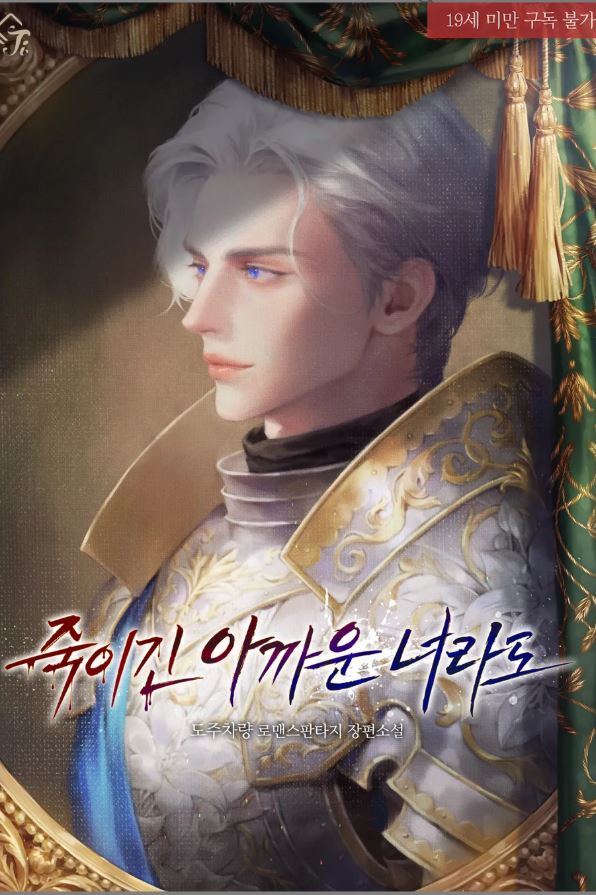
This Loving Traitor
+Add to Custom List
Genres:
Novel Info
  • Author:
  • Status:Ongoing

Summary

... Read More

Ivnen Denia was born a bastard of House Denia, raised in contempt by her father and half-sister, Lilien. She spent her life unloved until she met Count Bjorn Balder, a man of common birth who rose to nobility through military merit. Ivnen fell deeply in love with him, believing his proposal was a chance at happiness. Their wedding, however, was a tragedy. For a year, Bjorn remained distant, openly favoring an unnamed mistress while Ivnen suffered from a mysterious, wasting illness that no physician could cure. On the brink of death, she dreamed she had died from poisoned flower tea served by Bjorn’s own hand. In that final moment, he whispered words she could not decipher before she collapsed.

Ivnen awoke not in death, but on the day before her wedding, having regressed to the past. Her body was healthy, free of the agonizing pain that had plagued her final months. Confronted with the memory of her betrayal, she resolved never to suffer as she did in her previous life. During the wedding ceremony, she coldly accepted Bjorn’s declaration that he offered her nothing in return. In response, she demanded a divorce after exactly one year, asserting that she would use the marriage as a means of escape rather than a lifelong sentence. Bjorn, unsettled by her sudden detachment and icy resolve, agreed to the terms but ordered his guard knight, Felix, to ensure Ivnen never entered his private study.

As days passed, Ivnen’s emotional dam broke. She had planned to endure for a year, but the reality of Bjorn’s indifference and his love for another woman proved too much. She fled the estate, only to be found by Bjorn himself at the lakeside where she had once contemplated suicide. He had chased her through a torrential rain, terrified by her absence. When he found her, she told him she would never return. Meanwhile, Bjorn remained obsessed with his secret love, writing countless passionate letters to his faceless mistress, unaware that his wife was unraveling.

The turning point arrived when a jeweler approached Ivnen with a custom-made ring Bjorn had commissioned a month ago, during their engagement. This gift, which Ivnen had never received in her first life, sparked a painful realization. Driven by a mix of rage and confusion, she broke into the forbidden study despite Felix’s warnings. There, she discovered the pile of love letters addressed to the mistress, reading passages that revealed Bjorn’s deep devotion to another. The confrontation that followed ended with Ivnen collapsing from emotional shock, caught by a panicked Bjorn who ordered an immediate physician.

Following the incident, Ivnen retreated into silence, lying in bed like a corpse while Dek, her maid, wept over her. Bjorn, meanwhile, grew increasingly agitated by Ivnen’s cryptic accusations and her claim that he had deceived and used her. He dismissed these as absurd, yet he could not shake the image of her tearing heart. In a fit of desperation, he rode out to confront a relative of the imperial family, threatening force when the man evaded him. Returning to the estate in the dead of night, he was met with the news that Ivnen had disappeared again.

Bjorn raced back to the lakeside, recalling Ivnen’s earlier words about the weather being unsuitable for dying. He found her huddled by the water, soaked and shivering. When he asked why she had come to such a place, she replied that she had nowhere else to go. Yet, she refused to return to the estate, telling him she wanted nothing more to do with him. Bjorn, usually composed and unreadable, was left speechless, his desperate search revealing a depth of fear he had not acknowledged. Ivnen, however, remained resolute in her rejection, leaving Bjorn to grapple with the wreckage of a marriage he had taken for granted and a wife who had finally learned to let go.

Latest Release
DateGroupRelease
2026-10-03dusk blossoms c36
2026-10-03dusk blossoms c35
2026-10-03dusk blossoms c34
2026-10-03dusk blossoms c33
2026-10-03dusk blossoms c32
2026-10-03dusk blossoms c31
2026-10-03dusk blossoms c30
2026-10-03dusk blossoms c29
2026-10-03dusk blossoms c28
2026-10-03dusk blossoms c27
2026-10-03dusk blossoms c26
2026-10-03dusk blossoms c25

Community Reviews

Rating(0 / 5.0, 26votes)
5 stars
0(0%)
4 stars
0(0%)
3 stars
0(0%)
2 stars
0(0%)
1 stars
0(0%)

Popular reviews

... Read More
The structure of these chapters is doing something really clever and I need to talk about it. Start with the lakeside — quiet, almost serene after the storm. The sky is "clear as a lie," which is such a loaded phrase because we know exactly what kind of lie this clarity represents. Petunias at the lake. Bjorn's blue eyes matching the sky. It's almost too beautiful, and that discomfort is the point. The author is setting up a paradise that the reader already knows is built on a foundation of betrayal. Then the climb onto his back. Then the flashback. Then the return journey. Then the confrontation. Each beat lands with deliberate spacing — the author isn't rushing to the emotional climax, she's building toward it like someone slowly lowering themselves into water that's too cold. What's brilliant about the pacing here is how the confrontation itself is delayed. We get all this internal monologue, all this backstory flooding through Ivnen's mind, and Bjorn is just... walking. Carrying her. Not speaking. The silence between them is actually louder than any dialogue could be. Felix and Dek are basically background characters in their own house, terrified to interrupt whatever unstable equilibrium exists between these two. And then — the masterstroke — when Bjorn announces he's leaving. Just when we think the scene is about resolution, about them finally talking things out, he pivots HARD. "I am leaving Valder Estate today." The tension snaps taut. Felix's confusion mirrors our own. And then Ivnen grabs his coat. The structure here mirrors the emotional arc perfectly: false calm → building pressure → sudden disruption → grasping for stability → reluctant acceptance. The author knows exactly when to let scenes breathe and when to yank the rug out. By the time Bjorn says "Carry me" reversed — now he's the one offering his back — we've traveled through an entire emotional universe in what reads like twenty minutes of story time. The cliffhanger ending, with her arms tightening around his neck and the shadow of two bodies merging into one, is exquisite. Not a traditional cliffhanger, but an emotional one. We're left wondering: is this redemption or ruin? And the beauty is, the book isn't ready to answer that yet.
... Read More
I want to dissect why this chapter works so well structurally, because the pacing here is genuinely masterful. The chapter opens at a glacial pace. Several days pass. Nothing changes. Bjorn stays in his study. Ivnen sits on the bed. The prose itself slows down to match the mood — long sentences, heavy punctuation, thoughts that loop and double back on themselves. "All this time, Ivnen's feelings had swung wildly from one extreme to the other, day after day without rest — but today was a little different." And then — BAM. Mother's memorial day. The pacing SHIFTS. Suddenly we're moving through memory, through revelation, through Dek's dialogue. The emotional velocity increases. We learn about the mother's death. About the duchess's drunken confession. About the rape, the beatings, the hanging. All compressed into a few paragraphs that hit like a sledgehammer after the slow build. Then — the garden. The petunias. The pace slows again, but now it's a different kind of slow. It's the slow crawl toward dread. Every sentence adds weight: "Still there. Fresh as though they had just been cut and set down — petunias beaded with dew." The description lingers. The past comes rushing back in fragments. Bjorn's voice from before the wedding. Dek's assumptions. The realization building like pressure. "And in that moment of confusion, something caught Ivnen's eye." Felix. Appearing like a plot device but also like fate. The pace quickens — she calls his name, he stops, she approaches, she asks, he hesitates. The dialogue becomes clipped, staccato. "So you do know, Felix." "My lady, I—" "Is it the Count?" And then — the walk to the study. This is the chapter's heartbeat. "Ivnen's steps toward the study were urgent." Short paragraphs. Short sentences. The internal monologue fractures: "What do I even intend to say to Bjorn? Why am I going to him like this?" The pacing mirrors her panic — it jumps, it stutters, it accelerates. The collision in the corridor is the climax. Physical impact = narrative impact. And then the final exchange, which the author deliberately fragments: "I don't understand what you are thinking. Not even the slightest bit." "..." "It doesn't matter if you don't understand..." CUT OFF. The sentence is literally incomplete. The chapter doesn't end with a resolution — it ends with a sentence that can't finish itself. Which is PERFECT for a chapter about a woman who has spent her entire life unable to finish understanding the man beside her. The pacing from start to finish moves through: stagnation → grief → suspicion → realization → confrontation → interruption. Six movements. Each one shorter than the last. By the time we reach the end, the emotional tempo is frantic and the unfinished sentence leaves us gasping. This is how you control a reader's breathing.
... Read More
Okay so I need to just sit with this for a second because the petunia reveal absolutely wrecked me. Think about it — throughout the entire past life, petunias were on that garden table. Every. Single. Day. Since the wedding, when Bjorn's behavior already started shifting, right up until Ivnen was too sick to go outside. And she always assumed Dek left them there. Dek even confirmed it in passing: "I'd assumed so all this time." But it was NEVER Dek. It was Bjorn. Him. The same man who poisoned her. "Since you tell me it's the flower you love, I suppose it does look prettier to me than the others." He literally told her once — almost carelessly — that petunias looked prettier BECAUSE she loved them. And then he spent... what? Years? — quietly putting them on that table every day without ever saying why. Without ever claiming credit. Not even when she walked past that table a hundred times. And then after she finally confronted him about the mistress, the first thing that changes is — the petunias. They get BIGGER. A massive bouquet takes up nearly the whole table. This isn't coincidence. This is a man who just got REBUKED by his wife for the first time ever, who's been hiding in his study refusing to come out, and who responds by... escalating a gesture he's been making silently for years. Does he not know how this looks? Does he know exactly how it looks and does it not matter to him? "I simply wanted the flower I liked to be where I wanted it. As you know, this is my estate, and I am its master." WHAT A MANIPULATIVE LIE. Because we KNOW he didn't like flowers. He literally said so. This is the most transparent excuse I've ever heard, and the fact that he offered it instead of saying anything honest is either breathtaking arrogance or... I don't know what. Something worse. And then the chapter ends on "It doesn't matter if you don't understand what I'm thinking" — trailing off, cut short. I AM NOT OKAY. The plot is just... peeling back layers like an onion and I am crying. Also — the mother's backstory drop? Duke Denia forced himself on her "day after day without rest," beat her, chased her when she tried to run. She hanged herself. And Ivnen overhears this. This is the origin of everything — the trauma, the hollow space in Ivnen's chest, the way she clings to Bjorn as "the first person who ever reached out his hand." FIRST. Not best. Just first. And now Bjorn is being revealed as someone who both held out his hand AND put poison in her cup. The narrative architecture here is just SO deliberate. Every thread is connected.
... Read More
Okay so this part just completely reshaped my understanding of the entire setup and I need to process this out loud. So Bjorn commissions a ring a full month ago—during the betrothal period, before everything went to hell—and never gives it to Ivnen? He lets the jeweler hold onto it, and then we find out the mistress gets THE ring while the wife gets poison? That's not just neglect. That's calculated. That's deliberate. And then the timeline clicks into place even harder. The physician visit, the secret checkups, the gold pouch payment—all of this happened BEFORE the flower tea incident. She was already dying. She was already slowly being poisoned, just not openly yet. And she figured it out on her own, sneaking around like a ghost in her own home. The plot has been playing 4D chess this whole time and I only just noticed. Every "nice memory" we thought was real—that warm engagement period, the sapphire comment, the tender moments—suddenly feels contaminated. Because now we know Bjorn was either lying then too, or... what? Did he genuinely love her once and then switch? Or was he always capable of this duality? And let's talk about those love letters. "Yours alone — your Bjorn, who loves only you, so much he could die from it." Written while he's married. While his wife is slowly dying. The sheer AUDACITY of writing something like that and folding it neatly on your desk. The narrative structure here is brutal in the best way. We get Ivnen's internal breakdown, then the jeweler scene as the catalyst, then storming into the study, then reading the letters, then the confrontation. It's a perfect escalation chain. No filler. Every beat pushes her closer to the edge until she can't hold it in anymore. "Bjorn Valder, you... you are truly the worst." That line. That's not a wife talking to her husband. That's a survivor naming their abuser.
... Read More
There's a moment in Chapter 7 where Ivnen remembers her past life—the night before the wedding, lying awake, heart pounding, thinking 'what should I say to him first?' and imagining herself being the perfect wife. I read that paragraph five times because the devastation is in the contrast. The same body, the same white dress, the same trembling anticipation—but this time, the emotion behind it is completely inverted. In her first life, those feelings were genuine hope. In this life, they're torture because she remembers exactly how it ends. 'I have not the slightest intention of disappointing myself and burdening you in the process.' This line made me put the book down for a full minute. It's not anger. It's not even sadness. It's exhaustion so deep it's become surgical. She has removed herself from the equation entirely—not through drama, but through cold, precise calculation. And Bjorn—oh god, Bjorn. His reaction to her newfound detachment is so painfully human. He doesn't know how to handle a woman who doesn't want his cruelty. For someone who built his entire identity around being the one in control, her refusal to play along is the one thing he can't manipulate. The romantic tension here isn't between lovers—it's between two people who are learning, in real time, that the script they were given doesn't apply anymore. That's somehow more compelling than any traditional love story.
... Read More
I need to talk about this memorial day scene because I am actually not okay. Like physically not okay. Ivnen's mother hanged herself when Ivnen was three years old. THREE. She can barely remember her face. "A mother whose face Ivnen could barely remember anymore. And no wonder." That phrase — "and no wonder" — is just so casually devastating. It's not tragic in a dramatic way. It's tragic in a quiet, resigned way. Like Ivnen has accepted that not knowing her mother is just... the way things are. There's no hope of change. No future version of this where she gets to know her mother. She just has to carry the absence. And then Dek shows up. Just Dek. The one person besides Ivnen who remembers this day. Who brings rose tea. Who bakes the cake Ivnen likes. Who says "Your mother would worry, seeing you like this." And Ivnen's thought — "What a blessed thing it was, to have someone to mourn alongside you" — made me just stop reading and stare at the wall for five minutes. Because grief without a witness is just... noise. It bounces around inside your head and nobody hears it. But when someone ELSE shows up and says "I remember too, let's remember together" — that transforms it. That makes it real. Dek isn't family. She's a childhood friend of the mother, a servant. But she chose to stay. She chose to remember. "Her mother's memorial came around every year, but it was a day only Ivnen remembered. It had been the same when she lived in House Denia, before she married Bjorn. They had been entirely indifferent — as though her mother had never existed at all." Not even her own household cared. Not her father, not her step-family, not the duchess who probably felt guilty enough to drink herself into oblivion. Only Dek. Only this one woman who served alongside Ivnen's mother remembered that a human being existed who then died alone in a house that treated her like furniture. And then — RIGHT AFTER this tender, heartbreaking scene — Ivnen goes to the garden and finds petunias. The flowers Bjorn has been leaving as some kind of half-love-letter to a wife he's simultaneously destroying. The timeline is just... cruel. The author places the mother's memorial directly before the petunia revelation like two knives twisting in opposite directions. One knife is grief for what was lost. The other is grief for what never was. "If Mother had lived. If she hadn't gone… Would I have had to swallow my feelings alone like this? Perhaps not." YES. That's the thesis of Ivnen's entire existence, isn't it? Everything she can't process, she swallows. Because there's no one to share it with. No mother to tell. No friend who truly understands. Just Dek, who tries, and Bjorn, who... does petunias and poison in equal measure.
See all reviews

Custom lists

See all custom Lists