This Emperor Can Read Minds - Reviews

This Emperor Can Read Minds
+Add to Custom List
Sort
Add review
... Read More
There are so many layers beneath this seemingly straightforward palace drama, and I keep finding new ones. Let me start with the most obvious symbol: Wen Xiaotu's veil. She wears it every day because of her disfigured face, and the text explicitly says it 'eliminated any need for makeup. Simply washing her face and combing her hair sufficed.' On the surface, it's a practical detail. But what does it mean? The veil is her armor and her prison. It protects her from the Emperor's gaze, from judgment, from the very thing she's been sent into the palace to achieve. Every scene she's in behind that veil is a negotiation between visibility and invisibility—and that's the core theme of the entire story, isn't it? Who gets to be seen, who gets to be powerful, and who gets to survive by remaining hidden? Then there's the Rosewood Phoenix-head Cane. The Grand Princess wields it like a weapon—literally swinging it at Wen Xiaotu's head. But it's also a symbol of her authority, her age, her position. When it clatters to the floor, it's not just a physical object falling; it's the moment her power breaks. The Emperor's arrival doesn't just save Wen Xiaotu's life; it severs the Grand Princess's ability to impose her will through violence. The cane dropping is the story's most visual representation of shifting power. And the Emperor himself—his shadow. Wen Xiaotu backs into him without knowing it, and the text notes 'her back bumped into something—broad, tall, and seemingly male.' He's present but hidden, observing, listening, waiting. This is such a rich metaphor for power in the palace: the most powerful person in the room doesn't need to announce himself. His presence is felt through its effects on everyone else. The Empress Dowager notices the Emperor's reaction to Wen Xiaotu and immediately starts calculating about 'providing a royal grandson by next year.' She reads power dynamics like a text, and so does the reader. The poisoning itself—the poinsettia left carelessly in He Lan Shi's own bedchamber—is another symbol I can't stop thinking about. It represents the stupidity of unchecked arrogance. He Lan Shi was so confident in her power that she couldn't imagine anyone outmaneuvering her. The evidence literally sitting in her room is the story's way of saying: your own hubris is your downfall. And Wen Xiaotu, who survived by being careful, by thinking three steps ahead, by never leaving evidence of her own schemes—she's the opposite of that. The contrast between these two women isn't just moral; it's strategic, and it's the thesis of the entire narrative.
... Read More
I need to talk about how this author controls tension because it is absolutely masterful. Chapter 47 opens with Wen Xiaotu fast asleep, wriggling comfortably on an antique beech wood bed, completely unaware she almost got chosen by the Emperor. The scene is soft, domestic, almost sleepy. You're like 'okay, morning routine, got it.' And then—bam—Bi Xin rushes in panting: 'He Lan Shi is threatening to hang herself!' The pivot is so sharp you almost choke on your tea. One moment it's dumplings and congee, the next it's a full-blown political crisis with the Grand Princess charging in like a tornado in gold jewelry. What's brilliant is how the author stretches and compresses time. The confrontation in Yi Nian Hall plays out in real-time urgency—you feel every beat of it. The Grand Princess's demands escalate, the Empress Dowager's patience thins, and then the Emperor appears. That moment when Wen Xiaotu backs into someone broad and tall and realizes it's HIM—'her face instantly turned ashen'—the pacing here is *perfect*. The author doesn't rush it. They let the dread build, let the reader share Wen Xiaotu's panic, and then release it with the cane hitting the floor. But then—just when you think the chapter is winding down—the Empress Dowager drops this line: 'Why did Mother summon Wen Shi to Yi Nian Hall again?' And the Emperor's internal monologue reveals he'd been standing outside listening the whole time. The chapter ends on this quiet, charged note, and I was immediately desperate to turn the page. The structure here is like a rollercoaster: slow climb, drop, twists, and then this lingering moment of barely-contained electricity. I swear I read this section twice because I couldn't believe how smoothly it moved from comedy to tension to something almost romantic without feeling jarring.
... Read More
I need to talk about the voice in this text because it is SO distinct across different characters and it never blurs together. First, the Emperor's internal voice—oh my god. The way he thinks about his mind-reading ability is this mix of genuine exhaustion and arrogant self-awareness. He literally says (in his head): "The arrogant Emperor believed that even without this ability, he would still have become Crown Prince and Emperor!" That is such a specific kind of narcissism. He's burdened by a superpower but also convinced he'd have succeeded anyway. That's a very real, very human contradiction. Then there's Wen Xiaotu's inner voice, which is completely different. She's sarcastic, modern-thinking, and constantly commenting on things like: "This Emperor Tianze is really too impatient!" and "Complaining inwardly, she looked at the dinner that had just been delivered and felt a bit bitter—she hadn't even eaten yet…" The humor here is so natural. It doesn't feel like she's breaking the fourth wall; it feels like she's just a person who happens to have transmigration fatigue. The dialogue between the Empress Dowager and the Emperor is where it gets really interesting though. On the surface, it's formal and proper—everything wrapped in courtly language. But underneath, every line is a power play. The Empress Dowager says: "Does the Emperor still have any doubts about this?" and what she's really saying is: "Don't you dare question my investigation." The Emperor's response—cold, indifferent, cutting straight to the point about the tampered rouge—shows he's not intimidated. And Fang Jieyu's tearful gaze toward Wen Shi? That's non-verbal dialogue at its finest. The whole hall goes silent, everyone turns to look at Wen Shi, and she's just standing there awkwardly because she didn't even realize she was the center of attention. The narrative voice captures that moment perfectly—"she… stood there awkwardly, having unwittingly become the center of attention." The author's voice throughout is sharp, observant, and never condescending toward any character, even the ones being scheming and ruthless.
... Read More
"The only people without inner thoughts were the dead!" This line stopped me cold. It's the thematic key to the entire section. The Emperor's mind-reading ability represents the ultimate intrusion—no privacy, no authenticity, no safe space in a world where everyone is performing. Every consort's thoughts are noise to him, chaotic and meaningless. And then there's Wen Shi, whose silence is the one thing he can't penetrate. But here's the thing: her silence isn't emptiness. It's something else entirely. She's a transmigrator. She has thoughts, but they're in a different register—modern, foreign, possibly protected by whatever mechanism brought her to this body. The veil Wen Shi wears is another symbol that keeps coming back to me. She arrives with a "faint pink veil" covering most of her face, with "mottled brown spots near the corners of her eyes" still visible. The disfigurement is both literal and metaphorical—it's the mark of the poisoning, yes, but it's also what makes her invisible in the harem's hierarchy. Fang Jieyu arrives first, beautifully dressed in crimson and gold, while Wen Shi is described as "like a green leaf meant to set off Fang Jieyu." The visual contrast is intentional. The pale, veiled, late-arriving consort versus the poised, early, brilliantly dressed rival. And yet, the one the Emperor CANNOT read is the one who appears weakest. The setting itself—the Yi Nian Hall perpetually filled with agarwood scent, the octagonal lanterns, the cold palace of Eternal Lane—these all symbolize the trapped nature of the harem. Women are displayed, judged, confined, and discarded. The Emperor's ability to hear thoughts but not understand them mirrors his relationship with the entire harem system: he has power over everyone, but true understanding? That's impossible. Wen Shi's mental silence becomes the one genuine mystery in a world of loud, performative surfaces.
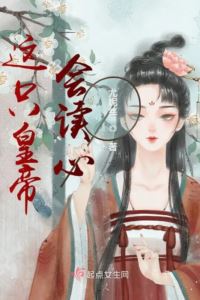
... Read More
"Wen Xiaotu only glanced briefly before quickly lowering her head and paying her respects respectfully, 'Your humble consort, Wen Shi, pays respects to the Empress Dowager and to His Majesty.'" Okay, can we just talk about how the pacing in this chapter is absolutely immaculate? The author starts with the Emperor and Empress Dowager discussing He Lan Shi's punishment—that's the setup, the political maneuvering, the cold calculus. Then we CUT to Wen Xiaotu in Yanqing Hall, practicing calligraphy, completely unaware, having a sweet moment with her maids renaming Bilian to Bi Xin. It's such a gentle, almost domestic scene. And then—BAM—Xiao Yuan Bao comes in saying Fang Jieyu is heading to Yi Nian Hall, and suddenly the pace accelerates like a horse being spooked. The transition from the quiet, almost comedic maid-renaming moment to the tense summons is chef's kiss. The author doesn't linger on the walk—just tells us she arrived a quarter-hour late because she had no shoulder carriage and her residence was far. That detail does SO MUCH work. It establishes her low status without a single exposition dump. And then the description of Yi Nian Hall—agarwood scent, lanterns, the Empress Dowager looking weary, the Emperor in his mismatched opulent robes—this is all atmospheric setup before the confrontation begins. What really sells the pacing, though, is the Emperor's internal monologue about his mind-reading ability. It's a long passage, but it doesn't feel like padding because it's essential context. We NEED to understand why his silence around Wen Shi is so shocking. The structure here is: tension builds → emotional release (the banter with maids) → tension builds again → climax (the silent confrontation) → cliffhanger (the Emperor's realization). It's a textbook example of how to control reader engagement without ever feeling rushed or dragged out.
... Read More
Okay so let me just say this: the way this author builds the palace world is *chef's kiss*. You don't get giant exposition dumps about the hierarchy, but every single detail drops you right into the setting. Like the breakfast scene—twenty taels of silver for dumplings and congee, and Wen Xiaotu's internal math about her monthly stipend? That's not just flavor text, that's worldbuilding through the stomach. You suddenly understand her entire economic reality in the harem without a single lecture. And then Yi Nian Hall—oh man, the description of the Grand Princess sitting there in 'lavish attire, adorned with gold and jade from head to toe,' her 'wrinkled, orange-peel-like face' regarding Wen Xiaotu with disdain. I could literally see this scene as a TV drama. The purple sandalwood throne, the embroidered stools, the Rosewood Phoenix-head Cane clattering to the floor—that last image hit me like a cinematic cut to black. The author doesn't tell you the Grand Princess is powerful; you feel it through the props and the space around her. What I love most is how the setting itself becomes a character. The palace isn't just a backdrop; it's a system of power that presses on everyone. The Northern Kitchen's control over ingredients, the way a fifth-rank Cairen's provisions get 'heavily discounted'—these aren't random details. They're the invisible walls Wen Xiaotu navigates every single day. The world feels lived-in because even the bureaucracy of the harem has rules, and breaking them has consequences. The cold palace, Eternal Lane, the hierarchy of ranks—all of it clicks into place through these small, sharp observations. I kept wanting to draw a map of this palace in my margins.
... Read More
The dialogue in these chapters is absolutely razor-sharp, and I'm obsessed with how every conversation doubles as a power struggle. Let me start with Fang Wanyi's entrance. She comes in crying, grasping Wen Xiaotu's hands, saying "You wouldn't... you wouldn't have done it on purpose—" and on the surface, this is a worried cousin visiting her friend. But read it again. How does she know Wen Xiaotu fell into the water? She claims a eunuch told her, but we already suspect that eunuch is her informant. The tears are real, or at least convincingly performed, and that's what makes it chilling. This is someone who has perfected the art of looking gentle while being deadly. Then there's Wen Xiaotu's response: "How did you know I fell into the water, Consort?" This line is everything. She's testing her, pushing gently, watching for a reaction. And Fang Wanyi? She doesn't even flinch. She just sighs, cries a little more, and says she was afraid Wen Xiaotu would do something rash. Perfect. Too perfect. The author also does something brilliant with the narrative voice itself. Wen Xiaotu's internal monologue has a completely different tone from everyone else's dialogue. Where the palace women speak in layers of meaning and politeness, Wen Xiaotu's thoughts are direct, modern, almost blunt. She calls Fang Wanyi's behavior suspicious. She mutters to herself about needing to find a way to avenge the original host. This contrast between external decorum and internal honesty is what gives the book its unique voice. And the minor characters—Bilian's outrage at the bland food, Hongguo's quiet competence, the eunuch Xiao Yuan Bao's whisper about the kitchen—each one has a distinct way of speaking that makes them feel like real people instead of plot devices. Bilian's exclamation marks versus Hongguo's careful suggestions tell you everything about their personalities without any description.
... Read More
The stakes in this story are layered in the best way, and I think what makes it work is that they operate on at least three levels simultaneously. On the surface, it's a survival story. Wen Xiaotu is in a palace full of people who want her dead or ruined, and she has no allies, a disfigured face, and a rank that makes her practically invisible. One wrong move and she's done. But deeper than that, it's about justice. The original host, Wen Rucha, did nothing wrong. She was naive, yes, but she never harmed anyone. She trusted her cousin. She believed the system would protect her. And instead, her face was destroyed, her reputation was shattered, and the person who did it walked away with barely a punishment. That's not just unfair—it's a fundamental breach of everything a person in that world is supposed to believe in. The third level is the most personal: identity. Wen Xiaotu isn't just inhabiting this body; she's inheriting someone else's rage. The text says it directly—"Wen Rucha... she wanted revenge, she wanted to seek justice. This was the last remnant of thought Wen Rucha had left for her." That's a haunting line. It means every action Wen Xiaotu takes is partially motivated by a dead girl's unfinished business. She's fighting a war that isn't even hers, and that's both a burden and a compass. What I love is how the author makes you feel the stakes physically. Wen Xiaotu's temples throb. Her chest feels tight. She's exhausted—"as if she hadn't slept for three days and nights." The emotional weight has a physical cost, and that makes the conflict feel urgent and real, not just abstract plot mechanics. The question now is: what does she have to lose? She's already lost her face. She's already lost her position. What's left to gamble?
... Read More
Okay, let me just say—this poisoning subplot is SO well-constructed. You think it's just Consort He Lan being a bitch, right? Classic palace villain energy. But then you start connecting the dots and oh my god, it's Fang Wanyi the whole time. The cousin who brought the rouge, the cousin who cried at the funeral, the cousin who was there every step of the way... and she's the one who handed over the poisoned box. The way the author reveals this is chef's kiss. First, Wen Xiaotu pieces it together in her head: Fang Shi didn't even inspect the Nan Yue Rouge before passing it to her. Who does that? Who receives a gift from someone they openly despise and just... hands it along without a second thought? Nobody. Except maybe someone who already knew it was poisoned. And then the nail in the coffin—when Fang Wanyi visits after the suicide attempt, she's the first to know Wen Xiaotu fell into the water. But Hongguo and Bilian swear they didn't talk, and the eunuch on duty that night (Xiao Qian Zi) is the likely leak. Who benefits from Fang Wanyi knowing? Exactly. The original host's backstory is also devastatingly efficient. Seventeen years of happiness, then everything stripped away in one spring. The Empress Dowager's favoritism turns into abandonment the moment Wen Rucha's face is ruined. The He Lan girl gets a slap on the wrist because her grandmother was apparently close with the Dowager. It's a perfect setup for why someone would throw themselves into a freezing pond—and why Wen Xiaotu is so driven to seek revenge. One thing I'm curious about though: if Fang Wanyi is the real mastermind, what's her endgame? Eliminating Wen Rucha from favor is one thing, but why go to such lengths? There's got to be more to it. The author is clearly building toward something bigger.
... Read More
Let me just say this: the stakes in this section are NOT subtle. They're escalating with every line and I am HERE for it. On the surface, it's about whether Fang Jieyu poisoned Wen Shi's rouge. But beneath that, it's about survival in a system where one wrong move means Eternal Lane—or death. He Lan Shi just got stripped of her rank and sent back to her family, which sounds merciful but is actually a death sentence in the social economy of this world. A discarded woman of the royal family? Good luck marrying well now. The Qingyang Marquis Estate will take her back, sure, but she's ruined. Fang Jieyu's stakes are even higher. She's the one who actually orchestrated the poisoning—she told He Lan Shi that poinsettia mixed into rouge was undetectable. She's kneeling right now in Yi Nian Hall, heart pounding like a drum, terrified the Emperor suspects her. And the worst part? She genuinely believed Wen Shi trusted her completely. The betrayal cuts both ways—Fang Jieyu betrayed Wen Shi, but she also underestimated how dangerous the Emperor actually is. But the most fascinating conflict is the one between the Emperor and Wen Shi. He can read everyone's mind except hers. That creates a tension that's almost sexual in its intensity—he's sitting across from her, staring, trying to understand something he's never encountered. For a man who believes he controls everything through information, Wen Shi's silence is the one thing he cannot dominate. And she? She has no idea that he's trying to read her thoughts. She's just standing there, veiled and plain, while the most powerful man in the empire is silently losing his mind over her. The suspense here is razor-thin. Will the Emperor confront her about her silence? Will Fang Jieyu crack under pressure? What happens to Wen Shi now that she's become the one mystery he can't solve? I need to know what happens next and I don't care how dramatic I sound about this
... Read More
I need to talk about the atmosphere in these chapters because the author is doing something really special with sensory details. The very first image—Wen Xiaotu curled under covers, Hongguo drying her hair with a third towel because there are no hairdryers in ancient times—this immediately grounds you. You can feel the cold. You can feel the dampness. The ginger soup Bilian brings is steaming, and you can practically smell the sharpness of it. It's small details like these that make the palace feel real instead of just a backdrop. And then there's Taihan Pond. Just the name of it—"Taihan" meaning "great cold"—and the author uses it so effectively. The water is described as freezing, the bottom dark. When Wen Rucha threw herself in, it wasn't just an act of despair; it was an act of surrender to that cold. Wen Xiaotu wakes up from the memory and still feels "a weight of oppression in her chest." That's the kind of atmospheric carryover that stays with you. Yanqing Hall itself is interesting. The name means "proliferation of descendants and blessings"—which is deeply ironic for a girl whose face was destroyed and who attempted suicide. The Empress Dowager gave her this hall as a sign of favor, but it's essentially a gilded cage. And the fact that there are no mirrors in the palace—her maids hid them all, which shows how thoughtful Hongguo and Bilian are—this detail alone tells you everything about how isolated and trapped she is. The food scene is also worth noting. Plain Jing rice, two vegetarian dishes, soy milk. The kitchen treats her poorly now because her status dropped. It's a small detail but it paints the whole picture of palace politics—your worth is measured in rank, and the moment you lose beauty and favor, even your meals get worse. The northern kitchen's indifference is its own kind of violence.
... Read More
I'm not even going to pretend I'm being objective about this—Wen Xiaotu's voice is the single best thing about this book. The author gave her this incredible gift: she's polite and precise on the outside, but her internal monologue is pure chaos. Let me give you the perfect example: The Grand Princess demands to know what Wen Xiaotu thinks, and on the surface she says: 'This humble concubine defers entirely to the Emperor and Empress Dowager.' But internally? 'So, if you have the nerve, go make the Emperor retract his decree! What's the use of staring at me?!' That contrast is *comedy gold*. It's also character depth disguised as humor. You understand immediately: Wen Xiaotu knows how to play the game, she knows exactly what to say, and she's fully aware that the Grand Princess is a ridiculous threat. The voice is sharp, witty, and deeply self-aware. And it's not just her. Every character has a distinct sound. The Grand Princess's dialogue is all imperious declarations and dramatic weeping—'A loyal minister doesn't serve two masters, a virtuous woman doesn't serve two husbands!'—which is both authentic to her class and instantly recognizable as the voice of someone who uses tradition as a weapon. The Empress Dowager speaks in measured, authoritative sentences that carry the weight of decades of palace survival. Even minor characters like Jiarong County Princess have a different rhythm—softer, more hesitant, always caught between her mother-in-law's fury and her own maternal instincts. The narrative voice itself is another layer I adore. It's close third person, deeply embedded in Wen Xiaotu's perspective, but the author occasionally lets the narration slip into something almost cinematic—like describing the Emperor's face as 'dark as Lord Bao's.' That kind of cultural shorthand in the narration adds this playful, knowing tone that makes the whole reading experience feel like you're in on the joke with the author. The dialogue doesn't just move the plot; it reveals power dynamics, hidden feelings, and social positioning with every exchange. I laughed out loud at least three times reading this section.

Leave a comment

You must be logged in to leave comments. or
