Summary

... Read More
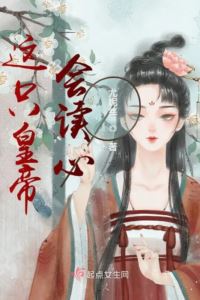
Wen Xiaotu was a twenty-five-year-old web novel author and programmer living in a bustling metropolis. Struggling with the high cost of urban life and burdened by the medical debts from her grandmother's recent death, she led a solitary life with no desire for marriage or children. Her existence changed abruptly when she was accidentally stabbed on a public street by a man targeting a woman he suspected of infidelity. As she lay dying, her consciousness transferred into the body of a young woman named Wen Rucha, who had just attempted suicide by drowning in the Taihan Pond of the imperial palace. Wen Xiaotu awoke in the Xuan Dynasty, assuming the identity of a Cairen, a low-ranking imperial consort. She discovered that the original owner, Wen Rucha, came from a noble family but had been cruelly disfigured. A gift of rouge from her cousin, Fang Jieyu, had been laced with a poisonous plant, leaving Wen Rucha’s face scarred and ruined. Devastated by the loss of her beauty and abandoned by the Empress Dowager, the original host had taken her own life. Wen Xiaotu inherited not only this tragic body but also the lingering resentment and desire for revenge. The palace environment was fraught with danger. Fang Jieyu, who posed as a loving cousin, was suspected by Wen Xiaotu of orchestrating the disfigurement to eliminate a rival. Meanwhile, Lin Xianfei, the highest-ranking consort, sought to manipulate Wen Xiaotu for her own political gain, hoping to use her womb to secure power. Wen Xiaotu, utilizing her modern knowledge and the unique Mustard Seed Space she had brought with her, began to navigate these treacherous waters. She maintained a facade of weakness while secretly investigating the truth behind the rouge incident. The political landscape was further complicated by the return of Emperor Ming Zhao from a successful military campaign. The Emperor possessed a rare ability to read minds, which he found burdensome due to the constant noise of others' thoughts. However, he noticed that Wen Xiaotu’s mind was silent, unable to hear her inner thoughts. This anomaly piqued his interest and suspicion. Upon his return, the Emperor moved swiftly to address the harem disputes, stripping Consort He Lan of her rank and exiling her for her malicious actions, while casting doubt on Fang Jieyu’s innocence despite her noble connections. As the Emperor prepared to deal with the remaining new consorts selected by the Empress Dowager without his consent, Wen Xiaotu found herself at the center of a power struggle. She had to balance the need to avenge the original host with the necessity of surviving in a court where alliances were fragile and betrayal was common. With the Emperor’s attention now fixed on her, and the true mastermind behind her disfigurement still at large, Wen Xiaotu faced an uncertain future in the imperial palace.
Latest Release
DateGroupRelease
2026-08-11shanghai fantasy c152
2026-08-11shanghai fantasy c151
2026-08-11shanghai fantasy c150
2026-08-11shanghai fantasy c149
2026-08-11shanghai fantasy c148
2026-08-11shanghai fantasy c147
2026-08-11shanghai fantasy c146
2026-08-11shanghai fantasy c145
2026-08-11shanghai fantasy c144
2026-08-11shanghai fantasy c143
2026-08-11shanghai fantasy c142
2026-08-11shanghai fantasy c141

Community Reviews

Rating(4.2 / 5.0, 13votes)
5 stars
5(38%)
4 stars
6(46%)
3 stars
2(15%)
2 stars
0(0%)
1 stars
0(0%)

Popular reviews

... Read More
There are so many layers beneath this seemingly straightforward palace drama, and I keep finding new ones. Let me start with the most obvious symbol: Wen Xiaotu's veil. She wears it every day because of her disfigured face, and the text explicitly says it 'eliminated any need for makeup. Simply washing her face and combing her hair sufficed.' On the surface, it's a practical detail. But what does it mean? The veil is her armor and her prison. It protects her from the Emperor's gaze, from judgment, from the very thing she's been sent into the palace to achieve. Every scene she's in behind that veil is a negotiation between visibility and invisibility—and that's the core theme of the entire story, isn't it? Who gets to be seen, who gets to be powerful, and who gets to survive by remaining hidden? Then there's the Rosewood Phoenix-head Cane. The Grand Princess wields it like a weapon—literally swinging it at Wen Xiaotu's head. But it's also a symbol of her authority, her age, her position. When it clatters to the floor, it's not just a physical object falling; it's the moment her power breaks. The Emperor's arrival doesn't just save Wen Xiaotu's life; it severs the Grand Princess's ability to impose her will through violence. The cane dropping is the story's most visual representation of shifting power. And the Emperor himself—his shadow. Wen Xiaotu backs into him without knowing it, and the text notes 'her back bumped into something—broad, tall, and seemingly male.' He's present but hidden, observing, listening, waiting. This is such a rich metaphor for power in the palace: the most powerful person in the room doesn't need to announce himself. His presence is felt through its effects on everyone else. The Empress Dowager notices the Emperor's reaction to Wen Xiaotu and immediately starts calculating about 'providing a royal grandson by next year.' She reads power dynamics like a text, and so does the reader. The poisoning itself—the poinsettia left carelessly in He Lan Shi's own bedchamber—is another symbol I can't stop thinking about. It represents the stupidity of unchecked arrogance. He Lan Shi was so confident in her power that she couldn't imagine anyone outmaneuvering her. The evidence literally sitting in her room is the story's way of saying: your own hubris is your downfall. And Wen Xiaotu, who survived by being careful, by thinking three steps ahead, by never leaving evidence of her own schemes—she's the opposite of that. The contrast between these two women isn't just moral; it's strategic, and it's the thesis of the entire narrative.
... Read More
I need to talk about how this author controls tension because it is absolutely masterful. Chapter 47 opens with Wen Xiaotu fast asleep, wriggling comfortably on an antique beech wood bed, completely unaware she almost got chosen by the Emperor. The scene is soft, domestic, almost sleepy. You're like 'okay, morning routine, got it.' And then—bam—Bi Xin rushes in panting: 'He Lan Shi is threatening to hang herself!' The pivot is so sharp you almost choke on your tea. One moment it's dumplings and congee, the next it's a full-blown political crisis with the Grand Princess charging in like a tornado in gold jewelry. What's brilliant is how the author stretches and compresses time. The confrontation in Yi Nian Hall plays out in real-time urgency—you feel every beat of it. The Grand Princess's demands escalate, the Empress Dowager's patience thins, and then the Emperor appears. That moment when Wen Xiaotu backs into someone broad and tall and realizes it's HIM—'her face instantly turned ashen'—the pacing here is *perfect*. The author doesn't rush it. They let the dread build, let the reader share Wen Xiaotu's panic, and then release it with the cane hitting the floor. But then—just when you think the chapter is winding down—the Empress Dowager drops this line: 'Why did Mother summon Wen Shi to Yi Nian Hall again?' And the Emperor's internal monologue reveals he'd been standing outside listening the whole time. The chapter ends on this quiet, charged note, and I was immediately desperate to turn the page. The structure here is like a rollercoaster: slow climb, drop, twists, and then this lingering moment of barely-contained electricity. I swear I read this section twice because I couldn't believe how smoothly it moved from comedy to tension to something almost romantic without feeling jarring.
... Read More
I need to talk about the voice in this text because it is SO distinct across different characters and it never blurs together. First, the Emperor's internal voice—oh my god. The way he thinks about his mind-reading ability is this mix of genuine exhaustion and arrogant self-awareness. He literally says (in his head): "The arrogant Emperor believed that even without this ability, he would still have become Crown Prince and Emperor!" That is such a specific kind of narcissism. He's burdened by a superpower but also convinced he'd have succeeded anyway. That's a very real, very human contradiction. Then there's Wen Xiaotu's inner voice, which is completely different. She's sarcastic, modern-thinking, and constantly commenting on things like: "This Emperor Tianze is really too impatient!" and "Complaining inwardly, she looked at the dinner that had just been delivered and felt a bit bitter—she hadn't even eaten yet…" The humor here is so natural. It doesn't feel like she's breaking the fourth wall; it feels like she's just a person who happens to have transmigration fatigue. The dialogue between the Empress Dowager and the Emperor is where it gets really interesting though. On the surface, it's formal and proper—everything wrapped in courtly language. But underneath, every line is a power play. The Empress Dowager says: "Does the Emperor still have any doubts about this?" and what she's really saying is: "Don't you dare question my investigation." The Emperor's response—cold, indifferent, cutting straight to the point about the tampered rouge—shows he's not intimidated. And Fang Jieyu's tearful gaze toward Wen Shi? That's non-verbal dialogue at its finest. The whole hall goes silent, everyone turns to look at Wen Shi, and she's just standing there awkwardly because she didn't even realize she was the center of attention. The narrative voice captures that moment perfectly—"she… stood there awkwardly, having unwittingly become the center of attention." The author's voice throughout is sharp, observant, and never condescending toward any character, even the ones being scheming and ruthless.
... Read More
"The only people without inner thoughts were the dead!" This line stopped me cold. It's the thematic key to the entire section. The Emperor's mind-reading ability represents the ultimate intrusion—no privacy, no authenticity, no safe space in a world where everyone is performing. Every consort's thoughts are noise to him, chaotic and meaningless. And then there's Wen Shi, whose silence is the one thing he can't penetrate. But here's the thing: her silence isn't emptiness. It's something else entirely. She's a transmigrator. She has thoughts, but they're in a different register—modern, foreign, possibly protected by whatever mechanism brought her to this body. The veil Wen Shi wears is another symbol that keeps coming back to me. She arrives with a "faint pink veil" covering most of her face, with "mottled brown spots near the corners of her eyes" still visible. The disfigurement is both literal and metaphorical—it's the mark of the poisoning, yes, but it's also what makes her invisible in the harem's hierarchy. Fang Jieyu arrives first, beautifully dressed in crimson and gold, while Wen Shi is described as "like a green leaf meant to set off Fang Jieyu." The visual contrast is intentional. The pale, veiled, late-arriving consort versus the poised, early, brilliantly dressed rival. And yet, the one the Emperor CANNOT read is the one who appears weakest. The setting itself—the Yi Nian Hall perpetually filled with agarwood scent, the octagonal lanterns, the cold palace of Eternal Lane—these all symbolize the trapped nature of the harem. Women are displayed, judged, confined, and discarded. The Emperor's ability to hear thoughts but not understand them mirrors his relationship with the entire harem system: he has power over everyone, but true understanding? That's impossible. Wen Shi's mental silence becomes the one genuine mystery in a world of loud, performative surfaces.

... Read More
"Wen Xiaotu only glanced briefly before quickly lowering her head and paying her respects respectfully, 'Your humble consort, Wen Shi, pays respects to the Empress Dowager and to His Majesty.'" Okay, can we just talk about how the pacing in this chapter is absolutely immaculate? The author starts with the Emperor and Empress Dowager discussing He Lan Shi's punishment—that's the setup, the political maneuvering, the cold calculus. Then we CUT to Wen Xiaotu in Yanqing Hall, practicing calligraphy, completely unaware, having a sweet moment with her maids renaming Bilian to Bi Xin. It's such a gentle, almost domestic scene. And then—BAM—Xiao Yuan Bao comes in saying Fang Jieyu is heading to Yi Nian Hall, and suddenly the pace accelerates like a horse being spooked. The transition from the quiet, almost comedic maid-renaming moment to the tense summons is chef's kiss. The author doesn't linger on the walk—just tells us she arrived a quarter-hour late because she had no shoulder carriage and her residence was far. That detail does SO MUCH work. It establishes her low status without a single exposition dump. And then the description of Yi Nian Hall—agarwood scent, lanterns, the Empress Dowager looking weary, the Emperor in his mismatched opulent robes—this is all atmospheric setup before the confrontation begins. What really sells the pacing, though, is the Emperor's internal monologue about his mind-reading ability. It's a long passage, but it doesn't feel like padding because it's essential context. We NEED to understand why his silence around Wen Shi is so shocking. The structure here is: tension builds → emotional release (the banter with maids) → tension builds again → climax (the silent confrontation) → cliffhanger (the Emperor's realization). It's a textbook example of how to control reader engagement without ever feeling rushed or dragged out.
... Read More
Okay so let me just say this: the way this author builds the palace world is *chef's kiss*. You don't get giant exposition dumps about the hierarchy, but every single detail drops you right into the setting. Like the breakfast scene—twenty taels of silver for dumplings and congee, and Wen Xiaotu's internal math about her monthly stipend? That's not just flavor text, that's worldbuilding through the stomach. You suddenly understand her entire economic reality in the harem without a single lecture. And then Yi Nian Hall—oh man, the description of the Grand Princess sitting there in 'lavish attire, adorned with gold and jade from head to toe,' her 'wrinkled, orange-peel-like face' regarding Wen Xiaotu with disdain. I could literally see this scene as a TV drama. The purple sandalwood throne, the embroidered stools, the Rosewood Phoenix-head Cane clattering to the floor—that last image hit me like a cinematic cut to black. The author doesn't tell you the Grand Princess is powerful; you feel it through the props and the space around her. What I love most is how the setting itself becomes a character. The palace isn't just a backdrop; it's a system of power that presses on everyone. The Northern Kitchen's control over ingredients, the way a fifth-rank Cairen's provisions get 'heavily discounted'—these aren't random details. They're the invisible walls Wen Xiaotu navigates every single day. The world feels lived-in because even the bureaucracy of the harem has rules, and breaking them has consequences. The cold palace, Eternal Lane, the hierarchy of ranks—all of it clicks into place through these small, sharp observations. I kept wanting to draw a map of this palace in my margins.
See all reviews

Characters

See all characters

Custom lists

See all custom Lists