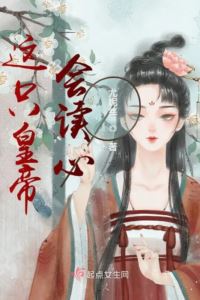
"The only people without inner thoughts were the dead!"
This line stopped me cold. It's the thematic key to the entire section. The Emperor's mind-reading ability represents the ultimate intrusion—no privacy, no authenticity, no safe space in a world where everyone is performing. Every consort's thoughts are noise to him, chaotic and meaningless. And then there's Wen Shi, whose silence is the one thing he can't penetrate. But here's the thing: her silence isn't emptiness. It's something else entirely. She's a transmigrator. She has thoughts, but they're in a different register—modern, foreign, possibly protected by whatever mechanism brought her to this body.
The veil Wen Shi wears is another symbol that keeps coming back to me. She arrives with a "faint pink veil" covering most of her face, with "mottled brown spots near the corners of her eyes" still visible. The disfigurement is both literal and metaphorical—it's the mark of the poisoning, yes, but it's also what makes her invisible in the harem's hierarchy. Fang Jieyu arrives first, beautifully dressed in crimson and gold, while Wen Shi is described as "like a green leaf meant to set off Fang Jieyu." The visual contrast is intentional. The pale, veiled, late-arriving consort versus the poised, early, brilliantly dressed rival. And yet, the one the Emperor CANNOT read is the one who appears weakest.
The setting itself—the Yi Nian Hall perpetually filled with agarwood scent, the octagonal lanterns, the cold palace of Eternal Lane—these all symbolize the trapped nature of the harem. Women are displayed, judged, confined, and discarded. The Emperor's ability to hear thoughts but not understand them mirrors his relationship with the entire harem system: he has power over everyone, but true understanding? That's impossible. Wen Shi's mental silence becomes the one genuine mystery in a world of loud, performative surfaces.