There’s a Beauty [Ancient Wear Modern] - Reviews

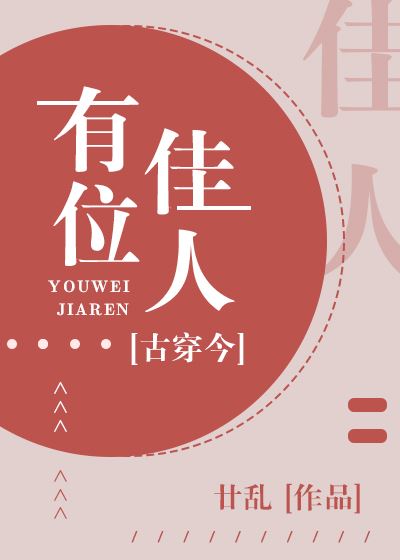
There’s a Beauty [Ancient Wear Modern]
+Add to Custom List
Sort
Add review
... Read More
I keep coming back to this concept woven through the entire chapter—the idea of being “in the midst of blessings and not knowing the blessings.” The translator even explicitly flags it with a note about 身在福中不知福, and honestly? It's the emotional spine of everything that happens. Shan Qihuan has Shen Yuhan, a loving husband, family dinners, intimacy, comfort—and yet he's quietly seething about a conversation regarding gardening and landscape architecture. Meanwhile, Shen Yuhan just got a beautiful jade Go board and made his first genuine friend, and he's lying there smiling like a child. The contrast is devastating in the best way. There's also this recurring motif of visibility and attention—Shan Qihuan staring at lips, Shen Yuhan's clear eyes, the “fatal angle” that reveals truth. Everyone in this scene is seeing and being seen, and the author keeps asking: what do we actually notice? What blessings slip past us while we're busy wanting something else? The jade board, the WeChat add, the warm room, the kiss—all of it is evidence that happiness is here, present, available. You just have to stop and notice it. Beautiful, quiet, devastating theme work.
... Read More
Okay I need to talk about this moment because it genuinely got to me. Shan Qihuan is sitting at this party, checking comments about Shen Yuhan's painting online, and his thoughts drift to... the future. Like, actually planning for a life with this person. He thinks about promoting Yifang Jushi as a brand, building something together. And then — and this is the part that wrecked me — he pictures them parting ways someday and just... gets gloomy. Drinks another mouthful of wine like he's trying to drown the thought. He even admits to himself: they have no common friends, no common career, no common hobbies. They're only together because his father decided it. 'Can it really last?' he asks himself. 'He himself thinks it's impossible.' This is the kind of raw honesty in romantic fiction that I live for. Not the dramatic confessions or the tearful goodbyes, but this quiet, private moment of doubt. He's a powerful, composed man who doesn't second-guess much, and here he is, alone at a party, genuinely afraid of losing someone before he's even fully admitted he wants to keep them. The fact that he was just thinking about them in his head moments before someone else tried to approach him, and Shen Yuhan's 'clean, clear, and bright eyes appeared in his mind' — that transition from anxiety to longing is everything.
... Read More
I keep coming back to the symbolism in these chapters, and I think the author is doing something really sophisticated here without even trying. Let's start with the knives. The auntie finds them 'tipped over'—this suggests chaos, disruption, violence. Knives are tools of creation and destruction. In Shen Yuhan's hands (or rather, the previous night's version of his hands), they became instruments of self-harm. And now at the end, Shan Qihuan has them all put away—not because he doesn't trust Shen Yuhan, but because he can't stand the thought of them being used against himself again. The knives represent both the danger Shen Yuhan poses to himself and Shan Qihuan's helplessness in stopping it. Then there's the nightmare sequence. Shen Yuhan dreams he's back in Qi Kingdom, calling for Mo Zhu, who ignores him and walks away. The path gets narrower and narrower until Mo Zhu disappears and bandits appear with big knives, shouting 'Beauty, don't run away, I'll take you back to be our eldest brother's wife!' This is deeply symbolic. Shen Yuhan is trapped between two worlds—literally dreaming of his old life while his body is in a new one—and both places feel threatening. The 'fortress' (山寨) in his dream is supposed to be a place of safety, but it's actually a place of capture and loss of autonomy. He doesn't want to be anyone's 'mistress of the fort.' He wants to be free. And the fever itself—38 degrees, a low-grade persistent fever—is almost a metaphor for the emotional heat between these two men. Something is burning inside Shen Yuhan, something he can't express in words, and it's manifesting physically. Shan Qihuan sees the fever but doesn't fully understand its source. He treats the symptom but not the cause. That's the tragedy here, isn't it? Until they can actually talk about what happened last night, nothing will really get better.
... Read More
I have to talk about the exhibition storyline because it ties together so many threads. The way the author structures this arc is brilliant. You start with what seems like a simple date—going to an art exhibition—but underneath, every scene is pulling double duty. The calligraphy scene isn't just romantic flavor; it's world-building that reveals Shen Yuhan's hidden depth. Then you have the transition to the exhibition itself, which becomes a space where old fears collide with new possibilities. What stood out to me was how the plot mirrors Shen Yuhan's internal journey. In his past life, a girl who went out at night was found dead in a moat—three days of searching, absolutely gruesome. That backstory isn't just tragedy for shock value; it explains why he checks for police signs, why he stays close to the driver, why he won't go to unfamiliar places. But then the modern setting enters: girls walking streets at night, security patrols, police stations nearby. The plot doesn't just show him attending an exhibition; it shows him stepping into safety while carrying trauma. And the author handles this without melodrama. It's restrained, which makes it hit harder. One line that stayed with me: "Shen Yuhan has always known his own position, what he should do and what he shouldn't do." That sentence carries entire worlds of restriction and self-control. The exhibition becomes a metaphor—they enter one hall, look at paintings, walk slowly together, and every moment is charged with the tension between his past and present. I think this is one of those arcs that rewards re-reading. On first pass, it feels like a sweet date scene. On second pass, you see the subtext everywhere: the scarf wrapping, the distance he keeps, the way he watches others but never stares. The plot builds something quietly enormous without ever raising its voice.
... Read More
Okay can we just talk about Shan Qihuan's internal monologue for a second because I am DEAD. He literally made a decision to go sleep in his own room to stop being possessed by his feelings—"鬼迷心窍"—the text itself acknowledges he lost his mind—and then ONE word from Shen Yuhan in pajamas, a glimpse of that bright red mole on his collarbone, and BOOM. Back in the same bed. He even admits it himself: "what a flirtatious little vixen." But the thing is, Shen Yuhan probably didn't even do it on purpose. He just stood there at the study door asking his husband if he wanted to rest, all soft and cute, and Shan Qihuan completely fell apart. The morning scene was equally devastating in its simplicity. Waking up and immediately being pulled into Shen Yuhan's arms, then Shen Yuhan's sleepy "Good morning, Husband" with those bright curious eyes, and Shan Qihuan just mumbling back while internally screaming about going back to his own room. The cycle is set. He will never win. And honestly? I don't even want him to. But what really got me was the shift in Shen Yuhan's mood when they went out. The first time he left, he was terrified—vigilant, panicking about the Taoist priests. The second time, dragged to a wedding, everything was a blur. But now? Everything is NEW. Every face, every sign, every golden retriever holding a stick—it's all fascinating to him. And the most touching part isn't even the wonder, it's that he points at a dog and says "Husband, look at that dog." He wants to SHARE it. He doesn't just experience the world, he wants his husband to experience it with him. That's not naive—that's love in its purest form.
... Read More
Okay so this scene with Shen Yuhan breaking down at Shan Qihuan's office absolutely wrecked me. Like, the way Shan Qihuan walks in and immediately assumes Shen Yuhan is scamming Uncle Li for money — the anger on his face, the darkening expression — and then that single line: "You have no money?" It just completely dismantles everything Shen Yuhan is trying to hold together. The description of him turning away, pressing his mouth, eyes going red... I felt like I was suffocating reading it. He wipes at his tears but they just keep falling and then BAM — the author drops this massive lore bomb: "He used to be very rich, he had a lot of dowry when he was in the Qi Kingdom!" THE HEIR TO THE QI KINGDOM reduced to borrowing 100 yuan from a driver. Who IS this person and what did they go through? And the fact that Shan Qihuan didn't even realize — he saw a guy asking a driver for cash and immediately jumped to scam, not wondering if this person he cares about was struggling. I need to know everything about the Qi Kingdom situation.
... Read More
Here's the thing about plot structure that most people miss: the wok question is the turning point of these chapters. Not the phone call. Not the romantic drama. The absolutely mundane, bizarre, hilarious question about whether they want to buy a wok. Let me explain why this matters. The phone call creates the conflict — Shen Yuhan feels inadequate. The journey home escalates it — he retreats into silence. They arrive at home and the tension is suffocating. Shen Yuhan is 'like a robot,' moving through motions, staring blankly at a silent TV. At this point, the story could go in a dozen directions: a big fight, a confession, a dramatic breakup conversation. Instead, Shan Qihuan asks about a WOK. And it works because it's TRUE to who these characters are. Shan Qihuan is practical, slightly oblivious, and clearly trying to bridge the gap without making it a Thing. He doesn't say 'I know you're upset, let's talk about our feelings.' He notices the TV is on a shopping channel and makes a joke. It's low-stakes, domestic, almost ridiculous — and that's exactly what disarms the tension. Shen Yuhan's response — 'You're not going out' — reveals everything. His first instinct isn't anger or sadness. It's relief. He's checking: is this man staying? Then when Shan Qihuan confirms he's not leaving, Shen Yuhan's eyes 'lit up a little.' Small detail, enormous emotional weight. What follows is the plot's emotional climax: Shen Yuhan asks to watch TV together. He explicitly wants to share an experience, to build intimacy through something simple. He doesn't say 'I'm insecure and I need reassurance.' He says 'accompany me to watch TV series.' This is how these two communicate — through actions, through shared space, through the mundane rituals of domestic life. The romantic drama on TV becomes a mirror for their own situation — two people navigating physical closeness, cultural differences, unspoken desires. When Shen Yuhan asks if the actors will suffocate, he's accidentally voicing his own fear: will we survive this? Will we be able to breathe in this relationship? The chapter ends with them still watching, still together, the wind still howling outside. The conflict isn't resolved — it's postponed, which is honestly more realistic and more tense. Because now we know what's underneath: insecurity, cultural displacement, the fear of not being enough. And the next chapter is going to hit different because of it.
... Read More
I need to just — I need a minute. The escalator scene. THE ESCALATOR SCENE. Shen Yuhan has NEVER ridden an escalator before??? And he's so terrified he almost falls and literally jumps into Shan Qihuan's arms??? And then he's holding onto his clothes like he's not going to let go??? I am DEAD. I am literally deceased. But what got me wasn't even the physical closeness — it was what happened AFTER. Shen Yuhan recovers, composes himself, and then whispers this tiny, trembling little thing: 'Husband, you just called me Xiao Han.' And Shan Qihuan's whole internal monologue where he's trying SO HARD not to be affected by this? The line 'being scratched by a cat' — oh my god, I was wheezing. And then Shen Yuhan says it again, smaller this time, 'it will make us appear closer.' That right there. That single sentence carries SO much emotional weight. This man who seems so confident in other situations is asking for something so small and basic from his husband. And Shan Qihuan feels it. He FEELS it and pretends he doesn't. The sexual tension in that entire exchange? INSANE. I literally had to put the phone down and stare at the wall.
... Read More
I've been thinking about the peace charm Shen Yuhan got for Shan Qihuan and how much meaning it carries in this context. On the surface, it's just a sweet gesture—a little token from a husband who wants his wife's safety and well-being, even from a distance. But placed right before this whole conspiracy unfolds, it takes on a different weight. Shen Yuhan literally wrapped something in peace and handed it to someone walking into a storm. The irony is almost unbearable in the best way. And then there's the phone itself as a symbol. This entire chapter hinges on technology bridging the gap between two people who can't be physically together. The camera becomes a mirror, a window, a lifeline. But it's also imperfect—Shen Yuhan is scared of accidentally turning it off, afraid of losing the connection. The phone is their tether, and tethers can snap. The hot search trending topic—#TheTriangleRelationshipBetweenShanQihuanAndShanQiyun#—is another kind of symbol. It represents how public perception can be weaponized. Names floating around on social media, people consuming drama without knowing the full story, reputations being shaped and reshaped by whatever narrative someone decides to push. That's not just plot device stuff. That's commentary on how visibility can be both a blessing and a trap. And then the smallest symbol that nearly broke me: "Honey, I miss you" followed by "Um, I don't miss you." Classic deflection. Shan Qihuan can't bring himself to say it back, but he promises to come home two days later. Actions over words. That's who he is. These little details—they're not accidental. They're the author weaving themes of distance, protection, and the cost of staying close to someone in a dangerous world.
... Read More
Shan Qixin is one of those characters who walks into a scene and instantly changes the energy. Listen to this exchange: "Hiss, Sister-in-law, your hand is really ruthless, you look at my back and see if it's bleeding, it hurts to death!" That line alone is enough to make me cackle. The way he groans and complains while being half-naked and covered in broom marks is peak comedic dialogue — it's so specific and vivid that I can hear the voice. And Shen Yuhan's deadpan responses are equally good: "Isn't this because I didn't know you were coming." No apology, just a factual statement delivered with zero drama. The author clearly has a knack for writing characters who sound distinct from each other. Even in translation, you can tell Shan Qixin has a very different personality from Shen Yuhan. One is all performative suffering, the other is all cold practicality. Their dynamic as siblings-in-law is going to be so fun to watch develop.
... Read More
There's a recurring theme here that's been building since earlier chapters and it finally crystallizes in this scene: the gap between what marriage is supposed to be and what it actually feels like for these two people. The wedding customs, the double happiness symbols, the dragon and phoenix embroidery — all of this represents the traditional expectation of a harmonious union. But inside that beautifully decorated room, you have a reborn Shen Yuhan who's reading short story advice books to figure out how to be attractive to his husband, and Shan Qihuan who entered this marriage purely to fulfill his father's wishes with zero emotional foundation. The symbols are loud and gold-embroidered, but the reality is these two people barely knowing how to exist together. Yet — and this is the beautiful part — the gap is closing. Shen Yuhan is trying. Shan Qihuan is noticing. The fact that Shan Qihuan 'doesn't like chatting with people for a long time without getting to the point' but somehow tolerates this entire awkward preamble from Shen Yuhan suggests that duty and genuine care might be slowly merging into something neither of them anticipated.
... Read More
What makes this chapter so tense isn't any dramatic event — it's the fact that everything important is happening underwater. The external stakes are minimal: a business trip, a recovery, a cold. But the internal stakes are enormous. Shen Yuhan has literally come back from the dead — this is 'hard-earned' rebirth, as the text says — and he's already contemplating suicide again. The illness is both real and symbolic: his body is healing, but his mind is still in the dangerous place. The conflict between him and Shan Qihuan isn't resolved. It can't be. They're in this strange liminal space where Shan Qihuan is trying to care and Shen Yuhan is too angry, too vulnerable, too exhausted to accept it gracefully. The stakes here are about trust — can they rebuild it? Can Shan Qihuan prove that his care isn't control? Can Shen Yuhan let himself be cared for without feeling defeated? The trip creates real tension because it tests everything. Seven days apart, two countries, video calls instead of presence. The author doesn't spell out what's at risk — we feel it. If they go a week without resolving this, will the distance harden into something permanent? And that balcony moment at the end — that's the highest stakes of all. Shen Yuhan wants to pretend he doesn't care, but he goes to the window anyway. The conflict isn't resolved; it's just become visible. And visibility is where healing begins.

Leave a comment

You must be logged in to leave comments. or
