Summary

... Read More
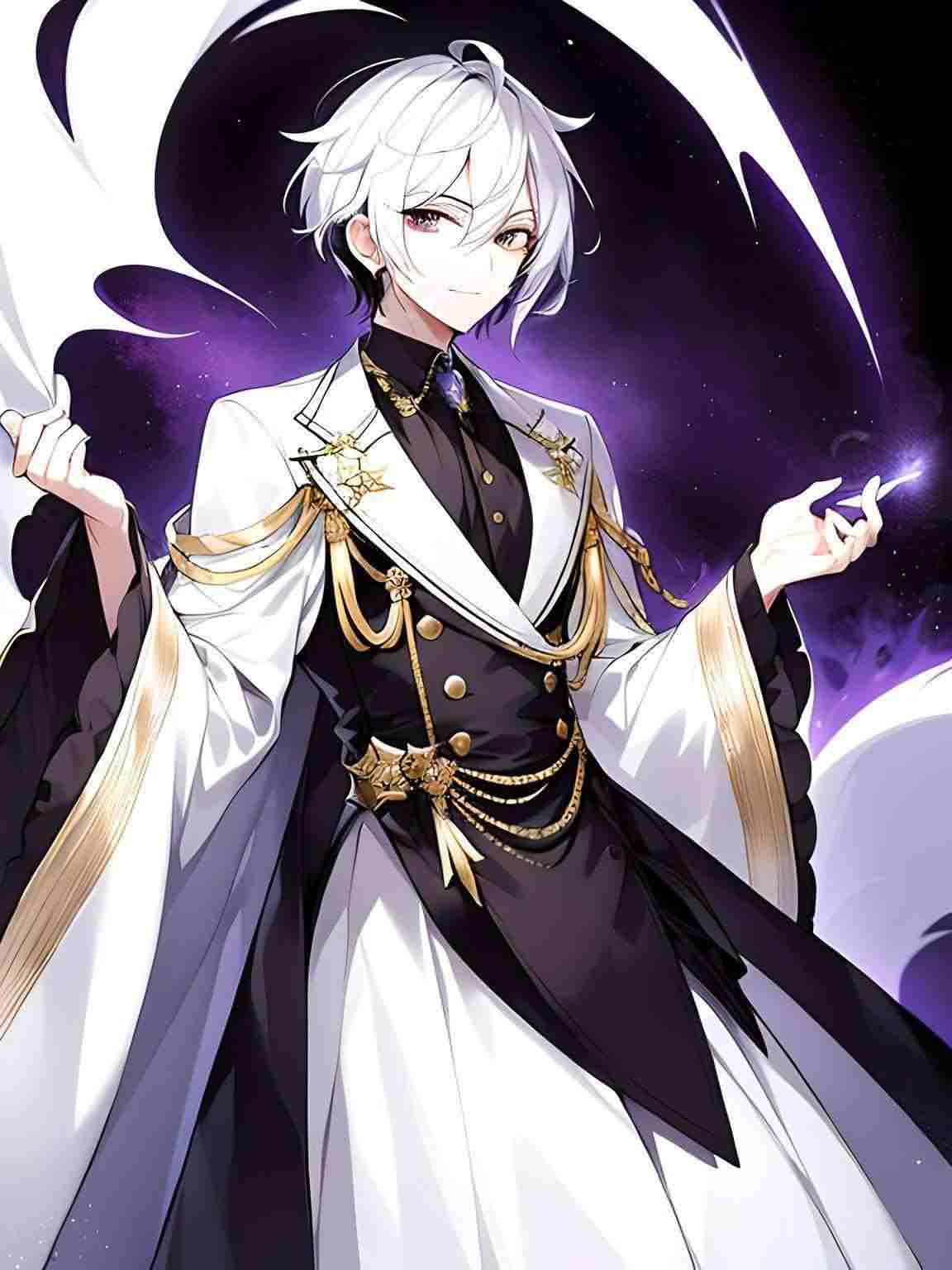
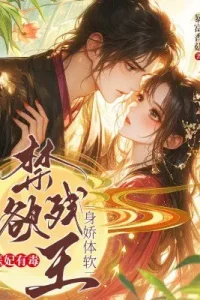
Shen Yuhan, the First Ger of Marquis of Zhongyong's mansion in Qi Kingdom, is forced into a political marriage with the ruler of Chu Kingdom to save his declining nation. During the wedding procession, bandits attack and the carriage plummets off a cliff. Shen Yuhan awakens in a modern hospital, having survived a drowning incident at a banquet hosted by the wealthy Shan family. He discovers he has transmigrated into the body of an identical man who shares his name—a rebellious young man with a history of public disorder.The original Shen Yuhan had caused a scene at the Shan family banquet by arguing with a wealthy woman over Shan Qiyun, the third wife's son, and fell into a swimming pool. The Shan family patriarch, Shan Tianfeng, had arranged for Shen Yuhan to marry Shan Qihuan, the first madam's third son, as a solution to settle the scandal. Duan Qiuhui, Shan Qiyun's mother, warns Shen Yuhan to abandon his pursuit of her son and accept the arrangement. Confining him in a suburban villa under surveillance, she hopes to isolate him before the wedding.Trapped in an unfamiliar modern world with no money and no knowledge of contemporary customs, Shen Yuhan adopts a strategy of quiet observation. He learns about television, mobile phones, and modern social norms by watching TV programs while his caretaker, Sister Jiao, monitors his every move. He notices that this world has no Gers—only men and women—which complicates his understanding of his new identity. Despite his initial shock, he adapts quickly, recognizing that survival depends on mastering this strange new environment.As the wedding approaches, Shen Yuhan undergoes transformations that mark his distance from the original owner of the body. He cuts his half-yellow, half-black hair to pure black, removing the flashy jewelry and earrings that defined the original Shen Yuhan's rebellious image. Designers from Youxian Studio fit him with wedding attire, and he accepts the arrangements with quiet compliance, observing the customs of modern same-sex marriage ceremonies.On the wedding day, complications arise when a young man attempts to smuggle Shen Yuhan away, claiming to represent Shan Qiyun. Shen Yuhan refuses, recognizing the danger of leaving with a stranger in a world where reputation carries severe consequences. In his flight, he collides with Shan Qihuan, who retrieves him and ensures the ceremony proceeds. Throughout the reception, Shen Yuhan maintains composure, showing no reaction when Shan Qiyun appears among the guests—a stark contrast to the original Shen Yuhan's obsessive behavior.The wedding proceeds smoothly, with Shan Qihuan guiding the hesitant Shen Yuhan through each ritual. After the ceremony, Shan Qihuan notices Shen Yuhan's refined manners and quiet dignity, finding him pleasing to observe. The two share a brief moment of comfort when Shen Yuhan asks for help opening a water bottle, a simple request that reveals his inexperience with modern conveniences. Following the celebration, Shan Qihuan leads Shen Yuhan home, establishing the beginning of their married life together.

Latest Release
DateGroupRelease
2026-09-26knoxt c15
2026-09-26knoxt c14
2026-09-26knoxt c13
2026-09-26knoxt c12
2026-09-26knoxt c11
2026-09-26knoxt c10
2026-09-26knoxt c9
2026-09-26knoxt c8
2026-09-26knoxt c7
2026-09-26knoxt c6
2026-09-26knoxt c5
2026-09-26knoxt c4

Community Reviews

Rating(4 / 5.0, 387votes)
5 stars
139(36%)
4 stars
126(33%)
3 stars
122(32%)
2 stars
0(0%)
1 stars
0(0%)

Popular reviews

... Read More
Okay, I need to just sit with this for a second because the way this chapter drops the 'Mo Zhu' reveal is actually kind of masterful in its restraint. No dramatic music, no confrontation — just Shen Yuhan murmuring a name in his sleep and Shan Qihuan's entire energy shifting. The author doesn't even make it a big deal in the moment. Shan Qihuan asks 'Who am I?' and gets 'Husband?' — and then what? He just... lets it go? For now. That's the plot hook that's going to explode later, I'm telling you. Also, the whole cafeteria sequence is such a quiet setup. Shen Yuhan wandering through this corporate world that's completely foreign to him, people taking photos of him like he's some celebrity, calling him 'the boss's wife' — it paints this picture of him being both adored and completely out of his depth. And then he flashes back to Qi Kingdom and compares takeout to what they had back then. Little worldbuilding threads everywhere. The structural choice to have this chapter end mid-thought — 'In fact, Shen Yuhan had just fallen asleep' — that cut-off is so deliberate. It feels like the author is saying: we're not done here. This unresolved tension is the whole point.
... Read More
There's something quietly devastating about how this passage handles the whole transmigration premise. We get used to the genre throwing protagonists into new worlds with quips and quick adaptation, but Shen Yuhan here feels the weight of every single day. He's not just physically displaced — his entire moral and cultural framework is alien to this environment. Modern people take openness and freedom for granted because they were born into it. For him, it's not liberation, it's a kind of existential exile. And the cruelest twist? He can't even go back. Death was the doorway once, but what if it doesn't work again? I keep coming back to one line that hits differently each time: "he has already died once, he doesn't care if he dies one more time." This isn't edgelord angst — it's the logic of a man who has lost his entire world and sees no bridge back. The modern setting isn't just backdrop; it's an active force of erasure. His family is dead. His name belongs to someone else. Even his grief is unauthorized in a world that moves on too fast. The recurring motif of doors and thresholds keeps showing up — the balcony door he opens at night, the threshold between worlds he crossed once and might cross again. Each one is a moment of decision, and right now every door leads somewhere he doesn't want to go. That's not just plot structure, that's philosophy. What makes this work is that the author never lets us forget the cost of the premise. Every beautiful thing about this modern world is filtered through his inability to belong in it. The freedom others enjoy is the very thing that isolates him.
... Read More
I am SO over Shan Qihuan's ability to suppress his emotions. Like, the man is a statue. 'Shan Qihuan has always been this kind of person, he does not show his emotions too much.' Read that and then WATCH him hold fire in his heart, literally unable to suppress it, shake Shen Yuhan awake, demand to know who he is — and then just... dissipate when Shen Yuhan calls him 'Husband' half-asleep? This man is suffering and he won't even let himself suffer properly. And the worst part? 'Forget it, he didn't have the right to care, there is still Shan Qiyun hanging around in front of him, it has nothing to do with him.' WHO IS SHAN QIYUN?! OKAY I need answers and I need them NOW. The text drops this name like it's nothing but my brain is already running wild. Is she a rival? A past love? A literal ghost from his history? The fact that her mere existence is cited as the reason Shan Qihuan can't pursue this jealousy tells me everything I need to know about the power dynamics in this relationship. Meanwhile Shen Yuhan is over here being adorably clueless — smiling at random female employees, getting lost in translation about takeout, falling asleep on his husband's bed like it's the most normal thing in the world. The contrast between his peaceful ignorance and Shan Qihuan's internal earthquake is both hilarious and heartbreaking.
... Read More
I want to talk about how the author uses physical space to tell the story. The bedroom in these chapters is everything. It's where Shen Yuhan curls up under a quilt like a turtle, where he cries alone, where Shan Qihuan enters and somehow makes the space feel different just by being in it. The image of Shan Qihuan pulling down the quilt—"You won't be able to breathe if you're smothered"—is both practical care and symbolic. The quilt is his barrier, his armor, and Shan Qihuan removes it without asking permission. Then the morning sequence: Shen Yuhan's forehead resting on Shan Qihuan's shoulder, warm breath on the neck, the tactile details are so specific they almost hurt. The author writes: "Shen Yuhan was a little afraid to move, Shan Qihuan's head was directly resting on Shen Yuhan's neck, and the warm breath blew on his neck, which was a little itchy." That word "itchy"—it's so ordinary, so imperfect, and it makes the whole scene feel REAL. This isn't a romance novel where everything is soft and golden. This is a body, a neck, an itch, a half-asleep tangle of limbs. The living room scene downstairs is painted in a completely different register—stiff, formal, full of social performance. Red envelopes. Polite formulas. The contrast between the bedroom (truth) and the living room (pretense) is the architectural spine of these chapters.
... Read More
Here's the thing that got me about this chapter—there's no explosion, no villain, no dramatic threat. And yet I was genuinely invested in whether Shen Yuhan would succeed or fail. Because the stakes here are SO personal. If he can't integrate, he's isolated. If he fails at this social moment, he might never feel like he belongs in this world at all. The text makes this clear when it says he entered his husband's life quietly, and that the gathering "narrowed the distance between the three of them." That narrowing IS the conflict resolution. Every successful interaction is a victory. Every moment of understanding is a triumph. And Shen Yuhan's internal stakes are even higher than we realize. He's not just trying to make friends—he's trying to prove to himself that he can navigate this modern world without losing who he is. The Lei cha offer is his gamble: if he shares his culture and they accept it, then maybe he doesn't have to choose between his past and his present. Wen Yan being immediately drawn to him raises the stakes further—now there's someone who sees him and likes what they see, which means Shen Yuhan has something to lose. He's not just surviving; he's starting to have real connections. And that makes everything riskier, more meaningful, more worth fighting for. The chapter ends on this note of growing stakes, and I was already desperate to see what happens when they actually get to taste the Lei cha.
... Read More
Okay so the tea room scene is JUST *chef's kiss* for atmosphere. You have these four people sitting around, and the whole setting feels so alive. Jiang Ruolin filling the teapot, Wen Yan pouring out old leaves and adding new ones—their steps are "quite random," which is such a specific, mundane detail that makes the whole scene feel REAL. This isn't some grand dramatic event; it's just four people having tea and catching up, and somehow that makes it feel MORE immersive. The contrast between Shen Yuhan's world and the modern setting is built into the very fabric of the scene. When he talks about Lei cha, it's not just dialogue—it's a cultural artifact being passed between two worlds. The narrator even goes into this little aside about how Lei cha is also a dish, comparing it to Japanese chazuke! That worldbuilding detail is SO satisfying because it grounds the fantasy element in real cultural practice. And the Old Master Jiang slipping out to play Go and then leaving space for the young people? That's such a specific Chinese family dynamic that just makes the whole environment feel lived-in. The elders do their thing, the young people get their moment. It's domestic, it's warm, it's exactly the kind of scene that makes you want to just sit in that tea room yourself.
See all reviews

Custom lists

See all custom Lists