The Words of the Number One - Reviews

The Words of the Number One
+Add to Custom List
Sort
Add review
... Read More
The dialogue in these chapters is ruthless in the best way. Let me start with Mo Xiao: 'Young Master Ji Yu's maid can only be touched by the young master. What type of thing are you considered?' That's not just a threat, that's a complete hierarchy lesson delivered in two sentences. And then her karma comeback is so sharp it deserves its own paragraph. But the line that wrecked me was Chu Shi's: 'I have already been fooling around with you for many years. Now I really don't want to be fooling around anymore.' Do you understand what she just did? She weaponized intimacy as an accusation in the middle of a crisis, and then immediately regretted it and pretended it slipped out. The narration says 'enriched meaning' which is such a polite way of describing emotional arson. And the narrator's voice throughout—so flat, so controlled—even when saying things like 'I smiled, but there were no great waves in my heart,' you can feel the effort it takes to sound that calm. The author's narrative tone is almost clinical, which makes the moments where characters lose control hit even harder. Every line of dialogue here is carrying at least two meanings, and usually three.
... Read More
"If you really believe in karma, then why don't you believe that what happened to your young madam is heaven's karma?" This line from Mo Xiao completely changed how I see her. She originally disliked the narrator, right? But here she is stepping in to take a blow meant for someone else, and then twisting the maid's own logic against her. That's not just cleverness, that's a shift in allegiance that feels earned. And then her follow-up—'Even I almost believed that sincere and guilty look of yours'—is equal parts impressed and unsettled. She's studying the narrator like they're a puzzle she can't solve. The line about whether the narrator would shed blood if pricked? That's the kind of question someone asks when they're trying to figure out if another person is real or some kind of weapon. Meanwhile, Su Cheng watching Ji Yu with that softness in her eyes—'maybe when a girl likes someone, she becomes soft and tender'—it's such a quiet observation that hits harder than any dramatic confession. Even Nan Su saying 'Then forget it' and walking away instead of being told a secret says everything about her integrity. These side characters are doing more emotional work than half the main cast.
... Read More
I keep coming back to the imagery of invisibility in these chapters. The narrator is literally disguised as a maid—ignored, underestimated, which is exactly how she operates. She says she hopes someday to just “brush past” the person she likes, unrecognized. And Ji Yu's maids are all chosen for how they make people feel at ease, how they neutralize suspicion. Zi Kou's innocence is a weapon. Princess Zhaoyuan is dead but her absence structures everything—the power vacuum, the concubines fighting, the Xiang clan's political positioning. Three queens and two generals produced by the Xiang ancestors, and now the current generation is holding onto power through marriage and military rank while women in the household fight over children and status. The narrator observes all of this from within but outside of it. There's also the spy motif—someone hidden in plain sight, watching, reporting. Isn't that what every maid in this house is? Isn't that what the narrator is doing right now? The story keeps asking: who is watching whom, and who has the power in that dynamic? The moonlight scene with Zi Kou feels almost sacred in its honesty—two women admitting they are unseen and unloved, finding temporary solidarity. But even that moment gets framed by the narrator's realization that she's been hired to manipulate information through someone “easy to control.” The symbolism is suffocating and beautiful.
... Read More
Okay so I need to talk about that final scene because I am STILL processing it. Zhang Shi is on her knees, crying, accusing the second young lady of falling into the water, and she literally points at the narrator saying "You saw me leave—testify for me!" And the narrator just... lies. Right to her face. "I have never seen you before." Like, bro, this woman is about to take the fall for something she didn't do, and we all know it. What makes this so good is how the author builds up to it across these four chapters. You've got the fireworks festival setup—everything seems festive and elegant—but underneath there's this poisonous undercurrent. Su Cheng getting seated far from Ji Yu despite how obviously she's crushing on him. The servants whispering they're "well-matched." The second young lady mysteriously falling into water the very next day. It all connects, and the tension just keeps mounting until that moment where the narrator has to choose between truth and loyalty to Ji Yu. And the plot structure here is so clever because we're getting multiple layers of conspiracy simultaneously. Ji Yu is investigating someone close to Shaoya—that's a whole separate thread we haven't fully seen yet. The political tension with the prime minister obstructing him is background noise that's probably going to explode later. And now Zhang Shi is framed, which means the Hou Mansion is full of snakes. Every subplot is feeding into each other like dominoes. The pacing between chapters 27 and 30 is excellent too. It starts slow with the fireworks scene—basically one long atmospheric set piece—and then BOOM, the next day everything collapses into conflict. The author knows exactly when to let the reader breathe and when to slam the door in their face. I stayed up way too late finishing these chapters. What happens next?! Is the narrator going to feel guilty about lying? Will someone discover the truth? Who pushed the second young lady???
... Read More
The stakes in these chapters keep escalating and I am genuinely on the edge of my seat. Let me break down what is actually at risk here, because it is way more than just a girl trying to survive as a maid. On the personal level: the female lead has no family, no kingdom, no real skills on display, and she is surrounded by people who could destroy her with a single word. Mo Xiao has already labeled her a threat before doing anything. That is dangerous. Zichen is curious about her — curiosity in this world can be a weapon or a lifeline, depending on who wields it. On the political level: the Fan Kingdom is divided. The prime minister wants peace. Xiang Shaoya wants war. The monarch has not decided. Ji Yu is navigating between these forces and the female lead is caught in the middle of it. When Ji Yu says "The key to sending troops out lies in the Monarch of the Fan Kingdom," he is basically telling her that their survival depends on a decision that has not been made yet. And the external threat? The opening lines tell us that another kingdom will come to attack eventually. Destruction is inevitable. So the real question is not whether the world will end — it is who will be standing when it does, and who will be left behind. "If one really wants to complain about it, then they are only blaming my father for not being good at ruling his kingdom." She says this with such terrible calm. Her life, her freedom, her entire future — all of it hangs on whether men in purple silk robes can outmaneuver each other. And she knows it. That is the most terrifying kind of stake because she is powerless to change it, yet she refuses to be paralyzed by fear either.
... Read More
Let me just start with this exchange because it's the kind of dialogue that made me stop reading and stare at the wall for a full ten minutes: "Ah, gentle, I also like warm-hearted men. He was so gentle towards you because he probably likes you too!" Zi Kou. What a character. She's loud, she's impatient, she wants romance and she wants it now and she cannot understand why her friend is being deliberately obtuse about something so obvious. And the narrator's response? "He is a gentle person so naturally he would be gentle towards anyone, and it is not because there is something special about me." Followed by: What's so special about me? This is not modesty. This is someone who has built an entire identity around being inadequate, and the moment someone suggests she might be special, she deflects so hard it becomes tragic. She can't accept kindness as directed at her. She has to explain it away as general benevolence. And then later, the A Yao flashback dialogue. The man who appears for three days and changes everything says exactly one line that matters, and it's delivered with devastating simplicity: "If you can love yourself well, then doesn't this mean that there is someone in this world who loves you? To you, you are the most precious person in the world." Not poetic. Not elaborate. Just a statement of fact, delivered like he's telling her the sky is blue. And yet it's the most revolutionary thing she's ever heard. The other voices in this passage are equally distinct. Ling Shang is energetic, practical, already taking care of Ji Yu's clothes with the ease of someone who has done this a thousand times. Xia Wan is softer, nostalgic—she keeps childhood clothes because she's afraid of forgetting what he looked like young. Even the political exposition has voice: the narrator describing Ji Yu's machinations with a dry, almost admiring tone. She doesn't fully understand what he did, but she recognizes the elegance of it. "Everything was one by one arranged properly, and after triggering them, he is able to attain the best results." Every character speaks like a real person. No one sounds like the author's mouthpiece. That's rare.
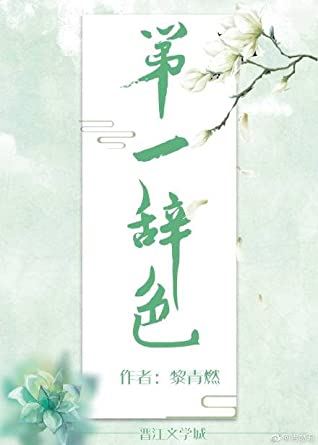
... Read More
I need to talk about this scene. Just this one paragraph. The narrator and Zi Kou in bed, moonlight on her hair, and the narrator says— 'I have before.' 'There used to be someone that I really really liked, but it's just that my liking has nothing to do with love.' And then she goes on to describe this person she hopes to meet someday, someone who doesn't recognize her, so they can just “brush past each other.” That's it. That's all she gives us. And I am OBSESSED. What is her history? Who is this person? The tragedy isn't that she lost them—it's that she might see them again and choose NOT to reveal herself. She wants him to be living well, even if that means she remains invisible to him. Meanwhile Zi Kou is just this bright-eyed sixteen-year-old saying “except for young master, I have never really liked anyone else” and the narrator's response hits differently because we know her answer is infinitely more complicated. The narrator's line “the people I like don't like me back” is delivered so casually but it carries so much weight. And then she tells Zi Kou: since no one likes you, you don't need to like anyone. You may be despised, trampled on, harmed—but you will never be deeply hurt. That's not wisdom. That's trauma talking. And I just—my heart broke a little for both of them.
... Read More
The pacing in this batch is doing something I can't stop thinking about. It opens with immediate physical conflict—Zhang Shi grabbing the narrator, the old madam intervening—and then you'd expect a big resolution, right? Instead, the narrator just... apologizes and leaves. That refusal to dramatize the confrontation is so deliberate. It forces you to sit with the aftermath instead of the event. Then we cut to Mo Xiao defending the narrator, which gives us a brief high point, and then—bam—we're suddenly in reflective mode with Su Cheng watching Ji Yu, and then Zichen's investigation results come rolling in, and then the He Xin confession scene explodes everything open, and it ends on Zichen's backstory that gets cut off mid-sentence. That ending is a masterclass in withholding. The author just drops us into Zichen's past and stops. No resolution, no comfort, just the beginning of a revelation that we'll have to wait for. The middle sections where the narrator spends time observing rather than acting might feel slow on a first read, but they're doing essential work—establishing the emotional baseline so when the He Xin bomb drops, it actually shatters something. The structure here trusts the reader to hold multiple threads at once.
... Read More
Okay so first of all — this opening sequence is GENIUS and I am shook. Let me unpack why. On the surface, we're watching what looks like a political marriage: the monarch of Song finally wins after conquering three kingdoms and marries the infamous beauty of the age, Jiang Qiqi. But EVERYTHING about this setup screams "this is not what it seems." The opening line alone sets the tone perfectly: "On the eighth day of June, it is suitable for marriage." It reads like an almanac entry, almost cheerful — completely at odds with the funeral-vibe energy underneath. Then we learn Qiqi is the widow of the destroyed Qi Kingdom. She didn't marry for love. She married because this was her revenge platform. She was planning to die on that wedding day. "This marriage is not going to happen anyways." That line hit me like a truck. The narrator — Qiqi's sister, Jiujiu — is the one who actually orchestrated everything. While Qiqi was prepared to burn herself to ashes, Jiujiu had another plan. A plan where they BOTH live. And then the assassination happens. A guard throws himself at the monarch, cuts his own throat after the kill — it's over in seconds. Blood sprays everywhere while the celebratory drums keep playing. THE ABSURDITY OF IT. The narrator's calm whisper to Qiqi — "The fourth kingdom that destroyed the Qi Kingdom has perished" — reveals the true depth of the plot. Li Yan, the prince, also didn't participate in the war. He loves Qiqi. The whole thing was designed so that in the chaos, Qiqi could be saved and Li Yan could seize the throne. But wait — the narrator steps forward as the sacrificial lamb when Li Yan orders Qiqi to be dragged away. And THEN Ji Yu appears and claims HER instead. Who IS this guy? A wandering strategist from the fallen Zhou dynasty who's caused more wars than he's prevented, and he just walks into the most dangerous room in the world and rescues a nobody maid? Something HUGE is going on here, and I need to know what. The plot structure here is a masterclass in misdirection. What looked like a revenge tragedy became a carefully choreographed escape. But Ji Yu's entrance completely rewrites the board. I have SO many questions.
... Read More
I need to talk about the visual storytelling because this author is not playing. The dark purple silk embroidered with inwardly flowing cloud patterns on Ji Yu's clothes? The cyan fabrics that somehow match the new A'zhi better than her old identity matched her? These color choices aren't accidental. The whole palette feels intentional - cold blues and purples dominating while warmth appears only in fleeting moments. The royal palace scene at sunset is gorgeous: "As the sun set, the vast royal palace was dyed with a golden red color, as alluring as an immortal's palace, that is the place that everyone yearns for." But she looks at it one last time and walks away. That single glance contains more resignation than pages of internal monologue ever could. Then there's the boat. Oh god, the boat. The transition from land to sea is handled so well - first the dizziness, the vomiting, the humiliation of sliding to the deck floor while Ji Yu watches with irritation. "Clean yourself up, there is sour plum soup in the kitchen." Three sentences. No kindness, no cruelty, just practicality. And somehow that's worse than if he'd been mean. The shops feel vivid too - the satin store, the rouge shop, the jewelry shop. Everything custom-made. The economic detail about Ji Yu being wealthy from trade between nations grounds this fantasy world in real commerce. You can feel the weight of those fabrics, the expense of those transactions. This isn't just backdrop, it's active worldbuilding.
... Read More
Okay so this whole He Xin thing is where everything starts to click into place, and honestly it is so well layered. On the surface it looks like a simple maid scandal—someone is leaking secrets to the Prime Minister's guards—but the second Chu Shi says 'I trust He Xin' you realize this isn't just about espionage, it's about loyalty, about who gets to be protected and who gets sacrificed. And then she drops 'I have already been fooling around with you for many years' and the entire power dynamic between her and Xiang Shaoya flips on its head. You go from thinking she's just a spurned lover to realizing there are years of tangled history neither of them will admit to out loud. The narrator picking up on all of this through Zichen is brilliant too—she's not just along for the ride, she's actively connecting dots. The subplot about her asking Zichen to investigate someone ties back to her own hidden agenda, which means everyone in this story is playing at least two games at once. How many more secrets is Zichen holding that we haven't even glimpsed yet?
... Read More
What are the stakes here? On the surface, a woman tries to jump off a boat and gets saved. Easy. But look closer and everything is layered with danger. The protagonist could have let her go. She HAD the woman's hand. She could have just... let go. And instead she shouted for help, held on until her arm was bleeding, and pulled her back from the edge. Why? That question is the whole story. Nan Huaijun owes her now. In a world where favor and obligation are currency, that's huge. But it's also dangerous — it puts her in his debt's orbit, and he's married to a princess whose kingdom attacked hers. Complicating matters further, Ji Yu is watching her every move, already suspicious, already wondering what she's capable of. When he says 'I didn't expect that you would also have such moments of excitement,' he's not complimenting her. He's recalibrating his assessment of her. The stakes get higher when you consider her backstory. She survived the fall of her kingdom at sixteen. She watched her father murder her mother and hang himself. She played the heartless survivor for five years because having emotions meant dying. And now here she is, twenty-one, pretending to be a maid, in the service of someone (Ji Yu) she may or may not trust, surrounded by people whose kingdoms destroyed her home. And yet — she held that woman's hand. She chose to save someone who wanted to die. What does that say about her? That she's still capable of choice? That she hasn't completely closed off? Or that saving this particular woman — the wife of the man who broke his engagement to her, the princess of an enemy kingdom — is somehow significant in a way she won't admit out loud? The suspense isn't about whether she'll survive. She's survived five years. The suspense is about what she'll DO with her survival. And who she'll bring down with her.

Leave a comment

You must be logged in to leave comments. or
