Summary

... Read More

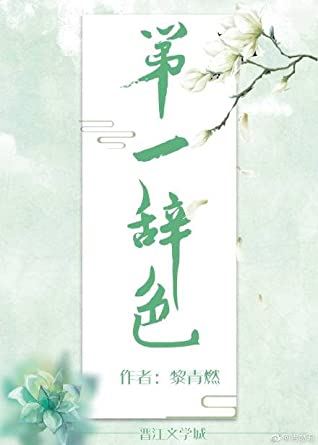
Jiang Jiuqing serves as the devoted elder sister and chief advisor to her younger sibling, Jiang Qiqi, the renowned beauty of the fallen Qi Kingdom. For five years, Jiuqing orchestrates a complex web of manipulation behind the scenes, guiding Qiqi’s actions as she seeks vengeance against the four kingdoms that destroyed their homeland. The narrative begins at the wedding of Qiqi to Li Yan, the new monarch of the Song Kingdom, an event intended to symbolize the final triumph of the Song over its rivals. However, the ceremony is shattered when Li Yan’s father, the former king, is assassinated by a guard loyal to the prince. Li Yan seizes the throne, but in a move to placate the gathered envoys and the public, he condemns Qiqi as the source of calamity and orders her execution. Jiuqing calmly accepts her own impending death alongside her sister, viewing their sacrifice as the necessary conclusion to their long campaign.

At the critical moment, Ji Yu, a mysterious and influential itinerant political strategist of noble Zhou blood, intervenes. He requests Qiqi’s maid, Jiuqing, for himself, effectively saving her life but stripping her of her identity. Under the threat of a slow-acting poison for which Ji Yu holds the only antidote, Jiuqing accepts her role as a maid named A’zhi. She leaves Qiqi behind, who remains in the Song palace as a captive concubine, while Jiuqing departs with Ji Yu on a river journey toward the Fan Kingdom. Ji Yu reveals that he has long suspected Jiuqing to be the true mastermind behind the destruction of the four kingdoms, recognizing her strategic brilliance beneath her modest appearance. Their relationship is defined by mutual calculation and hidden agendas, with Ji Yu employing her intellect while maintaining firm control through his threat of death.

During the voyage, Jiuqing’s past and detached philosophy are revealed. She explains that she never harbored resentment toward the fall of the Qi Kingdom, viewing it as an inevitable consequence of her father’s poor governance. Her primary motivation has always been survival, not revenge, a stance that distinguishes her from the emotionally driven Qiqi. Upon reaching the Fan Kingdom, Ji Yu engages with the local warlord, Xiang Shaoya, who is embroiled in a political struggle with the prime minister over whether to send troops to aid the besieged Yu Kingdom. Ji Yu tasks A’zhi with identifying a spy within Xiang Shaoya’s residence who is leaking information to the prime minister.

Jiuqing navigates the intricate social hierarchy of the Xiang mansion, dealing with the rival factions of the general’s wives, Zhang Shi and Chu Shi. She utilizes her observational skills and psychological insight to interrogate suspects and manipulate domestic tensions. Simultaneously, she interacts with Zichen, Xiang Shaoya’s deputy, uncovering deeper personal histories and loyalties. The investigation leads her to suspect Chu Shi’s maid, He Xin, who is involved with an imperial guard but denies espionage. As Jiuqing delves deeper into the conspiracy, she also encounters Su Cheng, the proud Jade Princess of the Fan Kingdom, who develops an interest in Ji Yu. The story follows Jiuqing’s adaptation to her new role, her covert intelligence work, and the evolving dynamics between her, Ji Yu, and the various political players in the Fan Kingdom, all while she conceals her true identity as the Ninth Princess of Qi.

Latest Release
DateGroupRelease
2026-09-26knoxt c10
2026-09-26knoxt c9
2026-09-26knoxt c8
2026-09-26knoxt c7
2026-09-26knoxt c6
2026-09-26knoxt c5
2026-09-26knoxt c4
2026-09-26knoxt c3
2026-09-26knoxt c2
2026-09-26knoxt c1

Community Reviews

Rating(4.1 / 5.0, 75votes)
5 stars
27(36%)
4 stars
27(36%)
3 stars
21(28%)
2 stars
0(0%)
1 stars
0(0%)

Popular reviews

... Read More
Okay so let me just say—Zi Kou is one of those characters who seems like background decoration but actually reveals SO much about Ji Yu. The narrator's observations about her are chilling in hindsight. If all eight maids were mature and steady, people would be suspicious. Her innocence ‘neutralizes this profound mystery, letting people be at ease.' That's not an accident. Ji Yu SELECTED her like a chess piece. And then there's this line: she ‘extremely admires Ji Yu, and could not be any better to control.' My stomach dropped when I read that. This man isn't just running a household—he's engineering loyalty. Meanwhile, the narrator herself is being used as another piece in some larger game, sent to investigate a spy while pretending to be just a maid. She says it straight: 'I am nothing more than just a maid.' But we both know she's playing a far more dangerous role. And the way she watches Zi Kou blush over Zichen? There's warmth there, real affection, but underneath it, the narrator always seems to be calculating. I keep wondering what kind of person she was before all this. Because that conversation with Zi Kou about liking someone—who they liked before, whether anyone really liked them back—that felt unguarded. Rare.
... Read More
What I love about this batch is how the political intrigue and domestic chaos literally collide. You have the prime minister actively preventing the narrator from seeing the Monarch because of 'poor health'—which is clearly a excuse. There's a spy inside Xiang Shaoya's residence, and every time he thinks he has a plan, the prime minister is one step ahead. But here's where it gets juicy: the narrator shows up and immediately suspects it's not even a servant. ‘Perhaps it is not a servant either?' And then BOOM—interrupted by a full-blown quarrel between Chu Shi and Zhang Shi, with the youngest daughter crying in the middle of it all. Two concubines, one without a wife (Princess Zhaoyuan died five years ago), a mother residing in the house, and now a spy who might be walking among them. The stakes keep rising because every layer you peel back reveals another threat. And the narrator? She's walking into this with nothing but her wits and a title she doesn't really hold. Zichen helps her understand the dynamics—Housekeeper Xu won't investigate because he'd have to alert the old madam, and he's too protective of his own people to believe there's a problem. Classic blind spot. I'm genuinely on the edge of my seat wondering who the spy is and whether the narrator will survive this investigation alive.
... Read More
I don't know if I've ever read a narrator this self-aware and simultaneously unreliable. The way they narrate is just *different*. They'll drop something like "A secret and ambiguous atmosphere is the most sultry" as if they're stating a scientific fact, then immediately undercut it with "and it loses effectiveness when it is seen through." This person is commentating on their own life like they're watching a drama, and I am HERE for it. The dialogue between the narrator and Ji Yu is some of the sharpest I've read. Look at this exchange: "Even better looking than fireworks?" "Fireworks are dead, how can it be compared to a living person?" On the surface it's flirtatious banter, but the narrator immediately follows up with: "These were my sincere and honest words. I always knew that he was good-looking." And then Ji Yu turns it around by saying the narrator doesn't actually mean it. The push-and-pull is incredible. Neither of them says what they really mean, but everything is being said. The narration itself has this wonderful detached quality mixed with moments of genuine emotional rawness. Most of the time the narrator observes like a camera, reporting gossip, describing scenes, analyzing motivations. But then they'll slip and reveal something personal—like the fireworks trauma, or their mother dying during those three nights of celebrations. Those moments hit so much harder because they come out of nowhere, completely unguarded. And the author's narrative voice! There's this running motif where the narrator keeps repeating phrases like "a secret and ambiguous atmosphere" almost like a mantra, as if they're trying to convince themselves of something. It gives the whole thing this dreamlike quality, like we're inside someone's head who's processing emotions they can't quite name. The servants gossiping about Ji Yu and Su Cheng being "well-matched" is such a nice touch too—it shows how the world perceives them versus how they actually are. The contrast between public perception and private reality is a recurring technique the author uses, and it works beautifully.
... Read More
The dialogue in these chapters is chef's kiss. I love how every single exchange between Ji Yu and the female lead operates on two levels simultaneously. On the surface they are discussing freedom, survival, and chess. Underneath they are negotiating power, trust, and something neither of them will name yet. Take this exchange: "That day, I bribed the soldiers, and also buried some valuables and money outside the palace." / "You have taken away my freedom, but have also provided me with delicious food and beautiful clothing. This is fair business so why would I resent you?" She calls it a business transaction. He calls her interesting and strange. Both are deflection. Both are testing the waters. Neither is being honest about what they actually feel. And the supporting characters have such distinct voices too. Mo Xiao is sharp and cutting — "How long do you think your little cleverness can last?" That is not a question. That is a threat wrapped in polite words. Zichen on the other hand is warm and curious — his dialogue is lighter, almost playful. "I have seen many young women from the Qi Kingdom, and all are very tall and thin like Young Lady A'zhi." Such a casual, friendly observation that contrasts beautifully with the tense political undertones. Even Ji Yu's conversation with Xiang Shaoya at the banquet is layered with unspoken meaning. They toast each other while the real negotiation happens in glances and silence. The author understands that in this world, what is NOT said matters more than what is.
... Read More
The structure of these chapters is really doing heavy lifting. You have the confrontation scene — high stakes, intellectual sparring, threats hanging in the air like swords — and then BAM, you're in Zi Kou's bedroom with her sniffling on a bed. The pivot is so sudden it almost catches you off guard, but it works because the emotional temperature drops precisely when you need it to. First you're on the edge of your seat wondering if A'Zhi is going to get killed, then you're sitting quietly with a broken girl. That rhythm — tension followed by tenderness — is exactly what keeps me turning pages. And then within the quiet scene, the author drops the A Yao flashback like a second emotional bomb. You think you've had your fill of heartbreak and suddenly there's this entire backstory about a tone-deaf girl and a patient music teacher, and it reframes everything A'Zhi is. The pacing also does something clever with Zichen's negotiation — Ji Yu's line about pushing the boat along the water comes in at just the right moment, explaining their strategy without slowing the scene down. It's exposition disguised as character voice. Every structural choice here serves the story. No drag, no rushing, just the right amount of space given to each emotional beat.
... Read More
Don't slander me. Do you have any evidence?" Cold, sharp, perfectly defensive. Zichen sounds exactly like someone who's spent his whole life wearing masks and is now being cornered — his words are weapons, short and pointed. But then A'Zhi's voice completely eclipses him. "You don't have to think about killing me to keep this secret, Young Master Ji Yu also knows." That's not a threat, it's a statement of fact delivered with terrifying calm. She's not playing games with him anymore — she's operating on a level he can't counter. And the negotiation scene? "What do you want?" He finally asks, stripped of all his pretense. That moment when a proud, careful man admits he's been checked is everything. Their dialogue throughout feels like two people playing chess where only one knows the rules. But then the voice shifts entirely in the Zi Kou scene, and it's so different — softer, slower, almost dreamlike. "Sister A'Zhi, as for your former sweetheart, why did you like him?" Simple questions, simple language, but underneath every word is this vast sadness. The author's narrative voice itself changes depending on the emotional register. When it's confrontation, it's sharp and clipped. When it's grief, it stretches out and breathes. I love how natural it all feels — no one sounds like they're reciting lines, they sound like people thinking out loud.
See all reviews

Custom lists

See all custom Lists