Summary

... Read More

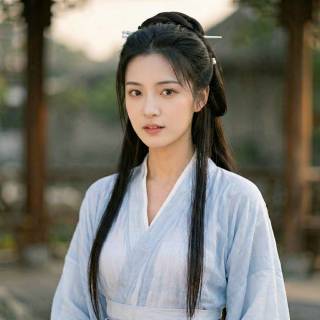
Nan Liujing is a young woman of fragile health and enigmatic origins, currently living as the fifth daughter of the declining Nan family in the capital of Jiandu. She is engaged to Pei Liuyu, the gentle and naive seventh son of the powerful Pei clan, who rescued her two years prior after she was found gravely injured in the wilderness with no memory of her past. While Pei Liuyu believes she is a victim of circumstance, Nan Liujing harbors a dark secret: she is actually Liu Tao, a former "Medicine Slave" of the reclusive and sinister Xi family, a clan of state preceptors who experimented on slaves by feeding them alternating poisons and antidotes to create living antidotes. Her current frailty is the result of this lifelong poisoning, and she relies on the wandering physician Jiang Ziliu to manage the toxins in her body.

The central conflict arises from the return of Pei Liuyu’s elder brother, Pei Songjun, the current head of the Pei family. Pei Songjun is a cold, calculating, and ruthless figure who recognizes Nan Liujing not as the frail Nan Liujing, but as Liu Tao, the maid who once attempted to poison him with "Xuhou Wine" during a banquet years ago. In her dream-like memory, Nan Liujing had forced the wine down his throat to save herself and other maids from execution, an act of defiance that Pei Songjun has never forgotten. Upon her return, he confronts her privately, revealing that he knows her true identity and demanding she sever all ties with Pei Liuyu, threatening to expose her criminal past if she insists on the marriage.

Simultaneously, Nan Liujing finds herself entangled with Xiao Lingguang, the formidable eldest master of the Xiao family and a hero of the recent rebellion. Xiao Lingguang is initially hostile toward her, viewing her as an intruder and a threat to his friend Pei Liuyu. However, after saving her from assassins in the southern city, a complex dynamic emerges between them. Xiao Lingguang is fiercely protective yet emotionally distant, harboring his own painful history regarding love and betrayal. He warns Nan Liujing that Pei Songjun is dangerous and that her presence threatens to destabilize the delicate peace Pei Liuyu has fought to maintain.

The narrative deepens as Nan Liujing discovers that her life is in constant jeopardy from multiple sides. The Xi family, her former masters, are hunting for her escape, and Jiang Ziliu is attacked while searching for a rare herb called Jade Marrow Grass, the only known cure for her poisoning. The herb is held by the Imperial Medical Bureau, placing her survival in the hands of the very political powers that oppose her. Meanwhile, Princess Shou’an, Helan Ying, a rival noblewoman with designs on Pei Liuyu, orchestrates public humiliations and schemes to drive a wedge between Nan Liujing and her fiancé, exploiting the rumors surrounding Nan Liujing’s dubious background.

As the story progresses, Nan Liujing is forced to navigate a treacherous web of court politics, familial duty, and hidden identities. She must conceal her past from Pei Liuyu to protect his innocence and her own life, while simultaneously dealing with Pei Songjun’s psychological warfare and Xiao Lingguang’s volatile protection. The core tension lies in her struggle to survive her poisoning and the relentless pursuit of her past, all while the marriage to Pei Liuyu hangs by a thread, threatened by the ruthless authority of Pei Songjun and the dangerous secrets of the Xi clan that refuse to stay buried.

Novel Items

More
Talismans
A protective talisman created by Guan Xuxu, placed at her former home in the Guan family. It prevents ordinary yin specters from approaching casually. Guan Xuxu warns Bai Shuqin to stay home because without the talisman's protection, she is vulnerable to yin specters.
Container
A purse containing copper coins and two small pieces of broken silver, emptied onto the table showing the five taels earned from selling fifty pastries.
Item
A letter tube delivered to Nan Liujing through the back gate of her courtyard. It contains a note with Pei Liuyu's elegant handwriting inviting her to tour North Lake together at the third quarter of the Hour of the Rooster. A faint floral scent drifts from the note.
Weapons
A weapon chosen by Pei Nai from Zhang Ming's arsenal, which also included a sword, dagger, and three throwing knives. She fastened it to her waist for protection in the underground palace.
Musical Instrument
A precious zither acquired by Su Nianci from an overseas merchant. It had been passed down through generations in the merchant's family. Su Nianci used every trick to convince the merchant to sell it, noting that the merchant's generation were all merchants with no one skilled in the art of the zither. Given as a gift to Su Nianqing, who is famously fond of zithers.
Pet
A black cat with snow-white paws belonging to Nan Liujing. It betrayed its master by bonding with Pei Songjun, playing with his jade-handled duster and ignoring Nan Liujing's calls. Nan Liujing internally despises it as a treacherous beast that sold out its master for glory.
Latest Release
DateGroupRelease
2026-08-11shanghai fantasy c10
2026-08-11shanghai fantasy c9
2026-08-11shanghai fantasy c8
2026-08-11shanghai fantasy c7
2026-08-11shanghai fantasy c6
2026-08-11shanghai fantasy c5
2026-08-11shanghai fantasy c4
2026-08-11shanghai fantasy c3
2026-08-11shanghai fantasy c2
2026-08-11shanghai fantasy c1

Community Reviews

Rating(4.1 / 5.0, 17votes)
5 stars
7(41%)
4 stars
4(24%)
3 stars
6(35%)
2 stars
0(0%)
1 stars
0(0%)

Popular reviews

... Read More
There's this one line that keeps echoing in my head: "Her heart felt hollow, as if she had forgotten something important." She wakes up from a fever dream with no memory of what she saw, but the emptiness remains. What is she forgetting? And more importantly—what is she refusing to remember? The armguard is such a loaded symbol. It belongs to Xiao Lingguang, a martial artist, someone who fights. It's scarred, cracked, used. And it ends up in Nan Liujing's embrace—the one person in this story who has never been allowed to fight, who has always been the one being protected or used or traded. The fact that she clung to it while delirious feels like her subconscious reaching for something she's never had: the ability to defend herself. But the real symbol that destroyed me is the scale. Nan Liujing literally has a scale in her heart. Pei Liuyu on one side—his power, his wealth, his affection, her gratitude. Jiang Ziliu on the other—just his medical skills. One side has everything emotional and social; the other side has one practical utility. This isn't just character development, this is the entire theme of the book laid bare. In a world where she was born a Medicine Slave, where her body is a battlefield and her value is measured in utility, she has internalized this transactional way of seeing every relationship. Love is something you calculate. Trust is something you barter. Even her question to Jiang Ziliu—"If there were no Pei Liuyu, no Nan family, could you, Jiang Ziliu alone, protect my life?"—reduces human connection to a survival equation. And yet. And yet. She asks the question. She doesn't just accept the arrangement. The fact that she's even weighing these options means part of her wants there to be another way. The hollow feeling in her chest—that's the part of her that remembers what it feels like to want something without calculating its price.
... Read More
Okay so Xiao Lingguang. That guy. The moment he kicked over the screen and pinned Nan Liujing's cloak to the wall with a short blade, I literally gasped. Like, this is the first time we've properly met him and he's already treating her like a threat to be neutralized. There's something deeply unsettling about how casually he assesses her as a problem and then physically corners her. And Pei Liuyu? He just stands there. He says 'I already have someone I love' but when the blade is at Nan Liujing's throat, does he move? Does he say anything? No. He just... watches. That silence says everything. And Helan Ying—she's the one who brought them all here. She knew Pei Liuyu was depressed, she knew Xiao Lingguang was there, and she specifically arranged this boat meeting. Her laugh at the end, that wild piercing laugh, feels like she's watching a game she set up. She calls out Pei Liuyu for wanting his brother gone so he could marry Nan Liujing first. Is she right? Is Pei Liuyu using this marriage, or is he genuinely in love? The text says he's soft-spoken and gentle with her, but then he snaps at Helan Ying like a different person entirely. Who is he really? Then there's Nan Liujing herself. She catches a black cat mid-leap, slaps it gently, and then hides behind a silk screen while eavesdropping on the most powerful people in the capital. She's frail-looking, pale, almost translucent—but she's also the one holding all the information in that room. She knows about the marriage. She knows about Pei Liuyu's family dynamics. She bought that talisman not because she believed it but because she was amused. This girl is playing chess while everyone else thinks they're playing checkers.
... Read More
Okay so the opening scene of this banquet along the Huai River is genuinely stunning. I don't usually pay that much attention to setting descriptions but this one just grabbed me. Layers upon layers of tents and curtains, common folk outside and noble sons and daughters inside playing pitch-pot and flying kites. The author just paints this whole picture in one breath and suddenly you're there. And then the princess's section — enclosed by curtains, the most luxurious, the most exclusive. It immediately tells you everything about the social hierarchy without a single exposition dump. But the real scene that lives in my head is the water polo sequence. The lake surface, the boats swaying, water balls flying through the air with that faint whistling sound — it's like a camera panning across chaos. And then Nan Liujing crouched there alone on her boat while everyone else was splashing and laughing, and the contrast between her isolation and their noise was just... devastating. I could feel the cold spring water just reading it. And then the underwater scene. Oh my god. The red skirt billowing open beneath the surface, the fiery crimson against the dark water, Helan Ying's face emerging like some kind of water spirit. The author writes "bold and unrestrained" and I just — I need a minute. It's terrifying and gorgeous at the same time. The way the light shimmers through the water and those pale golden eyes lock onto Nan Liujing's. That's the kind of scene you reread three times because your brain can't process how vivid it is. Also the detail about Nan Liujing's light purple skirt versus Helan Ying's "fiery as blazing flames" — the color contrast alone tells you everything about who owns this space and who is being tolerated in it.
... Read More
Let's talk about that moment. The screen gets torn, cold light flashes, and suddenly Nan Liujing has a short blade pressed against her neck. Her cloak loosens. She staggers back. Thud—the blade pins her cloak to the wall. This is the first time a character has physically threatened her in the entire story, and it happens in Chapter 1. Not Chapter 10. Chapter 1. The stakes here are immediate and visceral. Nan Liujing is alone on a pleasure boat, her maid is kept at a distance, and she's hiding behind a silk screen that offers zero real protection. Xiao Lingguang is a trained warrior who just returned from suppressing a rebellion. He moves fast, he strikes first, and he doesn't ask questions. The fact that he stops when she speaks—"Who's there!"—suggests he's not a mindless killer, but that's a very thin line to walk. But the deeper conflict isn't just physical. It's the conflict of information asymmetry. Nan Liujing knows things these powerful people don't know she knows. She overheard the conversation about the marriage, about Pei Liuyu's true feelings, about Helan Ying's suspicions. She's a fly on the wall in a room full of tigers, and she just got caught. Pei Liuyu's conflict is more internal but no less intense. He's caught between his family's expectations (Pei Songjun holds final say), his own desires (he loves someone), and the political reality (the Nan family has an unsavory reputation). When Helan Ying accuses him of wanting his brother gone so he could marry Nan Liujing first, is she wrong? The text doesn't give us a clear answer, which makes it even more compelling. The author's note mentions "Male Rivalry/Crematorium" tropes. If that's the direction this is heading, then the conflict isn't just about who Nan Liujing ends up with—it's about how these men will tear each other apart and themselves apart in the process. The stakes aren't just romantic. They're existential. And Nan Liujing, frail-looking and pale, is somehow at the center of it all.
... Read More
I need to talk about how each character sounds in this text because the dialogue is genuinely excellent and I don't say that lightly. Helan Ying's voice is the most distinctive by far. Listen to this: "Wu Niang, oh Wu Niang, where did you think you were escaping to? Surely not to find Pei Liuyu?" The way she says it — that lazy, almost playful tone that's actually razor sharp — it's terrifying. And then right after, she puts on this completely different voice: "Heaven has eyes—how can you twist right and wrong and spout nonsense?" She literally rewrites the entire incident in real time, making herself the hero who dove in to save Nan Liujing, while Nan Liujing is the vicious one who bit her. The audacity. The absolute theatricality of it. This is a woman who treats conversation like a weapon and knows exactly which blade to draw for which moment. Nan Liujing's voice is quieter but no less telling. Her line "Isn't that exactly what you did?" is so brief, so understated, and it carries so much weight. She's been publicly humiliated, physically attacked in the water, dragged underwater by the princess, and her entire response is four words. That's not weakness — that's a person who has calculated exactly how much resistance is worth and found this moment wasn't it. And Nurse Fu! Just one line — "Curiosity killed the cat" — and Nan Liujing's whole personality shifts in my head. She's guarded, she's careful, she's been hurt before and she's not about to be hurt again. The dialogue between them in the opening scene is so natural, like two people who've known each other forever finishing each other's sentences without actually saying anything. The noble ladies' dialogue is almost comical in its cruelty — "Ringing the bell so many times, yet not a single item to take away… how pitiful" — but it's also painfully realistic. That's exactly how gossip works. It's never direct; it's always wrapped in laughter and light touches and fake concern.
... Read More
I keep coming back to the color red in this passage and I think it's doing a lot more work than the author lets on. Helan Ying's earrings are "vermilion red agate" — vivid, dripping red. She physically threads them through Nan Liujing's ear while whispering threats, and blood seeps out beside the piercing, sliding down onto the agate. The earring becomes this grotesque kind of communion, this twisted gift that's also a brand. Nan Liujing wears them and suddenly her whole face comes alive with "vivid charm" — but it's Helan Ying's red, not hers. She's been decorated like a doll, marked like property. And then Helan Ying herself is described in fire imagery throughout. Her skirt is "fiery as blazing flames." Her eyes are pale golden but with a "sinister air." When she emerges from the water, her red skirt billows around her like wings, and she looks like something ancient and dangerous — a venomous snake, a water spirit. She doesn't just wear red; she IS red. She is the danger and the beauty and the power all wrapped into one. The water itself is another symbol I can't shake. It's spring water, supposedly refreshing and alive, but it becomes this weapon, this trap, this place where Nan Liujing almost drowns. And her envy — oh, this is the part that got me. She watches these healthy, lively young ladies and thinks: if they all got sick from the cold water, maybe it would ease her resentment. She's been so careful for so many years, so restrained, and the water offers her a chance to let someone else suffer for once. That's not just a plot moment — that's a thematic statement about what prolonged powerlessness does to a person. The blood on the earring, the red skirt in the water, the crimson lips — this story is soaked in red. It's about violence disguised as elegance, about beauty that hides something predatory underneath.
See all reviews

Characters

See all characters

Custom lists

Oops…There is nothing here.