Summary

... Read More
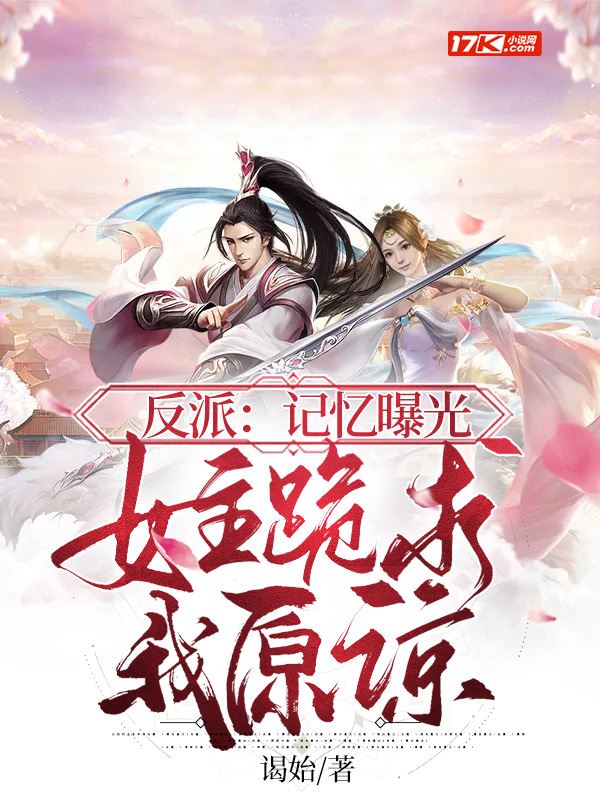
Jiang Zhige, the Demon Emperor and ruler of the Heavenly Realm, is captured and bound by the Heaven-Binding Chains in the ruins of the Xuancang Holy Land. As hundreds of powerful cultivators and the protagonist Qu Yun celebrate his impending execution, Jiang Zhige experiences a transmigration, realizing he has entered the body of the great villain from a novel he previously read. The original Jiang Zhige is destined to be killed by Qu Yun with the help of three female leads. However, upon binding with the Life Memory Editing System, Jiang Zhige discovers he can rewrite his past memories, allowing those edits to manifest as reality. He immediately begins editing his memories to clear his name and alter the perceptions of the female leads, particularly Nangong Rou, whose hatred for him stems from a perceived betrayal.The Heaven-Binding Chains project Jiang Zhige's memories onto a massive screen across the Heavenly Realm for all to witness. The memories reveal that the infamous Demon Emperor was once a destitute beggar named Jiang Zhige who rescued a freezing orphan girl, Nangong Rou. Despite having only a half-moldy bun, he shared his meager food with her and gave her the name Rou. When Shen Quan, a corrupt local merchant, attempted to force Nangong Rou into servitude, Jiang Zhige refused to sell his sister's freedom, enduring a brutal beating rather than submit. A white-robed immortal, Yao Qianji, intervened and offered to take Nangong Rou as a disciple due to her superior talent but rejected Jiang Zhige for his stubbornness. Instead, the immortal directed both siblings to an opportunity ten miles east of the city.The journey through the blizzard becomes a test of survival. Jiang Zhige, already weak and injured, carries Nangong Rou on his back through deep snow until they are caught in a sudden storm. They seek shelter in a cave, where Jiang Zhige faces starvation and hypothermia. In a desperate act to keep his sister alive, he cuts flesh from his own leg with a sharp rock, roasting it to feed her while claiming a hunter gave it to him. He endures excruciating pain without making a sound, preserving the lie so Nangong Rou would eat. When the fire dies out, he burns his own clothes and even wraps himself in dry hay to maintain warmth for her. The memories shock the onlookers, revealing a side of the Demon Emperor that contradicts his tyrannical reputation.As the memories continue, Jiang Zhige in the present struggles against the draining chains. He identifies Zhou Wuji, a former subordinate who betrayed him over the death of his wife, as a key figure whose loyalty might be manipulated through memory editing. The projection shows Jiang Zhige burning his last clothes and cutting more flesh to survive the night, eventually reaching the plum tree where the immortal left an opportunity. Nangong Rou, witnessing these events, feels a complex mix of guilt and unresolved resentment, as Qu Yun reminds her of the father Jiang Zhige supposedly killed. Despite the emotional turmoil, Jiang Zhige continues his plan, using the system to edit not only his own past but potentially the memories of others, aiming to turn his enemies into allies and escape the death sentence that awaits him.

Latest Release
DateGroupRelease
2026-09-26knoxt c17
2026-09-26knoxt c16
2026-09-26knoxt c15
2026-09-26knoxt c14
2026-09-26knoxt c13
2026-09-26knoxt c12
2026-09-26knoxt c11
2026-09-26knoxt c10
2026-09-26knoxt c9
2026-09-26knoxt c8
2026-09-26knoxt c7
2026-09-26knoxt c6

Community Reviews

Rating(3.8 / 5.0, 55votes)
5 stars
15(27%)
4 stars
13(24%)
3 stars
27(49%)
2 stars
0(0%)
1 stars
0(0%)

Popular reviews

... Read More
There's something almost cinematic about the imagery in these chapters. The cave, the dwindling fire, the snow piling up outside — it's a claustrophobic, freezing environment that mirrors Jiang Zhige's deteriorating body. But what really stands out is the visceral detail of him burning his own clothes piece by piece. "Being poor all his life, he couldn't afford silk clothes or warm jackets, so he had to wrap himself in dry hay to keep warm." This single detail does so much work. It tells us about his entire history in one sentence. Everything he owned was already stripped from him by poverty, and now even that meager possession becomes fuel. The image of him untiringly feeding his only warm layers into the fire while Nangong Rou sleeps peacefully is devastating. And the snow! It keeps coming outside while inside this cave, a man is systematically destroying himself. The contrast between the vast, indifferent storm and the tiny, desperate fire is such a strong visual metaphor. By the time the fire goes out completely, the reader feels the cold on their own skin. The worldbuilding here isn't about grand descriptions of palaces or magical systems — it's about the raw, physical reality of survival, and how brutal it is when you have nothing left to give.
... Read More
I need to talk about how this chapter BREATHES because the pacing is doing things I didn't expect. It opens in the past — snow, fire, roasted meat — and stays there for a while. Long enough to make you comfortable, maybe even fall in love with these two characters in their miserable little cave. And then it yanks the rug out. One moment she's asking if he's eating, the next she's screaming about patricide and clan treasure. The transition isn't gradual — it's a cliff edge and you fall straight through it. The real pacing masterstroke though is how the chapter handles TIME. We have: - Flashback time (hours in the cave) - Present time (the viewing in the palace) - Future deadline (seven days until death) - Immediate time (hours until the wound becomes fatal) Four different clocks running simultaneously, and they're all ticking DOWN. That's why the chapter never feels slow even though it's mostly people standing around in a room. Every sentence carries the weight of elapsed time. Jiang Zhige's realization about his memory-editing power comes at exactly the right moment — right after he's established as vulnerable and dying, right when the reader is starting to despair. It's a classic false hope structure: we think he's trapped, then suddenly he has an exit ramp, then immediately we remember the seven-day deadline makes even that escape route a race against time. The ending is perfect in its cruelty. After all that plotting and scheming and political maneuvering, the chapter ends with him performing basic first aid on himself while the woman he once loved watches the recording of his greatest act of sacrifice. No resolution. No pause. Just sizzle and burn and the unspoken question: will any of this matter in six more days?
... Read More
Okay, I need to talk about how the plot just yanked the rug out from under everything we thought we knew. Up until this point, the whole story has been built on the premise that Jiang Zhige betrayed Nangong Rou for a treasure, right? That's the foundation. The Demon Emperor is the villain. She's the wronged victim. But then BAM — this childhood flashback in the light and shadow and suddenly nothing makes sense anymore. "I heard rumors that later, the Demon Emperor betrayed Fairy Nangong Rou for a treasure. I believed it at the time, but now that I know their past, I realize how absurd that statement is." This line from the palace observers basically summarizes what every reader is feeling. The story is playing with unreliable narration here — or rather, unreliable MEMORY. Jiang Zhige fabricated those memories about the three female leads to stay alive, which means the entire emotional history we've been tracking might be constructed fiction. If he made up feelings for those women to survive, what else is fake? What about his feelings for Nangong Rou — are any of them real? The plot twist isn't just that he didn't betray her. It's that the betrayal itself might never have happened the way anyone thought. And now Nangong Rou is sitting there questioning everything: "If the most vivid memory of Jiang Zhige was the scene before him, how could he betray Nangong Rou for a treasure?" This is the kind of structural screw you can't unscrew. The whole middle of the story was built on a lie, and now we're watching both characters realize it simultaneously. Qu Yun even notes that her hatred was just love turned inside out because of betrayal — which means her entire emotional arc has been running on faulty data. How do you rebuild a relationship when the foundation was sand?
... Read More
I am not okay. Let me explain. Jiang Zhige—starving, practically dying himself—holds onto a half-eaten bun. The narrative emphasizes that he hadn't eaten it earlier SPECIFICALLY so that she could have it. Every word about that bun is weighted. "Jiang Zhige forced a smile and pulled out the half-eaten bun from his pocket." This man is offering his food. His survival food. And the girl—six years old, amnesiac, dressed in luxury—takes it and says "Brother, this thing is too terrible. I'm still hungry. Can we go eat something delicious?" And then the commentary from the crowd goes "Was Fairy Nangong so unreasonable when she was young?" as if they missed the point entirely. The tragedy isn't that she was ungrateful. The tragedy is that they came from completely different worlds and couldn't possibly understand each other's reality. He thought the bun was a feast. She thought it was an insult. Neither was wrong. That gap between them—that unbridgeable distance of experience and privilege—is what makes the later betrayal hurt so much. Because somewhere along the way, that distance became a chasm. "I risked half my life to save you" and she couldn't even say thank you. I'm sitting here emotionally compromised.
... Read More
I've been thinking about this one scene for hours and I can't stop replaying it in my head. "To prevent Nangong Rou from noticing anything strange, he deliberately placed the skin side down." That sentence. THAT sentence. He's roasting human flesh and he's worried about the AESTHETICS so she doesn't have to know. He's starving, he's injured, and his first instinct is to hide the grotesque reality from HER. That's not survival instinct — that's devotion so deep it's become invisible to him. And then he tells her HE already ate buns when clearly he hasn't. Another lie. Another sacrifice wrapped in a small white lie because he couldn't bear the thought of her feeling guilty about eating. "Brother, can we eat now?" she asks like a child. She had NO IDEA what she was consuming. The reader knows. Jiang Zhige knows. And she just wants to share a meal with her brother. This is the emotional core that makes everything else in the chapter hit so hard. Every moment of tenderness between them becomes double-edged because we know where it leads. The more beautiful those memories are, the more devastating the betrayal feels — for BOTH of them. Jiang Zhige's internal reaction when he hears her crying is what got me: "Oh my God, listening to this crying, she probably wishes she could let Qu Yun die instead of abandoning him to save me?" That's not just calculation. That's GRIEF. He's mourning the relationship they had while standing in the place where he's about to die. And Fairy Ziyan's comment — "At least Jiang Zhige was once so good to you" — it's casual, almost envious, but it confirms what we already knew: his capacity for genuine care was real, which makes its aftermath infinitely more tragic.
... Read More
The imagery in this section is actually insane and I need to unpack it. First you've got the opening shot—countless people in the Heavenly Realm watching a scene unfold in the sky. Like a cosmic cinema. This establishes right away that we're dealing with some kind of divine projection or memory display, and the witnesses are experts, cultivators, people who've seen everything. And THEY are shocked. That tells you how impactful this scene is supposed to be. Then you drop into the cold. Heavy snow in Yu City. A ruined temple where Nangong Rou and Jiang Zhige are holed up. Half a month of hunger. Her clothes no longer clean, looking 'no different from a beggar like Jiang Zhige.' The visual of this formerly spoiled rich girl now reduced to the same state as the beggar she's yelling at? Chef's kiss. The bun shop scene itself is SO vivid. The bustling market after the holiday season, vendors shouting, the middle-aged owner with his 'big build and round waist.' Jiang Zhige approaching like he's committing a crime—which honestly, he is. He's weak, starving, can barely run, bumps into someone, gets grabbed by the neck. The owner yanks the buns away and then—this is the part that haunts me—the owner bites one, throws it on the ground, STEPS ON IT, and uses his foot to mix the crumbs into the soil and snow. So Jiang Zhige can't even pick up the scraps. Every possible angle of humiliation blocked. And then the kowtowing. Thud. Thud. Thud. Three times. Blood running down his forehead. The visual of this already-starving boy hitting his head against frozen ground while the crowd of experts watches in stunned silence from the heavens above—that contrast is everything.
See all reviews

Custom lists

See all custom Lists