The Villainess's Fifteen-Year War ~ Reincarnated in Pre-War Japan?! Avoiding the Doom Flags Won't Be Enough at This Rate!! ~ - Reviews

The Villainess's Fifteen-Year War ~ Reincarnated in Pre-War Japan?! Avoiding the Doom Flags Won't Be Enough at This Rate!! ~
+Add to Custom List
Sort
Add review
... Read More
I picked this up thinking it was going to be a chill isekai romp. Seven chapters in and I have witnessed the protagonist die via traffic accident, experience fire rain over a Japanese city, watch Allied forces land on the mainland in an alternate WWII, freeze to death in a Soviet prison, and then get reborn as a child during the Great Kanto Earthquake. SEVEN CHAPTERS. The pacing is absolutely manic and I am HERE FOR IT. Most isekai take three chapters just to get the protagonist to the new world. This story treats reincarnation like a revolving door. What's remarkable is how the author manages to give each "death sequence" enough weight to feel real while also maintaining forward momentum. The Soviet prison cell section is only a few paragraphs, but it establishes so much about who she is — her hatred, her knowledge of history, her desire for revenge, her almost theatrical commitment to making Christmas Day a day of catastrophe. That's efficient storytelling. The transition from the Soviet cell back to the earthquake is also brilliantly handled. One moment she's cursing the USSR, the next there's a massive tremor and she's waking up confused. The author doesn't waste time explaining the mechanism of her reincarnation — we just experience it, which mirrors her own disorientation. Chapter 2's earthquake sequence is where the pacing really shines. The tremor starts, she shelters under a desk, the building collapses — and then the memory merger happens. The physical action (earthquake, collapsing building) runs parallel to the internal action (memories colliding and stabilizing). Both are earthquakes in a sense. That structural echo is satisfying without being heavy-handed. The chapter lengths vary nicely too. Some are short and punchy, others breathe more. There's no dragging — even the exposition-heavy moments where she's analyzing her situation feel urgent because she's literally running out of time (and physical safety). My only minor complaint: I wish we got slightly more time in the opening vision sequence. The engagement annulment and the woman she despises are mentioned in a breath, and I immediately want to know who those people are and why she hates them. But I suppose that's the point — the author is pulling us forward faster than we can process everything, which is exactly how trauma and confusion feel.
... Read More
The author understood something most writers in this genre completely miss: historical transmigration works best when the weight of consequence presses down on the protagonist gradually, like water rising. Chapter 10 opens with Reiko already in motion—she has connected the date to the event, she has formulated her plan, she has chosen her brother as the vessel for delivery. There is no setup chapter where we sit through three pages of worldbuilding exposition. We are thrown directly into the emotional center and asked to keep up. The chapter then pivots brilliantly from her internal panic to the aftermath, and the aftermath is where the real structural genius lives. Because instead of ending on the heroic save—which would have been the satisfying but predictable beat—the author spends an entire chapter documenting the bureaucratic, political, and social consequences. Newspaper articles. Cabinet reshuffles. Death by fasting. Audience with the Genro. Each paragraph is another stone dropped into the pond and the ripples keep expanding. Then Chapter 11 starts with New Year and somehow the pacing does an even more audacious thing—it slows down to domestic calm while simultaneously loading the narrative with future tension. Every child Reiko interacts with is a bomb ticking toward their canonical fate. The party scene is warm and bright on the surface but underneath every interaction carries the weight of knowing what is coming. The structure here operates on two levels simultaneously and it is beautiful to watch.
... Read More
'You can see inside my head?!' — and honestly, same energy. Reika is absolutely phenomenal as a character and I need to talk about her for a bit. On the surface she's the classic otome game villainess—haughty, elegant, throws around threats and fake smiles. But what makes her genuinely three-dimensional here is that she's also trapped. She's lived this life multiple times, died in horrifying ways each time, and now she's running out of power. She can't restart anymore. She needs a replacement. That desperation underneath the performative menace makes her so much more interesting than a standard antagonist. The dynamic between her and the protagonist is fascinating because it's built on mutual need but neither fully trusts the other. Reika keeps trying to manipulate—'let's play a game,' 'you'll struggle in vain,' that wicked laugh—but the protagonist pushes back HARD. When Reika taunts her about inevitable defeat, the protagonist literally locks eyes and refuses to flinch. 'You will be the one crying in defeat!' That moment where the reincarnated girl stares down a future version of herself and threatens HER? Chef's kiss. But here's what got me: when Reika explains why the protagonist's consciousness awakened on the day of the Great Kanto Earthquake, she gets genuinely sad. And the protagonist apologizes to HER. That role reversal—where the victim comforts the person who put them in this situation—was unexpectedly touching. Reika's 'unexpectedly sincere smile' right before disappearing showed a crack in that villain armor. Then there's Kouryuu entering the scene in chapter 18. Shaved stubble, neat hair, looking impressive in a way that made the protagonist wonder if he has plans. He's isolated at the university, struggling for funds, now tutoring the three kids. Already feels like he could be either an ally or another complication. The protagonist is clearly observant about people—'does he have some plans?'—which shows she's been sharpening her social reading skills alongside her political ones.
... Read More
Let me just sit with this for a second. When Reiko first wrote down her plans—stocks to invest in, short-selling, the Showa Financial Crisis—she was trying to save her family from financial ruin. That's already high stakes for a three-year-old protagonist, let alone a child who has to maintain a mask of normalcy while doing it. But by the end of these chapters, the conflict has ESCALATED beyond anything I expected. We're now talking about the Ootori family's involvement in the Russian Revolution, weapons deals with the White Army, gold bullion from Admiral Kolchak, connections to Chinese warlords, and potentially the Romanov treasure. This is no longer just about whether the family goes bankrupt. This is about a family that has been quietly shaping the course of modern East Asian history through centuries of prophetic foresight, and Reiko is now the newest link in that chain. The tension in that meeting room is absolutely suffocating in the best way. Reiko is three years old—physically, at least—and she's sitting across from four of the most powerful men in a centuries-old dynasty, all of whom have decades of experience in espionage, warfare, and financial manipulation. She has ONE advantage: she can see the future. But even that advantage comes with conditions and limitations she doesn't fully understand yet. The earthquake cutoff theory alone creates this underlying anxiety—what if her dreams stop? What if they're wrong about something? What if the future she's seen isn't guaranteed? And Ryuya—he's caught in the middle of all of this without knowing it. He was "chosen" but he doesn't understand why. He's been involved in the Toranomon incident and now the family is pulling him deeper into secrets his entire lineage has kept. The personal stakes for him are enormous and he has zero awareness of them. The author is really good at making every scene feel like a pressure cooker. Even the lighter moments—Reiko calling her brother "Onii-tamaaa"—carry this undercurrent of "she knows more than she should and everyone in this family knows it too." The stakes aren't just external anymore; they're existential. Who is Reiko, really? And what happens when the family decides she's either useful or a threat?
... Read More
I need to talk about Onii-sama because honestly the way this character is written makes me question everything I thought I knew about noble brother tropes. Here you have a twenty-two-year-old man who is apparently engaged to someone else, still manages to be the absolute pinnacle of competence in every room he enters, and also genuinely seems to adore his little sister in a way that feels earned rather than manufactured. Let me be clear—I have read a lot of sibling dynamics in fiction and they are almost always either saccharine or painfully functional. This one is neither. The hallway scene where he drops the goofy big brother act the second he steps outside and suddenly he is ALL business—sharp movements, hushed conversation with Grandfather Kiichirou, that complete tonal shift that tells you this man has been playing one role all along and the other role is the one reserved for family. That duality is intoxicating. But the real moment that sealed it for me is when he responds to Reiko's dream with zero skepticism. He takes her toddler rambling about shikomi-juu and tigers and America with complete seriousness and then just moves. No questions, no doubt, no testing her sanity. Just action. You do not get that kind of unconditional trust from a fictional older brother and I am struggling to process it. Meanwhile Kiichirou—oh my god the grandfather. The scene where he turns that sharp, assessing gaze toward Reiko after speaking with Ryuya, the one that sends actual chills down her spine, and then in the NEXT INSTANT he is warm and smiling again like nothing happened. That man is a fox in every sense and I love him for it. The family dynamics here are layered with political maneuvering, genuine affection, and mutual performance in equal measure.
... Read More
I need to talk about the emotional texture of this batch because it's way more layered than I expected going in. The opening sets up this almost mundane tone—peaceful bourgeois girl life, reading books, getting stock reports. But then chapter 17 drops you into this gray, featureless dreamscape where the protagonist can barely perceive her own form. The vulnerability in that description hit hard. She's a four-year-old body with a reincarnated adult mind, suddenly floating in nothingness, unable to tell if she's indoors or outdoors, her own shape unclear. That disorientation IS the emotion—existential dread wrapped in childhood confusion. And then Reika appears, this perfect 3D model of a woman who radiates elegance and menace in equal measure. The cold calculation of her proposal—fifteen years of dancing or disappear forever, and she'll just find someone else—should feel cruel. And it IS cruel. But there's also something almost parental in how she explains things, how she hesitates when asked about the earthquake trigger, how she gives that unexpected sincere smile at the end. The protagonist's internal monologue is where the real emotional labor happens though. 'I mean, I've already started struggling, though?' That's not defiance—that's someone trying to convince herself she's okay when she's definitely not. And 'She really suits this role. I should remember this.' That moment of forced admiration while being threatened with annihilation? That's the kind of emotional whiplash that makes characters feel real. The most emotionally charged exchange has to be the apology scene. The protagonist apologizing to a being who trapped her in a death game is both heartbreaking and darkly funny. It reveals how deeply she's already internalized this world's logic—even victims of supernatural coercion feel guilty when the victimizer shows weakness. That's a profound observation about trauma and conditioning, and it's delivered with zero pretense.
... Read More
I need to talk about how this chapter handles its pacing because honestly it's kind of wild what the author does here. We open with the protagonist sprawled out after reading social studies books, getting woken by maids, having breakfast—and on the surface it's literally just a sleepy three-year-old starting her day. But underneath? She's processing her father's death, mapping out the entire family power structure, and realizing she's a pawn in a succession crisis. All before she's finished eating. The structure here is brilliant because it mirrors how trauma actually works. You go through normal routines—wake up, eat breakfast, say good morning—while your entire internal world has just collapsed. The narrator even notes this explicitly: "Even I could feel that my body—or rather, my soul—was trapped in sadness." She goes through the motions of being a proper young lady at a grand breakfast table while internally she's doing crisis management on a level most adults couldn't handle. The information dump about the Ootori family history is where I almost paused. It's a LOT of exposition—generations of lineage, the founder's shady past, the opium trade, the Meiji Restoration connections, the government ties, the Siberian Expedition stuff. But here's the thing: it doesn't feel like a textbook chapter. It feels like her doing what she always does—reading, researching, piecing together the puzzle of her new world. She's three years old but her mind works like an investigator. The pacing works because we're getting this information THROUGH her curiosity, not THROUGH an omniscient narrator pausing the story. The chapter ends on this note: "It had only been one day since the Great Kanto Earthquake." And then it cuts off mid-sentence. That's it. No dramatic flourish, no cliffhanger. Just this devastating simplicity. One day. One day and everything is already shifting. I was genuinely hooked.
... Read More
Let's talk about stakes because OH MY GOD the stakes here are INSANE and I need everyone to understand how layered this conflict is. On the surface level, we have a three-year-old girl trying to prevent her family's financial ruin. That's already pretty wild. But then you realize she's ALSO trying to prevent Japan from being destroyed in a war that hasn't started yet. She's carrying knowledge of the future that could change the trajectory of an entire nation, and she's doing it from a body that literally cannot walk into a government office and present her findings. The internal conflict is where it really hurts. She's frustrated - I FEEL that frustration. 'Ugh, complaining in my head won't change anything' but then she does it anyway because what else is she supposed to do? She's trapped between knowing too much and being able to act on very little. The line 'if I'm the one who knows the future, doesn't that mean I have to somehow stop Japan and America from going to war?' hits different when you realize this is coming from a character who is physically three years old. And the external stakes? Japan losing a war. The Ootori clan falling. Her own death if she doesn't navigate this carefully. But also - the deeper stakes of identity. Who is she really? Is she the reincarnation of Rin? Or just a woman from the future who happened to die and get reborn? The great-grandfather's theory adds this layer of mystery that could completely change how she's treated by the family. What makes the tension work so well is that every time we think we understand the situation, the author pulls back the curtain a bit more. First it's about personal survival, then family legacy, then national fate, then questions about her very identity. The protagonist herself acknowledges 'this isn't just about ensuring my personal ruin—this is on a completely different level' and honestly? Same.
... Read More
I want to talk about how the author structures these chapters because honestly it's making me appreciate their craft on a whole new level. We go from Chapter 11's relatively light, almost slice-of-life opening—three-year-old Reiko playing with kids, dropping her formal act because the place is "such a paradise"—right into Chapter 12's family council scene, and the tonal whiplash is INTENTIONAL. It works so well. You start with warmth and innocence, the kind of scene that makes you feel safe, and then BAM—you're in a room with four adults who are about to fundamentally change the trajectory of your understanding of this story. The transition from "onii-tamaaa" to "you are not the reincarnation of your great-great-grandmother, are you?" is one of the sharpest pivots I've encountered. It's jarring in the best way, and it mirrors exactly what Reiko is experiencing. The reader gets the same whiplash she does. Then inside Chapter 12, the pacing is meticulous. Every exchange of dialogue peels back another layer: the dreaming miko revelation → the scope of the dreams → the financial crisis → the stock manipulation plan → the gold mine → the Romanov treasure. Each revelation raises the stakes and narrows the scope simultaneously, which is a clever technique. The chapter doesn't feel overloaded because each new piece of information feels earned and necessary. Chapter 13 then opens with the financial practicalities—the capital problem—and immediately introduces the Romanov thread, which expands the world-building from a Japanese family secret into something with global historical implications. The transition from domestic intrigue to international conspiracy happens so smoothly that by the time we're reading about Zhang Zuolin and the White Army, it doesn't feel like scope creep. It feels like the natural next step. The only slight wobble I'd note is that the explanatory passages about short selling and leverage read a bit like textbook inserts, but honestly, they're integrated well enough through Reiko's internal monologue that they don't kill the momentum. If anything, they add to her characterization—this is a modern person whose knowledge base is literally her superpower in this world.
... Read More
Let me just say — the sheer audacity of this entire setup is what makes this chapter so gripping. Reiko, a literal toddler, drops a leveraged investment scheme based on insider knowledge of the 1929 stock market crash onto her great-grandfather's lap, and somehow it works. Not just that — the plot is doing SO MUCH heavy lifting here. First, there's the revelation about the gold bullion. The White Army's 500 tons, the Romanov connection, the whole hidden fortune mystery — this is classic treasure-hunt plotting layered onto historical intrigue. The text drops these facts almost casually, like "oh by the way, 50 million dollars is sitting in a Swiss account." But it recontextualizes everything about the Ootori family's wealth and Reiko's position within it. Then the investment plan unfolds, and honestly, the author did their homework. Leverage? Check. Shell companies? Check. Dow Index timing with 1929 peak knowledge? Check. Even the detail about General Motors and aviation stocks adds specificity that makes the scheme feel credible rather than hand-waved. This isn't just "future knowledge wins" — it's a calculated financial strategy with real mechanics behind it. But here's where the plot gets clever: the stakes aren't just financial. Reiko explicitly says she wants to "improve Japan's fate." So this becomes a dual narrative — securing the family fortune AND attempting to alter national history through economic intervention. That's a huge escalation from typical reincarnation stories where the goal is just personal survival. The tension compounds when she falls asleep mid-explanation. After that intense strategic briefing, the narrative literally cuts to her snoozing — which is both darkly funny and deeply unsettling. The adults continue discussing her future like she's not right there listening. It's a masterclass in dramatic irony. And then the birthday chapter arrives. The shift from geopolitical-financial plotting to a child's fourth birthday party creates this whiplash effect that, strangely, works. The historical context about transportation methods and the gold standard feels like worldbuilding breathing room between action set pieces. One thing that keeps nagging at me though — is Reiko aware of how enormous her ambitions truly are? The text mentions that $300 million would exceed 2 trillion yen in modern value, and that Japan's entire national budget at the time was only $700-800 million. She's essentially planning to move more money than a nation-state's annual budget. Does she understand what she's signing up for? The plot feels solid, coherent, and ambitious. The only question remaining is whether Reiko's knowledge of the future will hold up against the chaos of real historical events.
... Read More
Okay, I need to talk about this trio—Reiko, Ryuichi, and Gentarou—because the way they bounce off each other is genuinely wholesome and I was not prepared for how much I'd invest in three kids who are like four, three, and maybe a bit older. Ryuichi is basically the classic musclehead with a heart of gold. He's described as a siscon who transforms into this earnest, diligent kid when he's around Reiko. And honestly? That contrast is chef's kiss. He's not just brute strength—he's trying. He says stuff like "O-oh. If there's sweets involved, then I'm all for it!" and you can just picture this kid's eyes lighting up. He's simple, direct, and completely genuine. Then there's Gentarou, who is apparently the more stubborn intellectual type (according to Reiko's past-life memory of the game). But watching him here? He's got this intense pride about not losing to Reiko, yet he's so endearingly serious that it makes him impossibly cute. When he calculates birthday customs like they're a math problem—"So instead of otoshidama, the person who was born gets gifts"—that is the kind of reasoning-out-loud moment that just melts you. And he has that tsundere energy even at his age, which Reiko herself notes is a huge plus. But what really sells these relationships is how Reiko manipulates them both without either of them realizing it. She figured out that provoking Gentarou makes him jump into things, and that Ryuichi responds to a bit of bossy leadership. She's playing 4D chess with two four-year-old boys and I am HERE FOR IT. The fact that they both immediately want to share the cake with their younger siblings though? That's the real character reveal. That's when you know they're good kids despite whatever stubbornness they show. And Reiko herself—she's not just coldly calculating. When she sees them happy, she says she was "honestly a little touched." That's the real Reiko peeking through the strategic genius. She wanted to spread birthday traditions, yes, but she also just wanted to make her cousins smile. Anyone who can read her inner monologue knows she's deeply lonely underneath all this competence. These two boys may be the first real emotional anchors she has in this world. But here's what worries me—Reiko herself acknowledges her advantage won't last. "Though realistically, my advantage will probably only last until middle school." That line hit me like a truck. She knows she's operating on borrowed time intellectually. What happens when the love interests catch up? What happens when the power balance shifts? I need to know what Reiko does when she's no longer the smartest kid in the room. Also, can we talk about how the game referenced her past life expectations versus reality? In the game, Gentarou was apparently way more stubborn and tough to get through to. Here, he's solving arithmetic at three years old and being sweet about sharing cake. Reiko is literally experiencing a different version of characters she once knew. How much of her strategy is adapting to people who are already different from their game counterparts? And how much is her own presence changing them? I feel like this chapter is quietly setting up some fascinating relationship evolution. The study group dynamic feels so normal and warm right now, but something tells me that peace won't last either.
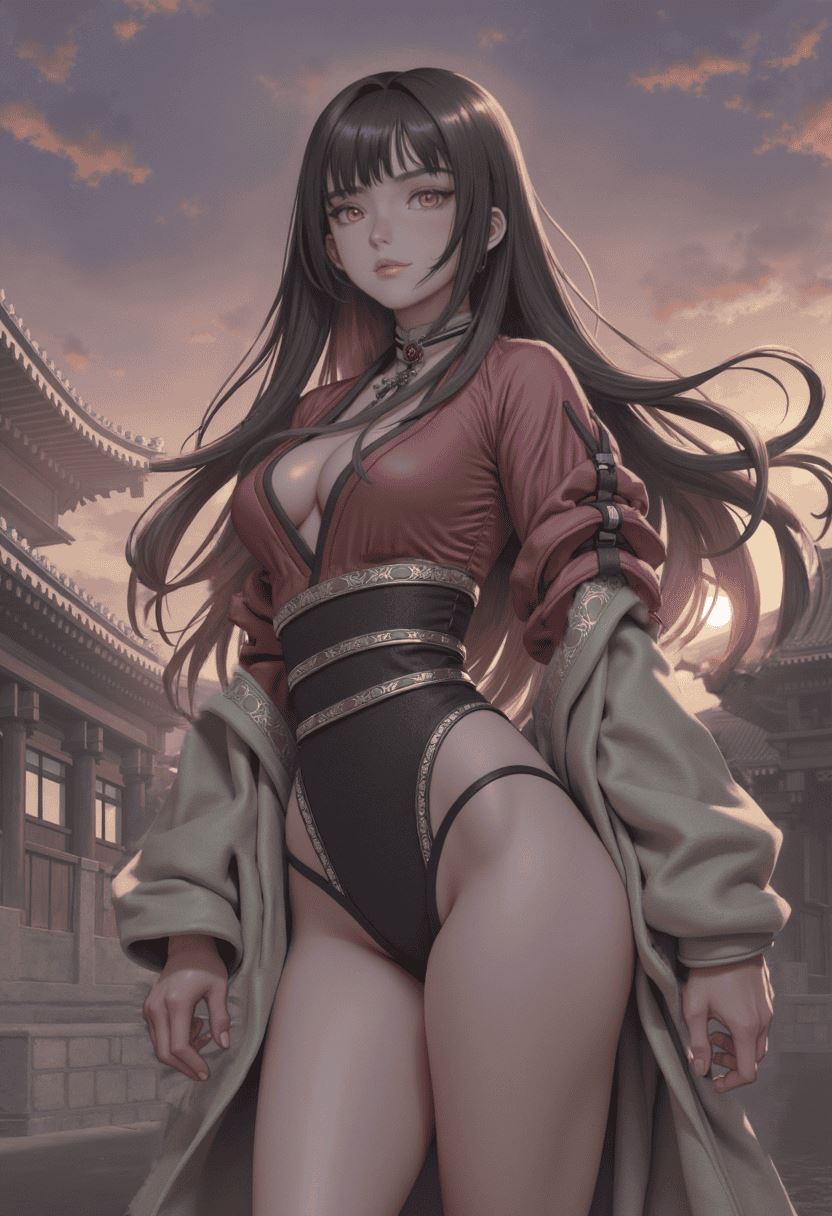
... Read More
The way this author builds the world through the mansion is absolutely sublime. You start with something as simple as breakfast — or the lack thereof — and from there the whole house unfolds like a map drawn in real time. Great-grandfather in a separate Japanese-style house. Grandmother secluding herself in her room despite coming from a noble lineage, complicated feelings about marrying into a family of upstarts. Great-uncles and uncles in their own damaged estates. Cousins scattered and unreachable. Servants numbering around thirty because apparently one person can't do what thirty people could in the 1920s. Every detail serves double duty. The fact that they had to send the women and extended family back to their own homes because the properties were damaged isn't just worldbuilding — it's economic storytelling. You can feel the post-earthquake strain pressing down on every corridor and every conversation. The protagonist's 'explorations' disguised as hide-and-seek become this gorgeous metaphor for a child navigating a house full of adult secrets, and honestly the image of a three-year-old wandering through tatami rooms and locked study doors while grown-ups pretend she's just playing is both charming and deeply unsettling. The library scene where she discovers the genealogy chart and organizational diagram — this is where the worldbuilding really expands beyond the walls of the mansion. Suddenly we're not just in a fancy Japanese estate, we're looking at a holding company structure with banking, securities, insurance, real estate, petroleum, shipping, heavy industry, automotive, pharmaceuticals, hospitals, and educational institutions. The author drops all of this information almost casually, like Reiko just found a folder on a desk, and it makes the world feel impossibly vast. "Founded in 1869 as Ootori Shachu, it now operates as a holding company called Ootori Kaisha." One line. That's it. And suddenly you understand that this family has been building an empire for over fifty years. The world feels alive because it has history, and history has weight.

Leave a comment

You must be logged in to leave comments. or
