The Villainess's Fifteen-Year War ~ Reincarnated in Pre-War Japan?! Avoiding the Doom Flags Won't Be Enough at This Rate!! ~
+Add to Custom List
Novel Info

Summary

... Read More

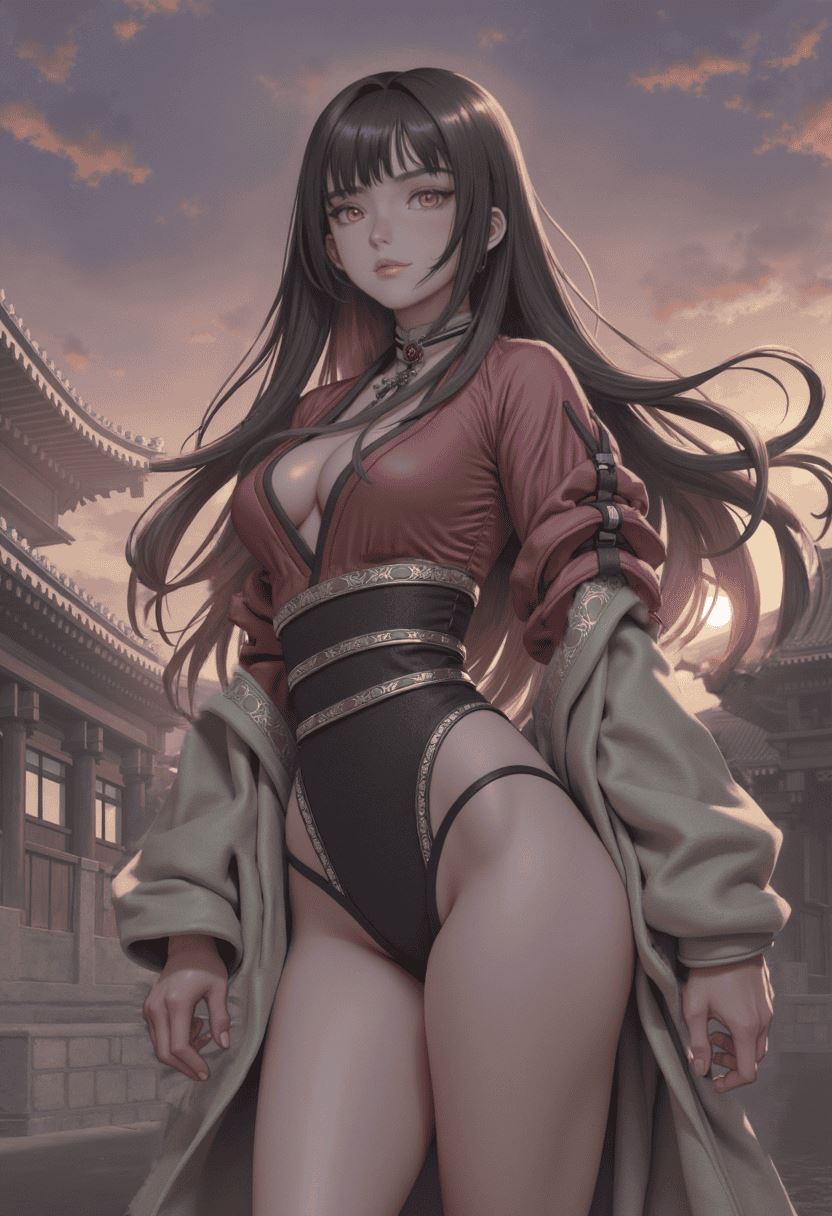
Ootori Reiko is a reincarnated soul, a forty-year-old history enthusiast from the twenty-first century who died in a traffic accident and awoke as a three-year-old girl in Taisho-era Japan on September 1, 1923. She finds herself in the aftermath of the Great Kanto Earthquake, her consciousness merged with the body of Ootori Reiko, the eldest daughter of the powerful Ootori family. The Ootori clan is a prominent noble house that also leads a massive financial zaibatsu with deep ties to the Japanese government, military, and continental trade. Reiko immediately recognizes her situation as resembling the setting of an otome game she played in her past life, a narrative centered on romance and political intrigue within a declining aristocratic family. However, she quickly determines that she is not the game’s villainess, Ootori Reika, but a distinct character named Reiko, though her path remains perilously close to the story’s tragic tropes.

The core conflict arises from Reiko’s awareness of impending historical catastrophes and the specific dangers facing her new family. She possesses knowledge of future events, including Japan’s involvement in World War II, the potential American invasion of the Japanese mainland, and the eventual collapse of the Soviet Union. Simultaneously, she is acutely aware of the Ootori family’s role in this world’s altered history, particularly their control over oil resources in northern Sakhalin, which diverges from the historical record she knows. Her grandfather, Kiichirou, is a high-ranking military officer, while her great-uncle Ryuujirou, the head of the conglomerate, suffers fatal complications from injuries sustained during the earthquake. With the leadership in disarray and Reiko herself too young to exert direct influence, she faces the dual threat of her family’s financial ruin and the broader destruction of the nation she now calls home.

Reiko’s primary objective is to alter the course of history to save her family and prevent national disaster, a task complicated by her physical limitations as a toddler. She begins by hiding detailed notes on future economic trends and historical events, hoping that her grandfather and great-grandfather will notice and act upon them. While her family does observe her unusual precocity and intelligent writings, they remain skeptical or interpret her actions through the lens of spiritualism, believing she may be a reincarnation of an ancestor. Reiko also cultivates relationships with key family members, such as her handsome uncle Ryuya, a military prodigy who offers her guidance and protection. Despite her efforts, she struggles with the frustration of being unable to effect change directly due to her age, relying instead on subtle manipulations and the cultivation of a respectable public persona to avoid the villainous fate she knows awaits other characters in similar positions.

As the story progresses, Reiko confronts the reality that her world is not merely a game but a complex historical tapestry with its own agency. She experiences recurring nightmares that serve as prophetic visions of war, invasion, and personal doom, reinforcing the urgency of her mission. The narrative explores her internal battle between the detached, analytical mind of an adult woman and the emotional instincts of a child navigating grief and familial duty. Reiko resolves to use her historical knowledge and intelligence to steer the Ootori zaibatsu away from the pitfalls that led to its downfall in the game, while also attempting to mitigate the catastrophic events of the coming decades. Her journey is one of careful preparation and strategic patience, as she seeks to build a future where she can survive and thrive despite the overwhelming forces of history and warfare looming on the horizon.

Latest Release
DateGroupRelease
2026-10-01light novels translations c152
2026-10-01light novels translations c151
2026-10-01light novels translations c150
2026-10-01light novels translations c149
2026-10-01light novels translations c148
2026-10-01light novels translations c147
2026-10-01light novels translations c146
2026-10-01light novels translations c145
2026-10-01light novels translations c144
2026-10-01light novels translations c143
2026-10-01light novels translations c142
2026-10-01light novels translations c141

Community Reviews

Rating(4 / 5.0, 48votes)
5 stars
16(33%)
4 stars
17(35%)
3 stars
14(29%)
2 stars
1(2%)
1 stars
0(0%)

Popular reviews

... Read More
There's a lot going on symbolically here that I can't ignore. The Great Kanto Earthquake is the backdrop, obviously. It literally destroys the old home—the Yokohama residence collapses—and Reiko is pulled from the rubble. It's a violent rebirth. She survives destruction to enter a world of rigid structures and inherited fate. Then there's the mansion itself. The Ootori estate is this 'opulent Western-style mansion' built to withstand disaster, located near the Imperial Palace. It represents the 'Blue Blood'—the old aristocracy, the Zaibatsu power. It's beautiful, but it's also a cage. Reiko is brought into this fortress of tradition, knowing she's supposed to be the 'Miko of Darkness' who will eventually ruin it all. The house is solid; her reputation is fragile. The text mentions the 'Miko of Light' versus the 'Miko of Darkness.' This duality isn't just about magic; it's about how society labels women. Reika is a 'femme fatale,' a 'villainess' solely based on jealousy and 'bad blood.' But Reiko—our protagonist—is intelligent, cautious, and kind. The theme seems to be challenging the 'destiny' written by others. She's reading history books in katakan to prove she's more than a game character. The 'inherited memories' versus her own consciousness is another layer: who owns your soul? Are you defined by your past or by your choices? The juxtaposition of the chaotic earthquake and the highly ordered, static mansion really drives this home.
... Read More
Let's talk about voice, because this is where the book absolutely shines. The narrator's internal voice is so distinct and so funny. She's trapped in a three-year-old's body but she has the cynical, well-read mind of a thirty-something woman who apparently consumed a lot of educational manga in her past life. The contrast between what she says out loud and what she thinks is where the comedy lives: She says: "Good morning." (with a bow, incompletely articulated) She thinks: (A little girl having multiple attendants... There's no doubt about it—this family is rich. A true elite! No, considering the era, I should say, 'This bourgeoisie scum!') And then later: "Eat with evewyone..." (Ugh, I still can't speak properly.) This is gold. The frustration of having adult thoughts trapped in a toddler's vocal apparatus—that single aside about not being able to speak properly yet made me laugh out loud. She's processing geopolitical history and succession crises and she can't even form the word "everyone." The maids' dialogue is simpler, more functional, which makes sense—they're serving roles. But Mari stands out. She addresses the protagonist as "Reiko-ojousama" with genuine warmth, and she offers choices: eat in her room or go to the dining hall? That small detail—treating a three-year-old like a person with preferences—is what makes Mari feel human rather than NPC-like. Kiichirou's dialogue is sparse but weighted. He gives orders about the funeral arrangements in a "calm and measured tone." That's all we get from him, and it's perfect. A military man, a family head, speaking in directives during a crisis. No sentimentality, just function. The narrator's own voice—the asides in parentheses, the historical references, the dry humor—this is what makes reading her internal monologue feel like eavesdropping on someone fascinating. She's not just observing; she's commenting, judging, remembering, and occasionally just exhausted. The parenthetical thoughts feel like they're whispered directly to the reader, creating this intimate, conspiratorial tone that pulled me in immediately.
... Read More
Underneath all the reincarnation drama and stock market schemes, this batch is quietly wrestling with some serious philosophical questions about fate and agency. The core metaphor is that soul contract itself—the idea that Reika has lived this life multiple times, each ending in catastrophic failure, and now needs a replacement to try again. This is literally the historical trauma of pre-war Japan encoded as supernatural mechanism. The 'nightmares' showing different deaths—freezing in Siberia, dying in air raids, watching the empire fall—are like memory fragments of alternate histories. Each one represents a different way the nation could have avoided or failed to prevent its destruction. The protagonist seeing four instead of three suggests there's a path none of Reika's attempts found yet—a possibility hidden even from someone who's looped through time repeatedly. The fifteen-year timeframe maps directly onto Japan's actual historical trajectory from the Mukden Incident to surrender. By framing real history as a 'game' with a win condition, the narrative asks: could individual agency—especially the agency of someone who appears powerless (a four-year-old girl)—actually change collective destiny? The protagonist's answer is an emphatic yes, but she's not naive about it. 'I'll struggle as much as I have to.' Not 'I will succeed.' Just that she'll struggle. The theme isn't about guaranteed victory; it's about the moral imperative to try. Then there's the economic subplot—stock market manipulation, leveraging gold reserves, planning for currency advantages. This operates on the same thematic frequency: using foreknowledge as a form of power, but also as a burden. The protagonist has 'come to terms with the fact that my very presence in this world is to make use of this future knowledge.' That resignation—to being a tool of fate rather than its master—is deeply existential. She's not choosing this; she's being chosen, like Reika was, like whoever comes after her if she fails. The gray, unfinished world of the dream space—described as 'an unfinished 3D model without textures'—feels like a symbol for history itself in this narrative: raw, unformed, waiting for someone to give it shape. Or maybe it's the protagonist's own identity, still undefined between child and adult, past self and present self, victim and agent.
... Read More
Alright, let's talk about how this author handles pacing because it deserves recognition. The transition from Chapter 14 to Chapter 15 is genuinely brilliant. Chapter 14 opens with historical exposition — the White Army, the Romanov treasure, the gold mine context. This is dense, information-heavy material that could easily bog down a narrative. But the author uses it as a springboard into Reiko's conversation with her great-grandfather, which immediately raises the stakes and personalizes the information. Then the investment explanation unfolds over several paragraphs. It's detailed but never boring because Reiko's internal monologue constantly undercuts the seriousness — the sleepy exhaustion, the self-doubt, the awareness that one wrong move means "complete ruin." The tension between her confident delivery and her fragile body creates natural rhythm. The chapter break with her falling asleep is the kind of structural choice that only an experienced writer would make. After a high-intensity scene, instead of easing into a lower-energy conversation, the author just... stops. Lets the reader breathe alongside the characters. Then Chapter 15 begins with a completely different mood — a birthday party. The tonal shift is jarring in the best way. What's interesting is how the author uses historical context sections as breathing spaces. The Hishikari Mine description, the Romanov Treasure notes, the Gold Standard explanation — these feel like editorial interludes that give the reader a moment to process before diving back in. They're not filler; they're pacing valves. The dialogue in the family discussion moves at varying speeds. Some exchanges are quick and sharp — the Kiichirou versus Souichirou standoff about Tokita's loyalty lands in just a few lines. Others linger longer, like the philosophical exchange between Kiichirou and Ryuya about leadership and escape. This variation prevents the scene from becoming monotonous. The birthday chapter itself feels lighter but not empty. The logistical details about overseas travel (ship routes, the Blue Riband competition, the Trans-Siberian Railway being avoided due to political instability) serve dual purposes — worldbuilding AND indicating the real obstacles Reiko's plans face. Tokita's journey to Frankfurt, Switzerland, and New York isn't just setting; it's the beginning of the actual execution phase. If I had one criticism, it's that the investment explanation, while thorough, slows things down slightly. But the internal monologue saves it — Reiko's panic about risking everything keeps the reader invested even during the financial details. Overall, the pacing feels controlled and intentional. The author trusts the reader to handle complexity while knowing exactly when to pull back for emotional resonance. That's craft.
... Read More
I need to talk about this moment with Ryuya-onii-sama because honestly, my heart did that thing where it both melts and aches at the same time? The way he appears - 'a gentle, handsome voice called down to me' - and just seeing him sitting there in his military uniform, looking at her with such genuine kindness? The author didn't even need to do much. Just that description of him as a 22-year-old cavalry officer, tall and slender with broad shoulders, and suddenly I understood exactly why the protagonist is working so hard to maintain this facade. But what really got me was the internal conflict. She's thinking '(Even though it's only been two weeks.)' and then he says 'If something's troubling you, you can talk to me about anything' and she responds 'Thank you, Onii-sama.' The warmth in that exchange is so real, so tender, and yet underneath it all she's this ancient soul trapped in a child's body who can't tell him about impending war, about family collapse, about everything weighing on her. And here's the thing that made me actually feel sad - she says 'That's why I make sure to act my age and let myself rely on him. It's definitely not because he's an insanely good-looking man.' But we ALL know that's not entirely true, right? There's something so bittersweet about a child who has to pretend to be a child around someone genuinely kind to her, while carrying the weight of someone who's lived before. The family dynamics here are also fascinating. The great-grandfather remembering his wife (her grandmother?), the uncle who stepped in as a father figure after her own father died... it's this beautiful tapestry of found family and obligation that makes the stakes feel personal. She's not just fighting for survival, she's fighting for the people who see her as just a little girl who needs protecting.
... Read More
This hanami scene is so vividly rendered that I could practically smell the spring air. Let me just sit with it for a moment. The setting is the Ootori mansion's cherry tree, which supposedly was a romantic meeting spot between the protagonist and love interests in the game. But here it is reimagined as a children's birthday party space—a goza mat spread under blooming branches, maids in aprons over kimono, a small table set with the most unconventional sight a Taisho-era Japanese child could encounter: a sponge cake covered in whipped cream. The author does something really clever with the worldbuilding here. Instead of info-dumping about the era, it's woven into the practical details. Strawberries in April are impossible because greenhouse cultivation doesn't exist yet. Fujiya's stores were wiped out by the Great Kanto Earthquake. The cake had to be stored in an American-made refrigerator, which only select few households owned. This isn't exposition—it's Reiko's problem-solving process, and every obstacle she overcomes teaches us about the period. "Hana yori dango" is mentioned explicitly, which is such a perfect thematic touch. The kids are there for the food, not the flowers. But the author doesn't let us forget the flowers—there's that magnificent cherry tree, the spring weather making Reiko yawn, the traditional Japanese setup contrasted with the Western-style cake. It's a cultural hybrid moment that defines the Taisho era itself. And then there's the historical divergence subplot that hits like a gut punch after all that warmth. Reiko goes from celebrating a birthday under cherry blossoms to discovering that Hara Takashi wasn't assassinated, that cabinet transitions have rewritten themselves, that her dreams of the past no longer match reality. The shift from the cozy mansion scene to the library study session with her great-grandfather is so jarring it mirrors exactly what Reiko is experiencing—her entire understanding of history has been upended. The library itself is worth noting. "The library was so vast and specialized that it could easily be mistaken for an actual public archive." This is a family that treats knowledge as power, and Reiko navigating it as a four-year-old in formal Western clothes sitting in seiza is such a striking image. Her great-grandfather laughing at how surreal it must look—a child performing flawless sliding-door etiquette—adds this warmth to what could have been a cold power-dynamic scene. The visual contrast between scenes is remarkable. Spring sunlight and cherry petals → dim library with history books → the quiet hallway where a tiny child in Western clothes practices formal entrance rituals. Each setting tells us something about Reiko's world: the privilege, the intellectual expectations, the suffocating formality that she navigates with practiced ease. What stays with me most is how the cherry tree functions as a liminal space—between childhood and the political weight being placed on Reiko's shoulders, between the game's timeline and this new divergent reality, between the warmth of a children's party and the cold calculus of cabinet succession. By the time Reiko says "I feel like another hurdle has just been raised," I knew exactly what she meant. The story is expanding beyond the cozy study-group days into something much bigger and potentially much more dangerous.
See all reviews

Custom lists

See all custom Lists