The Villain Loaded My System - Reviews

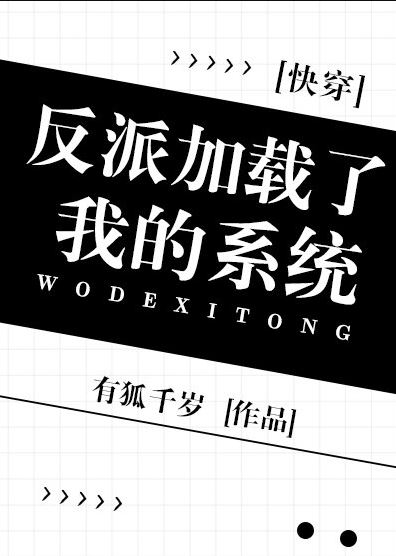
The Villain Loaded My System
+Add to Custom List
Sort
Add review
... Read More
I need to talk about this one moment because it completely got me. Ji Chen is in a boardroom, everyone's terrified because he's been staring into space with this dark expression — you know the type, the boss who's about to fire someone for breathing too loud — and then his phone lights up. The contact is saved as 'little spy.' Little. Spy. Not 'Gu Xiyu,' not the mission handler, not even a codename. Just 'little spy.' And the message? His dad had a car accident and he's asking Ji Chen to tell 'Boss Yang' to accept an apology and reschedule. This is Ji Chen composing a message while his face is doing that thing where he looks like he's about to murder someone, and the person on the other end is casually sending family updates through what might be the most compromised communication channel in literary history. What kills me is that earlier, the narrative told us Ji Chen's internal monologue about Gu Xiyu — how he thought he looked better than expected, soft hair, thin and fragile-looking, but with a heart calmer and more ruthless than anyone else. And then immediately after, he's the one sending these intimate little messages through a system that's supposed to be his enemy. The CP tension here is SUBTLE. It's not grand confessions or dramatic confrontations. It's two people who are technically on opposite sides of a mission, communicating through a system neither fully understands, saving each other's contacts under ridiculous nicknames, and neither of them is willing to admit what's actually happening. I'm obsessed.
... Read More
I need to talk about the G city apartment scene because the writing shift when Gu Xiyu arrives there is INSANE. One moment he's in this sleek, camera-ridden mansion controlled by Ji Chen, and the next — the walls are gray and dirty, the pedestrian roads full of potholes, advertising papers fallen out of mailboxes like nobody's cared about this place in years. But inside? Completely different. The room is CLEANED. Western-style design, sparse but intentional. And then the detail that got me — the spring dog squatting beside the cupboard in the living room, EXACTLY the same as one in the original owner's room. That single image connected past and present like a physical thread. You could feel the layers of time in that room. The punishment scene was also remarkably visceral. I mean, the description of that electric current — "from his tail vertebra all the way to the top of his head, cutting off all his thoughts" — I physically felt that. The thin layer of sweat on his forehead. The way his eyes stayed "terribly calm" while his body betrayed him. That contrast between external composure and internal torment was painted with such precision. And Fu Nian's entrance — his face appearing from behind an OPEN DOOR like he was expecting this moment. He wasn't surprised at all. Which means he KNEW Gu Xiyu would come. He'd already anticipated the entire chain of events. That apartment wasn't just a setting. It was a trap, or a sanctuary, or both. And the anime character ornament on the shelf felt like a relic from a life that belonged to someone else — or someone he used to be.
... Read More
This passage keeps coming back to one question: who gets to be the protagonist of their own life? Ji Chen's realization that he might just be a stepping stone for someone else's growth arc is not just plot exposition — it's the philosophical core of the whole story. "How can the things he has gotten so desperately be a ladder for others to reach their peak?" That's not just anger, that's a rejection of a predetermined fate. The fact that he calls it a "ridiculous rule of this world" suggests he knows something about the mechanics of this reality that most characters don't. Meanwhile, the original owner of Gu Xiyu's body anticipated his own death. He arranged for his data to be sent to a hidden address, entrusted it to Hao Zi, and planned ahead. That's not passivity — that's a different kind of fighting back. Both of these characters are dealing with forces larger than themselves, but neither one is just accepting their role. And then there's the uncle, the so-called protector who is actually the villain. He's playing the long game, building trust, waiting for the right moment to infiltrate. If Ji Chen is fighting the narrative, and the original owner was preparing for his fate, the uncle represents what happens when you accept the game and play it ruthlessly. Three different approaches to the same fundamental question: when the world has already written your part, what do you do?
... Read More
This chapter is a masterclass in shifting tones without losing the reader. You go from an intimate gift exchange → to a social confrontation with Lan Yue → to a wholesome clothes-gifting scene with Cheng Qianqian → to a domestic moment at home → to the EMOTIONAL NAPALM of the prison reveal. Each beat serves a purpose. The Lan Yue interruption works as both comic relief and genuine tension — we know he's a threat but the narrator explicitly tells us Ji Chen will get depressed later, so we're reading with dramatic irony. Then there's this quiet beat with the white cat being angry because they left it alone, which is such a small domestic detail that makes the world feel lived-in. And the pacing of the prison scene itself — slow buildup, describing the fraudster's appearance in detail, the parents' reactions shifting from disgust to shock — all of that earns the emotional payoff. The author trusts the reader to sit with uncomfortable moments instead of rushing past them.
... Read More
"Sure enough you were born as a jinx." That's the line. That's the LINE. Xu Caiting says this to Gu Xiyu's face while his brother is literally in a hospital bed and his father just got hit by a car. And the worst part? The narrative doesn't even frame it as shocking in the moment — it just says "Gu Xiyu was startled. It turned out that this was the case." Like he already knew she'd say something like that but hearing it aloud still hits different. Meanwhile Gu Xun, the guy who caused the accident by yelling at the driver to go faster and run a red light, immediately pivots to "Ah yu, help your dad, tell second young master Chen about today's affairs and let him help me to apologize to Boss Yang." THE AUDACITY. The dialogue in these chapters is so sharp because everyone is speaking from their own distorted priority system. Xu Caiting is protecting her son's interests. Gu Xun is treating Gu Xiyu as a resource. Even the marriage registration clerk sounds almost artificial with her "I wish you get happiness and wealth and a long life together" enthusiasm against this completely loveless arrangement. The only character who doesn't speak much but says everything through silence is Gu Xiyu himself.
... Read More
Okay so the Writing Department on the 12th floor. I need to talk about this scene. The supervisor is described as this mature, capable woman who gives Gu Xiyu a mountain of financial paperwork and just... leaves? The keyboard crackling around him while everyone ignores his existence? I could literally SEE this. It felt like a scene from a Korean drama where the new guy walks into the office and everyone's already formed their opinions before he's even sat down. The contrast with the police bureau people who apparently looked at him like he was garbage is wild — same guy, different world, completely different treatment. Then BAM — the Chen family mansion. 'This kind of mansions really existed.' The narrator's voice there is chef's kiss. And the old housekeeper calling Chen Jin 'Fifth Young Master' while this whole secret identity thing is supposedly in play? The setting is doing SO MUCH WORK here. The mansion isn't just a backdrop, it's a character. It's rich, it's old, it has history — and Chen Jin is infiltrating it as someone he's not. The visual of two people in all-black walking up to a grand old estate like 'we're here to collect souls' (yes, Gu Xiyu literally thought this) is comedy gold but also deeply atmospheric. The fact that the company has a 'Program Department' where spies from Tian Hai are being uncovered, a 'Writing Department' on the 12th floor, and connections to this massive feudal-style family estate... the worldbuilding is layered in a way that makes you want to draw a map immediately.
... Read More
Okay so this chapter had me doing a double take. Gu Xiyu goes to supervise Lu Ziqing's homework like usual, and suddenly we find out this rebellious kid is actually a TOP-TIER competitive gamer. The moment he checks Gu Xiyu's account and sees the nickname 'CC' — and realizes Gu Xiyu was that arrogant enemy they kept fighting online — I literally sat up straighter. What a twist. And then the whole professional gaming suggestion lands like a bomb. Gu Xiyu casually asks 'Haven't you thought about playing professionally?' and Lu Ziqing's mouse stops dead. Then that explosion: 'Only knowing playing games all day long, you fucker only know how to do this kind of unsuccessful things!' His own father's words, hurled at him, echoing back. The way Gu Xiyu sits there processing it — the silence after — that's one of those moments where the plot just... punches you in the chest. The author also drops this tiny note at the end: 'Lu Ziqing: How can I know if I haven't tried it?' Which is basically the entire chapter compressed into one sentence. I love how the plot layers reveal — first the gaming talent, then the father wound, then the author's own commentary. Three layers in one chapter.
... Read More
'I wouldn't want to go to this blind date if my dad hadn't forced me.' Okay, so random girl in a cafe, mid-monologue, and somehow she becomes the most entertaining person in this entire scene. Let me just say—this woman has SPIN. She's complaining about a blind date while simultaneously spilling tea about the CEO's disfigured son and openly admitting she'd rather date his nephew. This is a woman who does not care about subtlety and I am HERE FOR IT. And then Gu Xiyu just materializes in front of her. 'The girl was stunned and hung up the phone. After meeting the other's slightly narrowed eyes, she subconsciously said in a soft voice, hello...' The contrast between her loud, rambling energy and his barely-there presence is comedy gold. She's out here discussing inheritance disputes and erectile dysfunction in the same breath and he just... appears. Like a ghost. The narrative voice throughout is also worth noting. It's detached enough to give you the exposition you need but it has moments where it lets you IN—like when it describes how the staff in the control room got worse at their jobs the more anxious they became. 'But the more anxious they were, the worse they handled the things.' That's not just plot information, that's commentary on human nature wrapped in narration. The author knows how to write people falling apart in real time.
... Read More
I'm still thinking about the ending of that basketball court scene. You know the one. After Gu Xiyu wins the fight, after Lu Ziqing has clearly been thoroughly dismantled in front of his crew, the text says this: "He drank the water in the water bottle he took out of his schoolbag and took his fingers together. He squeezed the bottle so that it was smashed and threw it into the trash can more than ten meters away." Ten. Meters. With a CRUMPLED WATER BOTTLE. I don't care what anyone says—that is a moment of pure, unfiltered wounded pride. This kid just got his ass kicked by a stranger half his size, and instead of crumbling, he did something almost theatrical. He picked up the pieces and launched them into the distance like he was launching his own humiliation away from him. But also like he was marking territory. Like he was saying 'I'm still here, I'm still dangerous, watch me.' And the fact that Gu Xiyu noticed ALL of this, noticed every detail, and still chose to just smile at him afterward? That feels like the beginning of something. Not romantic, not yet, but definitely charged. There's a recognition happening between them that goes beyond fighter and beaten. Lu Ziqing saw Gu Xiyu as a threat and also as someone who SAW him. And Gu Xiyu saw someone he can't ignore. Then there's the quieter emotional thread with Xie Chunhua, his mom. She's worried he's only agreeing to this mission to escape Gu Sichang's violence. She hands him crumpled banknotes for food. They live in a tiny two-bedroom rental. The tenderness in that scene is so understated it almost doesn't register until you sit with it. "Take these and when you get hungry, go out to buy something to eat." That's a mother saying I love you without saying it. And Gu Xiyu refusing the money but still calling her 'Mom' and patting her shoulder—that's him choosing to stay in this role, choosing her, choosing to protect this fragile peace. Two different kinds of love in one chapter. One explosive and violent, one quiet and desperate. Both real.
... Read More
There are layers of meaning stacked in this passage that I didn't fully catch on the first read but which completely recontextualize everything. The tea. Of course it has to be tea. Ji Chen doesn't stab him or push him off a cliff—he serves him a beverage with an "unforgettable taste" and talks about saving it for a special occasion. The tea is hospitality weaponized. It's the cultural symbol of care turned into the mechanism of murder. And Gu Xiyu's first instinct isn't to fight—it's to be AMAZED by the taste. "I was amazed by it." That's the tragedy of his character compressed into one sentence. He appreciates the gesture even as it kills him. Then there's the transaction theme that carries into the next world. The father sold his son for 100,000 yuan. The previous world: Ji Chen "spent" Gu Xiyu's life as the price of his own twisted love. The Lu family: bought a marriage certificate to cure a coma. Every relationship in this story is being measured, priced, and traded. The system itself is the ultimate marketplace—souls processed like data packets, missions queued like orders. And Gu Xiyu himself keeps getting reduced to function. Mission target. Original body. Cannon fodder that doesn't appear much in the subsequent plot. Even his name gets filed away by the system. The question this arc keeps asking, without ever stating it outright: when everything you are gets converted into data, into a transaction, into someone else's plan—what's left that's actually yours? The answer, apparently, is the next world.
... Read More
The atmosphere in these chapters is so carefully constructed that I felt like I was actually walking through that house. Let me paint this out for you because the imagery deserves its own moment. Gu Xiyu standing in the corridor at midnight, the study light still on, hearing Ji Chen's voice through the door conducting some kind of multinational conference. The white cat on the big bed, bored, looking around with round eyes. The curtains wide open, Gu Xiyu catching sight of Ji Chen through the window in some small courtyard, phone pressed to his ear, lips moving slightly. And that cat—still the white cat, running around him, shaking its body. This mansion feels ALIVE. Not Gothic or ominous, but layered. There are multiple courtyards. There's a study that stays lit past midnight. There's a hallway where an old butler appears with coffee like he materialized from the walls themselves. The bookshelf that occupies an entire wall in Ji Chen's room—rows of books, large and thin, suggesting a mind that collects knowledge the way other people collect possessions. And then the next morning: Gu Xiyu alone in bed, phone at 10%, dozens of missed calls from people he clearly doesn't want to deal with. An extra bottle of eye medicine on the windowsill. Ji Chen noticing him watching from the window and smiling that dangerous smile. The world feels enormous and slightly dangerous, and every corner has secrets tucked behind it.
... Read More
Okay so let's talk about this mission structure because honestly it's way more clever than I expected going in. Gu Xiyu gets dropped into this world thinking he's there to fight the target — and you can literally feel his disappointment when he reads the mission brief. He's a fighter. He wanted three hundred rounds of hand-to-hand combat. Instead? Corporate sabotage. He has to either infiltrate Fengming HQ, block a contract, or become a superior at PAP and cancel it outright. That's actually a really interesting triad of objectives — it gives the character options instead of just one railroaded path. But then the twist I found most interesting: the original body had already applied to Fengming before. The system didn't just drop Gu Xiyu into a blank slate — it plugged him into someone who'd already tried and failed. And now he's accepted into a company that rejected him once? That's dramatic irony waiting to happen. Also love that the target's plan to acquire 20% of PAP shares and take over the board is essentially a move to destroy the Ji Group that the original protagonist was supposed to inherit. It's not just a business deal, it's a dynastic assassination attempt dressed in a suit. The fact that Ji Zixuan — the original protagonist of this world — was robbed of this opportunity by the target's vicious competition for the R&D team adds another layer of personal grievance underneath the corporate chess game. It all ties together.

Leave a comment

You must be logged in to leave comments. or
