The Villain Is Too Cute - Reviews

The Villain Is Too Cute
+Add to Custom List
Sort
Add review
... Read More
"Don't cry, baby, dad will take you to play, and dad will buy you whatever you want, okay?" I literally gasped out loud when I read that. Yin Yunqiu's voice going from ice-cold to this unbelievably soft tone? Who gave him permission to be this good a father after being basically absent? And Minglu! That little guy wrapped around his leg like a koala, refusing to let go, crying out of breath but still managing to squeeze out an "Okay~"? I'm not crying, YOU'RE crying. The emotional arc between father and son in these chapters isonestly the highlight. Everything about Minglu's behavior screams neglected child who just wants attention. Yesterday he cried bitterly when Yin Yunqiu showed him kindness, and now we understand why—it wasn't just shyness, it was years of emotional starvation. When he hears his mother threaten him about bothering his busy dad, something in him just snaps. The child has learned that his father is unavailable, and that realization must have been devastating. But here's what got me—the scene where Yin Yunqiu holds that tiny hand, kisses it multiple times, and his eyes get moist. He's not just feeling sorry for the kid; he's grieving. Grieving the time he's already lost, grieving that he didn't notice sooner. And Minglu, the little soldier, he senses it. He rests his face on his dad's neck and goes limp—total surrender, total trust. That's the most heartbreaking and beautiful thing I've read in ages. Meanwhile An Meijun is out shopping at luxury stores, completely unaware that her empire of lies is crumbling. The contrast between her carefree extravagance and the abandoned child waiting at home? It's almost too much. I found myself wanting to shake the author and also hug her at the same time because the emotional damage this story is doing to me is real.
... Read More
Okay so let me just say this plot does NOT play around. We get a full three-year time jump compressed into a few pages and honestly? It works. The author doesn't waste a single beat. You have the setup—Yuan Feng showing up with teaching materials on day two of summer vacation—which immediately signals something's off, and then the whole pen incident hits like a freight train. But what really makes this work is the payoff. That confession at the end after three years of waiting, after Yin Minglu turns eighteen, after everything... it lands because every single intermediate moment earned it. The entrance exam score (over 200 points!), the military school uniform description, the way Yuan Feng literally counts seconds on the day of the college entrance exams—that's not filler, that's emotional engineering. And then the twist that Yin Minglu's heart also beats faster for him? Chef's kiss. The author didn't make it one-sided devotion. Both of them were slowly falling without saying it out loud until the very end. Did I lose my mind when Yuan Feng stole that same pen back the next day though?? Like bro, you're playing 4D chess and we didn't even notice.
... Read More
There's something quietly devastating about how the author handles Xia Ming's arrival. You know he's been here before—you can feel it in every line. The quilt scene isn't just comedic relief; it's a full-circle moment loaded with regret. He watches two children whom he once failed, and the reader understands everything without the author spelling it out: “Only that child would greet him with innocence and curiosity, but it was a pity that he didn't cherish this kindness in his previous life, leaving a lifetime of regret.” That single admission hits harder than any dramatic confrontation could. The plot here isn't about grand twists or shock reveals—it's about the slow, painful accumulation of memory pressing against the present moment. Xia Ming knows what's coming. He knows Yuan Feng becomes his lifelong best friend. He knows Luo Cuihua. The tension doesn't come from wondering what happens next; it comes from watching him try to navigate a path he already failed once. And yet—and this is what makes the whole setup work—the author never lets us forget that knowing the future doesn't guarantee a different outcome. The real question hanging over every polite smile and every carefully measured word is whether wisdom from a past life is actually enough to change anything, or whether fate has its own stubborn gravity. The subplot threads are even more interesting: Han Shihao's manipulation, the family dynamics shifting like tectonic plates beneath the Luo household, Luo Yusheng's relocation to the Yuan family—all of these are quietly setting up conflicts that feel inevitable rather than forced. What I found most compelling is that the author trusts the reader to catch the subtext. The Luo sisters' contrasting reactions to Xia Ming's arrival aren't just character moments; they're foreshadowing the very different paths these relationships will take. Cuihua sees opportunity and status; Cuimiao sees wonder and warmth. Neither reads the room correctly, and that dramatic irony is delicious.
... Read More
'She wished she could pour it on him instead.' This line. This single line tells us everything we need to know about Jiang Mingqin's entire emotional architecture. Let's talk about her for a moment. She's standing there, surrounded by girls offering water to Yin Minglu, and her internal monologue is just pure venom. She blames her biological mother. She curses in her heart. She wonders why he doesn't stumble, why he keeps performing better. And the most chilling part? She genuinely believes that if her mother hadn't been kicked out of the Yin family, she could have 'raised him to be a waste' like she apparently did in her previous life. This is a character who sees human relationships as power dynamics. Yin Minglu isn't a person to her — he's a position on a chessboard. When she asks about him after her dance, it's not because she cares. It's because she wants to see the expression on his face when she dominates the room. 'Was he feeling like a loser, only able to look up to her performance?' This is not a love confession. This is a conquest report. And then Chen Gongzi enters the picture with his gentle concern — 'You're just too soft-hearted, always agreeing to every request.' The irony is brutal. He genuinely believes she's innocent and sweet, while we readers know she orchestrated this entire performance as a calculated power play. The guy has no idea what he's dealing with, and that gap between perception and reality is where the story's real drama lives. What fascinates me most is how Jiang Mingqin switches her expression 'as if they had been conquered by her extraordinary performance and striking beauty' into 'soft and harmless' the moment she raises her head. This woman is a performer in every sense. Her identity is built on manipulation — of audiences, of classmates, of Chen Gongzi, of Yin Minglu. But here's what keeps me up at night: is she actually happy? She got what she wanted — everyone's attention, Chen Gongzi's care, the title of campus goddess. And yet, the text says she felt 'a surge of excitement that was hard to contain,' not joy. Not fulfillment. Just... excitement. Like she won a bet, not like she achieved something meaningful. The question that haunts me: when Yin Minglu takes the stage, will she finally see him as a person instead of an obstacle? Or will she double down on the manipulation?
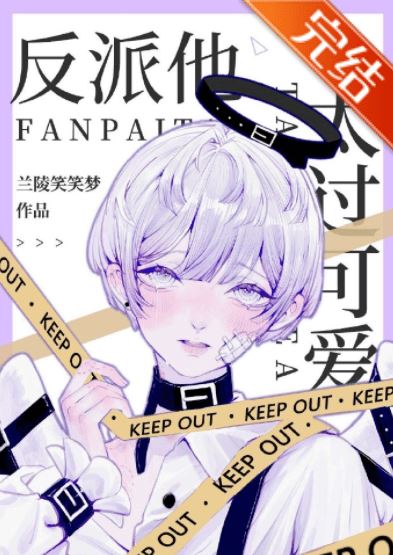
... Read More
Xia Ming's family is described as a cage and he's a trapped beast inside it. This isn't just poetic decoration, it's the whole thesis of the novel right there. The rural area functions as another kind of cage for Luo Cuihua — she's academically superior, more capable, more sensible, but the exchange quota goes to her brother anyway because of parental favoritism. She's trapped in this small village serving people who don't deserve her effort, watching her younger brother potentially rise while she's expected to marry an ordinary man and rely on him for rights in her own household. Meanwhile the city kids — the ones who get all the advantages — can't even repair a pigsty without vomiting at the smell of dung. There's this gorgeous bitter irony where the rural children carry the weight of life from the beginning, studying while doing the toughest work, while the city teenagers sleep till noon. The show's production team wanted to make a comparison and the result was that the young masters refused to cooperate after one painful attempt. The system is rigged in every direction.
... Read More
The pacing in this section is a masterclass in controlled chaos. The author takes us from a bright sunny field where Luo Cuihua is enthusiastically explaining the nutritional benefits of wild vegetables — complete with descriptions of color, fragrance, and flavor that somehow make even the reader salivate — and lands us squarely in Xia Ming's decade-long romantic regret before the chapter even ends. There's no transition warning. One moment we're processing how adorable Yin Minglu looks stuffing his face with sweet potato and the next we're in uncharted emotional territory about midnight phone calls and unhappy marriages. This is the kind of pacing choice that could easily feel reckless but instead feels like the author absolutely trusting the reader to keep up. The chapter doesn't slow down during the big emotional beat — it actually accelerates. Xia Ming's internal narration rolls forward with increasing intensity, each sentence adding another layer of backstory he's clearly been carrying around, until it crashes into the present moment where Luo Cuihua actually says "I am willing" about giving her kettle to Yuan Feng and the middle-aged staff members exchange worried glances. That ending note is perfect pacing — the adults in the scene react to the emotional weight that the narrative just dropped, grounding the heavy internal revelation back into the physical reality of the field. It's like the author knows that if they stayed in Xia Ming's head for too long another paragraph they'd tip into melodrama, so they cut away to the directors frowning at each other and let the audience sit with what just happened. The tension builds from comedic observation to genuine pathos without ever hitting a brakes, and that's why it works.
... Read More
So the book spends this entire meal scene building up the world through food—white rice, fried vegetables, roasted sweet potatoes, a big iron pot, chipped bowls and chopsticks. All of it painting a picture of rural poverty that these city kids have never experienced. And then it pivots HARD to the bathroom situation and honestly? I felt that shift like a gut punch. The hot water detail is doing a ton of heavy lifting here. 'Each person could only bathe for ten minutes at most.' Ten minutes! For a kid who 'usually takes a bath for at least an hour.' The author doesn't need to describe the village, the economy, the Luo family's financial strain—we already know all of it from the dinner table. But the bathroom scene makes it visceral. Yuan Feng pouring out his expensive shower gel because it smells wrong, then having to endure this pungent cheap substitute. The hot water running out because he went over his time limit. Yin Minglu getting hit with cold water and shivering. This is where the story stops being a fish-out-of-water comedy and starts becoming something harder. These kids aren't just culture-clashing over meals—they're losing basic human dignity in real time. The scene at the end with Yuan Feng coughing awkwardly and saying 'I will let you take a bath fi...' (cutting off) is perfectly crafted. Guilt manifest as incomplete sentences. The author just lets the silence hang there and it's more powerful than any description could be.
... Read More
Okay so let me just say this upfront: Yang Runxin is one of the most deliciously nasty people I've encountered in this novel and I cannot stop thinking about her. This woman spent YEARS trying to ruin her own son's reputation, got her comeuppance, and yet here she is trying to sabotage ANOTHER blind date for Yuan Jing like absolutely nothing happened. The entitlement is staggering. But you know what? She and Yuan Jing have this genuinely tragic codependency going on. He knows her schemes are for him. He calms her down. They're stuck together in this miserable little orbit. I kept waiting for him to tell her to back off but he didn't. He just said 'we should live a good life on our own' which is such a fragile sentence hanging there. Meanwhile, Luo Cuimiao completely broke free from her parents' toxic pattern. Her mom saved good news for the son and dumped all the bad news on her. But Cuimiao refused to play that role this time around. That realization hit me hard - she understood that children can't blindly follow their parents, and she actually made it happen.
... Read More
Okay can we talk about how Xia Ming just fully narrated an entire tragic backstory in like three paragraphs and I am NOT okay with this character development?? The author just slides in his internal monologue and suddenly we're learning that Luo Cuihua cried at night after marriage, that she called him in the middle of the night making him feel "robbed," that Yuan Feng told her to give her happiness before marriage but somehow made her cry AFTER. This is such a sharp pivot from what seemed like a lighthearted farming reality show scene into FULL emotional backstory dumping. And the worst part? Xia Ming literally just watches all this unfold while standing there like nothing is wrong. The narrative structure here is actually doing something really clever — it starts with what looks like pure comedic setup (Luo Cuihua showing off, the kid slobbering over sweet potatoes, Yuan Feng being dramatic about thirst) and then drops the heaviest emotional information in the chapter right when you thought you were just getting food content comedy. That shift from "OH MY GOD THIS KID IS CUTE" to "wait, she was IN LOVE with THIS guy first" is jarring in the best way. It recontextualizes everything that came before it. Suddenly Luo Cuihua's smugness during her vegetable lesson isn't just entertainment — it's layered with history. And Yuan Feng's casual "you can drink mine" doesn't read the same anymore either. The plot keeps these three people orbiting each other and every interaction now has double and triple meanings depending on whose POV you're reading through. Absolutely brutal for Xia Ming's character arc though. Guy didn't even get to say anything, he just had to sit there and watch his whole romantic history play out in real time while someone else got the girl.
... Read More
That opening scene with the bonfire—God, I can still picture it. The villagers surrounding the three teenagers, ethnic costumes fluttering, folk songs ringing out across the mountain night. You could practically feel the heat of those flames and the dust kicked up by jumping feet. It's rare when a story nails atmosphere this well. This isn't just background decoration; the countryside setting becomes a character itself, slowly softening the city kids' rough edges. But what really stayed with me? The contrast between that warm bonfire memory and the brutal reality of the tractor ride home. That muddy, uneven road—the one described as making the rear compartment ‘cramped' with ‘knees close to each other.' The author doesn't shy away from the ugly truth: the countryside isn't always picturesque. It's rough terrain that makes you crawl inside yourself. When Luo Cuihua kept ‘bumping' into Yuanfeng and Xia Ming, the physical proximity forced by that bumpy road created this entire ecosystem of awkward tension. Every collision—‘duckweed continuously shaking and floating'—carried weight because of where it happened. The farewell ceremony scene also deserves mention. The villagers coming from their fields, farm tools still in hand, to wave goodbye. The village chief's rough hands resting on young shoulders. These details—the agricultural gadgets made by hand, the moist eyes of two old men who ‘truly regarded the three young boys as their own grandsons'—grounded the whole story in tangible reality. The setting wasn't just pretty; it was lived-in, worked-on, real. And that tractor, that terrible, trembling vehicle, became this pressure cooker where all the relationships were forced into focus. Brilliant worldbuilding that serves the emotional arc perfectly.
... Read More
I need a moment. The Yin Yunqiu section hit me harder than anything else in these chapters and I didn't see it coming at all. Here's this guy who used to hold his son in his arms after a long day of work, feeling that warmth and softness, and now his son is sixteen and walking across a sports field in a robe and everyone's looking at him like he's someone important. "In that young man's life, many people had gradually appeared: friends, classmates, teachers, and various characters. His role as a father was gradually diminishing." CHILL. Absolute chill down my spine. This is the quietest, most devastating parental love I've read in ages. It's not dramatic. There's no big speech or tears. Just a man standing in the stands realizing his job is slowly being replaced by everyone else's presence in his child's life. And then—THEN—Yin Minglu looks up, spots his family, and immediately drops the scholarly act to pout and blow a kiss. The way the author writes this shift from elegant parade leader to mischievous teenager is everything. That single gesture undid the whole melancholy atmosphere and replaced it with something warm and messy and real. Yin Yunqiu's smile isn't sad anymore. It's proud. "He needed to live at least until the age of sixty to support his child's sky." That line. That ACTUAL LINE. I had to put the book down and stare at a wall for five minutes.
... Read More
"He smelled the familiar scent of chicken and moved his legs under the blanket, puckering his lips, unintentionally causing a smile." This line. This SINGLE LINE. I had to pause and just sit with it. A three-year-old child, half-asleep, dreaming of food, smiling without even knowing why—and Yin Yunqiu is there tucking him in like it's the most natural thing in the world. There's no romance here, no dramatic confession, just this quiet moment of a father who clearly loves his son despite everything. And then the contrast with An Meijun hits you like a truck. She's down there putting on makeup, loosening her neckline, calculating how to play the field across four powerful families. She posted a photo with the child to look like she's getting back together with her ex—completely unaware or completely indifferent that her son's face is in it, that his image is being used as a prop in her little game. The text says: "If she truly loved Minglu, as she claimed, how could she not notice the potentially harmful impact on the child?" I'm not even mad, I'm just... sad for that kid. He got a father who tucks him in and worries about bedsheet drawings, and a mother who sees him as content. The CP energy here is basically nonexistent, which honestly feels more realistic than any romance novel I've read. Sometimes love isn't enough, and the story is brave enough to say that out loud.

Leave a comment

You must be logged in to leave comments. or
