The Villain Is Too Cute - Reviews

The Villain Is Too Cute
+Add to Custom List
Sort
Add review
... Read More
Let me just say this - An Meijun is the funniest character to ever exist and I am here for her. This exchange: "Auntie, don't blame Minglu. He just met me today and isn't familiar with me yet. It's normal for children to be cautious around strangers." Meanwhile she's thinking: "Are you two related in distorting logic? No wonder you're uncle and nephew; you both favor each other, like wearing filters." I literally laughed out loud. The author's voice for An Meijun is SO distinct - she's calculating, greedy, constantly scheming to get her hands on whatever gifts the child accepts. Her internal monologue is gold. Meanwhile Yin Minglu's dialogue is this perfectly deadpan child who understands exactly what's happening and weaponizes politeness as a shield. And then there's the younger Yin Jiyu's voice - this well-meaning guy offering million-dollar turquoise beads to a toddler like it's nothing, genuinely confused when rejected. "Minglu, call me 'big brother,' and I'll give you this golden pig." The naivety is almost painful to read knowing what he becomes in future cycles. The contrast between these voices - An Meijun's scheming, Yin Jiyu's earnest wealth-flexing, and Yin Minglu's razor-sharp diplomatic deflections - creates this incredible dynamic where everyone is talking past each other while the reader sees everything clearly.
... Read More
There's something so cinematic about this New Year's Eve scene. I keep coming back to the visual of Yin Minglu in his bright red festive attire, holding that tiny cup of tea, stumbling over his blessings—'good fortune like the eastern sea, a long and healthy life.' It should be adorable. It IS adorable. But the red envelope changes the whole mood, doesn't it? Three hundred thousand. Not a small number for a toddler. The author lingers on it, and suddenly you're not watching a sweet family moment, you're watching An Meijun's eyes track that money like a hawk. 'I have to figure out a way to get this money. It should belong to my daughter.' That thought runs through her head almost instantly, and it's chilling how calculated she is even in this quiet moment. The contrast between the warm yellow lighting of the New Year celebration and the cold calculation in An Meijun's mind—that's the author's signature move, isn't it? Layering sweetness over poison. And then the setting itself: the grand Yin family mansion, the staircase where Yin Jiyu descends like some kind of ethereal figure, the dining table where the child eats with gusto like a hungry little wolf. These details paint a world that feels lived-in and real. The Yin family isn't just rich, they're aristocratic in a way that shows through etiquette, through red envelopes prepared in advance, through the way An Meijun tries to maintain her 'noblewoman' smile despite being embarrassed by her son's lack of refinement. The world feels enormous and oppressive, like every corner has eyes.
... Read More
I need to talk about An Jun because this boy is a vibe. His sister throws a tantrum, he silently picks up her phone, immediately checks if it's broken (praise be to Yin's phone quality), opens a game, and then gets SCOLDED for playing it. 87 days of playtime and his sister's response is 'you traitor, you still play this game! Don't you know who the people in this game are?' And his reply—just lazy, 'I'm just supporting it'—while internally monologuing about how he's the uncle of the young master so obviously he's gonna play. This kid is not trying hard at all and he's absolutely thriving. His rebellion is just... walking back to his room. No dramatic speech, no confrontation. Just 'I'm going to my room now, bye.' Meanwhile An Meijun is clattering her teeth at the dressing table planning her wedding return. The sibling dynamic is equal parts exhausting and adorable and I would watch this whole series just for them.
... Read More
This batch is basically a masterclass in stacking conflicts that seem separate but are clearly connected. An Meijun vs. her own emotions about the girl getting likes. An Jun vs. his sister's expectations about loyalty. The An parents vs.... well, everyone, honestly, when they start casually steering the conversation toward 'managing the child's money nicely like we did with your lucky money.' Meanwhile Yin Minglu is over there just sneezing milk bubbles and wanting to go shopping. The stakes keep escalating without anyone raising their voice. An Meijun going from jealous sister to calculating future gold digger of a six-year-old's inheritance is peak tension—and it's wrapped in such domestic, unthreatening language. 'Your parents collected your lucky money... it's in the bank.' Translation: give me access to the child's fortune. And then cut to the sweetest dad moment and the translator's apology for being late because of hospital stuff. The tonal whiplash is real but it works.
... Read More
This chapter has pacing that reminds me of a bomb ticking down. It starts with a discovery—a bag of children's clothes—and then each subsequent beat raises the stakes a little more until everything detonates. What I appreciated most was how the author never rushed the confrontation. Yin Yunqiu takes his time. He sends the child away first. He lets the housekeeper settle Minglu with cartoons. He lets the atmosphere thicken before he even speaks. Then comes the dialogue, and it moves in waves. First the observation—no boys' clothes anywhere. Then the accusation—An Meijun cares more about her niece than her own son. Then the threat—wedding cancelled, go home tomorrow. Each statement lands like a hammer blow, and the chapter gives An Meijun room to react after each one. We feel her fear building, her calculation shifting, her desperation increasing. By the time she's grabbing his suit and pleading about single-parent trauma, we're already exhausted on her behalf. The structure also does something clever with Minglu's perspective. We keep getting little flashes of what the child is experiencing—eating happily, nodding at cartoons, refusing the housekeeper's porridge offer. These brief insertions remind us that there's an innocent person caught in the crossfire, and they add emotional weight without slowing the main action. The ending arrives almost too quickly, which is intentional. The An family is already mobilizing, and the chapter closes on the promise of the next confrontation. It's a cliffhanger that doesn't rely on mystery or surprise—it relies on dread. We know the An family is greedy, we know they won't accept defeat quietly, and we know Yin Yunqiu is prepared to fight them. That's a much more satisfying buildup than any dramatic revelation.
... Read More
Okay so this whole baby-swap reveal is actually layered way deeper than I expected. Yin Yunqiu doesn't just come out swinging with rage—he actually prepared a contract. But get this: he deliberately left loopholes in it. The agreement says the child lives with him, but it doesn't sever the bond with An Meijun. If the kid grows up and refuses to sign, he can just tear it up. A cold businessman leaving an escape hatch? That's some next-level strategy right there. "This kind of love could not be counted in the long years. He only believed in the agreement in black and white." And then the child—who's literally four or five—presses red handprints instead of signing. A kid who can't even write his own name yet is making the most legitimate "signature" possible. I laughed out loud. The story keeps surprising me with how smart everyone is in their own way. Yin Minglu got exactly what he wanted (staying with his dad) and celebrated by drinking an extra bottle of milk. Meanwhile Yin Yunqiu is dismantling An Meijun's entire facade by feeding her own lie back to her—the congee she claimed to make was actually made by HIS kitchen staff. The plot moves like a trap closing slowly. Not a single scene is wasted. Every detail Yin Yunqiu gathers (her itinerary, the shopping bags, the missing class) piles up until there's no room left for her lies to breathe.
... Read More
Okay, I need to talk about Yin Minglu because THIS kid is absolutely unhinged and I am here for it. Let me be clear: I have never seen anything like this in any novel. A four-year-old who is basically a soul-transmigrator, hiding in the body of a rich heir, using his daddy's money to basically buy the production crew's comfort as a gift to his idol. The scene where he runs over with his basket of vegetables and asks Chu Run 'Male God, do you want these carrots or this cabbage?' — I literally screamed. Who writes this? The child has full strategic awareness. He knows his dad is powerful, he knows how to deploy resources, and he channels ALL of it toward making Chu Run's life slightly more tolerable during this rural shoot. That is both deeply touching and completely deranged. And the best part? Chu Run is so casually接受ing all this that it becomes the new normal. He's getting Yubari King melons in the middle of nowhere while the other cast members are bargaining with villagers for vegetables. The assistant's reaction says everything — 'What kind of magical place is this?' But then comes the kicker at the end: Yin Minglu's internal monologue — 'If the original owner really was from the Yin family, it would have been great, but unfortunately, he's not.' BOOM. Transmigrator confirmed. And he's been playing 4D chess this whole time while pretending to be an adorable four-year-old fangirl-fanboy hybrid. I need to sit down.
... Read More
OK so I need to talk about Yin Yunqiu and Yin Zhongyuan because this sibling dynamic is SO rich and I'm obsessed. First off, they look alike—narrow phoenix-like eyes—but you can literally read their souls just by how they carry themselves. Yin Yunqiu? Composed, cold, protective. His younger brother? Drunk, loud, a degenerate. The contrast is chef's kiss. But here's the thing that got me: Yin Zhongyuan comes upstairs not to bond or complain about the dinner party, but to deliver news that his brother is being played. And he does it with this casual cruelty—joking about the green halo like it's entertainment. But then... he also looks at Minglu and genuinely melts. Pinches his cheek. Calls him adorable. For a second there, I thought maybe this guy isn't completely irredeemable. Then he ruins it with the whole scandal dump and I was like BRO. Yin Yunqiu's reaction though—calm, detached, saying 'it has nothing to do with me'—that's the real character moment. He's not just distancing himself from An Meijun; he's protecting Minglu from being dragged into her mess. The text says he felt no disappointment toward her, only pity for his son. Oof. That's not a man who's in love; that's a man who accepted long ago that this arrangement was never going to be what he wanted. Three years of raising a child alone and this is how it ends? Brutal.
... Read More
I need everyone to understand what just happened at Capital Airport because my heart stopped. They land, the fans are going absolutely WILD for these three kids — and I mean truly fanatical — and Luo Cuihua still has NO IDEA who this 'sister of the Republic of China' is that everyone keeps shouting about. She's standing there completely clueless while the whole world seems to know except her. Then THIS WOMAN appears. Blue Chinese dress, snowy white skin, ageless beauty, the crowd literally loses their minds screaming 'Ah, my sister!' and 'You look so alike!' The two sisters are shocked in an instant. SHOCKED. I am literally on the edge of my seat. Who is this woman??? Why do people think Luo Cuimiao looks like her??? What does 'sister of the Republic of China' even mean and why is Luo Cuihua the only one who doesn't get it?? This author knows EXACTLY how to cliffhanger. The entire chapter builds through these smaller moments — the flight, the coffee disaster, the sleeping kid — and then BAM, a gorgeous mysterious woman walks in and everything changes. I immediately need to read the next chapter.
... Read More
This author writes inner thoughts like a weapon and Luo Cuihua is their favorite target. The flight attendant offers basic assistance and Luo Cuihua's brain immediately goes to: "She probably thinks I'm a country bumpkin and is getting a sense of superiority!!" Like... she is a country bumpkin on her first plane ride but the girl literally just helped her find her seat and buckle her belt and Luo Cuihua has constructed an entire imaginary narrative about the stewardess's secret motives. And then the coffee scene?? "Give me a cup of hand-ground coffee. I would prefer foreign-produced coffee beans, plus some sugar cubes and white cream." Then pretending to read newspapers and magazines like she's some sophisticated international guest. Meanwhile she's drinking it and her face wrinkles like she's about to vomit. The fact that she ordered MORE than enough to finish the whole giant cup and now has to suffer through it while maintaining her image IN FRONT OF THE CAMERA is the most humiliating thing I've ever read. The contrast between the twins' voices is also chef's kiss. Cuimiao: "Can I choose from all of them?" (genuinely sweet and childlike) vs Cuihua: ordering fancy coffee like she's in a drama (calculating and performative). You can tell everything about these two girls just from how they speak.
... Read More
Let me talk about how this section is structured because the pacing choices are doing a lot of work here. The chapter opens with audience commentary - those bracket-style reactions - which immediately establishes a meta-fictional layer. We're watching a show within a show. This framing device is smart because it gives us permission to laugh at Cuihua from page one. We're not supposed to take her seriously; the audience has already judged her. Then we cut to the teenagers feasting, which is a bright, lively scene. Full of food, laughter, red envelopes. This contrasts sharply with the next transition to Luo Cuihua sitting alone in the yard, fuming. The shift from communal celebration to isolated anger creates emotional whiplash that keeps you engaged. After that, the narrative compresses time beautifully. We go from 'half the village knows by afternoon' to Father Luo returning from town to hearing the gossip at the barber. The rumor spreads faster than anyone can contain it. This acceleration mirrors how internet-age gossip works - once something gets out, it's uncontrollable. The confrontation scene between Father Luo and Cuihua is where the pacing really picks up. Short, sharp dialogue. Quick exchanges. Each line escalates the tension. 'Who do you think you are??' Then Cuihua's response: 'Hahahahaha, today they will ignore me, but the next time, they will beg me.' This manic energy feels like a ticking bomb. Then the final scene - the night, the crying, the window, the cicadas. The pace suddenly drops. Everything slows down. We're in this quiet, sad, almost horror-adjacent moment. Xia Ming remembering his past life. The blood going cold. It's a perfect button to end on. One thing I want to note: the text cuts off mid-sentence at the end ('But her enthusiasm did...'). This is clearly a serialization format where chapters end on hooks. It's slightly jarring but also effective - you want to read the next installment immediately. The author knows how to leave you hanging.
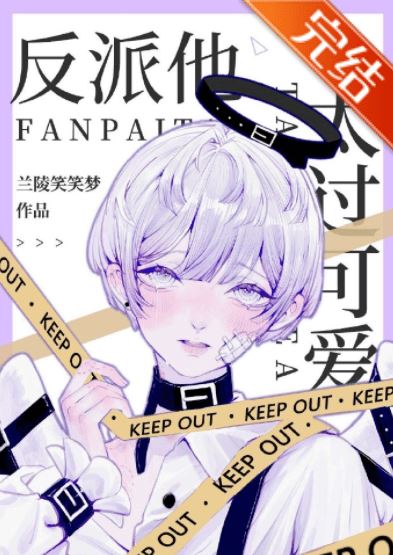
... Read More
The atmosphere in these chapters is honestly cinematic. There's something about the way the author captures the energy of a high school award ceremony that just pulls you right in. Think about it—the room erupting in cheers almost lifting the roof, the cacophony of insults from male students mixed with sour comments from others, the charged electricity of hundreds of teenagers caught up in the moment. It's chaotic and vibrant and completely believable. The late-night self-study session where Zheng Jiangning secretly goes to find the girl before the exam—that scene has this quiet intensity to it. You can almost feel the tension building as he creeps into Class 2's space, convinced he's about to catch his romantic rival in a vulnerable moment. Then the lights go up and everything flips. The contrast between that dark secretive atmosphere and the bright flashing spotlights of the award ceremony is really well done. And the visual imagery throughout these chapters is striking. Yin Minglu described as charming in feminine attire and dashing in masculine attire, catching the attention of everyone regardless of gender. The spotlight flickering on stage, neon lights reflecting off his naturally handsome face as he laughs. These aren't just descriptions they're creating a whole sensory world. Even the classroom setting feels alive with the academic pressure hanging over everything like a storm cloud. The calendar details, the forty-some days counting down to the exam, the whispered conversations about breakups and tragic endings—it all builds this incredibly specific time and place that you can smell and hear and feel.

Leave a comment

You must be logged in to leave comments. or
