The Villain Is Super S*xy - Reviews

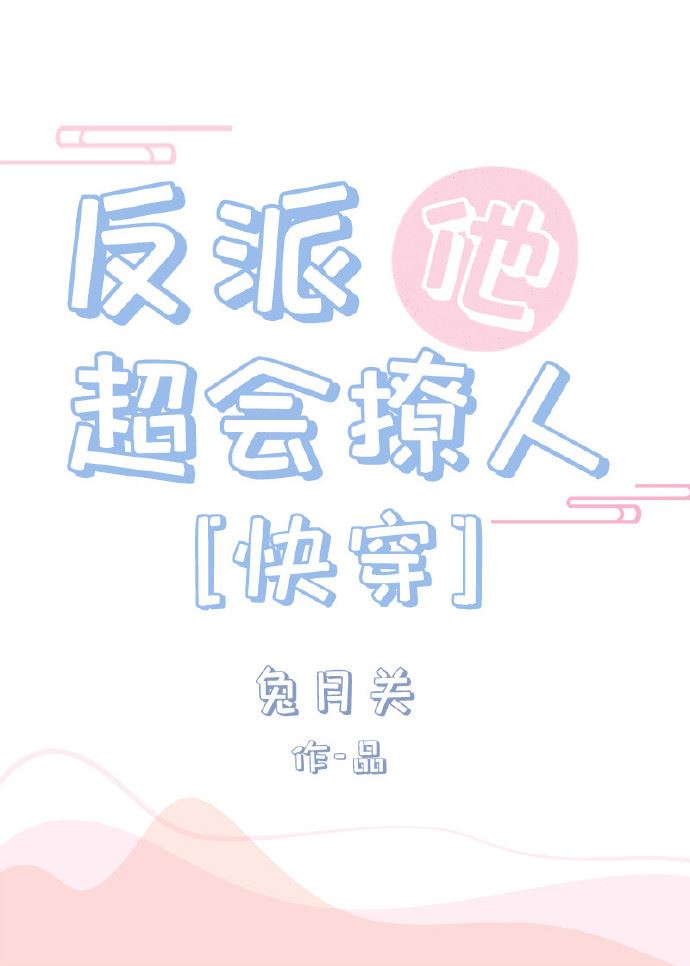
The Villain Is Super S*xy
+Add to Custom List
Sort
Add review
... Read More
This batch is the explosion I've been waiting for. For three years, the author has been stacking threats, secrets, and unspoken resentments, and now all three major threads—the Crown Prince's awakening, the Wei rebellion, and the Emperor's emotional unraveling—collide in one devastating sequence. What I love most is how the plot refuses to take the easy path. Yuan Beiyi surrenders because he's exhausted, because he thinks letting go is the only way to keep Wei Zixuan close. But that surrender is actually his final act of control—he lures the rebels into the palace where his prepared forces ambush them. It's a double betrayal: the rebels betray the throne, and the throne betrays the rebels. And then the ultimate twist? Wei Zixuan kneels—not to save himself, not to save his people, but to beg for his brother's life. Every character is forced to confront what they've been running from. The plot doesn't just move forward; it detonates. Can the Emperor's love possibly survive this moment of absolute vulnerability?
... Read More
I AM SCREAMING. I cannot—I cannot handle Su Jingxuan's voice in this chapter because it is absolutely chaotic and perfect and I need it memorized. The man is fighting a mutated wolf on live arena display in front of dozens of ability users, and his go-to strategy is theatrical complaining. 'You damn wolf, shaking so violently that I'm about to get dizzy. Just wait, today I will definitely catch you.' This is not what you say when you're in a life-or-death struggle. This is what you say when you're bored and the wolf is being inconvenient. And then he drops the Wen Ze information like it's gossip, not tactical intelligence. The casual cruelty of it—using his lover's captivity as ammunition mid-fight—is both ruthless and deeply human. But the crown jewel has to be the finale. After successfully manipulating the wolf into picking him up, Su Jingxuan shouts to the bodyguards below: 'This wolf has a problem! Tell my dad that the wolf has a problem!' Let that sink in. He just orchestrated an elaborate ruse, bit a mutant wolf in the ear, faked an injury, and now he's framing it like a defective product complaint. The sheer audacity of this character is unmatched. And yet, underneath all the performance, there's a weird sincerity to how he speaks to Xue Zhen. Even when he's lying or manipulating, the words carry weight. He's not a smooth manipulator—he's awkward and impulsive and occasionally genuine, which makes every line feel like it comes from a real person, not a plot device. That's rare in this genre. Most characters either monologue or deliver exposition. Su Jingxuan just... talks. Like a person. A slightly unhinged person who happens to be riding a wolf, but still.
... Read More
The dialogue in these chapters is sharp enough to cut glass. Let me just start with Su Jingxuan's line: "I can just kill everyone in this hall who can't keep their mouths shut, distort history, Your Majesty, what do you think of this method?" That is cold, bureaucratic murder wrapped in a polite question. He's not yelling. He's not threatening dramatically. He's offering an alternative like he's discussing dinner plans. And Yuan Beiyi's voice throughout is pure volcanic frustration—"Fine, fine, fine. If you want me to spare him, I will kill him." The repetition mimics someone losing control of their own emotions, spiraling. Then there's the most devastating exchange in the entire passage: Wei Zixuan saying "You killed the child I longed for the most. You killed the man I loved the most." Two sentences, parallel structure, and absolutely everything collapses. He's listing his losses like inventory. No exclamation points needed, the grammar does the work. And Su Jingxuan's closing lines about Fengchen—"Do you remember my second brother, whom you loved deeply and passionately until death?" The word choice here is surgical. "Until death" implies the love was real, which makes the betrayal worse. You can't just dismiss it as manipulation if the feelings were genuine. That's what makes this author's dialogue so effective—it doesn't just tell you what characters feel, it reveals exactly how messed up their feelings are.
... Read More
Can we just talk about Su Jingxuan for a second because THIS MAN IS NOT PLAYING. While every general is flying off the handle about vengeance and massacre, Su Jingxuan sits there, quietly connects dots nobody else thought to connect, and basically single-handedly saves them from walking blindly into an ambush. His analysis about troop numbers, tribal population, and the absurdity of the Li family's behavior is chef's kiss. But what made me actually gasp out loud was the way he held onto Chu Heng's arm. He wasn't just making a strategic point—he was terrified. And Chu Heng? He noticed. He saw the fear, patted his head, pulled him into this incredibly tender embrace, and whispered promises in his ear like they were some ordinary couple saying goodbye at a train station. Meanwhile the entire war room is standing there pretending not to watch. The strategist coughing awkwardly, the officers wide-eyed—this domestic moment happening against a backdrop of impending war is giving me so many feels. Chu Heng is clearly devoted to him in his own way, and Su Jingxuan is clearly not going to let anyone treat him as just a fragile court consort.
... Read More
There are two really cinematic sequences in this chapter and they cut between each other so sharply it's almost violent. First, Xie Lang at his parents' old villa. The nanny with bloodshot eyes matching his own. The lady not yet home from the beauty salon — such a mundane detail that makes the whole thing feel so painfully real. His mother living this normal life while she's destroying his life from the shadows. The study, the computer, the email arriving — it all builds this claustrophobic tension where the reader knows exactly what's coming and Xie Lang doesn't. Then suddenly we're thrust into this massive public spectacle. Hongliang Group headquarters, three floors of people packed in, reporters and international fans and rich people in suits — Mr. Aareon's influence is so huge that entire countries send planes. Zhu Yunsen walks out and the crowd goes wild calling his name. Xie Lang stands in a corner, stubble and red eyes, watching the person he wronged shine on a stage like a sun he can't approach. The contrast between these two scenes — the private, suffocating discovery and the public, radiant revelation — is what makes this chapter hit so hard. We see the truth in an empty room and then we see the consequences of that truth displayed for the whole world to applaud. Chen Ziyan won everything except the one person who mattered, and Xie Lang finally understands what he threw away. One line: "a nobleman in the last century." Such a precise image. Chen Ziyan isn't just rich or powerful — he carries himself like something ancient and untouchable. Which makes it even more devastating that behind all that polish, he's still just a young man who wanted someone to believe him.
... Read More
Let me just say this: the author knows exactly how to string a reader along and I am deeply annoyed by how effective it is. Chapter 304 opens with what reads like a military briefing. Short sentences. Timestamps. Clinical observations. It's boring on the surface - until the mouse clicking happens and you realize someone on the other end of that video call is losing their mind over something as small as a head touch. Then chapter 305 drops you straight into the competition setting without any transition, which is actually brilliant because it mirrors how the protagonist is dropping into a new battlefield. No warm-up, just immediate stakes. The variety show format within the story is genius for pacing too. You've got the Car Scene (establishing rivalry), the Camera Crew (adding the meta layer of public observation), and the Villa Arrival (the enclosed environment that means conflict can't escape). It's a pressure cooker and the author keeps cranking the heat. But the real pacing masterstroke is how information gets dangled. We learn Su Jingxuan is seventeen. We learn he has a blood clotting disorder. We learn his background is intentionally vague compared to everyone else. We learn the original plot had him exposed and discredited. But we DON'T learn what his actual plan is. Every revelation comes with a shadow of unanswered questions. That's how you keep someone up at 2 AM reading "just one more chapter."
... Read More
"All hope was gone. Shu Wenzhe, stimulated and driven mad, screamed and cursed." This is the moment the stakes become irreversible. Before this, there was competition, rivalry, tension. After this, there is nothing left for Shu Wenzhe but rage. The jade — his hope, his everything — has chosen another master. Not just any master. Su Jingxuan. His sworn enemy. The internal conflict here is brutal. Shu Wenzhe isn't just losing an object; he's losing his identity, his purpose, his reason for surviving. The text says the space was 'his hope, his everything,' and when that disappears, what's left? Madness. Blood. Screaming threats that amount to nothing. But the external stakes are equally towering. The Spirit Spring has been acquired. Zombies can now be healed. The apocalypse — humanity's extinction-level event — has a potential solution. But solutions attract conflict. Bian Zhaokun recognizes this immediately: 'To ensure that no one harbored ill intentions towards the Spirit Spring.' The alliance with Xue Zhen isn't just political; it's defensive. The zombie threat is ever-present, a ticking clock. 'If they wasted more time, they would become zombie food.' The delay in G City cost injuries. The retreat required calculation, speed, sacrifice. Shu Wenzhe was left behind not out of malice, but pragmatism — 'What happened to him after leaving was no longer their concern.' That line is chilling because it's true. Bian Zhaokun's son marrying Xue Zhen raises the stakes to institutional level. Two mega-bases uniting against fragmentation, against betrayal, against the chaos that almost consumed them. 'Anyone who dared to cause trouble or act recklessly would face the combined retaliation of the two major bases.' This isn't a threat; it's a promise carved in alliance. The suspense maintains momentum throughout. Will the Spirit Spring be shared or hoarded? Will the bases cooperate or fracture? Can Zhai Changlin be fully restored? Each question drives the narrative forward without slowing for resolution. And the ultimate stake — humanity itself. 'Since they had acquired the Spirit Spring, it was time to restore the world to its former beauty and peace.' The apocalypse isn't just a setting; it's the antagonist, and the characters are fighting not just to survive, but to reverse extinction itself.
... Read More
The pacing here is absolutely razor-sharp. The chapter begins in suffocating silence inside the car - every bump, every glance, every muffled sound carries weight. The author lets the tension build slowly through physical discomfort and unspoken threats until Su Jingxuan finally breaks the silence with his bite. Then immediately after that emotional release, the driver calls out about zombies ahead and the entire rhythm shifts. The car goes from a pressure cooker of interpersonal drama to a vehicle hurtling toward survival mode. The bridge plan introduces a deadline, the zombie horde introduces a physical threat, and the high-level zombie revelation introduces panic. By the end of this passage, the pacing has accelerated to a sprint. Su Jingxuan shouting warnings, the driver sneering back, the others nodding along - everything moves fast and furious. The cliffhanger ending with Su Jingxuan trying to convince them about the high-level zombie is exactly the right moment to stop. You are left desperate to know whether anyone will listen or whether this group is about to walk into an ambush. The structural choice to weave intimate drama with survival thriller elements creates a reading experience that never lets the audience breathe.
... Read More
Okay so I am literally still processing what happened in these chapters. The wooden box reveal—where Su Jingxuan lays out that 110 Nalan soldiers weren't actually wiped out in battle but were secretly captured and turned into human pig poison test subjects—this is NOT just a minor subplot twist. This completely rewires the entire narrative. Up until now, everyone (including us readers, I assume) thought General Nalan died heroically in a tragic ambush. But it was betrayal. Military information leaked. Someone inside the alliance fed them to the Li Clan. And the way this information is delivered is chef's kiss. Su Jingxuan doesn't just announce it; he locks the box and hands it to the military adviser like he's transferring evidence in a murder trial. Then he explains the whole thing—the frontal assault squad getting annihilated, the covert squad being kidnapped, the bird signals that somehow survived. The fact that some of those tortured soldiers managed to send messages using secret bird codes? That's the kind of detail that makes you sit up straight. But here's what really nails the plot mechanics: Chu Heng already guessed the truth. He says nothing, doesn't press for details, because he understands that some scars are blood-soaked and shouldn't be peeled open in public. That restraint tells us more about their relationship than any dialogue could. And the implication at the end—that the fall of Prime Minister Nalan, the Nalan Consort, and the current defeat of the Nalan family were 'probably not accidental'—this is laying groundwork for a MUCH larger conspiracy. The Nalan family didn't just lose a war; they were systematically destroyed from within over time. I keep thinking about how the author uses information control as a plot device. Su Jingxuan holds the truth. Chu Heng already knows it. The military adviser is just now learning it. Every character is at a different knowledge level, which creates this delicious dramatic tension. And the cliffhanger ending—Su Jingxuan declaring he's going to the Northwest with Chu Heng, hands locked around his waist, refusing to let go—this isn't just emotional drama, it's a plot pivot point. He's not staying behind to be protected. He's entering the conflict directly.
... Read More
The pacing in these chapters is absolutely relentless and I think the author really understands how to build tension scene by scene. You start with Yuan Beiyi's face getting uglier and uglier, veins bulging in his clenched fists, and the tiger and wolf army with the Chu banner visible in the distance — immediate visual stakes. Then Su Jingxuan puts a dagger to his own neck and the atmosphere snaps tight. The author doesn't rush through any of this. Each beat gets its own moment: the guards rushing forward, Su Jingxuan shouting no one is coming here, Yuan Beiyi calling out Nalan Yu with that gloomy angry voice. And then the kneel. The kowtow that makes a bang sound. Chu Heng's heart trembling. The description of Su Jingxuan's red swollen eyes and the bloody bruises on his forehead — these small sensory details ground the whole scene in physical reality. What I love most is how the author controls the rhythm of the confrontation. Yuan Beiyi says he'll investigate, Su Jingxuan doesn't believe him, the ministers are sweating internally, the old eunuch is worried. Then Su Jingxuan launches into his plea — and this is where the pacing shifts from short staccato moments to a longer flowing emotional cascade. His speech about the Nalan family, about his father's reputation, about his brother's death on the battlefield — it's given room to breathe. By the time Chu Heng responds with the edict reference, the tension has built to a breaking point and the Emperor's forced order to investigate feels like an explosion. The chapter ends mid-scene with Su Jingxuan leaning against Chu Heng, which is a perfect cliffhanger — the immediate crisis is resolved but everything else is still hanging in the air. I stayed up way too late reading this batch.
... Read More
Let's be real for a second—this whole chapter is a pressure cooker and the author lets it simmer right up to the breaking point. The stakes here are layered in the best way. On the surface, it's Su Jingxuan vs. the emperor over the Nalan family's destruction. But underneath that, you've got the ministers watching, the people watching, and suddenly Chu Heng walking in like he owns the place. Each arrival raises the temperature. First layer: Su Jingxuan's personal survival. He's accused of witchcraft, family wiped out, he has NOTHING. His desperate act on the tower is a gamble—'I have nothing to lose.' That's high stakes because we believe him. Second layer: the political consequence. The emperor can't just have him killed publicly. The ministers are already unhappy about Wei Guijun's rise. Now their grievances are AIRING OUT LOUD. Every noble's face changes when Su Jingxuan names the truth. The emperor is trapped by his own need for legitimacy. Third layer: Chu Heng enters and suddenly it's not just about the Nalan family anymore. 'In the imperial court, he has no authority to govern, listens to announcements but not orders.' BRO. This man is a sovereign state within a sovereign state. If he takes Su Jingxuan's side, the emperor is genuinely threatened. The tension never drops. It escalates from a personal crisis to a political earthquake, and the chapter ends with Chu Heng still holding Su Jingxuan like the next move hasn't even been made yet. I NEED to know what happens next.
... Read More
Let's talk about pacing because the author has this incredible ability to make you feel like time is moving differently depending on whose perspective we're in. When we're with Xie Lang and Gu Qiuyu, the pacing is HEAVY. Every sentence drags. “He didn't say anything.” “No matter how much Xie Lang asked, he didn't say another word.” The prose itself slows down to match the suffocating mood in that car. I found myself reading those passages slowly, savoring the pain of it. This is the author trusting us to sit with discomfort. But then—cut to Su Jingxuan. Suddenly the pacing accelerates. Short sentences. Quick dialogue. He answers the phone, delivers one vicious line, hangs up, blacklists the number, talks to his bodyguard, checks the phone, watches the news. It's efficient, almost mechanical. And that contrast IS the point. Xie Lang is drowning in emotion; Su Jingxuan is operating on pure strategy. The structural shift between these two modes of being is masterful. Then the middle section—the internet scandal brewing—is paced like a slow boil. The author feeds us updates in increments: first the headline, then the backstory digs, then the fan violence threats, then Fang Junqi's return, then the late-night bomb drop. Each paragraph raises the temperature. By the time we hit “It turn[ed]” at the very end (wait, the text cuts off mid-sentence there, which is either a batch limitation or intentional—either way, agonizing), my fingers were hovering over the screen like I was about to burst into the next chapter. The pacing here doesn't just serve the story—it EM Bodies the emotional experience. That's craft.

Leave a comment

You must be logged in to leave comments. or
