The Villain Is Super S*xy - Reviews

The Villain Is Super S*xy
+Add to Custom List
Sort
Add review
... Read More
Su Jingxuan is putting on a masterclass performance in these chapters and I am here for it. The man is tied up, being interrogated at gunpoint by the person who kidnapped him, and he STILL finds the energy to play the arrogant young master act — complete with threats about his father feeding Xue Zhen to zombies. But then he shifts. When he says "my hands hurt" with red, teary eyes, he's not just manipulating; he's genuinely hurt AND performing. The text describes him as looking like "a fragile porcelain doll" and then immediately undercuts that with "people who enjoyed the brutal spectacle of the arena wouldn't be this fragile." So which is it? Is he really weak, or is he hiding supernatural physical strength? The ambiguity IS the point. And Xue Zhen — he's equally complex. Here's a guy who can dismantle enemies in wolf form, who commands respect and fear from his brothers, and who melts when he sees bruised wrists. He reties Su Jingxuan because he needs to maintain appearances, but the narration tells us he felt a "twinge of guilt." He doesn't want to let him go either way. Their dynamic is this incredible push-pull where every interaction is simultaneously genuine and calculated. Su Jingxuan teases him about the world rules separating them. Xue Zhen threatens him with a safety-on gun. Both know exactly what the other is doing. Both choose to play along anyway.
... Read More
The visual description of that monster is WILD. "A creature with a green face, fangs, a small body, and a long, black tongue swinging. Wherever the monster passes, the ground is cracked. Each time it lands, it leaves a charred pit." I literally saw this in my head like it was a cinematic shot. The way the author builds the reveal—first you hear the howl, then the figure jumps, and then the camera pulls back and you see the destruction it's leaving behind before you even see its face properly. That's how movies do it, and it works perfectly here. The bridge scene too. They reach it, immediately start throwing bombs to destroy the path behind them, and underneath is a deep river. The zombies are roaring on the other side of the broken bridge. I can just SEE this. The car lights cutting through dust and darkness, the explosive flash as the bridge collapses, the creatures slamming into the gap and snarling uselessly. It's visceral and cinematic. But honestly what strikes me most is how lived-in this world feels. These people aren't random survivors—they have firearms stockpiled, they have ability users, they operate in coordinated teams with multiple vehicles, they know the rules of infection cold. "Normal individuals mutate within twenty minutes, and even those with abilities can only resist for maximum two hours." This isn't the first apocalypse they've navigated; they've had YEARS to adapt. The infrastructure of their survival—the communication equipment, the bomb supplies, the tactical coordination—tells you so much about this world without needing exposition dumps. It's efficient worldbuilding that doesn't slow down the action.
... Read More
Let me just list the stakes because they are MULTIPLE LAYERS DEEP: 1. Bian Zhuokun's people might be hunting them right now. Pursuers are behind them. If they're caught, everyone dies. 2. They need to get back to the Long Island base in half a month, but they've decided to DETOUR through G City for a magical fruit. Every extra mile is an extra chance of encountering zombies or enemies. 3. Su Jingxuan's abilities are sealed—but what if they aren't sealed PERMANENTLY? What happens when he breaks free? 4. Xue Zhen's space has FLAWS that need repairing. If he can't fix it, the base's defensive capabilities weaken, and everyone at the base is vulnerable. 5. Shu Wenzhe's personal revenge versus group safety. This hasn't been resolved—it's been SUPPRESSED. And suppressed grievances in apocalyptic fiction NEVER stay buried. The text says Xue Zhen "didn't have only you as a brother" when he reprimands Shu Wenzhe. That's not just a scolding—that's a line drawn in blood. Cross it again and Xue Zhen might actually kill him. And everyone in the group KNOWS this because they've seen the killing intent in his eyes. What really keeps me up at night is the timing. They just rescued someone (Bian Yujie, presumably), they're exhausted, they're splitting into two groups to mislead pursuers, AND they're choosing to take a dangerous detour instead of going straight home. Someone is about to pay for this decision, and I have a feeling it won't be Shu Wenzhe's magical fruit. Also—Su Jingxuan's wrists show "signs of discomfort" and his mouth is reddened from the gag. He's been tied up this whole time. How long until that breaks? How long until the hostage becomes the host?
... Read More
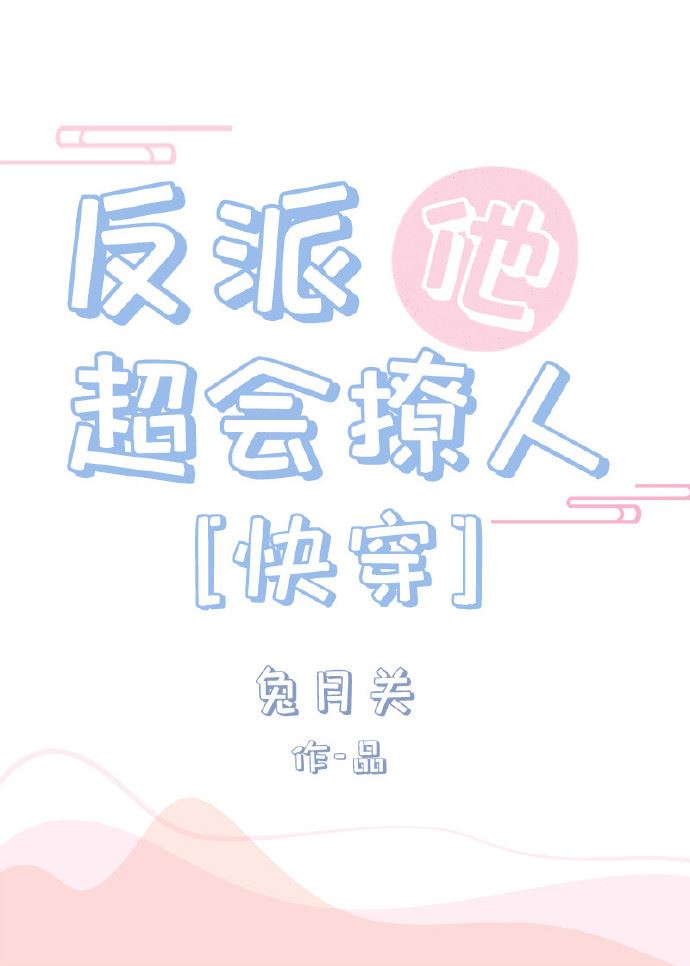
So let me just say—this opening sequence hit me like a freight train. The entire first chapter is essentially one massive detonation, both literally and narratively. A nine-level superhuman tears into a secret experimental base, spends a day and night going toe-to-toe with the base's guardian, and then both of them blow themselves up together. Every researcher, every experimental product, every scrap of data—gone. Buried under rubble and surrounded by hordes of zombies attracted by the blast. The military helicopters arrive to find nothing but ruins, and the revelation that the attacker was Jiang He, 'the most powerful man in the world who made all the bases afraid,' drops like a bombshell. Why would someone that powerful do this? What did they have against the base? Those questions aren't answered—not even hinted at until much later, and that deliberate withholding of information is actually really smart writing. The narrative then pivots hard into Su Jingxuan's internal awakening across countless reincarnations, which introduces the meta-layer of the story: he's been living as cannon fodder in worlds that revolve around protagonists, and his existence has always been scripted for someone else's glory. The twist here is subtle but devastating—he spent every iteration trying to resist, hide, compromise, or make friends with the protagonist, only to discover that fate itself was操控ing him toward the same gruesome end. Then Jiang He appears, not as a savior but as a dark mirror, someone who actually managed to break free of that script through sheer destructive power. The story structure is essentially: detonation → mystery → philosophical reckoning → a deal with the devil. And that deal? Su Jingxuan has to go back into those same problematic worlds and fix the cannon fodder fates, with the promise of seeing Jiang He again in the world as a reward. If he fails, he dies. This is a hook that doesn't just dangle—it grabs you by the throat and pulls you forward. The plot is lean, mean, and absolutely ruthless about what it demands from its protagonist.
... Read More
Holy crap, the transformation in Yan Junfeng here is absolutely chilling. In the past life, this guy was supposedly caring — he'd rush to the bedside, be warm and comforting. But now? The text literally says his 'deep, cold eyes behind the golden-rimmed glasses flashed a momentary hint of disgust.' That detail hit me hard. He's not just cold — he's actively seething with suppressed hatred for someone who looks completely harmless on the surface. And the tragic part? Su Jingxuan (or whoever is in that body now) doesn't even realize Yan Junfeng has memories from a past life. Su Jingxuan is just trying to play along with the original host's instincts, grabbing his arm and calling him 'Brother Yan' in what the narrative itself calls 'too effeminate' a tone. Meanwhile Yan Junfeng is sitting there thinking about how this person 'betrayed and harmed even family for the sake of benefit.' Who betrayed whom though?! The text drops this like a bomb but gives us zero context. I'm genuinely confused about who did what to whom in the past life.
... Read More
Okay so I just need to talk about this scene where Su Jingxuan throws himself onto Zhu Yunsen like a human possum because honestly I have never wanted to be that person in my life and also why is Zhu Yunsen so unfairly hot standing there in a decent suit with that cold killer face while some girl tries to slide into his DMs and he literally throws away the jacket she touched like it's contaminated and says GET OUT with that ice knife voice and then SU JINGXUAN shows up and what does he do does he awkwardly wave from across the room no he immediately launches himself into a koala hug wrapping his legs around Zhu Yunsen's waist like a baby kangaroo and the bodyguards are having full existential crises and Zhu Yunsen's heart just starts racing like BRO your soul remembers even if your brain forgot and I am SCREAMING. Here's the thing that truly wrecked me — the text literally says "the instinct of the soul" and that line hit me like a truck because we're talking about someone who has been reincarnated thousands of times right? Thousands of lifetimes of loneliness and this man who apparently can't even stand to let a stranger's nail touch his clothes somehow made a massive exception for one specific person. He doesn't remember Su Jingxuan's name maybe but his body recognizes him, his reflexes betray him, he wraps his hands around those slender thighs without even thinking about it. And Su Jingxuan's internal monologue about how Zhu Yunsen's love "revived his nearly withered heart" after thousands of lives? I am not okay. This isn't just romance it's practically cosmic devotion. The bodyguards couldn't believe their eyes someone DARED to hug their terrifying boss and the boss didn't explode? That's love baby that's the most powerful force in any story ever written. End of discussion.
... Read More
There's a specific visual rhythm to this chapter that I can't stop thinking about. It opens with Xue Zhen carrying an unconscious Su Jingxuan into a villa — already a stark contrast to whatever violent aftermath preceded it. The bedsheet binding, the toy mask, the transformation from wolf to human — these details paint such a vivid picture of a post-apocalyptic world where shape-shifters exist alongside human survivors, where zombies are an everyday threat and psychological training is apparently a recognized skill. But the most striking scene is intimate rather than epic. The living room sofa, the torn bedsheet, the medicine being applied — it's domestic violence inverted, where the captor becomes the caretaker. "The young man lay quietly on the sofa, his face turned to the side, long eyelashes trembling, and his complexion not looking good, with a slight frown." I keep coming back to that image. The trembling eyelashes. Something alive beneath the unconsciousness. And then the weapon comes out — the gun pressed to a temple, ice-cold, creating this jarring shift from tenderness to threat in the same room. The worldbuilding here is mostly implicit — we learn about psychics and their physical weaknesses, about zombie cures and underground laboratories, about a father who turns into a zombie and needs saving — but it all serves the emotional core. These aren't just lore drops; they're obstacles between two people who keep finding reasons to stay close despite every rule telling them not to.
... Read More
The dialogue in this section is so sharply written that I could basically tell who was speaking just by reading the lines without any tags. Su Jingxuan's voice is unmistakable—that sharp, slightly arrogant edge when he says "taking off their shoe and smashing it on us" and chuckles about it. He sounds like someone who genuinely enjoys proving people wrong with logic. The strategist is also phenomenal—quick-witted, always jumping to the politically relevant angle immediately when he hears "Empress Chunyi," and his internal prayer about wanting to be blind during the hug scene is hilarious. Then you have the generals who are all straightforward, emotionally raw, and completely out of their depth when court politics come up. Their silence when Su Jingxuan starts his analysis speaks volumes. And Chu Heng? His dialogue is minimal but every word carries weight. "We must rush back even if it seems impossible." That's it. Three sentences that define his entire character—duty-bound, resolute, refusing to accept defeat. The natural rhythm of group discussion flowing into strategic debate into personal confrontation is so well done. It doesn't feel staged at all.
... Read More
The pacing in these chapters is masterful. It starts at maximum intensity—military report, thousands dead, civilians massacred, a ticking clock of ten days before the pass falls. Every sentence is designed to make your heart race. Then right when you think it's going to be pure military panic, Su Jingxuan steps in and shifts the entire momentum. His analysis slows things down just enough for you to breathe and actually process the information instead of just absorbing the doom. And then? The Chu Heng-Su Jingxuan moment hits like a soft landing that somehow makes the tension worse because you KNOW they're saying goodbye. The chapter structure here—crisis, revelation, emotional beat, and then the cliffhanger ending with Chu Heng departing—is exactly how you keep readers glued. The author doesn't linger too long on any single note. Even the strategist's comedic awkwardness during the hug provides just enough levity before plunging back into seriousness. The ending cuts off right as Chu Heng is about to deliver another line, which is a classic hook. I had to immediately scroll to the next chapter.
... Read More
Lu Jinwen's dialogue in this scene is chef's kiss for antagonist writing. Watch how she constructs her lies and then collapses under them: First she plays the wounded victim — "I never expected you to be so malicious" — positioning herself as the wronged party. Then she produces her photos like a magician pulling a rabbit from a hat. When Song Mochen appears and flips everything, she immediately pivots: "This sketch is mine; I drew it at Mr. Yan's house!" Which is basically the literary equivalent of dropping your mic and immediately picking it back up while screaming. Her lines feel so real because they're exactly the kind of things someone would say when they're cornered and panicking. The stammering, the desperate appeals to emotion, the complete lack of self-awareness. And the supporting contestants? Their dialogue is equally sharp — the girl who defended Lu Jinwen earlier fires off this rapid-fire defense that sounds exactly like a fan losing their mind: "But do you understand how crucial the confidentiality of a designer's work is? How could there be a witness when Jinwen was sketching? I personally saw this shirt..." She's trying to sound logical but she's actually painting herself into a worse corner. The author has this amazing ability to let characters accidentally incriminate themselves through their own words. Meanwhile Song Mochen says, maybe, four sentences total in this entire scene, and each one is a hammer strike. His dialogue doesn't need flair — it has weight because of who's saying it.
... Read More
Can we just take a moment to appreciate how XIE LANG speaks versus how SU JINGXUAN speaks? Because the dialogue here is doing SO much heavy lifting and most authors wouldn't even attempt this level of voice differentiation. Xie Lang's dialogue is all IMPULSE. Short, sharp, volcanic. "Why are you here?" "Chen Ziyan!" "Bitch!" He speaks in detonations. Even when he's trying to be measured, it collapses into something harsher within two sentences. The text describes his voice as "squeezed out from between the teeth" — and that's exactly what his dialogue sounds like on the page. You can HEAR the grinding. His language is confrontational by default, even when he's asking a question. Notice how every line from him is an accusation disguised as communication? Su Jingxuan is the complete opposite. His dialogue is STRUCTURED. Measured. He builds arguments. "Do you know what is a fact?" — that's not a burst of emotion, that's a thesis statement. He doesn't just react, he reframes. Even his whisper at the end, meant to provoke, is delivered with calculated precision rather than raw fury. The text literally notes his sneer and his controlled delivery — he's playing chess while Xie Lang is throwing pieces at the board. The narrative voice itself deserves credit too. It slips between third-person omniscient and close third with zero jarring transitions, giving us direct access to both characters' internal states without ever losing momentum. Lines like "His voice was full of indescribable affection" followed immediately by Su Jingxuan finding it ironic — that's the author winking at us while simultaneously breaking our hearts. Perfect tonal control.
... Read More
The bone marrow here isn't just a plot device—it's a dense symbol for obligation, sacrifice, and control. In the original story, Lu Jinwen's donation creates an unbreakable bond, a physical debt that ties the original owner to her and, by extension, to the romantic plot. By refusing it, Su Jingxuan is rejecting not just a medical procedure but the entire narrative fate that comes with it. It's a bodily revolt against the story's design. There's also the theme of inherited identity: he's living in another man's body, with his memories, his relationships, his enemies. The original owner's love for Yan Junfeng isn't his, yet it still resonates with him emotionally. That blurring of self is central to the story's tension—who is really in control? And then there's the idea of rebirth as both curse and opportunity. Yan Junfeng returns with knowledge, but Su Jingxuan returns with something else: detachment, modern skepticism, and the ability to see the machinery of the plot itself. The hospital setting reinforces this—it's a place of healing but also of suspended animation, a liminal space where identities can be rewritten. Everything here whispers about agency versus destiny, and the quiet refusal to accept a predetermined role.

Leave a comment

You must be logged in to leave comments. or
