The Village Girl Carries a Baby to Shanghai Island and is Spoiled by the Cold-Faced Tycoon - Reviews

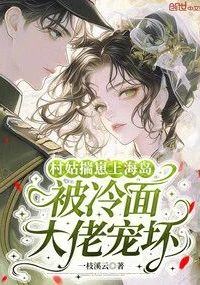
The Village Girl Carries a Baby to Shanghai Island and is Spoiled by the Cold-Faced Tycoon
+Add to Custom List
Sort
Add review
... Read More
Okay, so let me just say—this plot twist of having the protagonist wake up already married to the guy she accidentally drugged? That is BRILLIANT. Most transmigration stories start with the MC having some grand plan or golden finger, but here? She wakes up in a body that's dark, ugly, and already stuck with a husband who despises her. The setup is so much more interesting than the typical formula. What I love is how the author builds tension through the wedding day itself. The whole scene where the Xu family confronts the Zhou family in the courtyard—Zhang Tianfu's betrayal, the mockery about her appearance, the near-fight—this is where the plot really kicks into gear. And then Zhou Yue's line, "I married you only to take responsibility. Don't think about anything else," just absolutely crushed me. Not because it's cruel, but because it sets up this whole dynamic where both of them are trapped. The pacing is also really well done. The wedding, the first night, the next morning—all compressed into a few chapters but each moment feels earned. And that detail where Zhou Yue returns to the military base and his whole regiment finds out? That's a great way to show the consequences of this decision rippling outward. The plot doesn't just stay in the household; it expands into the military world too. Can't wait to see where this goes.
... Read More
Let me just say this: the stakes in this story are quietly massive and I am HERE for it. Xu Xi knows the original plot—she dies in childbirth, leaving twin orphans behind. That's not some vague threat, that's a death sentence she's actively trying to escape. And she's doing it while pregnant, in a village with terrible medical conditions, surrounded by people who want her gone. The conflict with Mother Zhou isn't just petty in-law drama—it's existential. Mother Zhou suspects the baby might not be Zhou Yue's, she's watching the belly grow 'too fast,' and she's plotting. Meanwhile the village women are gossiping about how Xu Xi 'forced herself on Zhou Yue.' Every interaction is loaded. And the fainting scene? Classic move but it worked on me because I understood the risk—Xu Xi could've been hurt for real, or the pregnancy could've been threatened. The fact that she turned it around and demanded compensation from the gossiping aunties showed teeth. Also the Zhou Yue angle—he's a soldier, divorce isn't simple, and yet Xu Xi is already planning to leave him after giving birth. She's playing chess while everyone else is playing checkers. I'm obsessed with whether she can actually change her fate.
... Read More
The author really knows how to paint a scene, and I have to talk about the train station and the train interior because they are SO vivid. Let me just quote this part because it's perfect: "Vivid red slogans were painted on the walls, and the attire of those around her was distinctly of the era—Dacron shirts and blue work clothes were everywhere. Vendors sold large bowls of tea for three fen each, twisted dough sticks wrapped in oiled paper, and some carried wooden boxes to exchange grain ration coupons or mend shoes." This is not just background description. This is worldbuilding that makes me feel like I'm standing there. I can see the red slogans, the sea of blue work clothes, the smell of fried dough sticks. The era is palpable. And the banyan tree scene at the very beginning? "A man suddenly sidled up beside her"—just that one line sets the whole mood. Rural village, shady encounter, immediate tension. No exposition needed. The train compartment during the trafficking scene is also brilliantly staged. The diagonal seating arrangement, the water bottles, the subtle hand movements of the trafficker—everything is positioned like a thriller movie. I could see every angle. The author clearly knows how to use space to build suspense.
... Read More
Can we just appreciate how good Xu Xi's dialogue is? This woman does not waste words. When Wu Yong tries to play it cool: "Sorry, I'm not familiar with you. There's nothing to say." Done. Next. When Mother Zhou confronts her about the pregnancy: "I have nothing to do with that man! He was harassing me... The child in my belly is, of course, Zhou Yue's. The doctor said I'm carrying twins. Isn't it natural for my belly to be big?" — this is a masterclass in defensive storytelling. She delivers it in one breath, with a "barely noticeable sob" to sell it. The mother-in-law swallows her anger and backs off. Perfection. But the absolute peak of dialogue in these chapters is the train scene. When everyone starts morally coercing her: "Doesn't our society promote unity and friendship nowadays?" And Xu Xi's response? She just devours the fried dough stick in front of them and blinks innocently. No words needed. The silence after that is comedic gold. Her brothers' dialogue is also great—each one has a slightly different voice. The eldest is dramatic, the second is ready for a fight, the third just wants to sleep. And Mother Xu's voice is all warmth and worry. Everyone sounds distinct.
... Read More
I need to talk about Xu Xi's relationships because this is where the story really shines. First, let's address the elephant in the room: Zhou Yue. The man hasn't even appeared in these chapters properly, and already I understand exactly why Xu Xi is done with him. He left for the army without telling her. His letters don't mention her once. She's pregnant, alone in a hostile village, and this guy is over on an island acting like he has no wife. Yeah, she's going to find him—but let's be real, this isn't a romantic quest. This is a woman who needs to survive, and he happens to be her ticket out. But the Xu family—oh my god. When she shows up at her parents' door in the middle of the night and they immediately drop everything to protect her? That hit me. Her brothers thinking a thief broke in and grabbing sticks? Her mother pooling together 107 mao and 5 fen and two warm eggs? That's the kind of family love that makes you want to hug your siblings through the screen. And then there's Mother Zhou, who swings from furious to apologetic in about thirty seconds because Xu Xi cries just right. "Sincerity is the ultimate weapon"—Xu Xi literally says this to herself afterward. I laughed out loud. This woman is surviving on pure cunning and she knows it.
... Read More
I'm going to be honest with you—I didn't expect to get this emotional from a story about a woman leaving her in-laws to find her husband on an island. But then Xu Xi opens that cloth bundle her mother pressed into her hands and finds 107 mao and 5 fen, grain ration coupons, and two still-warm eggs. And she thinks: "The Xu family was too good to her. In this unfamiliar era, they were her only source of warmth." That line. That single line broke something open in me. She's pregnant, alone, in a time period she doesn't fully understand, and her only anchor is the family she left behind who gave her everything they had. The fact that she also secretly adds Spirit Spring Water to their water vat before leaving—small, quiet, protective—shows how much she cares even when she can't say it out loud. And her brothers! "Little sister, what's wrong? Did the Zhou family bully you? Damn it, big brother will go settle things with the Zhou family right now!" These are not perfect siblings—they're impulsive and dramatic—but their love is real and immediate. No hesitation, no conditions. Meanwhile, Zhou Yue is out there on an island not writing her a single word in his letters, and I just... I don't know what to feel about him yet. But whatever happens between them, I think Xu Xi is going to be okay on her own terms. And that's what makes me want to keep reading.
... Read More
Okay so I need to talk about Mother Xu coming to visit. Like, the woman shows up with a pocketful of eggs and immediately starts fussing over Xu Xi about morning sickness. 'Back when I was pregnant with you, I threw up for three whole months!' And Xu Xi just... breaks a little. Her eyes well up because she misses her own mom. I felt that. It's these small, quiet moments of maternal love that hit different when the rest of the story is full of hostile in-laws and gossiping villagers. The contrast is brutal—Mother Zhou is spitting curses at the doorstep while Mother Xu is just worried her daughter isn't eating enough eggs. And Xu Xi hiding those eggs in her Spatial Dimension like they're treasure? That's not just about food, that's about holding onto love in a place that's trying to push her out. I also can't ignore the Zhou Yue thread. He's married her out of obligation, barely speaks to her, and yet... he's still willing to 'swallow this bitter pill' about the pregnancy. There's something there, even if it's buried under all his coldness. I'm curious where that goes.
... Read More
I'll be honest—I was a little unsure about the opening chapters. The marriage of convenience setup, the cold husband, the hostile family—it's familiar territory. But something clicked around Chapter 6 and the whole book accelerated. The pregnancy reveal, the Spatial Dimension awakening, the transformation arc—it all happened in quick succession and I couldn't put it down. The pacing choice to have Xu Xi faint right after encountering the gossiping villagers is smart narrative engineering. It forces a confrontation, reveals the pregnancy, AND gives her a moment to discover her golden finger—all in one scene. That's efficient storytelling. Then the two-month time jump to show her belly growing and her skin transforming keeps things moving. The author isn't wasting chapters on filler. My only slight complaint is that some transitions feel a bit abrupt—like we go from the clinic visit to the Spatial Dimension discovery almost instantly. But honestly, that urgency matches Xu Xi's mindset. She's racing against the original plot, so the pacing feels intentional rather than rushed. I'm hooked and I need to know what happens next.
... Read More
I have to say, the dialogue in this novel is absolutely TOP TIER. The author has a real gift for making each character sound distinct, and Xu Xi's internal voice is pure gold. Take this moment: after Zhou Yue tells her he won't sleep in the same bed, her reaction is just—"Xu Xi pouted. Who wanted to sleep with him? She was a victim too, okay?" That internal monologue is so relatable and funny. It's the kind of thing you'd say to your best friend while crying into your phone at 2 AM. And the external dialogue? Sharp as a knife. Zhang Tianfu's line, "Who'd want to marry Xu Xi anyway? If you hadn't drugged Zhou Yue and forced the situation, he'd never have looked twice at her!"—that's the kind of dialogue that makes you want to throw the book across the room. It's mean, it's cruel, and it's exactly what a jealous, bitter character would say. But the best dialogue moments are the quiet ones. Zhou Yue's simple "Let's go" when he extends his hand to Xu Xi. Three words that carry so much weight—disdain, obligation, and something almost like reluctance. And Mother Zhou's sarcastic "Lazy good-for-nothing!"—you can hear her voice in your head, can't you? The author doesn't need stage directions; the dialogue carries the emotion. This is how you write conversation.
... Read More
I need to talk about Zhou Yue because everyone is treating him like the villain here but—HOLD UP. Let me explain. On the surface, he's cold, dismissive, sleeping on the floor, refusing to even look at his new wife. But then you get these tiny moments that completely undermine that image. Like when he notices her makeup is washed off and his eyes "finally felt more at ease." Or the scene where he's about to unbutton his shirt on a hot night, remembers she's there, and buttons it back up. These are NOT the actions of a bad man. This is a man who is genuinely uncomfortable and trying to be respectful even though he's furious about the situation. And Xu Xi? She's not the scheming villain the book originally painted her as. When she says to herself, "Who wanted to sleep with him? I'm a victim too, okay?"—that's the real her. She's a modern woman from the 21st century who got drugged and transmigrated into a body that everyone calls ugly. Her temper flaring is completely justified. The mother-in-law dynamic is also fascinating. Mother Zhou wants to throw Xu Xi in a pig cage, but she's also the one who sent pancakes because "Third Brother specifically asked." The family is complicated in a way that feels real. Even Zhang Tianfu, who betrayed them all, isn't just a one-note villain—he's driven by jealousy and regret. These relationships have layers.
... Read More
I have to talk about pacing because these chapters move like a well-oiled machine. Chapter 8 starts with the Wu Yong incident—quick, tense, resolves in a few paragraphs. Then the rumor mill spins, Mother Zhou confronts Xu Xi, and within the same chapter, Xu Xi makes her decision to leave. That's efficient storytelling. No filler. Chapter 9 is basically a journey chapter—she visits her family, gets money and eggs, goes to the county town, buys supplies, gets on the train. On paper, this could have been boring. But the author keeps it moving by giving Xu Xi small moments of agency: choosing her outfit ("If it weren't for her prominent belly, she would have loved to try on a skirt"—such a human detail), buying extra food for the journey, noticing the traffickers. And then Chapter 10 drops the trafficking confrontation like a bomb. Two days of train travel, and suddenly we're in a thriller scene. The pacing here is excellent because the reader is already invested in Xu Xi as a person, so when danger appears, we care immediately. My only minor note: the ending of Chapter 10 cuts off right as the train conductor thanks her, which feels like a deliberate cliffhanger. I need to know what happens next on the island.
... Read More
Okay so let me just say this: the plot in these chapters is absolutely locked in. We go from a petty village harassment incident with Wu Yong to Xu Xi outsmarting human traffickers on a train, and somehow it all feels connected and purposeful. That's not easy to do. The inciting incident—Wu Yong showing up and stirring up rumors—is such a smart choice by the author. It's not just random conflict; it's what actually forces Xu Xi to make her big decision to leave the village. Before that, she might have just sat around suffering. But once her reputation is on the line? She packs her bags and goes. And then the trafficking subplot! I love how the author sets it up. First, that suspicious woman asking to trade pancakes for fried dough sticks—red flag number one. Then the man sitting diagonally across who starts egging people on—red flag number two. Xu Xi notices both, connects the dots, and instead of just staying quiet, she actively protects the young girl. That's not passive protagonist energy; that's main character energy. The only thing I'd say is that the transition from village drama to train adventure feels just a *tiny* bit fast, but honestly, the momentum carries it. I wasn't bored for a second.

Leave a comment

You must be logged in to leave comments. or
