The Unorthodox Mage - Reviews

The Unorthodox Mage
+Add to Custom List
Sort
Add review
... Read More
Let me just say this: the author does not waste time. In roughly 8,000 words we get a complete emotional arc—Ashura's despair, his vulnerability, four boys becoming brothers, a business scheme being born, a classroom confrontation, and a rogue decision to train as a warrior. That's a lot for one chapter and yet it never feels rushed. The pacing works because every scene has a clear purpose. The tea scene establishes bonds. The gossip scene establishes tone and gives us world texture. The classroom scene establishes conflict and Ashura's personality. The training field scene establishes his strategy. Each beat flows into the next naturally. But what I really appreciate is the tension management. The three-month deadline hangs over everything like a sword. We know Ashura can't bridge his magic gap in time. So when he bolts out of class and heads to the training field, it's both surprising and inevitable. The author lets us sit with his desperation for a moment—two periods of him failing to understand advanced magic, burying his head in his arms—before he snaps into action. The chapter ends on a perfect note of uncertainty. He's found the instructor from his entrance exam, but what happens next? The author knows exactly when to cut. No cliffhanger gimmicks, just a natural stopping point that makes you immediately open the next chapter.
... Read More
This story keeps circling back to one idea: what does it mean to be the one who doesn't belong? Ashura is a third son in a minor vassal state's general household. He has no cultivation materials, no private instructors, no advantage. He's the boy who got in through luck and guts, wearing a magic robe he doesn't understand, sitting in a classroom where everyone else speaks a language he hasn't learned. The tea scene is deeply symbolic. Four boys from different backgrounds—Jin Ze from a business family, Arthur with his cool detachment, Angelo the forging prodigy, and Ashura the outsider—gathering around a tea table. Jin Ze calls him 'Third,' and suddenly Ashura isn't an imposter anymore. He's family. The word transforms him. There's also this beautiful irony in Ashura's situation. He's placed in the Magic School but his real strength is warrior training. The author keeps reminding us of this gap—the meditation technique he learned 'ranked among the top on King's Continent,' his body absorbing magic elements 'like a bottomless pit,' yet he can't understand basic lectures. He's a warrior pretending to be a magician, and that disguise is both his burden and his secret weapon. The silver-haired girl Clara is interesting too. She represents everything Ashura isn't supposed to be—elite, accepted, powerful. And yet she makes space for him. Maybe the theme isn't about bridging gaps at all. Maybe it's about finding the people who will shift over when you sit down.
... Read More
Okay so let's talk about the sheer amount of hostility Ashura walks into on literally his first day. First Instructor Enge — who Ashura literally just set a trap against two days ago — and then BAM, Magina. The girl pulls out a horse-cleaving sword taller than herself and everyone just... backs away? Like this is normal? The students' reactions are doing a lot of heavy lifting here. There's envy, jealousy, pity, sympathy — but not one person offering to switch places with him. That's the kind of world-building detail that tells you everything about the social dynamics without any exposition dump. And then the kicker: he gets absolutely wrecked in thirty seconds, and Magina breaks through a realm from the fight. So now he's not just humiliated, he's been turned into a human cultivation resource. The stakes keep escalating in the most absurd way possible. One minute he's trying to sneak into a class, the next he's got a bounty on his head for being someone's sparring partner. What does he stand to lose at this point? His dignity? His body? His sanity? I genuinely wonder if he's going to survive the semester. The tension isn't just about whether he can win fights — it's about whether he can navigate an environment where everyone seems to want something from him, and almost none of it is good.
... Read More
The brotherhood dynamics in this chapter are actually really well done. You've got three brothers reacting to Ashura's beaten face and each one reveals something about their relationship. Arthur immediately wants to charge in and avenge him — classic protective older sibling energy — until he finds out it's his cousin, and then he slinks back to his seat like a deflated balloon. That's comedy gold but it's also character depth. Jin Ze is the quiet one who just pats Arthur's shoulder and says nothing. Angelo is the gossip who brings in the worst possible timing with his big news. And then Ashura, alone in his room, actually does something mature — he reviews the fight, learns from it, and starts meditating. The shift from 'avenge me!' to self-improvement in the span of one chapter tells you everything about who this character is becoming. But what really got me was the Magina angle. She's introduced as this terrifying warrior goddess who could cleave horses, and then we get these tiny glimpses of vulnerability — the slight blush, the fact that she found the fight 'wonderfully refreshing.' There's something almost tender underneath all that violence. Whether that's going somewhere romantic or just making them reluctant sparring partners, I'm here for it. The author isn't rushing anything, which is a relief.
... Read More
The dialogue in this excerpt is genuinely excellent. Each character has a voice so distinct that I never once had to check who was speaking. Jin Ze is the natural leader and businessman. Watch how he pivots from 'come drink tea, Third' to 'I'll handle the sales!' in one scene. His dialogue is practical, action-oriented. 'We'll trade for Academy Points, then split the points among us brothers!'—he's already got the whole operation mapped out. This boy thinks in systems. Arthur is the quiet one. Two lines, maximum, and they're always functional. 'I don't know magic and can't help much, but...' 'I'm not sure I can hold them off.' He's the muscle who doesn't know his own strength. Angelo is pure chaotic energy. 'Our non-combat department actually has an alchemy beauty named Tang Guo whose looks are enough for the top 10. Sadly, she seems unable to see, which knocks her image down a lot, so she can't make the list; what a pity.' That's not dialogue—that's a stand-up routine. He's the gossip broker, the hype man, the one who makes everything feel like an adventure. And Ashura? His voice is roguish, self-deprecating, sharp. 'So you fail to steal a seat and now you want to hit me? Go ahead, hit me; let's see if the academy expels you for violence.' Then immediately pivots to 'Hold on, I never said free; such a prime spot demands a little compensation, right?' He's testing boundaries, flipping situations, never taking anything at face value. The Kyle exchange is comedy gold.
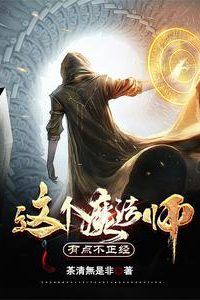
... Read More
Okay so I need to talk about this dorm scene because it genuinely hit me. Ashura walks in wearing that magic robe, looking completely defeated, and these four guys just... accept him. No judgment, no 'why are you here,' just tea and 'what's wrong, Third?' That word—Third—brought him back to his brothers and suddenly he's spilling everything. The way he omits the threat to his family but tells them about his weakness, his desperation—that's so real. You can feel how much he needed to unburden himself. And then their responses. Jin Ze offering three hours of meditation teaching. Arthur connecting him to his earth-element cousin. Angelo giving him a handmade bracelet that boosts magic by 20%, even though it's single-use. These boys didn't hesitate. They just... gave. And Ashura's eyes got moist. I literally got chills reading that. But the thing that really wrecked me was the ending of that chapter. Clara—the arrogant silver-haired girl who called him an idiot—when he sits beside her, she just shifts over silently and makes this proud little 'hmph.' Meanwhile the narration drops this line: "Yet louder than the girl's little snort was the sound of countless boys' hearts shattering inside the classroom." That's it. That's the moment. She didn't reject him. She made space for him. And every other guy in that room just imploded. I am NOT okay.
... Read More
The pacing in these chapters is absolutely relentless and I'm here for it. Chapter 19 opens with Ashura already in trouble, escalates to him getting paired with Magina, and then — get this — the entire fight takes about a paragraph. Thirty seconds of actual combat, and then he's spread-eagled on the training ground with raccoon eyes and boot prints on his robe. The author doesn't drag out the fight for dramatic effect; instead, the aftermath IS the drama. The breakthrough scene, the 'gold medal sparring partner' announcement, the walk back to the dorm — each beat lands with perfect timing. Then Chapter 20 shifts to the dorm scene, which provides comic relief but also raises the stakes (the campus rumor, the bounty), and then immediately pivots to the next morning where Ashura tries to escape Class 8 only to run into Instructor Enge again. The structure is basically: trouble → escalation → consequence → new trouble. It's a loop that never lets up, and that's why I couldn't stop reading. The Clara subplot at the end is a nice structural breath — a quiet moment that contrasts with the chaos — but it also sets up future conflict with Kyle's jealousy. Every scene has a purpose. Nothing drags. The only complaint I have is that I want more of Magina's perspective already.
... Read More
I need to talk about Magina because something about her character hit me differently than I expected. On the surface, she's introduced as a classic tsundere archetype — cold, violent, intimidating. She pulls out a giant sword and everyone fears her. But the author keeps slipping in these tiny cracks in the armor. When she beats Ashura up, she feels 'wonderfully refreshed' and her cheeks redden slightly at the thought. When she breaks through to Martial Master Stage 2, she 'beamed' with joy. These aren't the reactions of a cold, emotionless warrior. They're the reactions of someone who is genuinely, almost childishly happy about something. And then there's the whole dynamic with Ashura — he's the only person dumb enough to provoke her, and she's the only person strong enough to handle him. I keep thinking about that moment where she looks at him after the fight and her eyes light up. It's not hatred. It's something else. Something that could be respect, or curiosity, or maybe the beginning of something more. The author isn't rushing this — there's no confessions, no hand-holding, just two people who keep running into each other and getting into trouble together. But the emotional undertow is there, and it's pulling me along. Meanwhile, the Clara subplot is playing out in complete contrast — she's cold and dismissive to a handsome auditor, but protective of Kyle in her own way. Different kinds of emotional tension, same chapter. I'm not sure which one I'm more invested in yet, but both are working.
... Read More
I need to talk about Ashura's dialogue because this boy is a menace and I love it. When Magina asks him 'Does it feel nice?' after he accidentally gropes her, his response is to put on a scoundrel's grin and squeeze twice more while saying 'Honestly, not bad at all!' This is the kind of dialogue that makes you spit out your drink. The author clearly understands how to write a protagonist who is either extremely brave or extremely stupid, and honestly it doesn't matter because the voice is so consistent. Then there's Instructor Enge — the man has this dry, almost predatory humor. His line 'you may call me Instructor Enge' after being called 'Uncle' twice is peak comedic timing. And Magina! Her dialogue is sharp and cold, but the author slips in this tiny detail at the end where her cheeks reddened slightly thinking about beating him up. That's the kind of character voice that says more with a blush than most authors manage with pages of internal monologue. The brotherly banter in the dorm is also great — Arthur going from 'I'll avenge you!' to shrinking away when he realizes Magina is his cousin is hilarious. The dialogue carries the humor and the tension in equal measure, and nobody sounds like anyone else. That's rare.
... Read More
I love how this author builds the world without ever stopping to lecture us. Everything just... exists naturally. Like when Ashura sits down and drains his tea in huge gulps because he can't tell good from bad—he's never had luxury, and we feel that. Meanwhile Jin Ze refills with 'priceless leaves' and the second brother savors it 'as if he could taste its exorbitant value.' Three sentences and I understand their entire socioeconomic backgrounds. The training field scene is another gem. Nearly 2,000 first-year Warriors, the enormous drill ground, Ashura wandering around like a lost puppy in his magic robe. You can picture it. And the cafeteria detail—free first-floor meals, second-floor specialty dishes that cost Academy Points. That's worldbuilding through hunger, not exposition. But the classroom scene is where it all comes together. Students from other classes showing up to listen, not because they care about magic but because Instructor Ella is teaching. Kyle buying a seat for 200 points just to sit near Clara. The collective male desperation in that room is palpable. The author never describes the room's appearance directly, but you can see everything through behavior. That's masterful. How does a setting feel like home without ever being painted in brushstrokes?
... Read More
There's this recurring motif in the text that I can't shake — the idea of Ashura being used. First he's auditing classes he doesn't belong in, then he's being used as a sparring partner, then he's become a campus rumor, a joke, a human cultivation tool. The title 'Gold Medal Sparring Partner' is almost ironic — it sounds like an honor but it's really just a fancy way of saying 'professional punching bag.' And yet, I think the deeper theme here is about power and vulnerability. Ashura is weak right now. He's Stage 3, he gets beaten in thirty seconds, he can't even audit a magic class properly. But the story keeps putting him in situations where he has to negotiate his way through danger using nothing but charisma and shamelessness. That's his real weapon. The red-haired girl Magina represents everything he isn't — physical power, directness, social status (she's on a beauty ranking after all). Their dynamic feels like it's going to explore the tension between different kinds of strength. And then there's the brotherhood theme, which runs counter to the isolation Ashura feels. His brothers want to help him, even when they can't. The author seems interested in asking: what does it mean to be strong in a world that measures strength in realms and stages? Ashura might be the weakest person in the room physically, but he's the most resourceful. That's the story underneath the comedy.
... Read More
The stakes here are deceptively simple and absolutely brutal. Ashura has three months to pass an assessment or get kicked out. But it's not just about him—his family is under threat. He omitted those details from his roommates, which means the reader knows something they don't. That gap between what Ashura reveals and what he's hiding creates constant underlying tension. The assessment itself is a brilliant mechanism. Dean Sanin's rule—that anyone who reaches Martial Master or Magician realm and inflicts real damage on the test dummy will pass—gives Ashura a loophole. He's already Warrior Stage 3. If he can just break through to Martial Master in three months, he doesn't need to master magic at all. The author sets up this clever escape hatch while making us wonder: is it actually possible? Then there's the Kyle conflict, which seems small but actually mirrors the larger stakes. Kyle wants Ashura's seat—not because of the desk, but because Clara sits there. It's about status, about belonging, about who gets to be near the person they desire. Ashura turning it into a 200-point transaction is both hilarious and heartbreaking—he's so used to having to negotiate for everything that even a seat becomes a business deal. The real tension though is internal. Ashura meditating for four hours straight, his body absorbing elements 'like a bottomless pit,' exhaustion flooding him but pushing through anyway. He's gambling everything on a strategy he's not sure will work, and the author makes every page feel like he's running out of time.

Leave a comment

You must be logged in to leave comments. or
