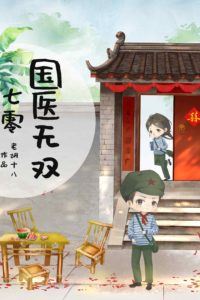
The Unmatched National Doctor of the 70s
+Add to Custom List
Genres:
Novel Info

Summary

... Read More

Qingyin, a successful traditional Chinese medicine entrepreneur from modern times, transmigrates into a period novel as Qingyin, the naive and tragic young aunt of the supporting female character Lin Suifen. In the original story, this character is exploited by her love-struck niece, who steals her inheritance, job, and fiancé, ultimately leading to Qingyin's death. Upon waking in 1973 Shucheng City, Qingyin finds herself in the body of the eighteen-year-old girl just days after the death of her elder brother, Qingyang. The Qing family, once respected for their medical lineage, is now in dire financial straits, with the household relying on the meager salary of Qing Huihui, the love-struck niece who is secretly plotting to seize Qingyin’s remaining assets.

Unlike the original host, the modern Qingyin is sharp, medically skilled, and determined to survive. She immediately rejects the narrative that she should drop out of school to support her niece. Instead, she secures a leave of absence to retain her student status while preparing to take over her late brother’s coveted position at the Shucheng Steel Mill, a job that was originally intended for her. When Qing Huihui and her accomplice, Liu Hongxing, attempt to publicly pressure Qingyin into quitting by fabricating stories about financial hardship, Qingyin counters with cold precision. She reveals the documented inheritance division and exposes the lies, turning the neighborhood committee’s sympathy away from the manipulative niece and toward herself.

Qingyin’s transformation shocks those around her. She is no longer the timid girl who blushed at the local delinquents; she is a woman who can recite medical texts and handle conflict with ruthless efficiency. She encounters Gu An, her childhood sweetheart arranged by their parents, who has grown distant due to her previous naivety. Gu An, now a security officer with a hidden life, is intrigued by her sudden boldness. Meanwhile, Qingyin uses her medical knowledge to diagnose and treat the epileptic seizures of Liu Hongxing’s daughter, Da Ya, earning the respect of the community and the gratitude of Da Ya’s grandfather, a one-armed lockmaker who had previously been hostile toward her.

The core conflict intensifies as Qingyin secures her brother’s job, thwarting Liu Hongxing’s plans to take it for herself. The Liu family, desperate to maintain their social climbing and romantic ambitions, continues to scheme against her. Qingyin, however, is not alone. She reconnects with Auntie Gu, Gu An’s mother, who had been vilified by the original Qingyin but is revealed to be a fiercely loyal protector. Auntie Gu publicly defends Qingyin against Lin Suifen’s manipulations, crushing a fish in her hand as a warning to the scheming women.

As Qingyin navigates the treacherous social dynamics of Xinghua Alley, she begins to rebuild her life on her own terms. She uses her hidden savings to secure her independence, changes the locks in her room to protect her inheritance, and prepares to face the political and personal challenges ahead. The story shifts from a tale of victimization to one of strategic survival, as Qingyin outmaneuvers her exploiters and forges new alliances with those who genuinely care for her, including the enigmatic Gu An and the formidable Auntie Gu.

The narrative sets the stage for Qingyin’s rise from a marginalized girl to a powerful figure in her community. With her medical skills, business acumen, and newfound resolve, she is determined to rewrite her fate. The original tragic ending is no longer inevitable. Instead, Qingyin faces a world where every decision is a move in a high-stakes game, and she is finally ready to play. The story explores themes of female solidarity, the power of education and skill, and the rejection of patriarchal and familial exploitation, as Qingyin carves out a future that is entirely her own.

Latest Release
DateGroupRelease
2026-08-11shanghai fantasy c40
2026-08-11shanghai fantasy c39
2026-08-11shanghai fantasy c38
2026-08-11shanghai fantasy c37
2026-08-11shanghai fantasy c36
2026-08-11shanghai fantasy c35
2026-08-11shanghai fantasy c34
2026-08-11shanghai fantasy c33
2026-08-11shanghai fantasy c32
2026-08-11shanghai fantasy c31
2026-08-11shanghai fantasy c30
2026-08-11shanghai fantasy c29

Community Reviews

Rating(3.9 / 5.0, 12votes)
5 stars
3(25%)
4 stars
5(42%)
3 stars
4(33%)
2 stars
0(0%)
1 stars
0(0%)

Popular reviews

... Read More
Okay, let's talk about the plot mechanics here because this chapter is actually doing a LOT of heavy lifting. On the surface, it's a cozy visit—Qingyin goes to Auntie Gu's house, eats peanut pastries, meets the fiancé—but underneath, there's a whole web of schemes, secrets, and ticking time bombs. The dowry subplot is the crown jewel. Qingyin's grandfather entrusted her inheritance to this Seventh Maternal Great Uncle, and in the original story, Qing Huihui forged her handwriting to steal it. That's not just a minor detail—that's the kind of betrayal that could destroy a protagonist if left unchecked. Qingyin's decision to secure the money ASAP shows she's not here to play naive girl. She's playing 4D chess while everyone else is still learning the board. But what really made me sit up was the Gu Quan reveal. His death, the accusation of being a spy, the letters found in his barracks—none of this appeared in the original novel. That means the world has expanded beyond the book's original scope, which is either a brilliant twist or a sign the author is building toward something much bigger. The fact that Gu An went from model child to street hooligan after his brother's death? That's a plot thread that's going to pay off. I can feel it. And Qingyin's manipulation of Auntie Gu—using 'Five Phases and Six Energies' to convince her not to go into the woods—is both clever and slightly chilling. She's already learning to weaponize people's beliefs. The chapter ends with a military jeep arriving, which is a textbook cliffhanger. My bet? It's connected to Gu Quan's case somehow, and it's about to blow everything open.
... Read More
There's so much going on symbolically in this chapter that I want to unpack. The fried potatoes are the most obvious symbol—food as power, food as independence, food as the first thing Qingyin has ever truly owned and controlled. She's spent her whole life being told to share, to be grateful, to make room for others. The potatoes are her rebellion. Every golden strip is a small act of self-preservation. And the fact that she eats them all alone, locked in her room, is the ultimate statement: I am allowed to take up space. I am allowed to enjoy things. I am allowed to say no. The dictionaries are equally significant. The stash of money and coupons hidden between the Xinhua Dictionary, the Idiom Dictionary, and the English Dictionary—that's not random. These books represent the old man's investment in Qingyin's education, his hope that she'd have knowledge and opportunity. He hid his love in the language of learning because that's what he valued most. And now Qingyin is using that inheritance not just to survive but to build something—key duplication, a trade, independence. She's honoring his memory by becoming someone he'd be proud of. The medical legacy is another thread. Qingyin claiming she learned Traditional Chinese Medicine from her father—even if it's partly performative—is her claiming a lineage, a purpose, a reason to exist beyond being someone's burden. The crowd's response ('Old Mr. Qing can rest in peace now') shows how she's rewritten her narrative from parasite to heir. And the key duplication stall itself is symbolic. Keys open doors. She's literally positioning herself as someone who provides access, who unlocks things. After a lifetime of being locked out—locked out of affection, locked out of resources, locked out of power—she's becoming the person with the keys. The childhood sweetheart arrangement with Gu An is its own kind of symbolism. It represents a future that was supposed to be hers but never felt like it. The way she walks away from him without looking back is her rejecting a predefined path and choosing her own.
... Read More
I need to talk about the old man's love for Qingyin because it absolutely wrecked me. So throughout this whole chapter, there's this undercurrent of grief and warmth whenever Qingyin thinks about her father. The way she searches through her things, the way she's genuinely scared of starving because she hasn't eaten in a day—she's not just fighting for survival, she's fighting because she knows how much he would've wanted her to live well. And then she finds it. The stash. Three hundred yuan, ration coupons, all neatly folded and hidden between dictionaries. Three hundred yuan in this era is not pocket change. That's a life-changing amount of money. And he saved it all for her. The text says 'each one a token of the old man's love for her' and I just... yeah. This man knew he was dying. He knew his daughter was vulnerable, surrounded by people who would exploit her. And he spent his last resources making sure she had a fighting chance. The fact that she was too grief-stricken to notice at the time breaks my heart. She missed her chance to thank him, to hear his voice one more time, and now she's carrying his love forward by using what he left her to build a better life. There's also this quiet moment with Gu An that tugs at something. The childhood sweetheart arrangement, the way she used to follow him around, the way he deliberately scared her off because he noticed she had no other friends. He thought he was protecting her by being mean, but really he was just another person who didn't understand how lonely she was. And now she's walking away from him without even looking back, and he's left standing there confused and a little hurt. There's so much unresolved history between them and I'm here for it. But honestly the emotional core of this chapter is Qingyin eating those fried potatoes alone in her room, locked door, finally allowing herself to just... exist without performing gratitude for people who never deserved it. She burps, she's full, she's safe for tonight. That's the emotional payoff. Not dramatic confrontations or tearful goodbyes, but a girl who spent her whole life being good and nice and giving, finally taking something for herself.
... Read More
There are two images in this chapter that I can't stop thinking about, and I think they're connected in a way the author probably intended. The peanut pastry. Made by a woman who skipped her own meals to feed her neighbor's child. Sweet, warm, handmade—something that costs nothing in money but everything in love. It's the opposite of the dowry, which is money held in trust by a relative who could easily steal it. One represents genuine care; the other represents the fragility of trust when money is involved. Qingyin chose to eat the pastry and feel the warmth, while simultaneously plotting how to protect the money. She's holding both truths at once. Then there's the snake. Auntie Gu is a snake catcher—someone who can handle the most venomous creatures without being harmed. But in the original story, she gets bitten anyway. The snake that kills her brother Gu Quan is a different kind of venomous creature: rumor, accusation, the poisonous narrative that a dead soldier is a traitor. The Gu family can't escape it no matter how hard they try. And Gu An? He became the neighborhood's 'hooligan'—a human snake, dangerous on the surface but fundamentally a protector. He catches snakes for a living, but he also carries the venom of his brother's death in his bones. The military jeep at the end? That's the snake coming for everyone. The past is about to bite the present. And Qingyin, who's spent her past life navigating treacherous waters, knows exactly what's coming. She's already bracing for the strike. This story isn't just about revenge or romance. It's about what survives when the world tries to poison you—and who you choose to share your last sweet pastry with.
... Read More
Can we just appreciate how distinct Qingyin's voice is in this chapter? The author nailed it. Her public performance is this perfect blend of pitiful sobbing and earnest gratitude—'Wuwu... my poor Big Brother, even in his final moments, he was thinking of me'—and it's delivered with such conviction that everyone buys it. But then her internal monologue? Cold, sharp, calculating. 'Silence was tacit approval, and tacit approval was complicity.' That line alone tells you everything about who she's become. The dialogue between Qingyin and Qing Huihui is delicious. Qing Huihui asking about the fried potatoes with that entitled 'Use less oil next time. Soy sauce costs money too' and Qingyin just looking at her like she's an idiot and saying 'Finished them. Burp.' The contrast between Qingyin's old self (who would've apologized and shared) and her new self (who eats everything and locks the door) is so satisfying. And Gu An's dialogue with Gangzi? Perfect. 'She must not have recognized me in this outfit today.' Bro, you're wearing sagging military pants and a crooked-collar sailor shirt and green rubber shoes worn sloppily—you look like a spiritual youth, not a mysterious handsome childhood friend. But the fact that he's genuinely confused that she didn't recognize him? That's character work. He's so used to her being invisible around him that her walking away without a glance is genuinely unsettling to him. The crowd's reaction dialogue is also well-handled. 'The Qing family's medical legacy has an heir. Old Mr. Qing can rest in peace now.' It's period-appropriate, it feels like something real people would say, and it serves the plot by giving Qingyin social cover. She's not just taking a job—she's carrying on a legacy. The crowd becomes her ally without her having to ask. Lin Suifen's dialogue is the most interesting because it's so layered. She's always playing the perfect elder sister-in-law, and her lines are carefully crafted to maintain that image while subtly reinforcing her power. 'It's fine. Your sister-in-law doesn't mind.' She's performing warmth while internally panicking. The author never lets us forget that Lin Suifen is calculating every word.
... Read More
I don't know if anyone has talked about how vividly this chapter makes the world feel, because the sensory details are absolutely insane. Let me just list a few things that hit me: The peanut pastries. Roasted until charred, red skins rubbed off with a blow of the hand, golden kernels left in the palm. Fresh from the pan, sugar syrup and oil dripping. Qingyin's mouth actually watered reading this. You can taste it. Then there's Auntie Gu's snake-catching lore. Eight years old, dragging a massive python home coiled around her neck. Catching two venomous black-striped snakes with one hand. Skin and extract the gallbladder in under ten seconds. This woman is basically a force of nature, and the fact that neighbors are TERRIFIED of her? Perfect. It tells you everything about power dynamics in this community without a single exposition dump. The Gu family home itself—mismatched stools, the隔壁 borrowing peanuts, the smell of cooking filling the air. It's humble but warm, and the contrast with Lin Suifen's stewing anger in her own house creates this whole emotional geography. You can feel the compound's social hierarchy just from who's cooking what and who's locking their door. And that ending—military jeep, brand new and gleaming, an elderly man in uniform stepping out with stars on his shoulders. The visual shift from a humble kitchen to a military vehicle arriving is so cinematic. It's like the camera just zoomed out and everything changed. This author doesn't just build worlds. They build worlds you can smell, taste, and flinch from.
See all reviews

Characters

See all characters

Custom lists

See all custom Lists