The Tyrant Bows at the Princess's Smile - Reviews

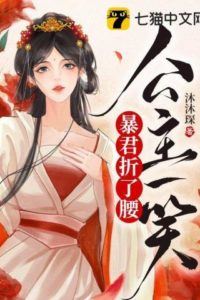
The Tyrant Bows at the Princess's Smile
+Add to Custom List
Sort
Add review
... Read More
The dialogue in this chapter is absolutely razor-sharp. Every line feels like it's carrying two meanings — what's said and what's not said. Let me start with Lu Yan's voice. He's cruel, dismissive, and darkly humorous. 'Then have the hand chopped off. It won't hurt anymore.' That's not just a threat — it's a statement of fact from someone who genuinely doesn't understand normal human empathy. His dialogue is cold, precise, and terrifying. He doesn't yell or rage; he speaks in whispers and it's worse. Lu Mingtang's voice is completely different. She's casual, almost bored, even in life-threatening situations. 'I advise Your Majesty to behave. You can't defeat me.' She says this while literally pinning him to a railing. The nonchalance is the power move. And her line about candy — 'When I wake up, I'll give you candy' — is so casually dismissive of his authority that it's hilarious. The supporting characters also have distinct voices. Zhang Ke'er's dialogue is all whining and false fragility. 'His Majesty, your servant is injured. It hurts so much.' Meanwhile, Lu Mingtang barely says anything to her — just pours hot tea on her hand. Actions speak louder. Chancellor Wei's dialogue is the most layered. 'Clever people are best at reaping the benefits without lifting a finger.' He's observing, calculating, never committing. Every line he speaks is a move on the chessboard. The narrative voice is also worth praising. It's third-person limited, mostly following Lu Mingtang's perspective, but it dips into Lu Yan's thoughts at key moments. The description of the fight scene — 'Two entangled shadows were cast upon the curtains' — is cinematic and evocative without being overwrought. My only critique: some of the palace maid dialogue feels a bit generic. But honestly, they're background characters, and the main voices are so strong it doesn't matter.
... Read More
I'm not usually one to get emotional over palace intrigue, but this section? It got to me. The romantic tension between Lu Mingtang and Lu Yan is building in this slow, deliberate way that makes every glance matter. When Lu Mingtang openly meets his gaze while eating, completely unfazed? That's not just defiance—that's a woman who knows her worth. And Lu Yan watching her with that intensity? You can feel the shift in him. He's not just amused anymore; he's captivated. But what really hit me was Lu Mingtang's internal emotional journey. She's carrying the weight of her past life—the massacre, the betrayal, the people she couldn't save. When she goes to the Department of Attire to find Bai Lu, it's not just a practical move; it's emotional redemption. She's trying to change fate, to protect someone this time. The scene where she remembers how Bai Lu died protecting her? I actually felt that in my chest. And then there's the emotional undercurrent of Zhang Ke'er—she's been used, manipulated, and now she's paying the price. Her wails after being splattered with food? It's pathetic, but it's also a reminder of how these women are pawns in a game they didn't choose. The emotional highs and lows here are expertly balanced—you get moments of triumph (Lu Mingtang outsmarting everyone) and moments of genuine ache (the memory of past losses).
... Read More
The conflict in this chapter operates on so many levels, and the stakes keep escalating in ways that left me genuinely worried for everyone involved. On the surface level, there's the physical conflict between Lu Mingtang and Lu Yan. She breaks his wrist bone. He kicks her off the bed. He resets the bone himself — which is both terrifying and strangely intimate. But this isn't just a fight; it's a power struggle played out through violence. Then there's the political conflict. Chancellor Wei is manipulating everyone from the shadows. The Empress Dowager is trying to install her niece as empress. The assassination attempt on the young emperor shows that someone out there actually wants him dead. And Lu Mingtang? She's caught in the middle, but she's not a victim — she's a player who just entered the game. The personal stakes for Lu Mingtang are enormous. She's in a foreign body, in a hostile palace, surrounded by people who would kill her for sport. Yet she's not cowering — she's fighting back. Every move she makes is risky. When she steals the waist token, she's gambling with her life. If Lu Yan finds out, she's dead. But she does it anyway because she needs leverage. What makes the stakes feel real is that nobody is safe. Zhang Ke'er thinks she's the predator, but she ends up with a burned hand and a silenced mouth. Lu Yan thinks he's in control, but he's been outmaneuvered by a 'little rabbit.' Chancellor Wei thinks he's playing chess, but there are other players on the board he hasn't accounted for. The chapter ends with Lu Yan refusing to eat and Lu Mingtang throwing the entire table. The conflict isn't resolved — it's escalated. And that's what makes it so compelling. You know this is just the beginning of a much larger war.
... Read More
Okay, so this section is absolutely packed with political maneuvering and I am HERE for it. The empress selection storyline is basically the main plot engine right now, and the author is layering in subplots like crazy. On the surface, it's about choosing an empress, but really it's a full-blown power struggle between Empress Dowager Zhang and Chancellor Wei, with Lu Yan playing both sides like a chess master. The plot twist where Lu Mingtang tells Eunuch Cao to PUBLICIZE the news about Zhang Ke'er staying in Qin Zheng Dian is genius—she's not just reacting, she's actively setting traps. And then the court scene where both factions present their candidates? Chef's kiss. Empress Dowager Zhang pushing Zhang Ke'er, Chancellor Wei countering with Wei Tongxin, and then Lu Yan dropping the bomb that he'll take BOTH? That's not just a plot twist, that's a power move that throws the entire political landscape into chaos. The narrative arc here is building tension masterfully—you can feel the storm coming. Every time I thought the scene was settling, another layer of intrigue was peeled back. The author doesn't just write palace drama; they write a living, breathing political ecosystem where every character has an agenda and nothing is what it seems.
... Read More
This chapter is a masterclass in pacing. Let me break down why it works so well. It opens with political intrigue — Chancellor Wei, the assassination plot, the power dynamics between factions. This is slow-burn tension, the kind that makes you lean in and read carefully. Then it cuts to Lu Mingtang and Zhang Ke'er, and suddenly the pace quickens. The tea scene is short, sharp, and brutal. No wasted words. Zhang Ke'er gets drugged, scalded, and silenced in the span of a few paragraphs. Then — BAM — we're in the emperor's chamber. The fight scene on the bed is where the pacing really shines. It's chaotic, fast, visceral. You can feel the sandalwood bed creaking, the silk curtains swaying, the hair intertwining. The author doesn't slow down for explanation; they just throw you into the action and let you catch your breath. But here's what I love most: the transition from violence to comedy. After breaking his wrist bone, Lu Mingtang just... falls asleep. On his bed. Like it's no big deal. Then the next morning, she's stealing his waist token while pretending to be kicked off the bed. The tonal shift is so smooth you don't even notice it happening. The breakfast scene at the end is a perfect cliffhanger. Lu Yan refuses to eat. Lu Mingtang throws the entire tablecloth. And then — the chapter cuts off mid-action as she's scooping food into her bowl with supernatural speed. I literally gasped out loud. How do you not turn the page after that? The only minor complaint: the political subplot with Chancellor Wei feels slightly disconnected from the main Lu Mingtang/Lu Yan thread. But honestly, it adds depth to the world without slowing things down.
... Read More
Okay so this chapter is absolutely wild. Let me just say it straight: Lu Mingtang is not your average palace lady. She wakes up in someone else's body, gets thrown into the lion's den, and immediately starts dismantling everyone around her like she's playing 4D chess while the rest of the court is still figuring out checkers. The plot twist that hit me hardest was the tea scene. Zhang Ke'er thinks she's the predator, sneaking into the inner chamber with her schemes, and Lu Mingtang just... lets her walk right into the trap. The sedative in the tea, the scalding water poured over her unconscious hand — that's not self-defense, that's cold, calculated revenge. And the best part? Lu Mingtang does it all with a smile on her face, then strolls into the emperor's chambers like she owns the place. But the real plot masterstroke is Lu Yan. He's supposed to be this incompetent, cruel young emperor who only cares about tormenting people. Yet the moment Lu Mingtang appears, everything shifts. He lets her sleep on his dragon bed. He watches her fight him. He even lets her steal his waist token. Why? Because for the first time, someone isn't afraid of him. Someone actually challenged him. That's the hook that made me stay up until 3 AM reading. The assassination subplot with Chancellor Wei is also brilliantly woven in. He's playing both sides — keeping the foolish emperor alive because it's convenient, but also knowing the Empress Dowager's faction is a threat. And Jiang Chaosheng? That guy's eyes when he says 'yes, Father' — you can tell he's hiding something huge. The plot threads are tightening like a noose.
... Read More
I need to talk about Lu Mingtang and Lu Yan because this dynamic is everything. Like, the way they interact is so layered and toxic and I'm obsessed. She calls herself a 'venomous scorpion' and he calls her a 'little rabbit.' These aren't just nicknames — they're weapons. She's telling him she can kill him if he disobeys. He's trying to diminish her, make her seem small and harmless. But the joke's on him because she literally just broke his wrist bone with her bare hands. What's fascinating is the power struggle. In every scene, they're physically grappling — on the bed, in the corridor, wrestling over control. But it's not just physical. It's psychological. She steals his waist token. She eats his food after throwing it on the floor. She calls herself 'elder sister' to provoke him. Every move is a declaration of war, and every move is calculated. And Lu Yan? He could kill her a hundred times over. He literally thinks about strangling her. But he doesn't. Why? Because she's the first person who's ever made him feel alive in this gilded cage. She's dangerous, unpredictable, and she doesn't bow to him. That's intoxicating for a man who's surrounded by sycophants and schemers. Then there's Zhang Ke'er — what a perfect foil. She's all delicate fragility and tears, playing the victim, while Lu Mingtang is all sharp edges and silence. One uses tears as a weapon, the other uses tea as poison. Both are dangerous in their own way, but only one of them actually knows how to fight. The relationship between Lu Yan and his grandmother, the Empress Dowager, is also interesting. She sent Zhang Ke'er to him like 'throwing a lamb to the wolves,' and Lu Yan is more than happy to play along. He's not just cruel — he's strategically cruel.
... Read More
Let me just say—this author knows how to pace a scene. The chapter opens with this explosive moment of Lu Mingtang humiliating Zhang Ke'er, and then instead of letting us breathe, it pivots to the political chess match in the court. The transition from the intimate dining scene to the grand court session is seamless; you go from personal revenge to empire-level strategy without missing a beat. And the pacing within the court scene? Masterful. Empress Dowager Zhang drops her hint about the empress selection, the Minister of Rites jumps in, Chancellor Wei counters with his portraits, and then the verbal sparring between the two factions escalates until it's practically crackling. The author doesn't rush any of it—they let each exchange breathe, let the tension build naturally. And then there's the cliffhanger ending with the embroidery competition and Lu Mingtang's quest to find Bai Lu. It's a perfect transition that makes you immediately want to turn the page. The chapter structure here is like a symphony—you get the overture (the dining scene), the main movement (the court intrigue), and the coda (the Department of Attire). Each section serves the whole, and the pacing ensures you're never bored, never confused, always engaged. The author trusts the reader to keep up with the political maneuvering while also delivering emotional beats that ground the story. It's tight, it's controlled, and it's absolutely gripping.
... Read More
I need to talk about Lu Yan and Lu Mingtang because the dynamic between them is absolutely electric right now. This feisty little rabbit of his? She's not just surviving in his palace—she's outmaneuvering everyone. When she casually eats all the dishes she wants in front of him and then publicly humiliates Zhang Ke'er? Lu Yan's reaction isn't anger, it's INTENSE INTEREST. His dark eyes swirling with that look? Yeah, he's hooked. And the scene where she commands Eunuch Cao and he doesn't stop her? That's not just power play, that's mutual recognition of equals. Meanwhile, the relationship between Empress Dowager Zhang and Chancellor Wei is fascinating in its toxicity—they're political enemies but also both playing the long game. The moment Empress Dowager Zhang brings up Wei Ruoyi to provoke Chancellor Wei? That's a character moment that reveals everything about her—she knows exactly where to strike. And Jiang Chaosheng? His loyalty to Chancellor Wei is tested throughout, and that scene where he calmly pours tea while blood splatters everywhere? Chilling. He's not just a servant; he's a calculating player who understands his master's mind. Lu Mingtang's relationship with her past-life memory of Bai Lu adds emotional depth too—she's not just fighting for survival, she's trying to save the people she couldn't protect before.
... Read More
This chapter is dripping with symbolism, and I want to unpack a few key images that stuck with me. The rabbit and the scorpion — these aren't just insults, they're identities. Lu Yan calls Lu Mingtang a 'little rabbit' to diminish her, to make her seem harmless and prey-like. But she reclaims the imagery by calling herself a 'venomous scorpion.' The rabbit is supposed to be weak, but the scorpion kills with a single sting. She's taking his weapon and turning it against him. The dragon bed is another powerful symbol. It represents ultimate power — the emperor's authority, his throne, his very life force. And Lu Mingtang just... claims it. She sleeps on it. She fights on it. She lets him sleep on the couch while she takes the imperial bed. It's a visual representation of the power shift happening between them. The weak emperor is being usurped by the 'lowly' princess. The waist token is fascinating too. In Chinese palace drama, a waist token represents identity and authority. When Lu Mingtang steals it, she's not just taking an accessory — she's taking his power, his ability to command, his very legitimacy. And she does it while pretending to be knocked off the bed. The ultimate irony: the emperor thinks he won, but he's been robbed right under his nose. The hot tea is both literal and symbolic. It burns Zhang Ke'er's hand — a physical punishment for her ambition. But it also represents the scalding reality of palace life: sweetness on the surface (the tea, the floral arrangement, the polite words) hiding something that can destroy you. And the shattered vase? When Lu Yan gets pinned against the railing and the vase crashes to the floor — that's the fragility of his power. He's surrounded by luxury (porcelain, silk, incense), but it's all one hard strike away from destruction.

Leave a comment

You must be logged in to leave comments. or