The Top Efficiency Cultivator - Reviews

The Top Efficiency Cultivator
+Add to Custom List
Sort
Add review
... Read More
The structural choices in this chapter are genuinely impressive and I think deserve more credit than they're getting. Let me map out what the author does here: we open in media res right after a battle conclusion, get the reward notification, then immediately cut to Xiao Qi's humiliation arc—which is fast, punchy, comedic. We hit a section break (xxx), then pivot sharply into Lin Shuang's psychological territory. This isn't a gentle transition; it's almost jarring. You go from "sh*t senior brother don't wake me up" comedy to "it was all my fault, I was too slow" trauma in two paragraphs. That's a bold structural risk and it mostly pays off because the emotional whiplash mirrors what these characters are experiencing. Then the author does something I rarely see done well: they bring it back down to mundane日常 after the nightmare. Zhao Keran popping in with spiritual stones, reminding about homework, the talisman assignment discussion—it's almost comically normal after the emotional violence of the previous scene. And then THE CLIFFHANGER. Someone from the Mountain and Sea Sect is at the gate. The pacing here is masterful because the reader is still emotionally recovering from Lin Shuang's grandmother scene and suddenly gets yanked back into plot mode. The author note at the end is also a smart structural choice—giving us a future-tense preview that reframes everything we just read as origin story material.
... Read More
I need to think about this differently. On the surface this is clearly a comedy — a cultivator treating life-and-death battles as background noise to her workout schedule, a system that comments on her calorie burn during combat, a technique everyone mocks being secretly mastered. But underneath that there's something genuinely interesting about what the story is saying about value and perception. The Fire Eyes and Golden Vision technique is the key symbol here. It was evaluated by the Myriad Blossoms Tower — an authoritative institution — as 'the most ridiculous technique of all time.' Cultivators used it as furniture. The creator spent eighty years and achieved almost nothing. By every conventional metric, it is worthless. And yet Lin Shuang is at level 916. The institution was wrong. The consensus was wrong. The 'experts' were wrong. This ties into something broader about the cultivation world itself — the entire system of evaluation, ranking, and judgment is built on assumptions that turn out to be flawed. Zhao Ming joined Annihilation Pavilion accepting he might die, operating under the assumption that his mission was hopeless because his resources were depleted. The emaciated old man assumes Lin Shuang is an incompetent joke because of her technique choice. Everyone is reading the world through conventional wisdom, and the protagonist keeps subverting it. The fat-burning exercises themselves are almost a metaphor — something that looks mundane, even silly, treated with absurd seriousness by the system, yet produces real results. The story seems to be asking: who gets to decide what's valuable? And what happens when someone ignores all the supposed experts and just keeps showing up?
... Read More
The tension in this section is absolutely razor-thin and I need to talk about it. We're talking about a literal half-day window where everything hangs in the balance. Lin Shuang lays it out with such cold precision: if they exceed half a day fighting the teleportation array enemies, the Ancestral Hall is lost. Period. No second chances. The math is brutal and inescapable. What makes this so gripping isn't just the time pressure — it's the stacking variables. Every decision branches into new risks. Guard Little Fang → risk the Hall. Rush to the Hall → risk Little Fang. Create a third-order swift travel talisman → maybe, possibly, they can hold both positions but there's no guarantee. The story refuses to give us comfortable certainty at any point. And then Dao Dong splits his forces. Three hundred divided against three hundred, and suddenly the entire strategic landscape shifts. The reader comments explode — 【We were supposed to win for sure...】 — because they've already calculated the advantage and watching it dissolve in real time is agonizing. Dao Dong's formation counters Meng Zi's forces, but his decision to send only a hundred to the teleportation array instead of three hundred creates a vulnerability that feels both inevitable and shocking. The hidden trump card — three hundred Li family strongmen waiting to be triggered if casualties exceed the busy season limit — adds this terrifying layer. It's a doomsday mechanism that neither side fully understands. If Meng Zi triggers it, he wins but at what cost? If he doesn't, he might lose everything. The stakes keep escalating and the story never lets up.
... Read More
There's this recurring theme in these chapters about guarding the wrong things and misunderstanding the rules, and it goes deeper than just plot mechanics. The ancestral hall represents tradition and appearance — it's where the Li family lineage is supposed to be protected, where the Wang family would theoretically attack from the front. But the real vulnerability is hidden behind a doghouse. The dog, Fang Fang, is both literally everything to Old Li and symbolically the thing no one takes seriously enough until it's too late. And then the whole meta layer with the projection watchers adds another dimension: people who already failed the same scenario, now reduced to comments in a chat system, spending spirit stones to warn or mock the current players. There's something almost cruel about that — the senior disciples watching juniors walk into the exact traps they fell into decades ago, not because the rules changed but because human nature doesn't. Misdirection, assumption, the gap between what's visible and what's real. The fact that one person actually passed by guarding the ancestral hall (wrong reason, wrong outcome) while others failed for the same wrong reason says everything about how these trials test perception, not just power.
... Read More
I CANNOT stop laughing at this scene. Zhao Ming is literally about to burn his Nascent Soul Golden Dan and force his way up in cultivation, he's sending his final goodbye message to Junior Brother Xiao Qi like he's accepting his death, and what does Lin Shuang do? She says, in a clear exhausted voice, 'One hundred and twenty breaths.' Hold on for one hundred and twenty breaths. ONE HUNDRED AND TWENTY BREATHS. While someone is actively trying to behead you! And then Zhao Ming and the old man are both just sitting there like 'wait, is she going to start fat-burning again?' The contrast between the stakes is so perfectly comedic. Zhao Ming is thinking 'this is it, I prepared for this day since I joined Annihilation Pavilion, when you go out into the world there will always come a day when you meet your end,' and Lin Shuang is like 'sorry, already finished my fat-burning for today.' The tension of the combat scene is built up seriously — Zhao Ming gets his arm torn open, 'tearing flesh and revealing bone,' the emaciated old man is grinning maliciously saying 'no one has ever seen me leave alive' — and then Lin Shuang just casually drops 'my next exercise is to practice the Fire Eyes and Golden Vision technique' and EVERYONE loses their minds. The old man literally laughs so hard his scythe shakes. He's been about to kill Zhao Ming and now he's stopping to mock her? That IS the tension maintenance right there — the author makes you care about whether Zhao Ming lives or dies, then undercuts it with absolute absurdity, and somehow it works because you're too busy laughing to actually panic. This is peak 'the MC is operating on a completely different wavelength than everyone else' comedy. The stakes are real but the delivery is ridiculous, and I live for it.
... Read More
Okay, let me just say this — Lin Shuang is hands down one of the most fascinating senior-senior-sister types I've ever encountered in cultivation fiction. On the surface, she's lazy, sleep-heavy, always making excuses, bargaining for noodles and eggs like she's running a consultancy service. But then you read between the lines and realize... what IS she actually hiding? Three years pass and Zhao Keran hits the seventh layer while Lin Shuang supposedly stays at the third. But that moment when Zhao Keran touches her shoulder and her fingertip goes NUMB from the defensive qi? That scene gave me actual chills. And then Lin Shuang casually drops the revelation that she has EIGHTY dantians, all stuck at peak third layer Qi Refining. Eighty. Eighty parallel cultivation bases. That is not a beginner. That is some top-secret experimental method nobody outside this novel has ever seen. And the way Zhao Keran views her senior sister — with awe, confusion, and genuine devotion — makes their bond feel incredibly real. Zhao Keran literally cooks her breakfast, saves her warm water, drapes her robe when it snows. The contrast between their apparent power levels and the actual dynamics tells me there's so much more beneath the surface. Is Lin Shuang protecting Zhao Keran by staying seemingly weak? Or is she genuinely playing some long game? Either way, I'm obsessed.
... Read More
There's a three-hundred-year-old pine tree outside the management hall. Right next to it is a stone tablet that ranks disciples. These two images are sitting side by side and I think they're the entire theme of this novel condensed into one scene. The tree is old, rooted, unmoving. It has survived centuries. The stone tablet is permanent too — it records achievements, assigns hierarchy, fixes people in place with numbers. 17291. 14993. 2. 1. These numbers are supposed to define who someone is. But Lin Shuang just jumped nearly two thousand positions and is smiling like it's nothing. She exists outside the system that the tree and the stone are meant to measure. And then there's Wood House Number Ninety-Nine. Her sauna. Her warm bed. Her private space where she controls the environment, the temperature, the schedule. This is where she recharges, where she sleeps without pretending, where the 20% flexible time lives. It's the one place in this entire sect that is truly hers — not ranked, not measured, not recorded on any stone tablet. "Familiarity breeds innovation" — this line from her diary is the thesis statement. She took something repetitive, something boring, something everyone does (cultivating spiritual perception day after day) and made it into something new. The theme isn't about being the strongest. It's about refusing to be categorized. The ranking system wants her at 17291 or 14993 or wherever the stone says she belongs, but she keeps rewriting herself in spaces the stone can't reach. What is the novel really saying about power? That it's not about the numbers on the tablet. It's about who gets to define the rules — and more importantly, who gets to hide.
... Read More
Let me ask you something: what's scarier than being trapped in a loop? Being trapped in a loop where you FORGET you're trapped every single time. That's the conflict setup in this chapter, and it's genuinely unsettling. The Library of Ten Thousand Books is designed so that failure doesn't mean death — it means ERASURE. You lose your progress, your memories, your hard-won insights, and you start over. The projection system shows us disciples who've been stuck for 173 days, 321 days, 192 days. Hundreds of days of repeating the same mistakes, never knowing why. "In a hundred years, probably no more than five people can perceive anomalies in the Library." Five. Out of everyone who's ever entered. That's the stakes. The conflict isn't just 'can they escape' — it's 'can they maintain awareness in an environment designed to make them forget.' What makes this conflict so tight is that the threat is INTERNAL, not external. There's no villain chasing them, no monster to fight. The antagonist is their own minds. The library weaponizes their desires against them: Meng Zi wants the expensive knife technique, Huangfu Yuan wants to master alchemy, and both of those desires are literally designed to trap them. The tension escalates in this brilliant way — first we see the others failing (the projections), then we watch our protagonists nearly fail (Meng Zi almost getting excited about the technique, Huangfu Yuan almost dismissing the burning smell), and THEN they break through by noticing something WRONG. The conflict resolves not through force but through DISSENT — disagreeing with their own expected reactions. And the stakes get raised even further when Lin Shuang asks "How long can cultivators forget their past using items that make them forget?" The answer turns out to be: not forever, but long enough to matter. The original body died and she came into this world not remembering anything. That's personal stakes — her entire identity is built on a foundation that could be washed away by a stick of incense. The chapter ends with what feels like a setup for a much bigger threat. Those memory-loss items exist in the world. Someone used them. And the three protagonists just realized they can be targeted. The conflict has shifted from 'escape the library' to 'someone is trying to make us forget — who and why?' That's how you escalate stakes without raising the action budget.
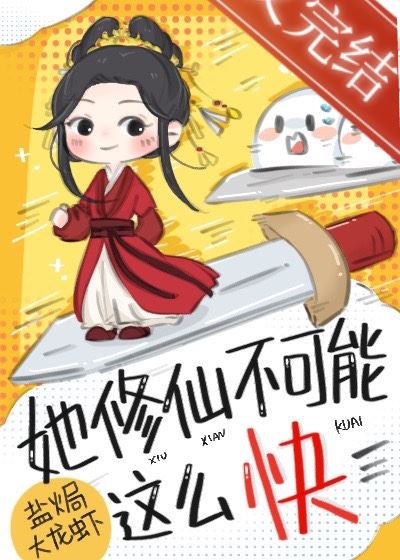
... Read More
I keep coming back to the dialogue in this because it reveals SO much about these characters without ever feeling like exposition. Zhao Keran's internal monologue is painfully relatable - "Oh no, Dad, Mom, Big Brother, I'm done for..." This girl is out here talking to her parents in her head while failing at cultivation and I adore her. Her self-doubt feels genuine, not manufactured for dramatic effect. But Lin Shuang's voice is where it's at. "Don't lose focus again." Four words. Spoken while physically supporting someone's back and channeling spiritual energy, and somehow it carries the weight of someone who has lived multiple lifetimes. The way she explains things - "The five internal organs' energy flows in five directions, merging one by one" - this isn't a beginner's guide, this is someone translating complex cultivation theory into language a struggling disciple can actually use. She could've just dumped power into Zhao Keran, but no, she teaches her. And the humor! Lin Shuang treating her secret cultivation guidance like a checkbox on a to-do list. "Today, I gave Zhao Junior Sister some guidance, which should speed up her cultivation, at least by fifty percent." She's literally running a productivity spreadsheet on her life while helping people. The contrast between her deadpan internal calculations and the profound impact she has on everyone around her is comedy gold wrapped in warmth.
... Read More
Let me just sit with this revelation for a moment. The Fire Eyes and Golden Vision technique. A technique that the Myriad Blossoms Tower evaluated as 'the most ridiculous technique of all time, without exception.' Twenty years ago cultivators were using it to prop up their tables. The creator spent EIGHTY YEARS practicing it and only reached Nascent Soul low level. One thousand four hundred and forty levels of nonsense. And then Lin Shuang casually announces, 'today is the day I broke through to level 916.' Level 916. Out of 1440. At this rate, if the math works out, she would have surpassed the legendary creator who only made it to level 500-something. This is the kind of plot twist that makes you physically spit out your drink. The author spent several paragraphs making this technique sound like the absolute worst possible thing to practice — the old man is LOLING, Zhao Ming has a bitter taste in his mouth, it's established as worthless and ridiculous — and then the MC drops the bombshell that she's somehow making real progress on it. What makes this work so well structurally is the setup. The author doesn't just slap this on you cold. We get the worldbuilding about why this technique is mocked, the historical context of its failure, the emaciated old man's genuine amusement — and then the punchline lands because we understand exactly HOW absurd the situation is. The system chiming in with '[Ding, Fire Eyes Golden Gaze technique, 916th level, progress: 97%]' is the perfect cherry on top. I keep going back to reread this section because the comedic timing is absolutely immaculate.
... Read More
I need to talk about this moment when Lin Shuang smiles at Xiao Qi with her eyebrows raised and suggests he just admit defeat and blame it on 'not fighting women today.' The man is literally standing there having just been physically and spiritually destroyed, and she's offering him a polite excuse to save face. And his reaction? 'all his grievances and indignation surged.' He's so mad she's so calm, so unfair, so infuriatingly gracious in victory that he can't even accept her kindness. The emotional whiplash here is incredible. On one hand, you have Xiao Qi who is clearly invested in this rivalry—six levels of cultivation difference and he still can't land a hit, and the worst part is that her punches are literally boosting his cultivation while destroying his pride. He's getting stronger AND weaker at the same time, and that has to be the most confusing emotional experience ever. And Lin Shuang, watching him leave while her junior sister fusses over her—'a rosy complexion, sweat on her forehead, and was breathing slightly heavily, yet she walked out calmly'—she's so peaceful in victory while he's a complete mess. The contrast is almost cruel, but in the best way. What kills me is the ending where she just watches him go, brow twitching at whatever he mutters under his breath. There's this entire dynamic building between them—rivals, teacher and student energy, something more?—and it's so completely unresolved. I need more. I need them to cross paths again. I need to know if he'll ever stop thinking about this fight.
... Read More
The chapter opens with Lin Shuang's internal monologue about her 36 Dantians and then immediately cuts to her pulling out a cultivation diary like she's checking her stock portfolio. This is such a specific structural choice and I love it. The author doesn't give us the action beat first — they give us the system, the methodology, the paperwork of power. The actual exciting part (defeating a Foundation Establishment cultivator) is already in the past tense. We're starting from the aftermath, which means the tension has already shifted from "will they survive" to "who knows what they survived." Then the pacing does this incredible flip — we go from Lin Shuang's private introspection to the noisy, bureaucratic world of the management hall. Xu Rui's chatty concern, the stone tablet glowing, the rankings updating. It's all so mundane and ceremonial, and yet every single detail carries weight. The 200 contribution multiplier, the Grade A rating, the positional jumps. The author lets the numbers speak for themselves instead of having characters react with shock or awe. Lin Shuang's satisfied smile says everything. And then — BAM — the elite disciple revelation drops and she's already gone. The chapter ends with Zhou Xuanwu trailing behind, cut off mid-interaction, while the narrative gives us that fragmented glimpse of junior disciples gossiping. The pacing is deliberately unfinished here, and I think that's the point. Nothing about their situation is resolved. Nothing is confirmed. The story is moving forward precisely because it refuses to slow down and explain itself.

Leave a comment

You must be logged in to leave comments. or
