The Times I Remembered You
+Add to Custom List
Genres:
Tags:
Novel Info
  • Author:
  • Status:Ongoing

Summary

... Read More

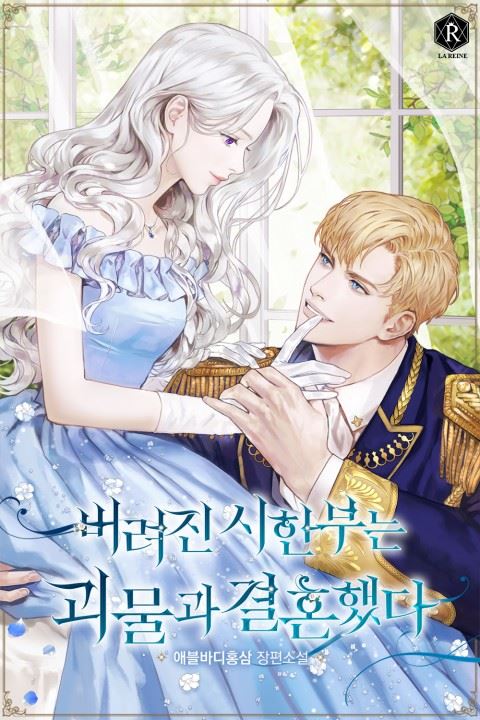
Kareina Fair Adrian, the last imperial princess of the fallen Niyev Empire, endured two years of hostility as the puppet Empress of the conqueror nation, Tirantus. Her marriage to Emperor Raul Fonnos Tirant was a political tool to suppress Niyev resentment, yet Raul treated her with public humiliation and private cruelty, maintaining a mistress named Evelyn Debussy while subjecting Kareina to isolation and suspicion. The tension escalated when a bombing in the Niyev region left Raul unconscious, leading many nobles to suspect Kareina of orchestration. Upon waking, Raul suffered total amnesia, retaining no memory of his hatred or his political alliance with Evelyn, but retaining only a vivid, fragmented image of Kareina that manifested as an inexplicable affection.

Unaware of their violent past, Raul began aggressively pursuing Kareina with gifts and intimacy, creating a stark contrast to his former self. He coldly dismissed Evelyn, claiming his true preference always lay with his Empress, a revelation that shocked the court but aligned with Raul’s subconscious instincts. Kareina, hardened by years of abuse and trauma, struggled to reconcile this new tenderness with her reality. She remained guarded, viewing his actions with suspicion and sorrow, yet found herself unable to reject his advances entirely due to lingering emotional vulnerability and her desperate need for survival in the hostile palace.

The narrative shifts focus to Kareina’s deep, unresolved guilt regarding her homeland. Despite her status, she felt responsible for the suffering of Niyev’s people, particularly during a severe drought exacerbated by corrupt officials like Count Puerco, who monopolized water resources. When Puerco mocked her for abandoning her people and suggested she seduce the Emperor to gain power, Kareina fell into a depressive episode. In a moment of despair, she attempted suicide by throwing herself into a lake, an act that was interrupted when her maid, Ginny, accidentally pushed her in while trying to save her.

Raul discovered Kareina unconscious in the water and rescued her, an event that triggered a profound change in his behavior. He dismissed her neglectful maids and appointed Ginny, who confessed to the accident, as her personal attendant. The near-loss of Kareina shattered Raul’s playful demeanor, replacing it with intense protectiveness and visible fear. He demanded she rest and forbade her from working late, signaling a shift from romantic pursuit to earnest devotion.

As Kareina recovered, the dynamic between the couple evolved. Raul ceased his flamboyant gift-giving, such as the endless flower baskets, and instead focused on genuine care and support for her efforts to help Niyev. Kareina, realizing her attempted death had failed and that she could not escape her responsibilities, resolved to use her position to aid her people rather than seek redemption through romance. She accepted Raul’s protection but maintained emotional distance, determined to navigate the complex political landscape alone.

The story sets the stage for a gradual healing process, with Raul striving to understand the woman he had wronged and Kareina learning to trust again. The resolution of the bombing incident and the uncovering of the conspiracy involving Puerco remain pending threats, while the presence of Evelyn introduces potential future conflict. Ultimately, the narrative explores the possibility of rebuilding a relationship founded on mutual respect rather than power and resentment, as both characters confront the ghosts of their past.

Latest Release
DateGroupRelease
2026-10-03dusk blossoms c80
2026-10-03dusk blossoms c79
2026-10-03dusk blossoms c78
2026-10-03dusk blossoms c77
2026-10-03dusk blossoms c76
2026-10-03dusk blossoms c75
2026-10-03dusk blossoms c74
2026-10-03dusk blossoms c73
2026-10-03dusk blossoms c72
2026-10-03dusk blossoms c71
2026-10-03dusk blossoms c70
2026-10-03dusk blossoms c69

Community Reviews

Rating(0 / 5.0, 30votes)
5 stars
0(0%)
4 stars
0(0%)
3 stars
0(0%)
2 stars
0(0%)
1 stars
0(0%)

Popular reviews

... Read More
So the whole chapter starts with this seemingly domestic scene—jewels, dresses, a garden walk—and then BAM, a note appears out of nowhere. You'd expect something more elaborate from whoever's trying to send a message, but it's just three lines scrawled on a scrap of paper. ‘You must not forget me.' Creepy, right? Not exactly ‘I love you' energy. What I found interesting is how Kareina processes it. She doesn't panic. She actually considers it might be a threat and then immediately dismisses it herself, attributing her caution to paranoia. That's such a character-defining moment—it tells us everything about how she's been conditioned to doubt her own instincts. And honestly, that's the real tension here, not the note itself. The note is just a symptom. Then the noble council scene hits like a wave. The plot pivots so sharply from garden strolls to political theater. All those nobles piling on with their Niyev insults, and Raul's transformation is the centerpiece. He goes from silently enduring to literally slamming his fist on the desk. The pacing here is brilliant because the author lets the insults build gradually—you can feel each one getting worse, each jab sharper—until Kareina is just sitting there, glass in hand, taking it all in silence. And then the explosion. The aftermath is where the plot really gets interesting though. Raul appointing Kareina to investigate the bombing? That's a genuine twist. It's not just protection, it's power—and he's giving her both. The nobles' shock is palpable, and it sets up this whole investigation thread that's clearly going to matter later. Plus Marquis Zook getting exiled for saying a few words during the meeting? That's a strong signal that the rules have changed. I'm curious what the author does with the Niyev investigation next, because that's clearly a loaded topic given how the nobles treated Kareina.
... Read More
There are THREE layers of explosions happening simultaneously in this chapter and I am NOT okay. First: the literal one. A bombing attack happened. The initial report written by Duke Debussy is garbage—no details on the explosives, no credible suspects. And who gets handed the investigation? Kareina. The woman everyone in the palace already thinks is cruel and inhumane. If she fails, she fails publicly. If she succeeds, she gains power she never had. That's not a gift; that's a loaded gun pointed at her feet. Second: the political one. Duke Debussy's entire worldview just cracked. He spent years treating Evelyn as his leverage in the palace, and now the Emperor is actively empowering the Empress over his own daughter's family. The text says it plainly: "Those who aligned themselves with the Debussy ducal family will shed tears of blood." The Duke himself is grinding his teeth in a corridor like some kind of villain origin story. But here's what scares me—he's not wrong to be afraid. If Raul regains his memory and decides he actually DOES care about Kareina, the Debussy faction goes from powerful to destroyed overnight. Third and honestly the one keeping me up at night: Raul's amnesia. Is it real or manufactured? The text gives us ZERO answers, only questions. Every time he looks at Kareina with regret, every time he defends her in council—it could be genuine reconnection or it could be performance. And Raul himself seems uncertain. The chief chamberlain was so terrified of saying the wrong thing he just shut up. That silence speaks volumes. When memory is weaponized, everyone becomes a suspect, including the man sitting on the throne.
... Read More
There's this incredible symbolism running through this entire section that I think a lot of readers might miss on a first pass, and I want to really dig into it because it's what elevates this from a standard romance to something with actual depth. Let's talk about the mariposa flower first. It appears at a crucial moment—when Kareina's emotional walls crack ever so slightly. The name itself means butterfly in Spanish, which is significant because butterflies represent transformation. Kareina is literally in a state of transformation throughout this section: she goes from refusing to engage with Raul to sitting beside him working, from cold and distant to showing flashes of warmth. The flower is the external trigger for an internal change she didn't know she was capable of. Then there's the contrast between the flowers and the documents. Raul sends both—flowers for beauty, documents for purpose. The flowers go unsmiled-at but kept on a shelf. The documents are DEVOURD. This tells us everything about Kareina's inner world. She doesn't need romance; she needs agency. She needs to matter beyond being the Empress consort. "To her, who had nothing but the title of Her Majesty the Empress, there was also no one to kindly deliver news of her homeland." This line hits different every time. The entire imperial court treats her as a symbol—a Niyev-born body to legitimise the political union—but nobody sees HER. The flowers are pretty but empty gestures. The documents about Niyev? Those are the first time anyone treats her as someone with knowledge, with expertise, with VALUE. And the imperial palace itself functions as a kind of golden cage throughout. High walls, lofty positions, beautiful but isolating. Kareina is imprisoned by her status, and the only window out is Niyev. Raul becomes the person who holds the key—not because he's freeing her, but because he's the first one who actually opened a door instead of just admiring the bars.
... Read More
I need to talk about the mariposa scene because I literally cannot get over it. So Kareina is basically a statue for most of the novel—cold, distant, treating Raul like furniture—and then she SMELLS the mariposa and suddenly there's this sweet smile on her face. This tiny, faint thing that seems about to disappear. And Raul notices it. He notices EVERYTHING about her. And it destroys him a little because he realizes he's never seen her smile like that before, and it has nothing to do with him. "Though it was a faint smile that seemed about to disappear, Raul had to suppress the impulse to lift her up and head to the bedroom." Like. The man is fighting a war between desire and respect in ONE SENTENCE and I am deceased. But the moment that actually broke me was later when Kareina says "thank you for the gift" after receiving those Niyev documents. Everyone in the room knows what that thanks is really about. It's not about the flowers or the necklace—it's about being SEEEN. For the first time, someone recognized what she actually needed instead of just using her as a political prop. "Kareina longed for Niyev." Two years in this palace and the only thing that makes her alive is the chance to help her homeland. And Raul, this guy who apparently did terrible things before losing his memory, is the one who gives it to her. That's the most complicated emotional situation and I love it.
... Read More
I need to talk about Evelyn first because WOW. This woman is unhinged in the most fascinating way. She shows up uninvited, sits down, orders tea, then when food arrives—raw salmon, no less—she pushes it away with what she pretends is an apology about health issues. But then Kareina just PICKS IT UP AND EATS IT. Not out of malice, not even really thoughtfully. Almost like a child wanting to prove a point. That moment where she smiled gently after eating the rejected food? Chilling. The text literally says: "As the firm salmon and sweet-tangy sauce spread throughout her mouth, her mood improved slightly." She didn't even process it consciously, did she? It was instinct. She won that round without standing up. And Evelyn's line—"Especially... in bed."—that wasn't awkward. That was a deliberate strike. She knew exactly what she was doing. But here's the thing that caught me: Kareina's reaction wasn't anger. Her actual thought was imagining Evelyn being carried out over her shoulder. That's not revenge; that's comedy. That tells me Kareina isn't threatened in the way people expect. She's not playing the wounded wife. She's playing something else entirely. Then there's Raul, who apparently forgot everything except how to look at Kareina like she's the sun. "He had held her hand for quite a while... watched her retreating figure until the end. Regret dripped so obviously from that unnecessarily handsome face." Duke Debussy can't understand why Kareina is playing along if she doesn't actually love him. But maybe she doesn't need to love him. Maybe she just needs him alive and dependent on her, and right now that's enough.
... Read More
The opening scene is so deliberately slow it almost felt like a meditation at first. Kareina standing outside looking at spring leaves while a rude servant delivers terrible news. Just gentle nature imagery and a mundane announcement that slowly builds dread. The author could have thrown us straight into drama but chose to let us breathe first, to establish that for all the chaos coming, Kareina maintains an extraordinary composure. Then the servant drops the bomb that the emperor has awakened and the pacing shifts completely. Each question the maids ask moves the story forward faster. How is his body? Did they catch the bomber? And then that final beat where the servant stops mid-sentence and the room goes silent. That is masterful tension control. The reader is hanging on every word right along with Kareina. I want to specifically call out the underground dungeon memory sequence. Just a few sentences of sensory detail and suddenly we understand everything about why Kareina is afraid. The rusted bars, the dripping ceiling, the cold floor rising through her skin. No exposition needed. The author trusts us to connect those dots. And the structure around the wedding flashback works on two levels. It explains how we got here while simultaneously showing the depth of Kareina's isolation. By the time we return to the present and Raul enters her chambers, we understand exactly how vulnerable she truly is and how dangerous this encounter might become. The author never lets the reader relax once the real confrontation begins.
See all reviews

Custom lists

See all custom Lists