The Sworn Enemy Became Love Struck - Reviews

The Sworn Enemy Became Love Struck
+Add to Custom List
Sort
Add review
... Read More
The winter imagery in this chapter is doing SO much heavy lifting and I need to talk about it. "As winter approached, the temperature got lower and colder. Every time Zhuang Wu got up in the morning, he has to stay in bed for a long time." This isn't just setting the scene — the cold is a metaphor for the emotional distance between these two. Winter makes everything harder, slower, more reluctant. Getting out of bed becomes a negotiation. And Qin Qiyue is literally his only motivation. The elevator scene also deserves its own mention. Two hours in total darkness with just the sound of breathing and the muffled noise of rescue workers outside. The way the author describes it — Zhuang Wu pretending to be calm so Qin Qiyue wouldn't be scared, when really he was also terrified — this claustrophobic setting stripped away all their usual defenses. No classrooms, no family gatherings, no third parties. Just them. And in that confined space, the physical closeness that would've been impossible in daylight became inevitable. Then cut to the birthday party, warm lighting, food being reheated multiple times because everyone was waiting for them. The contrast between the cold dark elevator and the warm crowded private room is almost painful.
... Read More
Let me just say this — the pacing in these chapters is masterful and I am not okay. The author could've rushed straight to the confession or the dramatic confrontation but instead chose to spend an entire chapter on a birthday dinner where nothing seems to happen on the surface. And yet I was reading with my heart in my throat the whole time. Look at the structure: elevator trap (tension) → rescue (release) → birthday party (social tension) → gift exchange (emotional resonance) → private moment under the table (intimate peak) → winter study montage (emotional valley). That's not random, that's deliberate pacing. The author lets you breathe after the high points and digs deeper during the quiet ones. The transition from the warm, crowded birthday party to the cold, lonely study sessions was jarring in the best way possible. One moment they're touching hands under a dining table and the next, Qin Qiyue is answering him with one word: "Busy." The chapter ends on that single word and I had to put the book down and stare at a wall for five minutes. That's how you control reader engagement — not with cliffhangers but with emotional whiplash.
... Read More
Okay, I need to talk about this love letter situation because honestly it is one of the best complications the author has cooked up. Zhuang Wu writes a love letter, Qin Qiyue publicly throws it away — or so everyone thinks — and then we find out he literally picked it up from the trash while Zhuang Wu was inside. That detail? Chef's kiss. But then the letter ends up in the classroom trash, gets read aloud by some random classmate, and suddenly all hell breaks loose. The way this single object chains together the romantic tension, the school conflict, and the physical fight is genuinely clever plotting. It's like dominoes. One tiny piece of paper knocks over everything. "Before I met you, I had never cared so much about anyone." — and now the whole class knows those words, directed at Qin Qiyue. The irony is brutal for Zhuang Wu, who wanted privacy but got the opposite. What I also appreciated is how the plot uses the love letter to expose character. Qin Qiyue's initial rejection looks cold, but the late-night trash retrieval scene recontextualizes everything. He didn't throw it away to hurt Zhuang Wu; he was playing along, or maybe he just didn't know how to handle it. Either way, the letter becomes a weapon when Xu Zhong weaponizes it in class. The plot keeps feeding on itself, and by the time the teacher shows up, we're fully invested in what happens next.
... Read More
There's something really beautiful about how water operates as a motif throughout this entire sequence, and I don't think the author is being accidental about it. The hot spring — that's where everything starts. The water is too hot, both of them hesitate, but they get in anyway. It's a perfect metaphor for their relationship: uncomfortable, overwhelming, but neither of them can stay away from it. Then the alcohol flows, lowering barriers, making the composed Qin Qiyue physically unable to maintain his defenses. Water inside him, water all around him. And then the cold shower he insists on — that's the attempt to wash it all away, to reset, to pretend none of that vulnerability happened. But he still ends up curling into Zhuang Wu's arms while asleep, holding him tightly. You can't sober-wash your way out of that kind of wanting. The biggest symbolic act though is the morning-after denial. "I don't remember." Whether genuine or not, this line taps into something universal about how we handle moments of emotional exposure — we want to unlive them, to pretend they didn't happen, to convince ourselves and others that forgetting equals safety. But the text keeps showing us that forgetting is a myth. His body remembers. His hands find Zhuang Wu in the dark. His smile was real even if his words weren't. The story keeps asking the same question under the surface: can you ever really un-feel something, no matter how hard you try to wash it away?
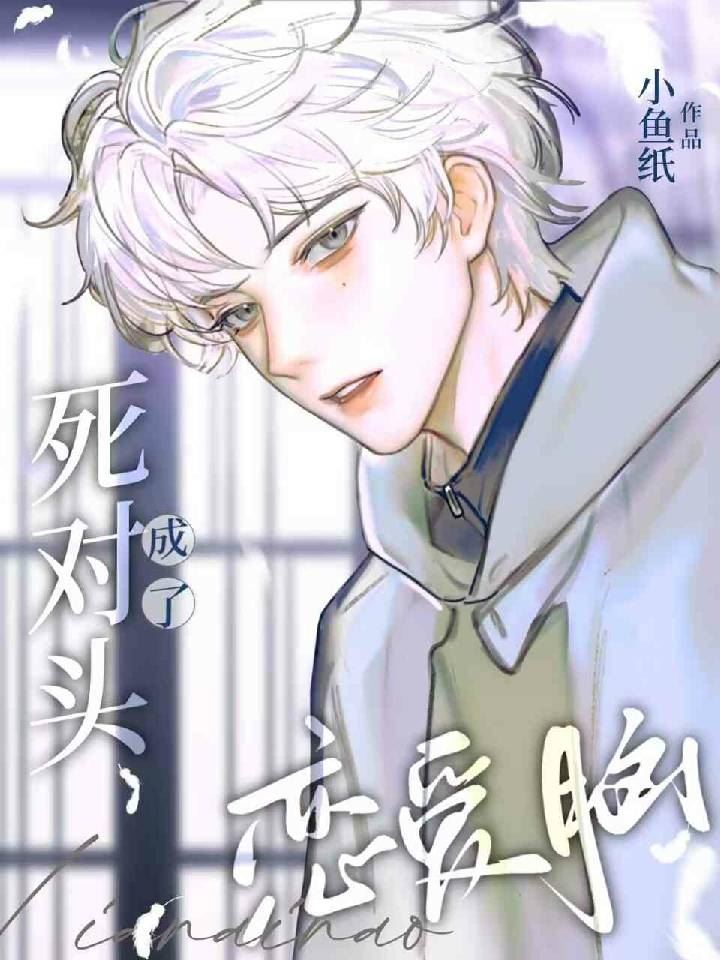
... Read More
I need to talk about the stakes in this chapter because on paper, nothing dangerous happens. They're trapped in an elevator for two hours. Fine. They arrive late to a birthday party. Fine. But the real stakes here are so much more personal and so much more terrifying. Zhuang Wu's conflict isn't about surviving an elevator — it's about surviving his own feelings. Every time he hugs Qin Qiyue and says "I'm still afraid," he's using fear as cover for intimacy. The stakes of being honest are losing him. The stakes of staying silent are slowly losing himself. Qin Qiyue's conflict is even more layered. He's studying himself into exhaustion because the alternative is sitting with his thoughts and his feelings and the terrifying realization that he wants something he's never allowed himself to want. His coldness is a defense mechanism, and the worst part is that it's working — it's keeping Zhuang Wu at arm's length, but it's also killing him a little inside every time. The birthday party scene raises the stakes even further. Zhuang Wu daydreams about a future with Qin Qiyue and immediately regrets it. The moment of vulnerability is followed by immediate retreat. These two are playing a game where the only rule is: whoever speaks first loses. And that's what makes every chapter so agonizing to read.
... Read More
I need to talk about how Qin Qiyue's dialogue operates on at least three simultaneous frequencies and the author clearly loves him for it. Take this exchange: "Since you want to improve your grades, I'll try to help you." — surface level: helpful classmate. Subtext: I will rearrange the seating chart for you. Third layer: I have already gone to the teacher and negotiated this before you even asked. The man doesn't just speak — he strategically deploys sentences. Every line is a calculated move disguised as casual conversation. When he says "See if you can improve your grades significantly," that's not encouragement, that's a challenge wrapped in indifference. Chef's kiss. And Zhuang Wu's voice is such a perfect contrast. Where Qin Qiyue is all controlled understatement, Zhuang Wu is maximum volume, maximum enthusiasm, maximum emotional transparency. "Gege! Do you want to sit at the same table with me?!" — this boy has zero filter and it's incredibly endearing. His excitement is immediate and unguarded, which makes those rare quiet moments when he actually reads the situation correctly hit even harder. Ji Zhixian gets maybe three lines but he's the comic relief MVP. "……???" as his entire contribution when Qin Qiyue sits down next to him for no explained reason. The silence speaks volumes. He's the audience surrogate watching this unfold and he is deeply confused. The teacher Hu Jianlong also deserves credit — his lines are functional but human. The mental struggle is palpable even in text: "This… why don't you let him ask me questions after class? I can also explain them to him." We can feel the teacher trying to maintain boundaries while simultaneously being outmatched by a student who has the confidence of someone twice his age. Brilliant cameo work. What I love most is how neither male lead ever directly addresses what's actually happening between them. The entire romantic tension exists in the space between what they say and what they mean. The author trusts the reader to connect the dots and that trust is rewarded every single time.
... Read More
Can we just take a moment to appreciate that the ENTIRE emotional escalation of this chapter gets defused by two people arguing about what to CALL each other??? Zhuang Wu calls Qin Qiyue 'Jiejie' (older sister) and Qin Qiyue fires back with 'Meimei' (younger sister) and somehow this feels like the most INTIMATE conversation in the whole passage. The dialogue between them has this beautiful rhythm—Zhuang Wu pushes, Qin Qiyue deflects, Zhuang Wu pushes AGAIN, and Qin Qiyue's excuses keep getting thinner: 'I don't want to eat it, don't block my view with this.' — BRO THERE IS NO VIEW BEING BLOCKED. 'I'm carrying you on my back now, so I can't hold anything with my hands.' — So you're saying if he asked you to drink water you'd just... let him drink from the bottle? And Zhuang Wu's internal monologue is SO distinct from his spoken voice. He thinks 'How shameless' about his own flirtation, then immediately does something EVEN MORE shameless. The gap between his outer persona (pitiful, hurt, sweet) and his inner voice (calculated, theatrical, aware) is where the humor lives. 'As expected, life is like a play and it all depends on acting.' He KNOWS he's playing a role and he commits FULLY. Meanwhile Qin Qiyue's dialogue is mostly short, clipped responses. 'Going back.' 'So what do you want to do?' '………' The ellipses ARE his dialogue at this point. He's running on fumes and sheer willpower and every sentence is one word shorter than the last. Which makes his final cooperation—agreeing to the nickname swap—feel like a tiny surrender that means everything.
... Read More
Okay so this whole sequence with Zhuang Wu buying hot milk and then Qin Qiyue immediately handing it to some random guy who was playing basketball with him—it is literally one of the most quietly devastating things I've read in a while. The plot doesn't hammer you with drama, it just lets the moment breathe and the wound does the talking. Zhuang Wu calculated everything: waited until the court cleared, brought the drink himself, even rehearsed the pitch about pestering Qin Qiyue into teaching him basketball. And then Qin Qiyue doesn't even hesitate—just turns around and gives it away like it was never his. The subplot threading through all this is Zhuang Wu's memory of a "previous life" where apparently Qin Qiyue eventually fell for him. That raises the stakes SO much because now we're reading with dramatic irony. Every small gesture from Zhuang Wu carries the weight of someone who knows how this story ends—or at least what he thinks the ending is. The new transfer student Huai Nanzhi appearing and staring directly at Ye Chuli is clearly setting up another major plot thread. And the fact that Zhuang Wu noticed it means he's already hyper-aware of who looks at whom in this room. The author is building layers here, not just one love triangle but multiple intersecting emotional geometries.
... Read More
I need to talk about this scene where Lin Mengyu confronts Qin Qiyue. Because honestly? The stakes here are NOT just about a wet notebook. Everyone keeps treating it like some minor disagreement between two guys, but read between the lines and this is literally the crack where everything changes. Zhuang Wu comes out of that room with red eyes. Red. Eyes. For something that could've been handled with a simple "it's fine, don't worry about it." Instead, Qin Qiyue drops this line — "can't you just hold it properly? Why do you have to wait until you've done something wrong before you apologize?" — and then wonders why the kid is upset. WONDERS. Like he genuinely doesn't understand that being told you're careless in front of someone else who already thinks you're not good enough cuts deep. But here's what gets me: Lin Mengyu, the mother figure, sees it immediately. She says it straight to Qin Qiyue's face — "you always consider things from your own perspective and don't care about what others think." That's not just advice about a notebook. That's about their entire dynamic. Qin Qiyue has always been right. Always been excellent. And Zhuang Wu? He's been tolerating it for YEARS. Until now. And then Zhuang Wu finds the notebook and realizes HE was the one who was wrong this whole time. Jealousy masked as hatred. That's a stake — not career, not revenge, but self-knowledge. The terrifying kind.
... Read More
I need to talk about this OPENING LINE because it set the tone for the entire passage. "Nu-uh. I've already assumed that you have feelings for me anyway. There's no point in your explaining!" This is Zhuang Wu in a single sentence — absolute confidence, zero self-doubt, weaponized playfulness. He's not asking, he's not hoping, he's STATEMENT-ING. And the fact that Qin Qiyue can't even get a word out because his mouth is covered? Chef's kiss. The dialogue throughout these chapters has this wonderful push-pull rhythm. Look at the exchange with Wen Jia: "Why are you bothering him again? He even fed you." / "Ah, I have hands." / "I didn't know that. Thanks for reminding me, Mom." / "......" That silence from Wen Jia says everything. She's dealing with two chaotic energies under one roof and she's done. But the best dialogue moment has to be Qin Qiyue's desperate scramble when caught: "No, Auntie, I volunteered to feed him..." / "?" / ...which made it worse. He tried to correct himself and accidentally CONFESSED his voluntary involvement. The fact that the author lets this moment breathe — that single question mark from Wen Jia, the long pause, the terrible excuse about it being late — this is dialogue doing heavy psychological work. Every line reveals character instead of just moving plot forward. And the text messages? "Gege takes my message so seriously. I'm happy φ(≧ω≦*)" — that kaomoji after such a devastating psychological strike is exactly the kind of detail that makes dialogue feel alive and specific to this character.
... Read More
The way this batch cuts between two completely different scenes is honestly masterclass pacing. You start with Zhuang Wu texting Qin Qiyue in the dark — slow, intimate, almost tender. You're settling into this soft moment, maybe even getting ready to swoon over the time-travel confession — and then BAM, Huai Nanzhi grabs Xu Zhong's shoulder and everything shifts. The tone goes from warmth to cold confrontation instantly. What I found particularly effective is how the author uses the power outage as a structural device. It's not just atmosphere — it's literally the reason both scenes exist. Zhuang Wu needs the darkness to have his vulnerable conversation; Xu Zhong and Huai Nanzhi need it as cover for their fight. The outage serves two different narrative purposes simultaneously, which is incredibly efficient storytelling. And then the lights coming back on at the worst possible moment for the fight scene while Qin Qiyue is laughing softly for Zhuang Wu? That contrast is everything. The tension resolves in two opposite ways at the same instant — one scene crashes down with authority figures arriving, the other scene elevates because two people are finally close. I also appreciate that neither scene gets too long. You don't linger on the confession until it becomes uncomfortable, and you don't drag out the fight beyond what's necessary. The chapter ends right when Zhuang Wu comes back to his seat, and you're left wanting more from both threads equally. That balanced distribution is why I keep coming back to this book.
... Read More
I need to talk about Qin Qiyue for a second because this guy is NOT handling this situation the way I expected. On the surface, he's all 'scram' and cold glares and genuine annoyance. He literally wants to throw Zhuang Wu's breakfast in the trash after eating it. But then what does he do? He GRABS Zhuang Wu's arm when the kid pretends to leave. He SAYS yes. He TUTES for a whole morning. This is such a classic Qin Qiyue moment — his actions are the complete opposite of his words. He'll insult Zhuang Wu to his face but never actually let him go. And that whispered line during lunch? 'If you really feel embarrassed, then don't bother me in the future' — but he's clearly not mad about it. He's just... accustomed to this nonsense now. And Zhuang Wu? The kid is shameless beyond belief but also genuinely observant. He knows exactly when to push and when to pull back. He can sense Lin Mengyu watching and adjusts his behavior accordingly. The fact that he 'couldn't stop laughing on the way home' tells me everything — he KNEW this would work. He went in with a plan and executed it perfectly. Their dynamic is fascinating because there's this constant power struggle. Zhuang Wu thinks he's the one in control with his schemes, but Qin Qiyue keeps revealing that he's actually the one allowing all of this. 'I don't think you're an eyesore' — said against his conscience, sure, but still. The boy has options and he chooses to stay.

Leave a comment

You must be logged in to leave comments. or
