The Sworn Enemy Became Love Struck - Reviews

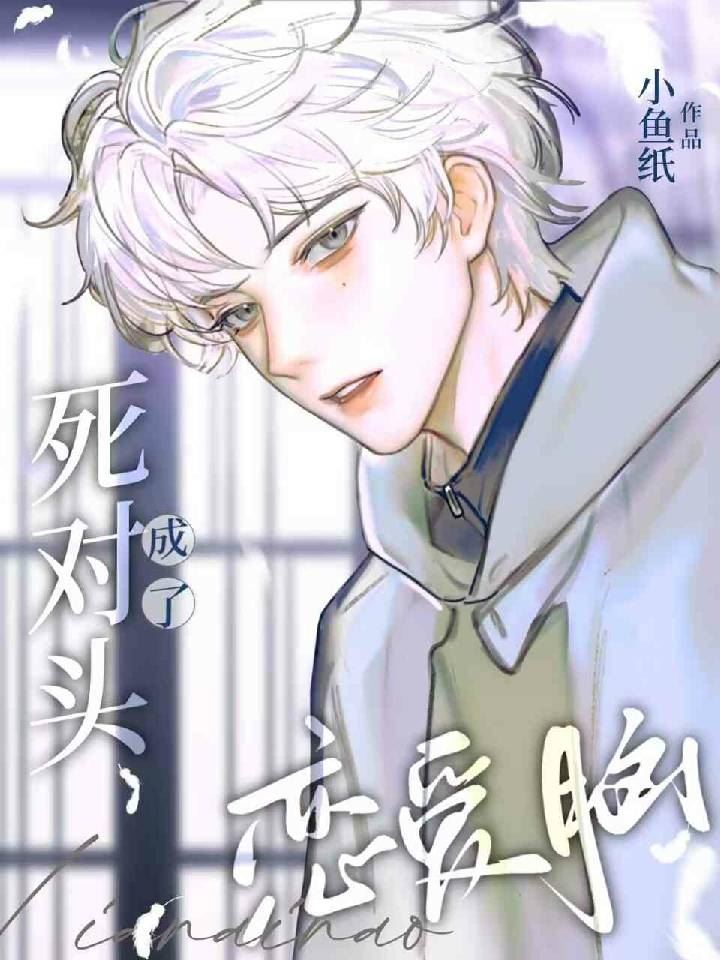
The Sworn Enemy Became Love Struck
+Add to Custom List
Sort
Add review
... Read More
There is a line where Qin Qiyue literally says "I really don't like you and don't want to be too close to you" and somehow it's the most romantic moment in the entire chapter. I know. I know. But hear me out. Because Zhuang Wu's reaction—his pupils shrinking, his face going red from the earlier touch and then draining of color, his eye sockets feeling sour—he limits himself to just reddening eyes. He tells himself he won't cry because he's not acting. But then he buries it so fast and comes back with a smile that says your rejection actually made me admire you more. That is some next-level emotional damage and I am not equipped to process it. The worst part is Qin Qiyue. He KNEW he was being cruel. The text says it directly: "Qin Qiyue knew that what he said was very hurtful, but he didn't want to comfort Zhuang Wu and give him hope." He did it on purpose. He chose to be the villain in this scene because he believed that was kinder than leaving any door open. And then he walks away without saying goodnight. And Zhuang Wu whispers it to the door instead. That closing line—"The sound of a door closing, neither light nor heavy, echoed in the empty alley"—I actually had to sit with that for a moment. It's so quiet. So small. A door that isn't slammed and isn't gently closed, just… finished. And then Zhuang Wu's "Good night" to someone who can't hear him. That's the entire romantic arc of this book in one image.
... Read More
The stakes in these chapters are deceptively low on the surface — it's just high school kids, right? But underneath every conversation there's this huge emotional minefield and the tension is absolutely electric. Take the nap scene. Zhuang Wu is so exhausted from knitting that he's nodding off in class, and Qin Qiyue's response is to physically press his head down onto the desk, pile books around him as a shield from the teacher, then — and this is the part that got me — rub his hair. Gently. The stakes here aren't life or death, but they might as well be. Because every time Qin Qiyue lets himself be this tender, he's risking everything. He's risking the friendship, he's risking his carefully constructed indifference, and most of all he's risking admitting to himself that he feels something real. "He didn't dare to confess to Zhuang Wu, let alone admit to himself that he had feelings for Zhuang Wu. Perhaps it was because they were both guys, so he didn't dare to admit it." This line basically summarizes the entire emotional stakes of the novel in one sentence. It's not just about rejection — it's about self-acceptance, and that is infinitely harder. Meanwhile Zhuang Wu is operating on completely different stakes. He's skipping meals, pulling all-nighters, endangering his grades — all for a scarf he wants to give to Qin Qiyue. And when Qin Qiyue offers to tutor him after he naps? "Gege, it's great to have you here." He's pouring his heart out in the simplest possible sentences and doesn't even realize it. The conflict isn't some dramatic external force. It's two boys who want the same thing desperately but are terrified of what happens if they reach for it first. That's what makes every chapter hurt so good.
... Read More
Can we talk about the hand-holding scene under the dinner table? Because I need to process this. ''Zhuang Wu also reached out and took Qin Qiyue's hand from under the table.'' In FRONT of their parents. While剥虾 and making comments about love. This is either the most forward thing I've ever read or the most cowardly — probably both simultaneously. What kills me is Qin Q Qiyue's reaction: ''Qin Qiyue momentarily paused from eating shrimp, but pretended not to hear anything.'' He doesn't pull away. He doesn't yell. He just... continues. The fact that he pretended not to hear whispers about 'feeling my love' while someone else is holding his hand under a dining table is the most emotionally complex moment in the entire text. And then the spill — is it rage? Is it panic? Is it a cry for help? ''I didn't mean it. Who told you to just sit next to me?'' The blame-shifting is so defensive and so transparent. But the real gut-punch is earlier, when Zhuang Wu says ''I really like you. Whether you believe it or not, time will prove that I'm serious.'' and Qin Qiyue just turns away awkwardly. ''Oh... the medicine is applied. I'll leave first.'' No response to the confession. Not a no, not a yes — just a retreat. That avoidance haunts me. The romantic tension between them is suffocating in the best way.
... Read More
The symbolism around food in this passage is layered in ways that almost slip by if you're not paying attention. The Mid-Autumn Festival itself — traditionally about reunion, family gathering, sharing mooncakes — is immediately subverted. The school shortened the holiday to one day because of academic pressure, which already sets up a world where genuine connection is squeezed and distorted. But the real symbolism is in how food operates as both love language and weapon between these two boys. Zhuang Wu cooking every single dish and announcing it — ''I made this'' — is his way of saying 'I care about you' without being able to say the actual words. Food becomes his proxy for affection. The shrimp peeling is even more telling: ''I washed my hands clean, so you can eat it without worry.'' This is domestic intimacy performed for an audience. Qin Qiyue's parents see it as sweetness; the reader sees it as desperation. And then the ultimate symbol — the food turned weapon. The bowl of shrimp, meant to nourish, becomes the instrument of humiliation. Oil and shellfish poured over a freshly washed head. It's almost biblical in its imagery: what was offered as gift is returned as punishment. The line ''Who told you to just sit next to me?'' reveals everything about how these boys communicate — through retaliation, through deflection, through staged accidents. They can't say what they mean, so they say it with shrimp.
... Read More
Okay so let me just say this scene with Qin Qiyue getting drunk and basically倒反天罡 with Zhuang Wu is one of the best plot maneuvers I've read in a while. Think about it — you've got this cold, distant Qin Qiyue who's been maintaining all these emotional walls, and then alcohol literally strips all of that away. The moment he picks Zhuang Wu up and carries him, that smile — "more real than any before" — that's not just a cute moment, that's the entire emotional arc of this relationship crystallizing in one beat. He doesn't say "I like you" or whatever, but the narrative is SCREAMING it through action. And then the masterstroke: Zhuang Wu pressing him the next morning, and Qin Qiyue claiming amnesia. Is he genuinely forgot everything, or is he playing dumb to avoid facing what happened? The text gives us just enough guilt cues — that frozen body, the refusal to turn around, the sigh of relief when Zhuang Wu says "it's fine" — to make me think he remembers every single second and is actively choosing silence. Then Zhuang Wu starts describing what happened and that "I even took off my clothes" line — whether true or exaggerated for dramatic effect — completely shifts the power dynamic. He's gone from someone being teased to someone holding all the cards now. This is peak plot manipulation and I love it.
... Read More
There's this whole water motif running through these chapters that I can't unsee now. First, the hot drink Zhuang Wu brings — an act of care — and Qin Qiyue pours it on the ground. Not drinks it, not refuses it, just EMPTY IT. Wasting it. Then later, his hand feels wet and realizes it's TEARS. Water as both rejection and vulnerability. And the matcha cake — green, like moss, like something that grows in damp places, like feelings that fester when left unspoken. I also can't ignore how Qin Qiyue keeps physically avoiding Zhuang Wu (walking away, not looking back) but can't stay away either (accepting the cake, promising the movie). There's a push-pull that feels almost gravitational, like these two are orbiting each other whether they want to or not. The notebook gets folded and tossed — paper as another fragile medium for communication. Every time Zhuang Wu tries to reach out, it gets literally thrown away, yet Qin Qiyue keeps picking it back up, metaphorically. The whole thing reads like a study in how people who care about each other deeply can still be catastrophically bad at showing it.
... Read More
I need to talk about how distinctly each character's voice sounds because honestly, I could read just their dialogue and identify who's speaking without any tags. Zhuang Wu's whole vibe in these chapters is this mix of casual and sincere that's incredibly hard to pull off. "Gege, why didn't you reply to the message I sent you?" feels like actual teenager texting energy, but then "You have to reply to every message I send you from now on" has this underlying intensity that sneaks up on you. And when he's lying about coming from the future, the dialogue shifts again — it gets more deliberate, more rehearsed, like he's performing for an audience of one. Qin Qiyue is the complete opposite. His lines are short, almost clipped. "I haven't read it. Besides, I don't think I need to reply to your message." Cold. But then later, just a single word: "And then?" That tiny prompt from him is what keeps Zhuang Wu going with his fabricated backstory. He's playing along without admitting he's playing along. The subtext in his dialogue is incredible. Then you have Huai Nanzhi and Xu Zhong and their voices are SO different it's almost unfair. Huai Nanzhi: "Can you fight? You look weak and frail." Pure provocation, calm and measured. Xu Zhong: "Screw you, I have something to do now, don't mess with me." Desperate, defensive, already losing. Their dialogue during the fight also tells you everything — Huai Nanzhi mocking him while pinning him down versus Xu Zhong swearing and struggling without actually landing a hit. You can hear their entire power dynamic in how they speak. And Hu Jianlong's entrance? "School will be over in two minutes. Everyone, pack your bags while the lights are still on" followed immediately by "Xu Zhong, why are you always involved in trouble?" That switch from teacher mode to disappointed dad mode in two sentences is perfection.
... Read More
What I keep coming back to is how many conflicts are converging in these few chapters and none of them are being resolved. Zhuang Wu vs. his own timing—he remembers a future where Qin Qiyue loves him, but the present doesn't match, and every gesture he makes gets redirected elsewhere. That's internal conflict wrapped in external failure. Then there's the Zhuang Wu vs. Ji Zhixian dynamic, which used to be easy and is now strained by silence and unspoken changes. And quietly, dangerously, there's the Huai Nanzhi variable: a new person who looks at Ye Chuli the way Zhuang Wu looks at Qin Qiyue, and sits right next to Xu Zhong, who has a pattern of targeting attractive people. The stakes here aren't about life or death—they're about emotional survival. What happens if Zhuang Wu keeps giving things that get passed to strangers? What happens if Huai Nanzhi's interest in Ye Chuli intensifies? What happens when the past-life memories and present reality diverge further? The author is masterful at maintaining suspense not through action but through accumulation of small fractures. That closing image of Zhuang Wu's eyes drifting toward Qin Qiyue during boring Chinese class, while someone new stares across the room at someone else—it's like the entire emotional architecture of the story is settling into place, and we're just watching the foundation crack.
... Read More
I need to talk about Ji Zhixian because this guy walked in for literally two minutes and already did more character work than half the people in this book. The reunion feels SO real—the kind where you've known someone since childhood but now you're an 18th-tier nobody and they're busy surviving in the entertainment industry, and there's this weird polite distance between you even though you were best friends once. He notices immediately that something is off: "Why do I feel like you always have something to do lately?" That line hit me because it's the exact question an old friend asks when they sense you've disappeared into something else—love, obsession, a goal. And then the pivot to Qin Qiyue: "Why are you looking at Qin Qiyue? Because he's good-looking?" Ji Zhixian is direct in a way that forces truth out of people. Zhuang Wu just says "of course" without missing a beat, which tells us everything about how honest this friendship still is underneath the distance. But what really got me is that last image—Ji Zhixian staring at Zhuang Wu's back, confused about why he became so polite. That's the author showing us that Zhuang Wu's been carrying something alone, and even his oldest friend can feel the shape of it.
... Read More
The first thing that grabbed me wasn't the time travel mechanic itself — it was the blackboard. "203 days countdown to college entrance examination. The date below was 2012." Just one sentence and I was instantly transported. I could smell the chalk dust. I could hear the classroom murmur. The fact that the author included the exact date and the countdown number felt like such a specific, lived-in detail. This isn't a vague high school setting — this is China, 2012, the pressure is visible, the uniforms are mentioned, the teacher is giving lectures on the podium like nothing happened. But the scene that really stuck with me was the alley. Let me paint it: evening self-study just ended, everyone's gone, Qin Qiyue is packing slowly (which we know is him waiting, being weird about things), Zhuang Wu throws the letter on his desk with this brave declaration, and then—Qin Qiyue leaves and the letter FALLS TO THE GROUND. And they walk out. And now they're in an alley under streetlights. "Beneath the lights in the alley, he showed his emotions vividly." That lighting detail is everything. The alley at night, the yellow pool of light from the streetlamp, two guys who supposedly hate each other standing close together. It's so cinematic. I could see the camera angles — the wide shot of them walking, the medium shot of Qin Qiyue stopping and turning around impatient, the close-up of Zhuang Wu's face looking up with those serious eyes calling him Gege. The perfume moment also deserves mention. Asking a female classmate for perfume like it's the most normal thing in the world, then carefully spraying the envelope. It's such a small detail but it tells us everything about Zhuang Wu's character — he's theatrical, he thinks about presentation, he wants this moment to feel special even though he has no idea how any of this is supposed to work. And the classroom itself. Everyone looking at him. His high school classmates from seven years ago all sitting there in uniform. The disorientation of it. The author doesn't over-explain the confusion — Zhuang Wu just processes it in real time, and we process it with him. That's how you do instant immersion.
... Read More
So here's the thing about this chapter — it starts with a wet notebook and ends with a kid writing until 3am with sore hands and then barely sleeping to finish it before afternoon. That's not just plot progression, that's a complete emotional arc crammed into a few scenes and it WORKS. Let me break down why the pacing hits so well. The chapter opens with tension — Zhuang Wu leaving Qin Qiyue's room after some implied harsh exchange. Immediate visual: red eyes, wet notebook, running out the door. Then Lin Mengyu intercepts him, pieces it together without him saying a word, and drags the truth out of Qin Qiyue. Fast. Efficient. No filler. Then we cut to Zhuang Wu alone with the notebook. This is where it slows down intentionally. The detailed description of him drying it, trying to separate pages, the ink blurring — it forces you to experience his frustration. You're not just told he regrets it. You WATCH him try and fail to save what he accidentally ruined. The pacing here is almost painful, and that's on purpose. The reveal about the notebook's contents comes next, and it's delivered like a punch. One paragraph and everything shifts. Zhuang Wu's entire worldview cracks open. Then immediately after — the action. Writing it all out. By hand. Through the night. The pacing accelerates again, mirroring his desperation to fix things. And then the chapter ends mid-sentence with Wen Jia calling out to him. Classic cliffhanger structure. I literally had to keep going.
... Read More
Can we just take a moment for how distinctive these two characters sound when they talk? Because I swear I could tell who's speaking with their eyes closed. Zhuang Wu: "Gege, don't walk so fast, wait for me." → "You've been too idle lately, coming to see me all the time." → "When will you stop speaking so harshly to me... can't you be more gentle?" → "I might just pretend for the rest of my life." His dialogue shifts from playful to vulnerable to devastating and back again in the span of ten lines. That's not easy writing. Most authors can't do that without making the character feel inconsistent, but Zhuang Wu feels like one coherent person whose walls keep dropping at exactly the right moments. Qin Qiyue on the other hand — every line is a scalpel. "Let's see how long you can pretend to like me." "Go to sleep, get lost." Cold, sharp, but the fact that he ENGAGES with the bet proves he's not actually indifferent. His dialogue is sparse but loaded with meaning. And the chat log at the end! The nickname change from 'Winning an Oscar sooner or later' to 'Haze' — that's such a small detail but it tells us everything about Zhuang Wu's self-awareness and embarrassment. The author trusts us to read between the lines here.

Leave a comment

You must be logged in to leave comments. or
