Strongest Wizard - Reviews

Strongest Wizard
+Add to Custom List
Sort
Add review
... Read More
Let's be honest—the stakes here feel dangerously low on paper but incredibly high emotionally. Sure, there's a magic circle that attracted poisonous boars and wolves. But that's resolved in three paragraphs. The actual tension lives in the spaces between characters. Take Vi-Vi. She's a devil, a species the village fears. Her punishment for causing trouble isn't execution or exile; it's house arrest under Al's supervision. That's a delicate stake. If she misbehaves again, the village might demand harsher action. If she bonds with Al too much, she challenges every prejudice they hold. Meanwhile, Al's internal conflict is a ticking clock. He's an S-rank adventurer used to clear objectives and lethal enemies. Humans are messy. Attachments are liabilities. Yet here he is, sharing a bed with a devil girl and a wolf beast, accepting meals from a woman he's convinced he can't have. Every moment of comfort is a risk to his emotional armor. The hot springs scene raises the stakes perfectly. One wrong word, one accidental peek, and his reputation is ruined. He's defended against hellish monsters, but a bucket to the head from a pouting devil nearly takes him out. That's hilarious and telling. Who is the real threat? The wolves outside the village, or the complicated relationships forming inside it? I think the author is arguing that the latter is far more dangerous—and far more worth protecting.
... Read More
"Don't call me YOU -- my name is Millet." I literally laughed out loud at this. The way she corrects him like that, so formally but also kind of cute, and then the whole dynamic between them just naturally unfolds. Alfred's not some edgy young protagonist — he's an actual middle-aged guy who says things like 'this old man is an expert at killing basilisks' and then gets flustered when the girl praises him. 'Almost enough to make me blush.' BLUSH. He's like 50 years old and he's blushing. And then Millet gigling to herself at the end because she realizes they're going to be neighbors?? That's not romance, that's just wholesome in a way that somehow hits harder than any forced love confession. Meanwhile she's running around alone in dangerous forests to save her sick sister and he just *sees* her and decides to help without any agenda. "If I let you die, it's going to suck finding that out when I wake up in the morning." That line is him being Alfred — practical, slightly gruff, but genuinely caring underneath all that. The sister situation with Millet is also giving me major protective big-sister vibes and honestly I'm here for the family bond energy more than anything romantic at this point.
... Read More
Okay so this whole sequence is actually really clever when you step back from it. Alfred completes a quest, immediately bolts the capital because people are now talking about him, rides a stagecoach for three days, walks the rest, gets distracted by a fight, saves an elf girl, kills a basilisk, and then randomly ends up in the village he was heading to anyway. It's one of those plots where nothing seems connected but everything is — he was already going to Mulg, but meeting Millet there adds layers. The sub-burns the main plot isn't obvious yet but I'm feeling it. He's hiding from something in the capital (Guild Master + military minister both noticing him??) and now he's settling into this quiet village life. That's classic setup energy. The wolf king attack at the end also signals trouble is already closing in, which means the quiet won't last. Classic 'calm before everything explodes' move by the author. Honestly the way the plot moves feels like it's been carefully threaded even if Alfred himself doesn't realize it.
... Read More
「Who do you think I am?! I'm the SUB-BOSS OF THE DEMON LORD! VI-VI!!」 Okay, first of all—*chef's kiss*. That line alone tells you everything about Vi-Vi. She's proud, she's theatrical, she's absolutely obsessed with her title, and she loves performing for Collette. The exclamation marks are doing heavy lifting here. This isn't a calm declaration; this is Vi-Vi standing on a stool, arms spread wide, waiting for applause. And the dialogue patterns are *so* distinct across characters: Vi-Vi:「Idiotsth don't catch coldsth, you know!?」—the stammering pretense of intelligence, the sudden anger when called out, the「Hmph」dismissals. Collette: pure energy.「Wow, sthub-bossth!!」「Femm go!」「Ruff Ruff!」She's all motion and excitement, speaking in bursts. Femm: 『I need your help.』『Just this time.』The spirit speech brackets set it apart visually, and Femm's lines are terse, duty-focused, occasionally injured pride.『Regrettable』after being called a dog—that's *classy*. Millet: soft-spoken but strategic.「Don't worry about it.」while hiked-up-towel-adjacent. She lets her actions do the talking. The narrative voice is first-person casual—Al is observant, slightly sarcastic, genuinely caring.「I stopped trying to resist and obediently sat there and enjoyed it.」That's a guy who knows when to stop arguing and just live. And the humor!「Humans have the saying『Idiots don't catch colds.」]Of course, if we mentioned that...Vi-Vi would become furious.」This *meta* awareness—characters knowing idioms and reacting to them—is comedy gold. What really works is how dialogue reveals relationship dynamics without narration. Vi-Vi washing Collette's back, Millet insisting on washing Al's front「myself,」Femm refusing to let Vi-Vi ride—none of this needs exposition. The dialogue *is* the character map.
... Read More
The entire Vi-Vi versus Luka confrontation is basically three seconds of pure tension stretched into a scene that could have gone VERY differently. Luka sees a magic circle being drawn. A SUB BOSS of the Demon Lord is casting undead magic. Her instinct — and it's the RIGHT instinct — is to neutralize the threat immediately. She's a warrior. She's trained for this. She doesn't hesitate. Vi-Vi fires back. Not out of malice, but out of survival. She's scared, she's cornered, and she's been betrayed by people who called themselves allies. The villagers turn on her. Luka calls her an outlaw. No one has asked what she's actually doing here. And then Alfred jumps between them. Here's what makes this scene so tense — it's not just about whether they'll fight. It's about what happens AFTER. If Luka and Cruz decide Vi-Vi is a threat that needs to be eliminated, they WILL win. The text is brutally honest about this: "If I had to fight both Cruz and Luka... I was going to lose." And Vi-Vi wouldn't last two seconds. But the kids save her. Not with swords or magic — with "You're our Vi-Vi!" and tears and the sheer weight of affection that Cruz and Luka both, for different reasons, cannot argue with. Cruz melts. Even Luka, who literally just accused this woman of trying to resurrect the Demon Lord, backs down. The stakes here aren't about the world ending. They're about whether this fragile community can absorb another broken person, or whether the old patterns of violence will reassert themselves. And they don't end cleanly — Vi-Vi is still sitting in the shadows, still apologizing, still not sure she belongs. The conflict isn't resolved, it's just paused. Which is honestly more realistic and probably more haunting.
... Read More
I need to talk about the stakes because they're doing something really clever here. On the surface, the external stakes were massive — kill the Demon Lord, save the kingdom, all that. The fight scene delivers on that promise. The Demon Lord regenerating, the hero getting trapped, the last-minute arrow that changes everything. Proper tension, proper relief, proper devastation. But then the novel pivots and the real conflict begins. It's not about monsters anymore. It's about a forty-year-old man who just wants to lie in bed and not die, surrounded by people who keep asking him to do more. The military minister offers him a command — he refuses. The Guild Master begs him to lead a party against undead — he agrees before he can say no. Every interaction is the same dance: Alfred wants out, the world needs him, and his own inability to refuse everyone slowly traps him further. The internal conflict is where this novel earns its keep. Alfred is exhausted. Not tired-exhausted, soul-exhausted. He's been an adventurer since he was fifteen, fighting without rest for twenty-five years, and the moment he thinks he can finally catch a break, the kingdom hands him a viscount title with invisible chains attached. His knee won't heal. His body is breaking. But the stakes aren't just physical — they're about identity. Who is he if he's not the veteran holding the line? The story is setting up this incredible tension between what Alfred wants (peace, rest, anonymity) and what the world demands (his continued service, his sacrifice, his presence). And the funniest, most heartbreaking part? He found his escape. He literally found the quest that would let him disappear into a hot spring in a random village. And I guarantee you — and I am betting my entire emotional stability on this — something will pull him back. The stakes just shifted from 'survive the Demon Lord' to 'survive being Alfred Lint,' and honestly? That might be even harder.
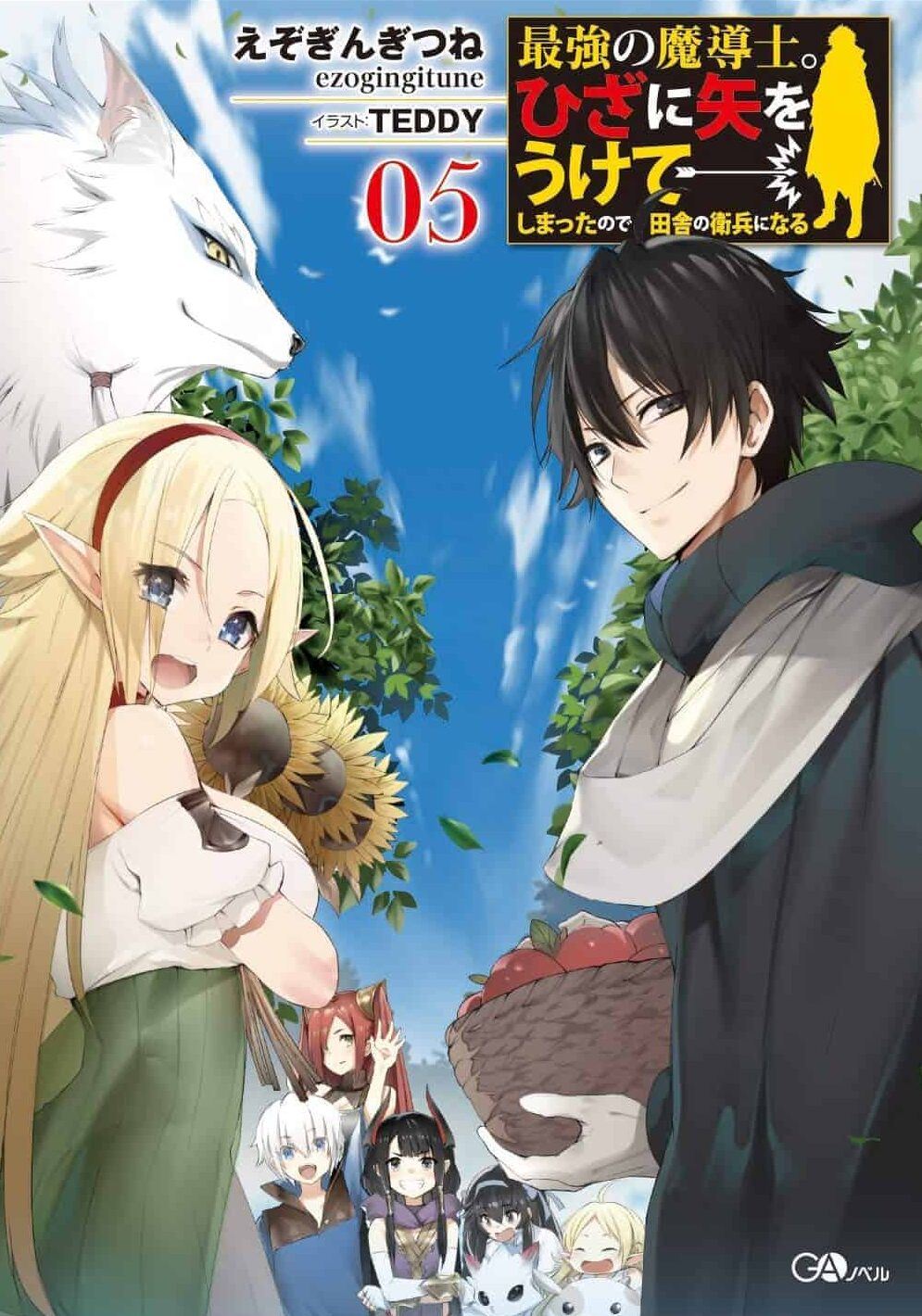
... Read More
"You're really thin." - and honestly, that was the moment I knew this wolf wasn't just some generic magical beast. Alfred calls Femm skinny TWICE. The man has priorities. Let me just say - the relationship between Alfred and Femm is one of the most delightfully weird dynamics I've read in a while. It starts with them trying to kill each other, right? Alfred's kicking ass, Femm's getting wrecked, and instead of dying dramatically, Femm just... concedes? "I concede defeat." Like a gentleman. Then they exchange names like they're at a parka meetup. "Okay, how about Puffy?" GRRR. Not Puffy. "Femm?" Tail wag. Okay, we're doing this. But the real gold is what happens next. Femm literally moves into Alfred's futon. A WOLF KING sleeping in your bed. And Alfred's just like "...damn. Oh well." He doesn't even flinch. This guy has seen too much. What I love is how Femm tries to maintain royal dignity while simultaneously being a housepet. "I am the Wolf King Femm" - appears as a big dog, gets headpatted by a little elf girl who calls it cute. The contrast is hilarious. And that scene where Femm has to explain the fang thing - making fangs grow faster, the pain levels - you get these tiny moments where this ancient, powerful creature is just... starving. The wolves are losing ground to boars, Femm came to Alfred for help despite being a KING. That takes humility. And then the subtle stuff - Femm dodging the "master" question by rubbing its nose against Alfred. Kweeen. Not denying it. The whole dynamic of Alfred agreeing to help the wolves hunt boars because he made a promise. That's character development right there - from a guard who just wanted to do minimum work to someone people genuinely rely on. Also can we talk about how the villagers treat Femm now? One day it's a terrifying magical beast, next day it's the cute dog at breakfast. Rural life is weird. Femm also squeaked when Alfred jumped on its back. 'Eeek.' A WOLF KING squeaked. I'm dead.
... Read More
There's a recurring theme running under all these seemingly slice-of-life chapters: the tension between identity and hiding. Vi-Vi has to wear a hat in town because devils can cause trouble depending on the local lord. She knows it, she accepts it, but there's a resigned quality to it—"Oh well." She's competent, proud, and powerful, yet still has to disguise herself. The hat is a small symbol of how marginalized beings navigate a world that isn't built for them. Femm is another example. Appears to be a dog. Is actually a magical wolf. Can speak through spirit speech but chooses to communicate in barks and growls around humans. His entire existence is a performance of something less threatening than what he is. Al himself is hiding in plain sight. The butcher recognizes his Adventurer Card—S Rank, wizard, part of the hero's party that defeated the Demon Lord—and immediately wants an autograph for his son. Al has to beg him to keep it secret. The famous hero is just trying to sell some beef and buy groceries. And then there's Mulg village itself. It's insignificant. No magicians. No grand history. Just a place where Al can sit by the gate and feel at ease. The irony is that this ordinary village represents the most authentic version of home any of these disguised, hidden, performing characters have ever known. The story keeps asking: who are you when no one's watching? And the answer seems to be—someone who just wants to go home.
... Read More
There's this one image in the text that hit me harder than any battle scene — the newly built storage shack, and the author specifically mentions: "Because it was newly built, it still had the fragrance of pine and cedar, freshly cut." Four sentences later, Alfred's actual house is a charred ruin. The contrast isn't even accidental — it's brutal. One structure smells like something new and intentional. The other is gone because a sub boss of the Demon Lord couldn't control a fireball. But beyond that detail, the whole village of Mulg operates as this strange liminal space. It's not just a resting point — it's become something Alfred never intended. He came here to hide, to be an old man named Rall, to live quietly. Instead he has a village that adopts him, children who adore him, a former demon general who now lives among them, and two visiting heroes crashing at the chief's house because theirs burned down. The storage shack full of dragon bones is probably the most honest building in the entire village. Every fang, every skeleton, every trophy of battles fought in secret — it's all there, hidden behind fresh pine scent, while the rest of Mulg pretends nothing extraordinary is happening. Cruz walks in and her mouth literally drops. "Whoaaaa! Holy crap!" The most powerful adventurer in the continent, reduced to a teenager's exclamation. And Millet, who offers her house without hesitation, without being asked twice — she's the quiet heart of all of this. Not a warrior, not a hero, just someone who sees people need shelter and opens her door. The worldbuilding here isn't about maps or magic systems or political structures. It's about a village that somehow became a home for broken people.
... Read More
Okay so let's talk about that knee because the symbolism here is so heavy I can barely breathe. The arrow is described as an 'immortal-killer' — strong enough to wound something immortal, and it hits Alfred right at the end of his greatest victory. But Alfred isn't immortal. So what does that mean? It means he's been marked by something that operates on a scale meant for gods, and yet he's just a guy. A veteran who's been at this since he was fifteen. The arrow won't kill him, but it also won't let him heal. It's a permanent reminder etched into his body — every ceremony, every kneeling, every step is a reminder that the war never actually ends for people like him. And then there's the S Rank. The guild hasn't used it in two hundred years. It's not a reward — it's a cage. The Grand Master himself practically warns him: this rank comes with duties. And Alfred, who spent twenty-five years running on adrenaline and camaraderie, suddenly realizes he has no escape hatch. The kingdom, the guild, the people he cares about — they all need him. Even when he tries to hide behind a stupid F-rank guard job for a village with a hot spring, the system is already closing in. 「That's the one!」 Alfred celebrating an F-rank quest like it's the Holy Grail. This man just saved the world and he's treating a wolf-hunting gig like it's liberation. The irony is almost painful. He wanted to be a hero when he started, or at least he wanted to matter. Now that he matters too much, all he wants is to disappear somewhere nobody can find him. The story keeps asking: what do we owe the people who save us? And the answer so far seems to be: everything, and then more.
... Read More
I need to talk about Millet for a second because THIS WOMAN is everything. She shows up at Alfred's door at sunrise with breakfast because she was worried. Not just casually worried - she physically drags him by his shirt. And when she sees Collette recovering? Her face just LIGHTS UP. The little elf girl with the huge ears saying 'thanksth, sthoooo much' - I swear I actually smiled out loud at my screen. This is the kind of soft, genuine warmth that makes fantasy feel like home. "At times like those, I'm glad I chose to become an adventurer." - Alfred's narration here hit me differently than usual. There's this quiet satisfaction in being useful, in the simple joy of helping someone's family. No grand speeches, no dramatic fanfare. Just... this is why I do it. The whole village celebration scene is peak cozy fantasy content. Adults cheering, kids running around grabbing Alfred's clothes calling him 'tuff' and 'ol-man' - and the chief apologizing with a bow? After initially thinking Alfred was a reckless idiot? That's growth. That's community. But what really got me was the contrast between this sunny village warmth and the desperation underneath. Femm coming to Alfred in the middle of the night because the wolves are starving. The boars are winning. The previous king died, the new king is too thin, and they're racing against time. All that village cheer is built on a fragile peace held together by one guy who happened to not die last night. And yet - they still celebrate. They still have parties. Millet still bounces around calling Alfred 'Mr. Al' like he's some kind of local hero. There's something deeply moving about people choosing joy even when the world is dangerous and uncertain. The moment where Femm chooses to sleep in Alfred's bed instead of returning to the forest... that's not just comedy. That's trust. That's a creature who has lost everything finding somewhere to rest. I'm crying over a wolf in a futon and I don't care.
... Read More
The dialogue in this batch is surprisingly distinct for each character, which is no small feat with a five-person cast plus a talking wolf. Al's voice is the anchor—casual, slightly exasperated, but warm underneath. He lectures Vi-Vi about magic circles like a patient teacher: "You don't have to chant though." "It doesn't have to work!" These lines are practical, direct, and reveal that he's been around the block enough to give unsolicited advice without being asked. His inner monologue when Millet cuddles him—"Trouble"—is perfectly deadpan. Vi-Vi's speech is loud and declarative. "I KNOW THAT ALREADY!" "It's ridiculous that I have to give up half to a LOW-LIFE LIKE YOU!" She caps her lines with exclamation points and defensive energy. Even her spirit speech has personality: 'Beef, Beef!' when she sees food. Millet speaks softer, with hesitation marks and trailing thoughts. Her dialogue has a gentler rhythm—"Um...okay," "I didn't know..."—and when she's flustered, she just gets quieter or more physical. Collette's lines are short and simple. "I'll sleep with the old man." "Here's a treat." She doesn't waste words. Femm's spirit speech is the funniest part. Correcting everyone about being a wolf, drooling incomprehensibly when hungry ('Low-life meat is the best!'), and that whole chicken bone scene where he mentally complains 'Are they mocking me?' while eating the bone anyway. The contrast between his dignified self-image and his actual behavior as a pampered magical beast is comedic gold. The narration itself is light and unpretentious—almost conversational. It doesn't try to be literary. It just tells you what happens and lets the characters carry the energy.

Leave a comment

You must be logged in to leave comments. or
