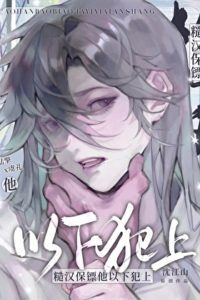
I've been thinking about this excerpt for days, and the more I sit with it, the more I realize the author is using physicality as a language. Everything that happens between Yu Li and Lu Qing is mediated through bodies—touching chests, buying clothes for specific physiques, working out shirtless, the domestic performance of cooking. The story isn't just about two men who are attracted to each other. It's about how desire operates through the material world, how power and submission are performed through objects and spaces.
The chest muscles are the obvious symbol, but I think they're more complex than just "hot body part." In this world, Lu Qing's physique is his currency. It's what got him the job, what makes Yu Li notice him, what the other twenty bodyguards couldn't match. But it's also his vulnerability. Yu Li can touch it, buy clothes to display it, build a gym to showcase it. The body that gives Lu Qing power is also the body that makes him observable, possessable. When he takes off his shirt, he's both asserting control (I choose to show you) and submitting to being looked at (you wanted this).
The pink apron is another symbol I can't stop thinking about. On one level, it's comic relief—a huge muscular man in a frilly domestic garment. But on another level, it represents the blurring of roles. Lu Qing is a bodyguard, trained for violence and protection, and yet here he is performing domesticity. Is he submitting to Yu Li's world? Or is he colonizing it? The apron is both a costume of service and a badge of conquest. He's making himself indispensable in a way that has nothing to do with physical protection.
Clothes themselves are a recurring motif. Yu Li buys over a dozen outfits for Lu Qing, and each one is a gesture of ownership disguised as generosity. The tank top reveals the chest. The black T-shirt he changes back into is described as "pilled"—worn, cheap, the uniform of someone who works with his body. When Yu Li buys him new clothes, he's not just dressing a bodyguard; he's rewriting how that body appears in the world. And Lu Qing accepts this rewriting willingly, which raises the question: who is really being dressed up here?
The gym equipment is perhaps the most loaded symbol of all. It's built into the villa, into Yu Li's private space, for Lu Qing's body. It's investment, obsession, and courtship all in one. The author keeps reminding us that every machine is chosen for chest training. This isn't subtle, and it doesn't need to be. The symbolism here is meant to be felt in the gut, not analyzed in the head. It's about how desire builds its own architecture, room by room, piece by piece, until the environment itself becomes a confession.