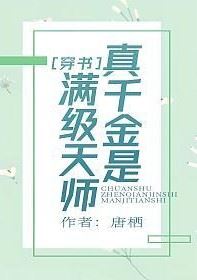
The Real Daughter is a Max-Level Daoist Master
+Add to Custom List
Novel Info
  • Author:
  • 唐栖
  • Status:Ongoing

Summary

... Read More
Tang Xi, a genius cultivator from the Xuanmen Daoist sect, transmigrates into the body of a sixteen-year-old girl who shares her name after tearing apart a sect talisman. She discovers she has replaced the original Tang Xi from a melodramatic romance novel, inheriting the girl's memories of being switched at birth. Sixteen years ago, a hospital fire led to a baby swap: Tang Xi was raised in poverty by her grandmother after losing her adoptive parents, while Tang Jing, the biological daughter, grew up as the wealthy Tang family's beloved only child. The Tang family recently discovered the truth and brought Tang Xi back to Jiangnan City. Upon arriving at the Tang family mansion, Tang Xi is shocked to find the estate infested with ghosts, including a water ghost in the fountain and a hanged ghost under a tree, indicating that the supernatural world is far more active in this reality than in her own. Despite the Tang family's attempts to welcome her with material gifts and a pink-themed room, Tang Xi feels no emotional connection to them. She quickly establishes boundaries, requesting to live at school to avoid conflict and maintaining a cold, detached demeanor toward her new family. The Tang family, particularly her father Tang Zhenying and mother Yang Wenqiu, continue to favor Tang Jing, treating Tang Xi with a mix of guilt and dismissiveness. At Jiangnan No. 1 High School, Tang Xi struggles with the academic gap between her rural education and the rigorous curriculum of the prestigious school. During an exam, she encounters a male ghost named Yu Mingfan, a top student who died from overwork before his college entrance exam. She seals him in her pencil case and later negotiates a deal: he will tutor her to help her reach the top three hundred in her grade, and in return, she will create a proper vessel for his soul. She also befriends Qi Sihui, a timid but kind classmate, and interacts with Shi Rui, a class bully, and Cheng Yihang, a top student. Tang Xi's life takes a turn when she intervenes to stop three boys from abusing a stray white cat. Using her spiritual powers, she swaps the soul of the lead abuser with the cat's for twenty-four hours as a lesson in empathy. The cat, now intelligent and grateful, chooses to follow her. Tang Xi also discovers a amulet within her soul, named Yun Qi, which begins to awaken as she approaches a sealed haunted house. The house, where multiple deaths have occurred, is protected by a powerful seven-star Daoist seal, suggesting the presence of a strong entity inside. With Yun Qi awake and her new companions, Tang Xi prepares to explore the haunted house, marking the beginning of her journey to reclaim her power and navigate this ghost-filled world.

Latest Release
DateGroupRelease
2026-08-11shanghai fantasy c28
2026-08-11shanghai fantasy c27
2026-08-11shanghai fantasy c26
2026-08-11shanghai fantasy c25
2026-08-11shanghai fantasy c24
2026-08-11shanghai fantasy c23
2026-08-11shanghai fantasy c22
2026-08-11shanghai fantasy c21
2026-08-11shanghai fantasy c20
2026-08-11shanghai fantasy c19
2026-08-11shanghai fantasy c18
2026-08-11shanghai fantasy c17

Community Reviews

Rating(3.8 / 5.0, 6votes)
5 stars
2(33%)
4 stars
1(17%)
3 stars
3(50%)
2 stars
0(0%)
1 stars
0(0%)

Popular reviews

... Read More
I need to talk about Tang Jing for a moment because I think the author did something really subtle and powerful with her character. On the surface, Tang Jing seems like the typical spoiled rich girl—entitled, used to being the center of attention, looking down on Tang Xi. But there are these tiny moments that reveal she's actually deeply insecure and lonely. In the car, she swallows back words she wanted to say. She casts a glance at Tang Xi's workbook and feels sympathy because the problems look so simple. She offers to help her with studies, genuinely trying to connect in the only way she knows how. And Tang Xi just... doesn't engage. The text describes it perfectly: "To say Tang Xi was targeting her—well, she really wasn't. From the moment they had met, Tang Xi had always been cold yet polite. But precisely because of that coldness, Tang Jing felt a suffocating frustration." Tang Jing wanted conflict because conflict means engagement. Even hatred is a form of connection. But Tang Xi's polite indifference is like punching cotton—there's nothing to grip, nothing to push back against. And that's honestly heartbreaking when you think about it. Tang Jing has spent her whole life being the golden child, the one who brings honor to the Tang family, and now there's this girl who looks exactly like her but gets all this attention just by showing up, and Tang Xi won't even give her the satisfaction of a real reaction. Meanwhile Tang Xi is just... eating sweet and sour ribs and doing her homework. She's not thinking about any of this emotional complexity. She has a ghost to tutor and a haunted house to survive. And that contrast between Tang Jing's emotional turmoil and Tang Xi's complete emotional detachment is what makes this story so compelling.
... Read More
Let me just say this first: the author has built this world where ghosts are absolutely real but nobody else knows it, and that dramatic irony is being used SO well. The scene where Shi Rui is describing the haunted house to impress the girls—talking about how people died there, how two police officers ended up in the hospital, how a homeless man screamed and jumped into the Tiesha River and his body floated up the next day—on the surface this is just a typical teenage boy trying to sound cool. But we, the readers, know that Tang Xi actually hears all of this and her immediate reaction isn't fear, it's professional curiosity. She's mentally cataloguing facts because in her world, this is actual danger, not an urban legend. And the school itself is such a vividly drawn setting. Jiangnan No. 1 High is described through its social hierarchy—Class 1 is the elite, Class 9 is where the troublemakers and underachievers and spoiled rich kids end up. The director of academic affairs is warm and flattering only because Tang Zhenying donated an entire building. The homeroom teacher Wu Hai looks stern and immediately seats Tang Xi next to the quietest, most unassuming girl in class because he's protecting her from bullies. Every detail builds this world organically. The car ride to school is another great atmospheric moment—the awkward silence between Tang Xi and Tang Jing, the faint discomfort, Tang Xi buried in her workbook like she's in a different world. And then the moment the driver runs over what Tang Xi perceives as a "mutilated, wandering ghost" at the intersection, and her internal monologue about how ordinary ghosts dissipate and only those with heavy obsessions linger... that's where the worldbuilding really clicks into place. The mundane and the supernatural coexist seamlessly.
... Read More
The stakes in this story are layered in the best way. On the surface, Tang Xi has a very practical problem: she transferred to the most competitive high school in the city with only two months until midterms, and her grades in physics and chemistry are basically non-existent because, you know, she spent eighty percent of her time studying mystic arts and once drew a floating talisman to make an apple go upward instead of downward when the teacher was explaining Newton's law. But there are so many other stakes operating simultaneously. The Tang family situation is a powder keg—Tang Xi knows she's the switched twin, she knows they're covering it up with a fire story from sixteen years ago, and she's navigating this hostile environment where everyone has expectations of her. The dinner scene showed how quickly things could escalate if she says the wrong thing. Then there's the haunted house situation. Shi Rui thinks it's just a fun adventure, an urban legend to scare girls, but Tang Xi knows better. The text establishes that victims of family massacres usually carry heavy resentments, and this house has multiple deaths, police officers hospitalized, a drowning. These high schoolers are walking into actual danger and Tang Xi is the only one who understands the stakes. Her agreeing to go isn't about fun—it's about making sure they don't end up dead. And underneath everything, there's the tension of her secret. She has to maintain the appearance of an ordinary transfer student while actually being the Xuanmen's number one genius. One slip and everything falls apart. The author is really good at stacking these conflicts so they feel urgent without ever feeling overwhelming.
... Read More
Okay so I need to talk about this dynamic between Tang Xi and Tang Jing because honestly it's one of the most interesting things I've read in a while. Tang Jing is sitting there probably rehearsing all these elaborate strategies for weeks—like the text literally says she stayed up all night devising backup plans—ready for some epic rivalry, and Tang Xi just... walks past her entire formation like she doesn't even exist. That metaphor about the two armies was honestly perfect. Tang Jing wanted a fight, wanted drama, wanted Tang Xi to be either a threat or a victim, and instead Tang Xi treats her like background noise. The dinner scene earlier really sets the tone too. Tang Xi is absolutely ruthless with her words—calling out the whole illegitimate child situation, making Tang Jing freeze because she can't respond without looking like she despises her poor roots. And then Tang Xi just finishes her meal, stands up, and says she's going to review homework like nothing happened. The family is just sitting there stunned because apparently she ate an entire meal and then casually walked away. I love that she didn't even engage with Tang Jing's half-hearted attempt at being nice in the car. Tang Jing offered to help her with studies, and Tang Xi just said "Got it" and moved on. It's not hostile—it's worse. It's indifference. And for someone like Tang Jing who's used to being the center of attention, that's apparently the most frustrating thing in the world. But here's what I find fascinating: Tang Xi isn't even trying to be cold. She's just... focused on her own goals. She has actual priorities (catching up on schoolwork, dealing with ghosts, surviving high school) and Tang Jing is not on that list. That's a character who knows exactly who she is and what she wants, and that confidence is honestly kind of magnetic.
... Read More
"Wrong." "Wrong again." "Still wrong." Four options and she only got it right after exhausting them all? Even random guessing shouldn't be this unlucky. I literally laughed out loud at this scene. The male ghost leaning on her desk during the exam, casually critiquing her answers like a tiny, decapitated teaching assistant, and Tang Xi's reaction is just... she grabs him, crumples him up, and stuffs him in her pencil case. No panic, no screaming, just "perfect, peace and quiet." And then her internal monologue about taking him home as a tutor because his grades in life must have been excellent is the most practical thing I've ever read. The dialogue throughout this whole section is just so natural and character-revealing. Shi Rui's whole "hey new beauty, wanna explore a haunted house?" approach is painfully teenage boy, and Tang Xi's response is absolutely devastating. She doesn't even get mad—she just interrogates him like a journalist: "People died there? When did they die? How many? Who were they? Are the ghosts the ones who died there? Has anyone actually seen them? And since that homeless man drowned, who exactly said he saw the ghosts in the house?" Shi Rui is just completely speechless. The author really nailed how Tang Xi's voice sounds—she's analytical, direct, and completely unmoved by social games. Meanwhile Qi Sihui is over there dropping her chopsticks in terror and Tang Xi is mentally calculating whether this ghost boy is a good investment for her study routine. The contrast between these characters through their dialogue is incredible. Each one sounds completely distinct.
... Read More
There's this one line that keeps echoing in my head: "Sixteen years ago, before full digitalization, a fire had burned down the entire maternity building, destroying many records." A fire. It destroyed physical evidence, it destroyed truth, it destroyed the ability to know who you really are. And now sixteen years later, the Tang family is still living with the consequences of that fire—still manipulating matters, still maintaining the twin story, still afraid of what would happen if the truth came out. The fire is this perfect symbol for everything that's been buried and distorted in this family. Tang Xi's grandmother's request is also deeply symbolic. "Don't let me hear rumors of me being some illegitimate child. That would not let her rest in peace." The dead ancestor is worried about reputation, about how she'll be remembered, and Tang Xi is the one enforcing that wish. It's interesting—the grandmother, even in death, is concerned with social perception and family honor. And Tang Xi, who has literally seen beyond the veil of life and death, is the one upholding these worldly concerns. Then there's the ghost tutor in her pencil case. A boy who died—jumped from a building, from the sounds of it—whose greatest achievement in life was his academic performance, and now his afterlife purpose is to help Tang Xi pass her math test. It's almost tragic in a darkly comic way. He couldn't even die free; he's still bound to the material world by unfinished business, except his unfinished business is apparently helping a reincarnated cultivator understand calculus. The whole story seems to be about what survives destruction—the fire, identity, life itself—and what we choose to carry forward.
See all reviews

Characters

See all characters

Custom lists

See all custom Lists