The Princeliest Prince of All - Reviews

The Princeliest Prince of All
+Add to Custom List
Sort
Add review
... Read More
The stakes in this story are layered in a way that almost made me forget how ridiculous the premise is—and I say that lovingly. On the surface: Sera got suspended from the academy, her family is broke, and Prince Leonard—this impossibly fastidious royal—has basically drafted her into a contract that reads like medieval viral marketing mixed with occupational therapy. If she refuses, she goes to the guillotine. If she complies, she has to watch a grown man vomit into a basin three times a day. But the real stakes are deeper. Leonard literally cannot inherit the throne if he can't produce an heir. The Empress (his mother) is pressuring him. He's trapped between a kingdom that needs him and a body that rejects everyone around him. The contract isn't just funny plot machinery—it's his ONLY viable solution. He's using Sera as a tool, yes, but he's also genuinely desperate. Sera's stakes are equally real. Financial ruin for her family. A death sentence hanging over her head. And yet the author keeps undercutting the gravity with Sera's deadpan complaints about break time and cookies. Which, honestly, is brilliant narrative technique—we laugh because if we don't laugh, we'll start crying about how both these characters are essentially trapped. The suspense works because the reader knows more than either character. We know Leonard will eventually inherit. We know Sera won't actually die. But we don't know HOW they get there, and every scene raises the question: when does the contact training become real instead of performative? At what point does Leonard stop seeing her as a tool and start seeing her as... what? A person? Someone he can't live without? The scene where Leonard has Evan FOLLOW Sera is the peak of this tension. On the surface it's paranoid prince behavior. Underneath it's a man who is terrified of losing his only safe connection without having any vocabulary to express that fear.
... Read More
Let me just say — the pacing in these chapters is relentless and I cannot stop reading. We start with the morning's intimate scene (Sera helping Leonard release), which ends with him fainting. Then we cut to his nightmare — stuck in mud that turns out to be MANURE. This is basically his mysophobia manifested as a psychological breakdown. He wakes up, and immediately the physical and emotional consequences hit: he's become clingy, he's copying her eating habits, he can't focus. The transition to the princess's palace visit feels natural but it's also where things escalate. Sera wants tea with Leticia (her ultimate fandom goal), Leonard offers to facilitate it, and instead of just having tea, they end up HIDING in a dressing room while the actual protagonists have their romantic moment. The irony is delicious — Sera gets to see her favorite scene in "live 4D" but she's also partially responsible for disrupting it by being there. And then THE CLIMAX of the chapter: Leonard gets aroused AGAIN. Not once, not twice, but THREE times across these chapters. Each incident escalates the situation further. First the handjob, then the nightmare, then the dressing room. By the time Evan sees them return and trails off with "You're back..." we know something is VERY wrong. The chapter ends on this note of mounting chaos — Sera offering to work tonight to make up for it, Leonard leading her back to his bedroom again, and that bath scene that cuts off mid-description. The structure here is basically a comedy of errors where every attempt at normalcy leads to MORE chaos. And I love it. Each scene feeds into the next like dominoes.
... Read More
There are flowers everywhere in these chapters. Red and yellow blooms filling the garden, pollen floating in the wind, a greenhouse full of them that Leonard offers Sera as a distraction. But the real flower here isn't botanical — it's the relationship between Leonard and Sera, growing in the most toxic soil imaginable and somehow refusing to die. The pollen allergy is such a perfect metaphor. Leonard can't handle the natural world intruding on his ordered existence, and Sera keeps sneezing right in his face, forcing him to confront the messy, uncontrollable aspects of life he's spent years running from. Her spit on his chin — that's not just comedy, that's intimacy violation turned inside out. The most intimate thing that could happen between two people is reduced to a cleaning accident, and yet he can't stop thinking about the warmth of her fingers through that handkerchief. And the gloves. God, the gloves. Leonard never removes them, not even to urinate. They're his armor, his barrier, his entire philosophy made physical. But by the end of this section he's taken them off and laid them neatly on a table, bare-handed for the first time, trusting someone with the most vulnerable part of himself. The symbolism writes itself and the author doesn't even need to point at it. Leticia and Theodoric's romance underneath all of this mirrors everything — forbidden love, class barriers, the danger of desire. Two pairs of people who shouldn't be together but are, and the garden is where all their secrets bloom.
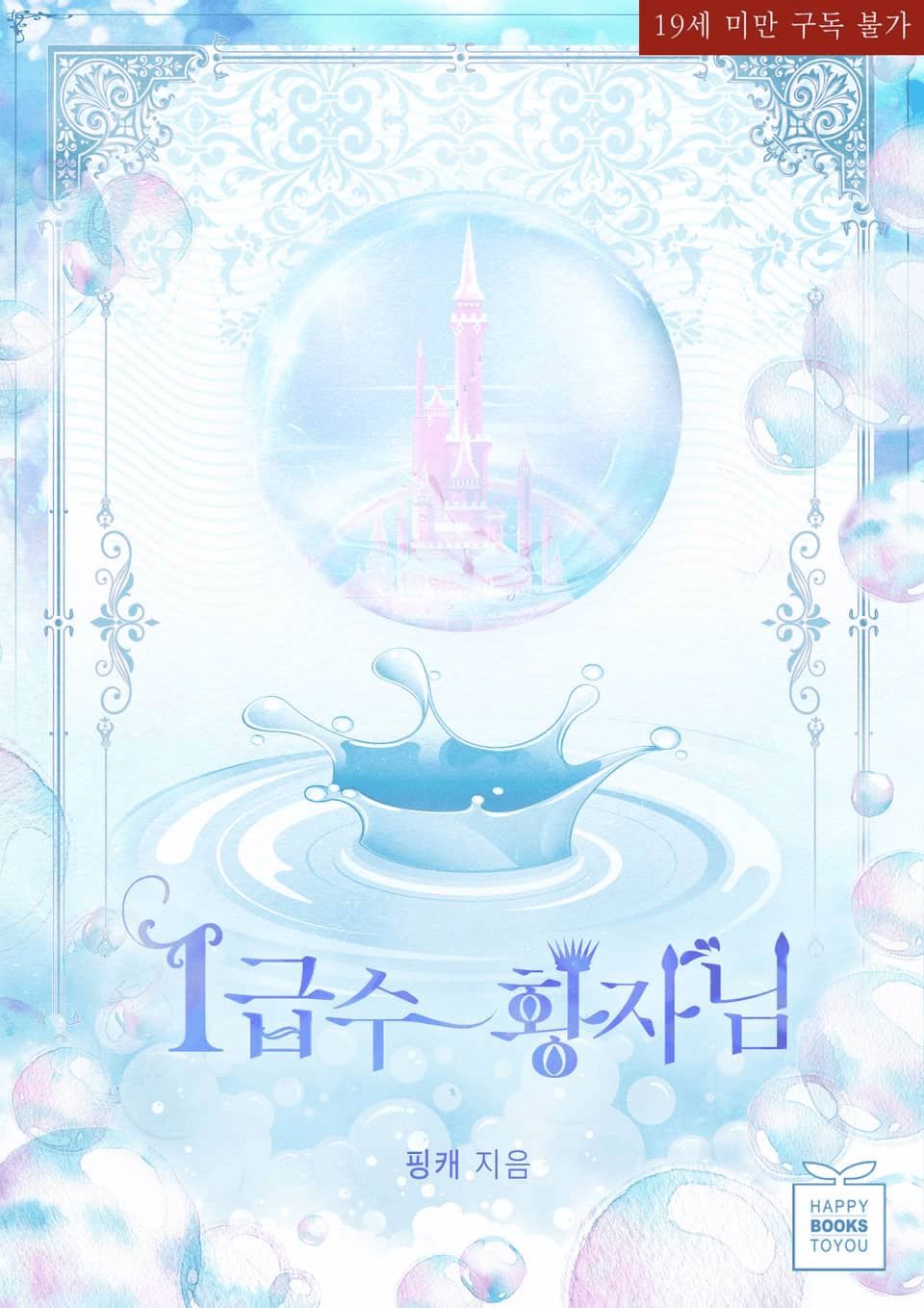
... Read More
Okay so this chapter is wild because it basically admits what I've been sensing — the entire narrative is unraveling. Sera directly states it: the original plot has already derailed. The duke's daughter who was supposed to become Crown Princess? Gone. Adrian exists when he shouldn't. And now this Theodoric situation threatens the 'everlasting love of the main couple.' That's not subtle worldbuilding, that's the story itself acknowledging it's off the rails. But here's what actually sold me — instead of just letting the plot collapse into melodrama, the author uses Sera as a chaotic intervention engine. She doesn't just comfort Leticia; she mobilizes the entire capital's security force, charges it to her brother's household, and nominally charges Theodoric with TREASON. Like, the sheer bureaucratic absurdity of this is hilarious. "Go arrest my friend's husband for treason because he might be cheating." And the vice-captain's response — asking if they should 'eliminate' him — is peak comedy relief in the middle of genuine emotional stakes. The reveal structure is also clean. We get Leticia's heartbreak, Sera's investigation, the red herring of the refugee camp (which makes us AND Leticia think the worst), then the actual flower reveal. It's a proper misdirection. The chapter earns its emotional landing by making us sweat first.
... Read More
"I'm just going to see the garden!" — and we all know that was a lie from page one. Sera's manipulation skills are genuinely frightening. She links arms with Leonard, uses his own training against him, pretends to be affectionate, and somehow every single move is calculated while simultaneously looking completely natural. But here's what got me — Leonard is falling for it. Like, literally falling. His mysophobia is so severe that touching Sera makes him physically ill, yet he can't pull away. And the scene where he finally breaks down on that table? That wasn't just a physical breakdown, that was emotional. He's a prince who's never been allowed to be weak, never been allowed to need anyone, and here's this girl who's been faking affection for a contract and suddenly he's the one who can't function without her. The fact that he asks HER to help him — after everything, after his disgust, after every insult he's ever thrown at her — says something I can't even put into words. And Sera? She's not just doing this for the contract anymore. When she sees him trembling and sweating and looks at him like he's some wounded animal, I swear her expression changes. She's still calculating, still thinking about survival, but there's something else underneath it now. Neither of them will admit it. Neither of them can. But it's there.
... Read More
I'm still recovering from the dialogue in this section. Like, genuinely. Let me start with the line that lives in my head rent-free now: "Is it really so hard to just say you like me?" That's SERA. That is SO Sera. After all the dramatic confessions, the running through dirt paths, the emotional vulnerability—you know what cuts deepest? Her calling him out like he's a stubborn child who needs to just ADMIT things. And Leonard's response: "I like you… I do. Please don't leave me." No titles. No royal padding. Just a man who's spent his entire life surrounded by people who want something from him, saying the thing he's most afraid of saying out loud. But let's talk about the humor too, because this author KNOWS how to balance devastating emotional moments with comedy that makes you snort-laugh: "Your Highness, allow me to apply the fragrant oil." — Head maid, being obsequious. "Three days aren't enough. A week." — Sera, absolutely unhinged about the wedding night. "I'll attend to it immediately." — Also Sera, completely serious about consummating the marriage right after a hot tub session while half-asleep. And the whole bridal chamber scene! The romance fantasy tropes are ALL there—rose petals, wine, soft lighting, see-through nightgowns—but the author subverts every single one: Sera twirling around like "Your Highness, shall we have a drink—" and Leonard just YANKING her into his chest instead. The mood shattered by two people who are clearly way too excited to pretend otherwise. The matching nightgowns from "the capital's best tailor"—okay that's actually kind of romantic but also honestly kind of funny because they look like a ridiculous couple. And the dialogue during the intimate scene? So raw. So unfiltered. Sera saying "I'll cry angry tears if you don't!" and Leonard basically short-circuiting from her saying his nickname. This isn't polished romance novel dialogue. This is two people who have been pretending for FIVE YEARS finally dropping the act. The narrative voice itself is also doing something interesting—it shifts between Sera's internal sarcasm (the rolling eyes, the snarky observations about Leonard's germaphobia) and genuine tenderness, often within the same paragraph. That tonal whiplash is intentional. It mirrors how Sera actually experiences this relationship: equal parts exasperated and completely fallen.
... Read More
I need to talk about the symbolism in this text because it is HEAVY and I didn't expect to cry over a metaphor about cleanliness. Let's start with the most obvious one: Leonard's obsession with cleanliness. On the surface, it's a quirky character trait—yeah, the prince can't touch anyone without fainting, clearly some kind of psychosomatic condition. But dig deeper and what do you find? Cleanliness = power. Control. Distance from the messy, inconvenient reality of other human beings. Leonard grew up in a palace where everything was sanitized, where people were treated like contaminants, where his mother (the empress) made decisions for him and called it protection. His cleanliness isn't just hygiene—it's emotional isolation weaponized into a lifestyle. And Sera? She's the opposite. She lives in a dusty annex. Her clothes smell like grass and earth and chicken feathers and sugar. She's physically DIRTY by palace standards. And yet she's the only person Leonard can be honest with. The moment he says "manure or someone else's hand, it's equally dirty"—that's not just a romantic line. That's the entire thematic thesis of this novel dropping like a bomb. He's saying: the world taught me that some people are clean and some are filth, and I believed it. You showed me that was a lie. Then there's the dust. SERA'S DUST. The text keeps returning to it. Leonard wiping his finger across the dusty table. The yellowing walls of the maid's quarters. The dirt path he runs down. The palace's cleanliness is "only on the surface, forced by Leonard"—and Sera's annex is the truth underneath. The wedding night scene with the rose petals? Romantic, sure. But think about it: red petals on a bed, covering the sheets like something trying to hide the fact that this is still just a room. A place where two people who've been used as political pawns finally get to be honest with each other. And that last line of the chapter—"Thus, a very dirty, messy, and smelly couple was born"—is the purest statement of love I've read this year. Not perfect. Not polished. Just… real. Finally real.
... Read More
Okay, so let me just say — the Leticia secret romance reveal is actually brilliantly layered and I didn't see it coming at all. Sera keeps showing up at the garden for an hour every day, pretending to look at flowers, and Leonard finally follows her and discovers she's been guarding a forbidden love between his own sister and a bodyguard. The dramatic irony here is INSANE because Leonard's immediate reaction is pure territorial prince energy — he wants to confront the guy, throw rocks at him, basically declare war on his own sister's happiness. Meanwhile Sera is just sitting there thinking about how in the original story this hasn't happened yet, so if she screws this up she's either going to get killed or accidentally erase the entire plot. The stakes are so high and she's just trying to keep everyone alive while playing spy in a garden. And then the physical comedy of her hugging him to stop him from marching over there? Perfect. But what really got me is Leonard's internal monologue afterward when he's lying on that table — he trusted SERA of all people with something so private. The power dynamic has completely flipped and he doesn't even realize it yet.
... Read More
I keep thinking about that one line: "It had been five years since Sera came to this world." Five. Years. And the stakes never stopped escalating. Think about what Sera was facing at the start of this whole thing: execution OR marriage to a man who couldn't touch anyone without losing consciousness. That's not romantic tension, that's literal survival. And the emperor—the one with the same golden eyes as Leonard—is apparently the kind of father-in-law who makes you want to fake your own death. But what's genuinely terrifying about this story isn't just the death threats. It's the slow realization that EVERYONE is using Sera. The empress told her she had no choice. The political situation forced the marriage. Even Leonard's grandmother pushed things forward. At every turn, Sera's agency gets treated as secondary to whatever political convenience is happening. And yet—this is where the story actually wins me over—it never lets us forget that Sera STILL had the power to say no. The text literally says: "If it's a choice between marriage or execution, of course, it's marriage." That's not enthusiastic consent. That's coercion dressed up as a fair option. And the narrative KNOWS this. It doesn't shy away from it. What makes the conflict so gripping is that the external stakes (death, political fallout, imperial duty) are constantly mirrored by internal stakes (will Leonard's germaphobia ever truly dissolve? Will Sera ever feel safe enough to stop building walls?). When Leonard runs through the kitchen, past chickens being plucked, past bags of sugar, down that dirt path—that's not just a romantic gesture. That's a man running toward something he's spent his entire life trained to avoid. For her. And the wedding? Oh, it gets worse. Or better. Depending on how you look at it. Because now there's pregnancy involved—Leticia congratulating Sera like it's some kind of royal decree fulfilled. The stakes just multiplied. This isn't just about two people anymore.
... Read More
I need to talk about the dialogue in this because honestly it is Chef's Kiss level work. Sera's voice is absolutely immaculate. She has zero filter and the author clearly adores her for it. Let's look at some samples: "Give me my handkerchief." — Three words. Demands ownership. Already establishes she's not intimidated. Classic Sera. "I hear Your Highness was looking for me…." — Said with the enthusiasm of someone who just got assigned to clean the royal stables. The facial expression description alone ('akin to a worker starting on a Monday') is everything. "So… Your Highness is going to use my body, and I'm supposed to go around telling everyone that you laid your hands on me and assaulted me? Whu—?" — This is the kind of line that made me physically choke on my drink. She reads the contract, processes the absolutely wild implications, and her response is a squeak. PERFECT. "Yes. I've been thinking… maybe the empress will pay it off if I tell her that you've been blackmailing me?" — This woman is playing with fire and she KNOWS it and she doesn't care. That's the charisma. Leonard's voice balances this beautifully. He's clipped, precise, devastatingly dry. "Off to the guillotine you go." Not even a dramatic pause. Just delivered like he's ordering lunch. And yet the narration keeps showing us the cracks—the trembling hand, the way he clutches that handkerchief, the irritation when he wants to take back permission to visit Leticia. The side characters have distinct voices too. Evan is genuinely sympathetic, which makes him the emotional anchor. The attending servants react with gasps and horror while Sera just... carries on. The contrast is comedic gold. The dialogue also does something really smart: it lets the reader infer what the characters aren't saying. Every time Sera says she wants to quit, she works harder. Every time Leonard says she's contaminated, he asks her to stay. The gap between what they say and what they do IS the story.
... Read More
"Why does your entire body feel like this?" "What do you mean?" "It's all squishy." I laughed out loud. I actually laughed out loud at "squishy." But then I kept reading and the laughter died because wow, this is actually kind of devastating when you think about it. This man has probably never been touched by another human being in his life. Not really touched. Not skin-to-skin. And here he is, fingertips lightly brushing the inside of Sera's arm, trying desperately not to faint while simultaneously being overwhelmed by the sensation of warmth and softness that his entire body apparently hasn't processed in years. He doesn't call it tender. He doesn't call it nice. He calls it squishy, which is such a Leonard thing to do—reducing an intimate, almost vulnerable moment into a complaint about texture. But the fact that he CONTINUES touching her after that? The fact that he comes back day after day for more of this "squishy" experience even though it makes him sick? That's not nothing. And Sera—she notices his voice changing. When he says her name in his low baritone, she feels her heart rate increase. She doesn't acknowledge it. She just... notes it, the way you note a weather pattern. Useful information. Nothing more. But my heart did THAT. The whole setup is framed as a comedic contract arrangement—blackmail, forced proximity, a princess who hates everyone—but underneath it all there's this incredibly tender thread about two people who have built walls so high they barely remember why they built them in the first place. Leonard's line about rewarding useful subordinates while feeling uncomfortable doing it? That's a man who has never given anyone anything without expecting contamination in return. And Sera offering to let him touch her, even while making fun of him, even while planning her escape? That's someone offering care wrapped in sarcasm because it's the only language she knows how to speak.
... Read More
Let me just say — the pacing in this batch is excellent. Chapter 60-67 moves like a proper three-act structure compressed into novel form: ACT ONE: The Setup. Leticia confesses her suspicions. Sera processes the bigger picture (plot deviation!). The emotional baseline is established — heartbreak, fear, determination. This section is relatively contained, mostly dialogue in the drawing room. Almost leisurely. ACT TWO: The Investigation. This is where the energy PICKS UP. The carriage scene, the security headquarters, the walk-and-talk about the festival from two years ago (beautiful pacing choice — giving us a quiet moment of nostalgia right before everything escalates), then the red herring at the refugee camp. Each beat adds information AND raises stakes. Sera's internal panic about narrative collapse runs parallel to Leticia's visible hurt. ACT THREE: The Confrontation and Release. The carriage screeches to a halt. Guards surround Theodoric. Leticia runs toward him despite everything. The reveal. The embrace. The sunset. Silence from Sera. End. What I especially appreciate is how the author uses the festival flashback as a pacing valve. Right after Sera deploys the entire capital guard (maximum tension), we cut to a warm, funny memory of Leonard in a mask. The reader breathes. Then: "Knock, knock." Back to tension. It's deliberate rhythm, not accidental. And that final line trailing off into Sera thinking of Leonard? It doesn't resolve the romantic tension of the main couple — it extends it into Sera's own story. Smart structural choice.

Leave a comment

You must be logged in to leave comments. or
