The Pretty Seamstress of the Seventies
Novel Info

Summary

... Read More

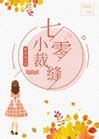
Ruan Xi, a fashion designer from the twenty-first century, dies in a mountain accident and transmigrates into the body of a fourteen-year-old girl with the same name in a 1970s Chinese period novel. She awakens in a mountain hollow, rescued by a boy named Ling Yao, and is taken to his family’s stilt house. Upon regaining consciousness, she absorbs the original character’s memories, learning that she has become a villainous supporting character destined for a tragic end. The original Ruan Xi, raised in poverty by her grandfather while her military officer father raised the female lead in the city, became jealous and hostile toward the female lead, Ye Qiuwen. Ruan Xi resolves to avoid this fate and carve out her own path.

Returning to her rural home in Fengyan Brigade, Ruan Xi observes the stark poverty of the era. Her grandfather, Ruan Zhigao, is the local brigade leader, and her family lives relatively better than most due to remittances from her father. However, the household is fraught with tension. Her fifth uncle, Ruan Changsheng, is idle and prone to fighting, while her second aunt, Sun Xiaohui, is greedy and manipulative. The family structure begins to fracture when Sun Xiaohui, resentful of the resources allocated to Ruan Changsheng’s upcoming wedding and Ruan Xi’s education, forces a family split. She accuses her parents-in-law of favoritism and threatens to leave unless they separate into independent households.

Ruan Xi, pragmatic and independent, welcomes the split as an opportunity to escape the exploitative dynamics of the large family. She moves into a separate cooking arrangement with her grandmother, Liu Xinghua, and cousin Ruan Jie. Her primary goal is to secure her future by learning a trade. Despite her grandfather’s dismissal of her ambitions and her uncle’s mockery, she insists on learning tailoring. She approaches the local old tailor, Master Song, a reclusive and difficult man who has rejected all previous apprentices. Ruan Xi offers him a basket of eggs as a gift and diligently cleans his house. Impressed by her competence and speed, Master Song agrees to teach her, marking a significant turning point in her integration into this new life.

Parallel to her professional development, Ruan Xi’s relationship with Ling Yao deepens. She discovers him being brutally beaten by local boys who discriminate against him because his father is labeled a “black category” element, a political enemy of the state. Ling Yao, a quiet and introverted boy, endures the abuse silently to avoid bringing trouble to his persecuted family. Ruan Xi intervenes, using her grandfather’s status and her uncle’s reputation as a fierce fighter to intimidate the bullies into stopping. She enlists her uncle to publicly declare Ling Yao under his protection, ensuring the boy’s safety. This act of kindness solidifies a bond between them, contrasting with the hostility Ling Yao faces from the rest of the village.

As Ruan Xi masters the sewing machine and various stitching techniques, she gains the respect of Master Song, who nicknames her a “genius.” Her skill development allows her to envision a future as a self-sufficient tailor, a respected profession in the rural community. Meanwhile, the family drama continues to unfold. Sun Xiaohui’s abuse of Ruan Jie escalates after the split, leading to a public confrontation where Liu Xinghua defends her granddaughter. The narrative highlights the rigid social hierarchies and political tensions of the 1970s, where family loyalty is tested by scarcity and ideological pressure. Ruan Xi navigates these challenges with modern sensibilities, rejecting the traditional subservience expected of women and focusing on economic independence and personal autonomy.

The story progresses with Ruan Xi balancing her apprenticeship with her family obligations. She maintains a cautious distance from the original plot’s romantic entanglements, particularly the rivalry with Ye Qiuwen, choosing instead to build a stable life through her craft. Her interactions with Ling Yao remain platonic but supportive, as she recognizes his potential and the unfairness of his circumstances. The narrative sets the stage for Ruan Xi to rise above her designated role as a villain, using her modern knowledge and determination to transform her life in the harsh environment of 1970s rural China.

Latest Release
DateGroupRelease
2026-08-11shanghai fantasy c42
2026-08-11shanghai fantasy c41
2026-08-11shanghai fantasy c40
2026-08-11shanghai fantasy c39
2026-08-11shanghai fantasy c38
2026-08-11shanghai fantasy c37
2026-08-11shanghai fantasy c36
2026-08-11shanghai fantasy c35
2026-08-11shanghai fantasy c34
2026-08-11shanghai fantasy c33
2026-08-11shanghai fantasy c32
2026-08-11shanghai fantasy c31

Community Reviews

Rating(4 / 5.0, 22votes)
5 stars
6(27%)
4 stars
11(50%)
3 stars
3(14%)
2 stars
2(9%)
1 stars
0(0%)

Popular reviews

... Read More
This thing moves. Like, chapter one gives us a mountain fall, a rescue, a transmigration reveal, a return to the family home, AND sets up the entire premise of who Ruan Xi is in this story. That's a lot to pack in, and honestly? It works. The author doesn't waste time. Ruan Xi wakes up, figures out what's going on, and by the end of chapter one she's already planning her next moves. No drawn-out confusion sequences or endless exposition dumps. The memories flood in and she adapts—which is realistic for someone who clearly reads a lot of novels herself. Chapter two slows down just enough to let us breathe and absorb the family dynamics, the clothing situation, the milk candy moment. It's a nice rhythm—big plot events followed by quieter character beats. The only thing I'd note is that chapter 2 ends mid-thought about schooling being impossible, which is a bit of a soft landing. But then again, we're only seven chapters in. The author is laying foundations, and they're laying them quickly. I'm not bored, which is the real test.
... Read More
Let me just quote this exchange because it's perfect: Zhou Xueyun: 'Didn't I tell you not to meddle in other people's business?' / Ling Yao: 'This is… learning from Lei Feng and doing good deeds.' That's it. That's the whole vibe. A boy trying to justify his kindness with political slogans and his mom being done with everything. It's funny, it's period-accurate, and it tells us so much about these characters in two lines. Then there's the grandmother: 'We can't eat meat every day. The copper mine on the mountain isn't yours.' Deadpan. Absolute deadpan. That's a woman who has heard every excuse in the book and is not having it. Ruan Xi's internal voice is also great—she's got this modern, slightly sarcastic sensibility that contrasts nicely with the period setting. When she thinks about milk candy being 'snacks she wouldn't even look at' before transmigrating but now they're 'precious treats,' that's such a natural way to show the cultural shift without info-dumping. The dialogue feels lived-in. People interrupt each other, they don't say what they mean directly, there's subtext everywhere. Sun Xiaohui's internal scoffing while keeping a straight face? That's real family dynamics right there.
... Read More
Okay, so here's the thing that really got me about this section—the plot is quietly setting up this massive undercurrent about knowledge as the only real escape route. It's 1973, the college entrance exam hasn't been reinstated yet, and Ruan Xi knows it. That single detail—"it was only 1973, and the college entrance exam hadn't been reinstated yet"—is doing SO much heavy lifting. She's not just studying for fun; she's preparing for a door that hasn't opened yet. That's forward planning on another level. The subplot with the old tailor is also doing double duty here. On the surface it's just "she's learning a skill," but it's actually establishing her economic independence track while the education track runs parallel. Two strategies, one goal. And the fact that she has to keep the Ling Yao tutoring a SECRET because of his mother? That adds this nice layer of tension—she's building something important in secret, which makes it feel more precious. But honestly, the plot moment that made me sit up was when Ruan Jie actually asks "Sister, are you serious?" and then after looking into Ruan Xi's eyes for a long time, says "I do!" That's not just a plot point—that's a character commitment. The whole story hinges on whether these two sisters will actually follow through, and that moment feels like the point of no return. The plot is no longer just about Ruan Xi's plan; it's about both of them now. And that makes me wonder—what happens when the plan hits its first real obstacle? Because it's coming, and I'm here for it.
... Read More
The atmosphere in this book is IMMERSIVE. Let me just start with this image: a girl lying in a mountain hollow, rocks pressing into her bones, sunset painting everything red, and distant singing about the Red Army. That's chapter one, first paragraph energy. The sensory details are what make this world feel real. The stilt house that's so old it looks like it belongs in a museum. The straw sandals. The oil lamp flickering in the Ruan household. The pickled mustard greens being eaten THREE TIMES A DAY and it's considered a treat. The fact that there's no barefoot doctor in the village, let alone modern medicine, so injuries just have to heal on their own. And the clothing details! Ruan Xi examining the floral jacket that's 'neither new nor old, without any patches'—in this era, that's basically luxury. The military uniform among the donated clothes being 'the most fashionable and eye-catching' says everything about what people value. There's this one moment where Ruan Xi shines her flashlight on herself and sees her waist-length black hair in two pigtails with bright red ribbons. I could literally see that image. The contrast between her modern designer sensibilities and this 1970s rural mountain setting creates this really rich texture. The world doesn't feel like a backdrop—it feels like a character itself.
... Read More
The stakes in this book are layered and I love it. On the surface: Ruan Xi needs to survive in 1973 rural China with no modern conveniences, no medicine, and a body that's basically hers but still needs to navigate mountain terrain and poverty. Physical survival is a real concern. But the bigger stakes are narrative. She KNOWS she's supposed to be the villain. She knows the original plot has her becoming twisted, framing the female lead, and meeting a tragic end. The conflict isn't just 'will she survive'—it's 'will she break the story's gravitational pull toward her doom?' Then there's the family tension. The grandmother prioritizing the fifth uncle's wedding over everyone else's meals. The second aunt trying to swipe donated clothes. The fact that Ruan Xi's family is cautious and isolated because of political troubles. These aren't just background details—they're active pressures. And the Ling Yao situation! A kind boy who found her, his protective mother, the whole 'we can't afford trouble' dynamic. There's potential for something meaningful there, and the fact that Ruan Xi is already aware of the original plot makes every interaction feel loaded with unspoken tension. What I find most interesting is that the stakes feel genuinely high because they're grounded. This isn't a world-or-death situation—it's a 'your entire life and fate is at risk' situation. And honestly, that's scarier.
... Read More
Can we talk about how the author handles the transition from the heavy emotional scene on the hillside to the tailor subplot? One moment they're sitting in the dusk talking about home and futures, and then—"Since she was going out to make clothes for someone and would likely stay overnight, Ruan Xi packed a change of clothes and toiletries at home and informed Liu Xinghua." Boom. Scene change. No awkward bridge, no "the next day." Just life moving forward. And then the old tailor's entrance is genuinely hilarious in how it's paced. Four strong men showing up, two carrying the machine, two carrying the man. The sedan chair that looks like something from a palace drama. The author takes their time here, letting us picture this ridiculous and wonderful scene. "Sitting in the sedan chair, looking at the mountain scenery, and smoking a pipe—it was truly like the life of an emperor." I literally laughed out loud at this. But what I appreciate most is how the pacing mirrors Ruan Xi's own life. She's been adjusting to the slow mountain rhythm—"she had fully adapted to her current life... the time seemed to pass slowly, watching the sun rise and set." The narrative pace matches her internal pace. And then when Granny Zhao shows up and the whole neighborhood gossip machine kicks into gear about Ruan Xi being recognized by the old tailor? That's the author reminding us that in a small village, nothing stays private for long. The pacing is breathing with the story, not against it.
See all reviews

Characters

See all characters

Custom lists

See all custom Lists