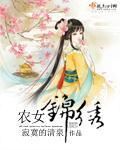
The Peasant Girl's Glorious Rise
Novel Info

Summary

... Read More
Qian Yixiu, a woman in her thirties, has spent over a decade harboring unrequited love for her childhood friend Shang Qingyun. Despite their shared history from rural village life to careers in a major metropolis, their relationship remains strictly platonic. Shang Qingyun, ambitious and socially climbing, treats Qian Yixiu as an emotional confidante, summoning her whenever he experiences romantic highs or lows. She remains single, waiting for a chance that never comes, while he pursues relationships with clear utilitarian motives. On the day she decides to finally confess or move on, she drives to a resort to meet him. While waiting, she saves a young girl from being struck by a speeding car and is killed in the impact. Her soul drifts toward the Road to the Underworld but is intercepted by Niutou and Mamian, two underworld officials who admit to grabbing the wrong soul due to intoxication. Lacking a permit for her premature death, Qian Yixiu faces the prospect of becoming a Wandering Soul. Mamian, seeking to avoid punishment, proposes a solution: he will use the permit intended for a deceased child to send her soul into a new body in a parallel world. After some negotiation, during which Qian Yixiu uses her workplace skills in flattery to gain favor, Mamian reveals that the body she is destined to inhabit has not yet been born. It will be the daughter of a young man named Qian Manjiang, who is about to be conscripted into the army. She is instructed to wait in the household of Qian Manjiang’s family until the child dies at age six, at which point she must possess her. Qian Yixiu’s soul observes the Qian family, a impoverished household in the fictional Great Qian Dynasty. The family consists of her future father, Qian Manjiang; her future mother, a simple-minded girl named Cheng Yue; her frail, crippled father Qian Sangui; and her young sister, Qian Manxia. The family is struggling to survive after Qian Sangui’s medical debts depleted their savings. When Qian Manjiang is conscripted, the family rushes to marry him off before he leaves to ensure an heir. With limited funds, Qian Manjiang’s mother, Mrs. Wu, purchases a dirty, simple-minded girl from a matchmaker, unaware of her true beauty and noble bearing. This girl, Cheng Yue, becomes Qian Yixiu’s future mother. Qian Manjiang is instantly captivated by Cheng Yue’s beauty despite her mental state. He treats her with kindness, naming her Yue’er and integrating her into the family. Qian Yixiu watches as her parents’ relationship develops, noting Qian Manjiang’s ambition and charm, which remind her of Shang Qingyun, though Qian Manjiang possesses a genuine integrity she finds lacking in her past life. The family prepares for the wedding, with Qian Manjiang expressing hope that he will rise through the ranks and bring honor to his family. Qian Yixiu, now reborn as Qian Manxia, the young daughter, must navigate this harsh feudal society while waiting for the moment she can fully inhabit her own body. The story sets the stage for her journey in a world where survival depends on wit, resilience, and the unpredictable nature of war and family dynamics.

Latest Release
DateGroupRelease
2026-08-11shanghai fantasy c40
2026-08-11shanghai fantasy c39
2026-08-11shanghai fantasy c38
2026-08-11shanghai fantasy c37
2026-08-11shanghai fantasy c36
2026-08-11shanghai fantasy c35
2026-08-11shanghai fantasy c34
2026-08-11shanghai fantasy c33
2026-08-11shanghai fantasy c32
2026-08-11shanghai fantasy c31
2026-08-11shanghai fantasy c30
2026-08-11shanghai fantasy c29

Community Reviews

Rating(4.3 / 5.0, 6votes)
5 stars
3(50%)
4 stars
2(33%)
3 stars
1(17%)
2 stars
0(0%)
1 stars
0(0%)

Popular reviews

... Read More
Okay so this section is wild because on the surface it looks like a quiet slice-of-life passage but underneath there are SO many threads pulling at each other. Let me start with the rumor mill around Cheng Yue's face — that's not just gossip for gossip's sake. The author uses Mrs. Yang's dramatic description of Cheng Yue's face as "a white cloth covered in sparrow droppings" to completely shift the social hierarchy in the village. Wang Zhi'er goes back to being the number one beauty, and suddenly Cheng Yue is isolated. That's clever worldbuilding through plot. Then there's the egg subplot with Mrs. Tang, which is basically a mini drama within the drama. She brings TEN eggs but claims she was told to buy twenty, and the whole exchange is this tense negotiation where everyone is performing politeness while actually manipulating each other. Qian Manxia seeing through it immediately — she knows Mrs. Tang would have just kept the eggs and told her husband she gave them — is a brilliant plot moment. It shows the reader that this household operates on a different level of awareness. But the real plot punch comes at the end with the flowers. Cheng Yue, who barely speaks, manages this whole long sentence about the flowers withering and blooming multiple times, and it's revealed that this is her husband's promise — when the flowers bloom again, he'll come home. That's the emotional core of the entire arc. The plot isn't about big explosions or dramatic reversals; it's about survival, waiting, and the tiny moments that keep people going. The structure moves from winter hardship to spring renewal, and that floral imagery ties everything together. I literally got chills reading that part.
... Read More
I need to address the pacing here because some people might call this section slow, and I get why — there's no big action, no dramatic reveals, just daily life unfolding. But the pacing is actually masterful because it mirrors the actual experience of these characters. They're waiting. Waiting for the husband to come home, waiting for the baby to be born, waiting through winter to spring. The narrative doesn't rush because their lives don't rush. The author uses a brilliant structural device: the eggs. They appear multiple times throughout this section — Old Lady Qian bringing eggs with her demands for a grandson, Mrs. Tang bringing ten eggs with her ulterior motives, the hens not laying in winter. Each egg scene advances character and plot while also marking the passage of time. It's a subtle way to create rhythm without dramatic events. The Mrs. Tang confrontation is perfectly paced. It starts with her arrival, builds through her performative generosity, peaks with the verbal sparring between Mrs. Wu and Manxia, and ends with Mrs. Tang storming out humiliated. In maybe 500 words, we get a complete dramatic arc. And the author doesn't over-explain — we understand the power dynamics through dialogue and action alone. Then the winter passage — "The family endured the long, harsh winter day by day" — is just one sentence. The author doesn't drag it out. She lets us feel the passage of time through that single line and then immediately transitions to spring. It's efficient storytelling that trusts the reader to fill in the gaps. The flower scene at the end serves as both climax and resolution for this entire section. After all the hardship, all the tension, all the waiting — a flower blooms. The pacing earns that moment because we've suffered through the winter with these characters.
... Read More
I'm not even going to pretend I didn't completely lose it at the flower scene. Let me set this up for you. Cheng Yue has been barely speaking since she arrived at this household. She's disfigured, pregnant, treated like a project by her in-laws, and her husband is at war. She has NOTHING. And then one day she sees a small yellow flower blooming and she literally forces out this whole sentence — the longest she's spoken since arriving — about how her husband said when the flowers wither and bloom again, he'll come home. "Brother Jiang said that when the flowers wither—then bloom again—wither again—bloom once more—wither once more—and bloom again, he'll be able to come back." I am not okay. She had been holding onto this phrase in her heart, repeating it, waiting, and now she's saying it out loud for the first time. And Mrs. Wu — her mother-in-law, who has been strict and practical and sometimes seems more concerned with producing a grandson than with Cheng Yue herself — she drops everything and runs to tell Qian Sangui. "Husband, spring is here, the flowers have bloomed. You made it through without any tonic medicine." The way she says it — the relief, the gratitude, the sheer emotional weight of another winter survived — I couldn't breathe. And Qian Sangui's response, just "Oh, that's good" from inside the room, so weak but so full of meaning. This entire family is hanging by a thread and yet they find joy in a flower. And Cheng Yue's love for her husband isn't dramatic or passionate in a romantic-novel way. It's quiet. It's waiting. It's believing that a flower blooming means he's coming home. That's the kind of love that actually hurts to read about because it's so real.
... Read More
The atmospheric writing in this section is absolutely chef's kiss. Let me just talk about how the author uses the environment to mirror the emotional state of the family without ever being heavy-handed about it. The winter scenes are brutal in their simplicity. "In the bitter cold, the hens hardly laid any eggs." That's it. One sentence and you feel the entire weight of poverty and scarcity. The family is eating sweet potatoes and corn porridge while Cheng Yue gets eggs and dates, and the visual of Qian Manxia "chewing on a corn stalk to extract its sweet juice" — that detail is devastating because it shows a child finding small pleasures in a hard life. But then the transition to spring is so gentle. "When the willow branches began to sprout green and the first small yellow flower bloomed in front of the house" — the author doesn't announce spring, she lets you notice it creeping in. And the sunlight description later: "The sky as blue as if washed clean, and the sunlight was so bright it stung her eyes. It had been a long time since she had basked in the warmth of the sun." This is from Qian Yixiu's perspective, and it's incredible how the environment reflects her own emotional state — she's been in the shadows, literally and figuratively, and now the sun feels almost painful. The needlework scene under the jujube tree is another gem. Mrs. Wu pretending not to notice Cheng Yue's longing gaze at the tiny garments, the dried leaves filtering sunlight, everyone in their padded jackets still — it's a painting. You can see it. The author builds this world where every detail matters: the eggs, the dates, the straw sandals, the small clothes cut from old garments. Nothing is wasted, nothing is excess. This is a world where survival is measured in eggs and flowers.
... Read More
I need to talk about Qian Manxia because this girl is everything. She's the only one in this entire household who actually SEESES what's happening. When Mrs. Tang shows up with her performative generosity, everyone else is either too polite or too caught up to notice the manipulation — except Manxia. She immediately understands the situation and steps in to accept the eggs while also setting a boundary: "When Man He's future wife is with child, my mother will send her twenty eggs to eat." That's not just clever, that's a power move. She's essentially saying we see your game and we're keeping score. And her relationship with Cheng Yue — it's so tender. She calls her "Sister-in-law" with genuine warmth, corrects her gently about filial piety wording, and internally she's this fierce protector. Remember when she's watching Cheng Yue and thinks about how the child won't have a handle but will be stronger than any child with one? That's not just observation, that's devotion. But what really got me is the dynamic between Manxia and her father. The text says "Qian Manxia, who had rarely seen her father smile since she was born" — and then Cheng Yue makes him smile with just a few sweet words. That moment where the father, who has been bitter and bedridden, actually smiles silently? Manxia noticing it and telling Cheng Yue "you even made Father laugh" — it's such a small thing but it reveals everything about this family's emotional landscape. Then there's Qian Yixiu's perspective, watching from behind the wall, blowing kisses to Manxia. The relationship between these two girls — one invisible, one sharp as a knife — it's beautiful. Yixiu's internal monologue about treating Manxia well when she "fully crosses over" adds this layer of mystery that I am SO here for.
... Read More
The dialogue in this section is so distinctively voiced that I can basically tell who's speaking without looking at the names. Let me break this down because it's genuinely impressive craft. Qian Manxia's voice is sharp and quick. When she snaps at Mrs. Tang — "My sister-in-law isn't stupid at all! Only a fool would call someone stupid to their face." — that's not someone who hesitates. Her dialogue is direct, sometimes bristly, but always protective. And her line to Mrs. Tang about sending twenty eggs in return: "When Man He's future wife is with child, my mother will send her twenty eggs to eat." That's Manxia being strategically polite while actually delivering a verbal slap. Perfect. Mrs. Wu's voice is warm but edged with steel. She says "Silly girl" to Cheng Yue with affection, but she also tells Mrs. Tang off without blinking: "If elders want respect from the young, they should act like proper elders first." Her dialogue shifts between maternal tenderness and fierce defense, and it never feels inconsistent because that's who she is. Cheng Yue's dialogue is the most interesting because it's so sparse. When she finally speaks at length about the flowers, the fact that she pauses multiple times but manages to convey the whole meaning — it shows how much effort this costs her and how deeply she's holding onto this hope. Her line "Brother said we must be filial to Father and Mother, and to Little Sister" — she's repeating what she's been taught, trying to be good, trying to belong. And Old Head Qian's internal monologue about the name Qian Yishan — "Laugh at me? Look at the names you've chosen—Dog Leftover, Blackie, Lamb, Second Fool" — that's hilarious and heartbreaking at the same time. His voice is proud, defensive, and deeply human. The author doesn't need him to speak aloud for us to hear him. The narrative voice itself is restrained but never cold. It observes without judging, which makes the emotional moments hit even harder.
See all reviews

Characters

See all characters

Custom lists

See all custom Lists