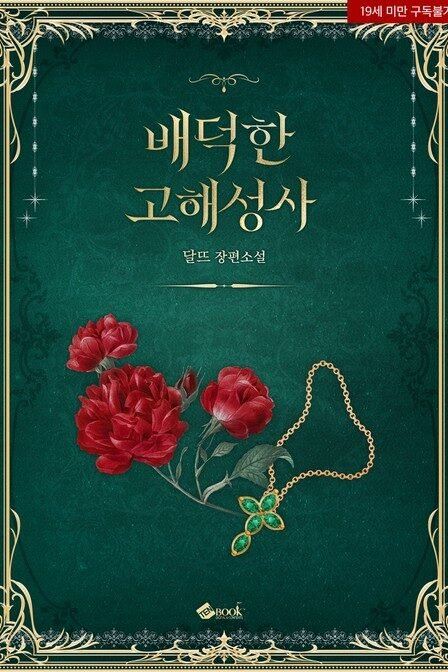
The Night My First Love Ended
+Add to Custom List
Genres:
Novel Info
  • Author:
  • Status:Ongoing

Summary

... Read More

Lisette de Vermoa is the twenty-year-old daughter of a noble Count, a woman known for her frail health and quiet demeanor. For three years, she lived in anxious anticipation of her brother Alexander’s return from the battlefield, alongside the presence of Leon Hart, her escort knight and her brother’s closest friend. Leon had accompanied Alexander to war with the promise to return safely, a vow he repeated during an emotional farewell. Lisette had harbored deep, unspoken feelings for Leon, keeping her affection hidden while maintaining a facade of compliance within her restrictive family structure. Her mother, Countess Céline, and her eldest brother, Théodore, had already arranged her marriage to Baron Tarmen, a wealthy but significantly older widower, viewing Lisette’s impending union as a necessary alliance despite her delicate constitution.

The story begins with the long-awaited homecoming of Alexander, who returns as a celebrated hero. The manor erupts in celebration, yet Lisette’s joy is immediately tempered by absence. She searches the victorious procession for Leon, only to find him missing from the official entourage. Panic sets in until she spots him arriving separately, walking toward the main gate with a cold, predatory detachment that contrasts sharply with the gentle knight she once knew. When Lisette rushes to embrace him, Leon physically recoils, pushing her away in front of their shocked family. His eyes, once warm and guileless, are now dark and indifferent. He addresses her with formal courtesy, creating a chasm between them that leaves Lisette humiliated and confused, while her family watches with stern disapproval.

Unable to accept this alien version of the man she loved, Lisette slips away that night and ventures into the foggy forest to find Leon’s cottage. Lost and frightened by the encroaching darkness and the sound of wolves, she stumbles upon the cottage and bursts inside for safety. She encounters Leon in a state of undress, and the moment is interrupted by a wolf attacking the door. Leon pulls her into his arms to protect her, and in the ensuing tension, their dynamic shifts. However, the encounter ends abruptly when he walks her back to the manor boundary, coldly instructing her never to seek him out alone again. Heartbroken, Lisette returns to her room, destroys a cherished angel figurine that symbolized her wishes, and collapses into unconsciousness.

She awakens to find Leon by her bedside, feeding her water and kissing her with desperate intensity. The experience feels vividly real, marked by physical touch and emotional urgency, leading Lisette to believe they have reconnected. Yet, when she wakes fully, Leon is gone, and the nanny reveals that Lisette had collapsed on the floor, suggesting the events might have been a dream. The ambiguity is shattered the following morning when Lisette sees marks on Leon’s body at the training grounds that correspond to the bites and kisses she inflicted in her vision. Simultaneously, she discovers identical marks on her own skin. A voice inside her head reveals that she is not dreaming but cursed. Having entered the fog-covered forest, she has fallen under the influence of an Incubus. The entity, manifesting through the destroyed angel figurine, confirms that her desires are being forced into reality, binding her to Leon in ways that defy her consent and the rigid social boundaries of their world.

As Lisette grapples with this supernatural affliction, her arranged marriage to Baron Tarmen proceeds despite the protests of her brother Alexander, who senses the turmoil beneath her compliant exterior. Leon remains distant and erratic, his behavior oscillating between hostile avoidance and sudden, intense proximity, seemingly controlled by the curse’s mechanics. The narrative moves toward a collision between Lisette’s forced marital duty, Leon’s cursed loyalty, and the growing awareness that her own subconscious desires are actively shaping their tragic circumstances. Lisette is trapped between the reality of her engagement and the spectral entanglement with Leon, forcing her to navigate a path where her innermost wishes may be destroying the very life she sought to preserve.

Latest Release
DateGroupRelease
2026-10-03dusk blossoms c44
2026-10-03dusk blossoms c43
2026-10-03dusk blossoms c42
2026-10-03dusk blossoms c41
2026-10-03dusk blossoms c40
2026-10-03dusk blossoms c39
2026-10-03dusk blossoms c38
2026-10-03dusk blossoms c37
2026-10-03dusk blossoms c36
2026-10-03dusk blossoms c35
2026-10-03dusk blossoms c34
2026-10-03dusk blossoms c33

Community Reviews

Rating(0 / 5.0, 36votes)
5 stars
0(0%)
4 stars
0(0%)
3 stars
0(0%)
2 stars
0(0%)
1 stars
0(0%)

Popular reviews

... Read More
OK I need to process what happened here because my chest actually hurts. Lisette and Leon's relationship is built on this foundation of promise and abandonment that I'm still not over. Think about it—three years ago, he swore he'd come back. He swore he'd protect her with his life. And she? She believed him so completely that she spent every single day after he left waiting, writing letters she'd never send, counting down to a reunion that would never happen the way she imagined. But Leon—Leon came back and became someone else. Not a villain, not a jerk, just... a stranger wearing the face of the boy who once held her hand. The way he looks at her now, those cold eyes hiding behind wind-blown hair, it's like he's a completely different person. Or maybe the real Leon was always there and she just never saw him. What breaks me is the moment by moment evolution of their dynamic. First there's the raw awkwardness—he's half-naked, she's mortified, and there's this tiny vulnerability where he covers himself with a towel and his ears go red. For a split second, you can almost see the old Leon peeking through. Then the wolf comes. And suddenly he's her protector again, pulling her close, whispering in her ear, holding the door against the beast. It's intimate in the most desperate way possible. And then—then—he lets her go. The physical distance he creates afterwards is so telling. He steps back, changes his tone, becomes formally polite. Every action refuses her. He's building a wall, brick by brick, and she's standing on the other side watching it rise. When she asks herself why she can't even find the courage to ask him why he's like this now, that's the real tragedy. She knows the answer already. He doesn't need her anymore. And the nanny scene at the end? I'm still replaying that in my head. Lisette slamming the door in her caretaker's face—not out of anger, but because if she looks at anyone right now she'll crumble. She can't pretend. Not even for a second.
... Read More
"[A bird in a cage, I suppose you thought it could never happen to you.]" — that opening line from the figurine. Right there. That IS the theme of this entire novel compressed into one sentence. The idea that some things are inevitable. That you can't outrun your own choices. Lisette literally thought the curse could never happen to HER after what happened three years ago. And now? Here we are. But the real symbol that destroyed me is the figurine itself. An angel figurine that's actually a demon. She treasured it for years — a gift from Leon as a child, something she kept close to her heart, called a wish-granting angel. The person she loved gave it to her, and inside it lives something that will force her to confront exactly what she's been running from. How perfect. How absolutely cruel and beautiful. And the curse itself — the marks spreading across her body, turning her dream into something that might consume her if she doesn't act — it's not just a plot device. It's physical manifestation of her guilt. Three years of carrying this weight, pushing Leon away, thinking she's protecting him, and meanwhile the curse has been BUILT into her body this whole time. Every mark is a choice she made. Every wound is a moment she ran instead of staying. The fog-covered forest keeps coming back to me too. She saw the marks on another person — someone who suffered because of the same curse. She thought she was the only one, but she wasn't. The idea that her selfishness hurt someone else, that she dragged an innocent person into her ruin alongside her... that's the guilt that's actually destroying her, not the curse itself. The curse is just punishment. The guilt is the real story. And then the ending — the blurred line between dream and reality. She's touching herself, waking up slick and desperate, and her mind keeps going to Leon's voice, his touch. The curse is making her body want exactly what her mind is terrified of. She says [He was a demon] but her body doesn't believe that. The whole novel is built on this tension between what she THINKS she wants (to stay away from Leon, to protect him) and what her body/knows/deep down actually wants. And the figurine knows it. The figurine just said it outright: [Realize your desire. And you will be free from the curse.]
... Read More
The stakes in this chapter are INSANE and I need everyone to understand what just happened. On the surface level, Lisette is cursed. There's a physical consequence — marks on her body, dreams that are making her body react in ways she can't control, waking up every night in a state she can't explain. She's been trying to ignore it for four days, coping by touching herself, but it's not working. The curse is escalating. She told herself [It's only a dream] and now she's admitting to herself it might not be harmless. But the REAL stakes are the relationship with Leon. She's spent THREE YEARS running from him. Three years of building walls, of telling herself she's protecting him by staying away, of convincing herself that their past doesn't matter. And now the ONLY WAY to break the curse — THE ONLY OPTION — is to go to HIM. To spend a night with him. The one person she's been avoiding. The one person she thinks will only get hurt if she gets close. And the demon knows this. The demon is literally saying [He's a man too, so he's probably hoping for it deep down...] and Lisette is FURIOUS about it because it's true. She can feel it in her body. Every night she's waking up desperate for exactly what she's been running from. But here's what makes the conflict so much worse — there's NO ONE TO TELL. The nanny notices something's wrong but Lisette can't say anything. The rumors at the manor are getting wilder by the day. Baron Tarmen is arriving in one week. She has a BETROTHED person coming and she needs to keep her distance from Leon but her BODY won't let her. The external pressure is mounting while the internal conflict is eating her alive. And the most terrifying part? If she does go to Leon, if she spends that night with him, [once it's done, there was no going back to what they had been before]. Whatever happens, the three years of separation, the careful distance she's maintained, the way she's been protecting him by staying away — it all ends. Either the curse breaks and they're forced to confront everything, or something worse happens. There is no safe option. Every path forward destroys something. I cannot handle this.
... Read More
Okay so the Leon reveal in Chapter 7 needs to be discussed because wow. Three years. Three entire years she's been waiting for him, clutching his clothes to fall asleep, dreaming about his return—and what does she get? He literally PHYSICALLY PULLS AWAY from her hug in front of everyone. Like, he takes her wrist and UNWINDS her arms from around him. And his eyes? "Nothing of who he had been three years ago remained." That description gave me chills. The author paints his gaze as this completely alien thing—"razor-edged. Like those of a predator." A predator. Her Leon was the gentlest person she knew. Now he looks at her like she's prey, like she's a threat. And the reason?? "There are many eyes watching." That's it. He doesn't even try to explain himself properly. He doesn't say "I'm sorry, I can't do this here" or anything that would give her a sliver of hope that tomorrow might be different. He just... shuts the door in her face. What really wrecked me was the contrast. Three years ago she sent her brother to war as a sacrifice for the family, and he came back changed. But Leon? Leon went to war and came back as someone else entirely. He didn't just lose his warmth—he lost whatever bond they had. And Lisette? She stood there frozen, unable to process it, and had to be physically led away by Alexander like she couldn't even stand on her own. The family dynamic is so complicated too. Celine yelling at her to come here this instant, Theodore glaring, everyone treating her like she's made of glass, and Leon—the one person she actually wanted to see—acts like she's nobody. But then the night forest scene... he KNEW she'd come. He was waiting at the cottage. Why wouldn't he meet her openly but he lets her walk into a wolf-infested forest alone??
... Read More
"You, really." "Ha." "Fool." Three words. Three completely different tones. The de Vermoa family dialogue is so distinct I could identify it blind. Alexander's speech is clipped and impatient—he interrupts, he uses commands disguised as questions, he teases with a physicality that makes you feel like you're in the room with them. When he says "Get up," it's not a request. When he says "Sorry. I forgot about your condition," it's almost embarrassingly genuine, like he didn't plan to apologize and just blurted it out. Lisette's voice is such a contrast—she deflects with humor and sarcasm when she's uncomfortable. "So I'm a fake lady?" comes right after she's been physically manhandled down a corridor. That's not confidence; that's survival instinct through wit. And then her dialogue starts fragmenting when she's emotionally overwhelmed—"S, still, he's quite kind"—she can't even form complete sentences when talking about Leon anymore. The most striking dialogue moment has to be the angel figurine's voice. It doesn't speak like a person. It speaks like cold, absolute certainty. "Child, did no one teach you? Enter a fog-covered forest at dawn and you fall under the curse of an Incubus." No warmth, no drama—just factual devastation. The author uses formatting brilliantly here too, bracketing the figurine's dialogue to visually separate it from human speech. It's a subtle touch but it signals that something fundamentally OTHER is speaking. And Leon's silence? His dialogue consists of one muffled "Young master, Miss..." before being cut off. That restraint is powerful. What he doesn't say is doing so much heavy lifting.
... Read More
I need to talk about how this scene handles silence because honestly the dialogue here is barely there and it works so much better than any monologue could. Like, when they're both struggling with this overwhelming physical and emotional moment, what comes out of their mouths is these broken fragments—'Mi... ngh.' 'Ha.' 'Le... on.' And somehow those incomplete sounds are doing more work than any polished romantic speech ever could. The few complete lines that do exist are so perfectly calibrated too. When Leon says 'Relax' three times in different contexts—once when he touches her below, once after he pulls away covered in evidence of her arousal, once when he's about to enter her—it's not repetition, it's evolution. Each 'Relax' means something different. The first is physical guidance. The second is almost a whisper of intimacy. The third is surrender, or invitation, I can't tell which. And Lisette's voice! I love how her dialogue shifts from commanding ('Put it in, Leon.') to vulnerable ('I want to be filled with you.') in the span of two sentences. There's no transition, no hand-holding, just the raw honesty of someone who's decided to stop performing composure. The author doesn't waste words on her—she speaks sparingly but each word lands. Then there's the narrator's voice weaving through all of this, which I have to mention because it's doing something really interesting. It moves fluidly between Lisette's POV and Leon's interiority without any jarring shifts. 'So this was what it meant to feel like losing one's mind'—that line transitions from describing her state to describing his, and it works because both of them are experiencing the same thing, just from different angles. The most striking moment though is when the author just... stops. No dialogue, no internal monologue, just the image of Lisette looking up at him and saying 'Put it in.' And then the chapter ends mid-sentence with 'I want to be filled with you.' That cut-off ending! It's either going to be continued in the next chapter or it's deliberate. Either way, it left me staring at my phone for a solid ten seconds.
See all reviews

Custom lists

See all custom Lists