The Nanny of House Herzen - Reviews

The Nanny of House Herzen
+Add to Custom List
Sort
Add review
... Read More
Let me tell you about the head maid. I haven't met anyone in this book yet who feels this real, and she's only had maybe four scenes. She's assertive, she nags Evelyn to eat, she physically wrestles her nightgown open without asking permission—but she also notices Evelyn's distress, reads the room, and makes a life-or-death decision in seconds. When she says 'You've come at the right time. It seems Heaven sent you,' that's not manipulation. That's a woman who has watched a baby die of starvation and made a choice to save it, even if it means trusting a stranger who looks like she crawled out of a grave. And Evelyn—God, Evelyn. She's a ghost in her own life right now. A wife who was exiled, a mother who lost her child, a woman whose body is still trying to nurture something that no longer exists. The scene where she takes baby Johanson into her arms and just... breaks. She holds that child and weeps for her own. The head maid strokes her back like it's the most natural thing in the world. This bond between them, forged in desperation and milk and shared grief—it's the emotional anchor of everything. I'm already obsessed with both of them. Then there's the Duke. We've only seen him for maybe thirty seconds at the end, in moonlight through trees, and already I hate him and want to understand him simultaneously. He's described with 'piercing black eyes' and 'predatory' scrutiny—and yet he doesn't threaten her. He just... looks. Like he's searching for something. The fact that he hasn't visited his own dying daughter speaks volumes about his internal state. Grief, guilt, or something darker? The relationship between these three—Evelyn, the head maid, and the unseen Duke—is already a triangle of power, desperation, and unspoken loyalty. I can feel this story pulling toward something immense.
... Read More
Okay so let me just say—the chapter where Evelyn discovers that room at the end of the corridor CHANGES EVERYTHING. Up until that point, you kind of wonder whether this is a slow-burn dark romance or just a creepy situation that might resolve into something tender. Then she finds the taxidermy room and suddenly the genre flips. The entire narrative pivot happens when the mop falls and the door opens. That's such a masterful use of accidental discovery—you know, the classic plot device, but executed with real consequence here. Everything before it was铺垫, and now we're in dangerous new territory. What I also appreciate is how the Duke's absence and return is structured. He leaves for a week, and instead of providing relief, it just makes Evelyn's anticipation worse. She's spending that entire time in this limbo state—relieved he's gone but also weirdly disappointed he hasn't come back for his "next time." And then when he does return, he doesn't even check on the baby. That detail is BRUTAL and tells us everything we need to know about what this story is really about. The pacing here is also worth noting. The author doesn't rush. We get a full month of passing time, small moments in the dining room, Kevin's casual commentary—which at first seems like filler but later becomes important dramatic irony because he tells us the Duke loves hunting and prefers larger prey. That line hits completely differently on the second read. I did have one small complaint though: the transition from the breast milk scene to Evelyn's solo moment felt a little jarring. It was effective in showing her internal conflict, but it came right after an extremely intense scene and the emotional whiplash was almost too much. That said, it served the plot purpose of showing us how far she's already fallen from her own moral boundaries.
... Read More
There is so much going on beneath the surface of this text that most readers will probably glide right over. I've re-read certain passages four times and each time I notice another layer. Let's start with the most obvious symbol: milk. Breast milk is literally life—Evelyn is sustaining this child, Johanson, who is not hers biologically but whom she cares for. And the Duke, the man who holds absolute power over her life and death, fixates on this very substance. 'Is the scent of milk naturally this sweet?' His question reduces her most maternal, nurturing act into something to be inspected, evaluated, consumed. The milk becomes a symbol of everything he can take from her—her body, her labor, her autonomy. And yet, her body responds to him anyway. The milk flows, her body trembles, her 'lower stomach clenches.' She is simultaneously the most powerful (nurturing life) and the most powerless (violated, exposed) version of herself, all at once. Then there's the moonlight. The Duke holds his wet palm up to the moonlight after wringing out her handkerchief. Moonlight in literature has always been tied to feminine power, to wildness, to things that operate outside daylight reason. Here it illuminates the evidence of her violation—but also, strangely, it's the only light in the scene. Daylight would mean witnesses, civilization, rules. Moonlight means this happens in a liminal space, outside the law, outside consequence. The dress is another symbol I can't stop thinking about. Evelyn keeps losing control of her clothing—partially exposed, loosely fastened, ribbon untied. Each time the Duke demands she 'unbutton your clothes,' it's not just sexual; it's about stripping away her social identity. She enters as a nanny, a wet nurse, a servant. By the end of the scene, she's reduced to a body. The dress is her armor against this reduction, and it keeps failing her. And what about the stillbirth? That ghost haunts every page. Evelyn's body produced nothing but a dead child for her first husband, and now it produces life-sustaining milk for another woman's child under the gaze of a dangerous man. Her body has betrayed her, been used by her, failed her, and yet it continues. It persists. 'She had survived, so she must live.' Those final words carry the weight of every symbol in this text—the body as site of suffering AND survival. Is this a romance? A horror story? A feminist dismantling of the male gaze? I think it's all three and that's what makes it so unsettling.
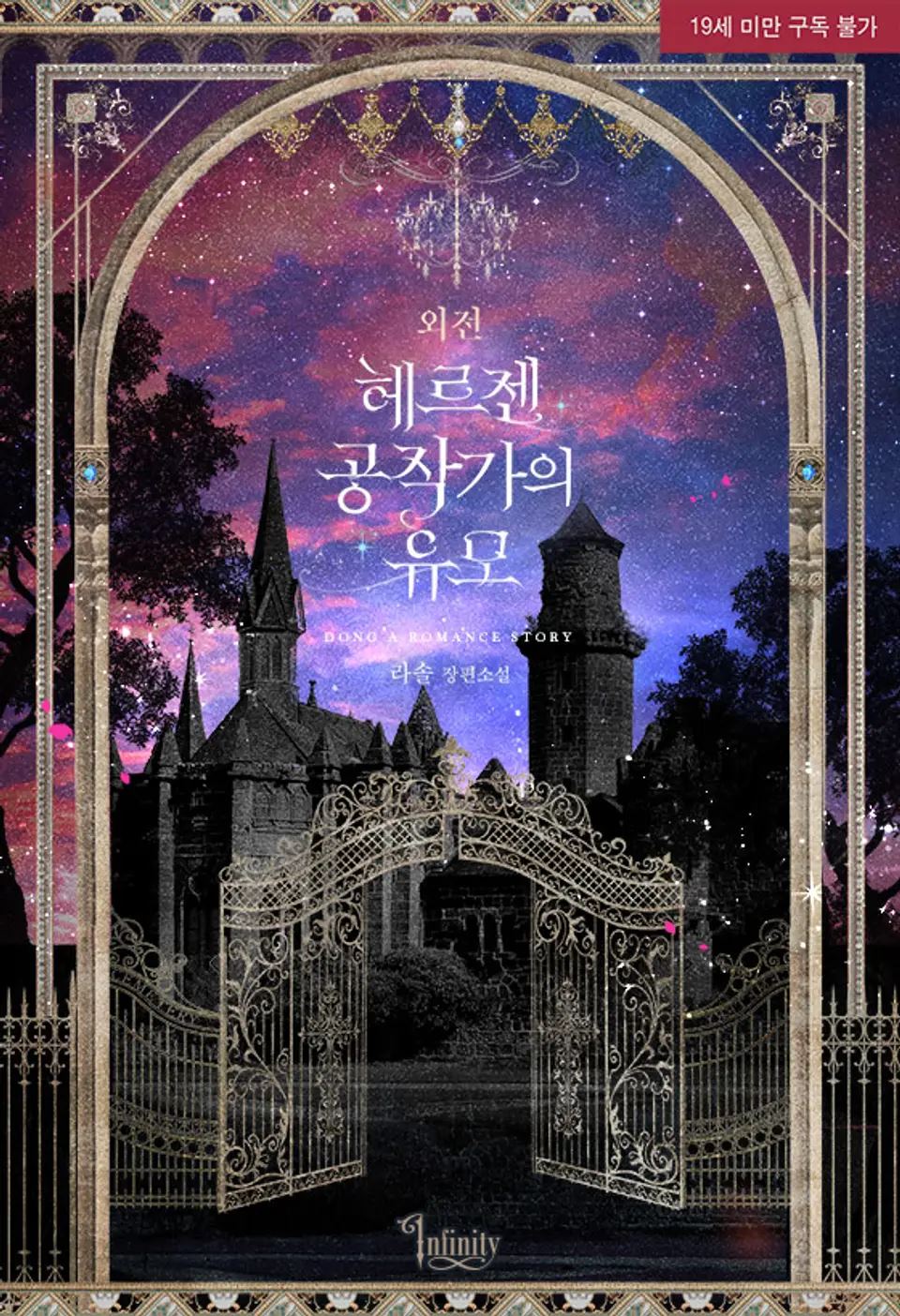
... Read More
Okay so let me just say—this opening hit me like a freight train. We open mid-chase, mid-labor, mid-everything. Evelyn is bleeding in a reed bed, can barely crawl, and there are GUNSHOTS behind her. Not swords, not hunting bows—GUNSHOTS. The author doesn't waste a single word setting this up; she just drops you into the nightmare and makes you swim. What I love is how the plot keeps layering revelations: first we learn she was driven out by her husband (the Marquis, cold bastard), then her baby died, then she stumbles into the most dangerous noble house in the kingdom. And the Duke? The one person who could protect her is also the man everyone fears. The irony is thick enough to cut with a knife. The pacing of reveals is masterful. We learn about Duke Carius Demik Herzen through Evelyn's memories of street rumors while she's eating soup—so natural, so unforced. Bodies that don't decay. Servants treated like flies. The only family permitted private soldiers. And yet here she is, safe inside those walls. The question hanging over everything is whether she's walked into protection or a different kind of death. I re-read that scene where the head maid explains why they need a wet nurse—the late Duchess died in childbirth, the previous nurse had an infectious disease, and the baby hasn't eaten in three days. The timing is almost too perfect, and Evelyn knows it. That suspicion is what keeps the plot moving even in quiet moments. One thing that genuinely surprised me: the author doesn't explain why Evelyn was driven out. Not yet. We know her husband sent people after her, that she's carrying a child that didn't survive, and that her status as a noblewoman is somehow compromised. But the actual crime? The reason? Still locked away. I want to rip the next chapter open. Also—Johanson's golden hair. Evelyn's dead child had the same trait. Is that coincidence or design? The author is playing with us, and I'm here for it.
... Read More
I literally gasped out loud when that line dropped. Let me just sit with this for a second. So we've been watching Evelyn since day one — this girl who came into the mansion like a bolt of lightning, who cleaned floors she'd never touched before, who treated the Duke with this strange mix of fear and defiance. And for a month she stayed in his bedroom, and now she's gone, and his entire world has tilted off its axis. When Hannah asks him bluntly, 'In what capacity are you looking for her? As a lover? A nanny? Or are you planning to take her as your mistress?' — I thought my phone might crack. That is such a Hannah move, just dropping the hammer with zero filter. And the Duke's response? 'I've regretted for a month not using force to keep her.' My heart actually stopped. This man is absolutely ruined for anyone else, and he knows it, and he's so exhaustedly honest about it. But the part that wrecked me was Evelyn's reaction. When Hannah mentions Herzen, Evelyn literally bursts into tears and shakes her head so fast I could feel it from here. She didn't just dislike it there — she was devastated. Whatever happened between her and the Duke in that bedroom, whatever she felt and then had to run from, it cut that deep. She's not running FROM him. She's running from the impossibility of what they had. And Hannah — bless her ancient, sharp-tongued soul — she sees all of it and says, 'Stay here, live with me, and grow old on the meager wages I can offer.' That is the most motherly thing I have ever read in this book. She doesn't push. She doesn't manipulate. She just opens her arms. I am so emotionally compromised right now.
... Read More
Okay so this whole dynamic between Carius and Evelyn is honestly making me physically tense just writing about it. Like, on the surface it reads as some dark romance trope, but the more I sit with it, the more I'm convinced the real story here is about power so thoroughly internalized that even tenderness feels like a weapon. The most chilling line for me is Evelyn thinking: "She was afraid of him, and even more so when he was kind." Think about that. She's not scared of being hurt—she's scared of wanting to be hurt. Of craving the very thing that could destroy her. That's such a psychologically specific kind of trauma response and the author writes it without ever stopping to explain it. And then there's the morning scene where Evelyn is trying to leave because she has to nurse Johanson, and Carius immediately pulls her back. He doesn't get angry—he just... uses her body. "If you're not wet... I might let you go." Evelyn's body betrays her and suddenly she's trapped by her own response. It's not just physical. It's psychological captivity. The line that broke me though was the ending: "Warmth in body temperature didn't necessarily equate to warmth in heart. One mustn't mistake physical tenderness on the bed for a sharing of hearts. She knew all this, yet… she didn't want to leave his arms that morning." She KNOWS. She knows exactly what's happening. And she goes anyway. What does that make her? What does that make us, reading this and keeping going? Also the way the text contrasts Evelyn's past with her former husband versus Carius—her former husband made her gag and scolded her, and now with Carius, despite everything, she's experiencing something she "never known before." That contrast is doing a LOT of heavy lifting in making this psychologically believable, even in fiction. She's not naive; she has a baseline to compare against. I don't know if I love or fear these two characters but I cannot stop thinking about them.
... Read More
I need to take a moment to appreciate Hannah because this woman is absolutely carrying the dialogue in this entire chapter and I am obsessed. 'If she was important enough for you to come personally, it's a pity. She has left.' That opening line. Just devastating. She doesn't flinch. She doesn't try to be polite. She looks this Duke in the eye — a man who could probably have her arrested for trespassing if he wanted to — and she lies to his face with the calm of a woman who has absolutely nothing to lose. And then later: 'A true man does not use force on a woman.' Which is both a genuine moral statement AND a brilliant tactical move, because she knows EXACTLY what she's doing. She's drawing a line he won't cross. The Duke's response — 'I've regretted for a month not using force to keep her' — is so uncomfortably honest that I wanted to throw my phone across the room. But what makes Hannah's voice so special is that she's not performing. She's an old woman who has survived everything this world can throw at her, and she's tired of nobles pretending they're better than everyone. When she says 'Hestinal left us the same way, didn't she?' to the Duke, she's not being rude — she's being historically accurate and the Duke can't even argue with it. The narrating voice itself is also doing interesting work. It stays close to multiple characters' internal states — we get Beth's confusion, Jupe's anxiety, Hannah's calculating warmth, the Duke's unraveling. But it never feels omniscient or detached. It's like we're hovering over their shoulders, catching fragments of everything. Also: 'Just like his father, grown up to match his looks.' I need this observation more than I need air.
... Read More
I need to talk about the subplot that's sneaking up on us. Everything in these chapters feels like it's building toward a bomb, and the detonation is literally a hair color. So here's the setup: Evelyn is the nanny for baby Johanson. Johanson has blonde hair. Evelyn is blonde. In the garden, a maid sees Johanson and mutters "Blonde?" like it's some kind of impossibility. Then Kevin the stablehand practically panics when Evelyn mentions the late Duchess might have been blonde—because she wasn't. The Duchess had black hair. Carius has black hair. Every past Duke has black hair, apparently. So. Who is Johanson's real father? The author is doing this masterful slow burn where the actual dramatic revelation hasn't happened yet, but every single detail has been planted. The portraits in the gallery hall. The rarity of black hair in this kingdom. The fact that Carius barely glanced at Johanson the night before but immediately seized Evelyn. And Evelyn's own guilt—"It was her own shame that had caused Johanson harm." I'm picking up on so many threads. The fact that Evelyn was sent to the servant's quarters after something happened with her former husband. The head maid who "knows everything yet knows nothing." The Duke himself who seems to know exactly how to manipulate every person in his household without raising his voice. What I love about this plotting is that the author trusts us to connect dots. There's no exposition dump about Johanson's parentage. We're getting it through gossip, overheard comments, and environmental details. The tension isn't in a big dramatic reveal—it's in the reading itself, in us realizing what we're seeing before the characters fully acknowledge it. And the chapter structure is doing something interesting too. Each section ends on a smaller revelation that points toward the bigger mystery. The bedroom scenes aren't just spice—they're worldbuilding for the power dynamics that make this secret possible.
... Read More
Okay so can we just talk about how the Duke's interaction with Evelyn completely flipped my brain on its head? From the moment he first sees her, there's this entire power dynamic playing out without a single word being said. He tells her not to greet him—then immediately demands to know who she is. Classic, right? But then the scene goes completely off the rails when he notices her exposed chest after nursing. The way the text describes his gaze just… lingering there… it's horrifying and mesmerizing at the same time. And what kills me is that Evelyn doesn't even have a real voice in this exchange. She stammers, she bows, she can barely speak. Every time she tries to leave or explain herself, he shuts it down. The moment where he touches her hair and then slowly traces down to her chest—I had to put the book down for a second. It's that combination of tenderness and absolute menace that makes their dynamic so electrically charged. But then there's Evelyn's backstory, which completely reframes everything. This woman has been through hell—abusive stepmother, a father who sold her off to an old lecherous marquis, a stillbirth, nearly murdered. She's survived literally everything life threw at her, and here she is, frozen and trembling before yet another powerful man. And yet—here's the thing that wrecked me—her body betrays her. She touches herself thinking about him. After everything she's been through, after the trauma of her first husband, she feels desire for THIS man who just terrified her half to death. That contradiction is everything. It makes me want to shake her and also hug her simultaneously. And don't even get me started on Kevin the stablehand. One tiny scene, one little interaction, and suddenly I'm like who is this guy and why do I care? He just shows up, block's her path, makes a joke about her milk supply—and somehow manages to be the most normal, warm interaction Evelyn has had in the entire chapter. I need to know more about him immediately. The contrast between his easy friendliness and the Duke's predatory intensity says so much about Evelyn's world. Who is actually protecting whom here? Because I have theories and they are messy.
... Read More
The stakes in this story are layered like an onion made of glass—every layer cuts you. On the surface: Evelyn is being hunted by her husband's men. She has no money, no allies, no child, and she's physically weakened from childbirth and trauma. If they catch her, what happens? We don't know, and that uncertainty is torture. But underneath that: she's now living in the most dangerous house in the kingdom, caring for a baby who is the last living remnant of a murdered Duchess. The previous wet nurse 'caught an infectious disease'—how convenient. How suspicious? Who really died, and why? The Duke is the central tension point. He's described as 'sensitive,' 'strict,' and 'not like the rumors suggest'—but the head maid's hesitation when explaining him tells a different story. The forbidden staircase, the strange smell, the bodies that don't decay. Every detail screams that this mansion is a trap wrapped in safety. Evelyn walks into it willingly because she has no choice—but will that choice cost her everything? What keeps me gripped is the escalating dread. Chapter by chapter, the author raises the temperature: first it's men with guns in the reeds, then it's whispers about the Duke's reputation, then it's the mystery of the late Duchess, then it's Evelyn's unprocessed grief colliding with her new role as mother to another woman's child, and finally—moonlight, shadows, and eyes watching her from behind a tree. Each conflict feeds the next. The external danger (her pursuers) merges with the internal danger (the mansion's secrets) and neither let up. I'm sweating just thinking about what happens next.
... Read More
I need to talk about Carius. I thought I understood him going into this, but these chapters completely dismantled my reading. On the surface he's the cold, imposing duke who occasionally shows Evelyn something almost tender, but underneath? He's built himself into this entire fortress of control. What struck me most is how his childhood shaped him. His father never loved his mother. His siblings kept dying. And when his mother finally snapped and hung herself at a banquet, the boy felt “so thoroughly steeped in misery that even this terrible demise could not devour him.” That sentence. That one sentence tells you everything about who Carius is now. He survived by becoming cold. He survived by turning grief into superiority. And then the inheritance piece hits. He didn't want to marry his cousin. He rebelled. His father actually died — literally from shock after Carius told him he hated him. Did Carius cause it? The text doesn't confirm that, but it sure feels like it. And then Hestina — his wife, his cousin again, trapped in the same system — comes to him pregnant with another man's child and he refuses to hold her. She dies giving birth to a blonde baby. A baby that isn't his. And he considered starving it. So here's the devastating part: the baby he kept alive is Johanson. The child he pretended to care about is the living proof of his wife's betrayal, the reminder of his father's sins, and the one thing he couldn't bring himself to destroy. He kept it close because of Evelyn, Kevin says, but I'm not so sure. Or maybe he kept it close FOR Evelyn while secretly resenting both of them. And Evelyn? She's falling for the warmth he deliberately shows her, not understanding it's calculated affection from a man who doesn't know how to be anything else. Their whole relationship is built on a foundation of secrets neither of them fully knows yet. When she finally learns what's in that locked room? That's when everything shatters. The power dynamic between them is terrifying in its precision. He holds all the cards. She thinks she's making choices, but she's always one step away from being discarded.
... Read More
'Let me suck on this again.' That's it. That's the sentence that wrecked me for three days straight. Not because it's explicitly sexual—though it absolutely is—but because of how casually devastating it is. He says it like he's ordering coffee, and she sits there trembling in cold bathwater like her entire nervous system just short-circuited. What gets me is Evelyn's internal response. The text says she hoped he would leave after tasting her, and instead he whispers that line and walks away without a smile. But then—here's the thing that made me sit up in bed at 2 AM—she doesn't just feel violated. She says directly: "Instead of feeling discomfort, Evelyn found her cheeks flushing and wetness forming between her legs every time she thought of it." This is such an honest, uncomfortable depiction of female desire that coexists with fear. The author doesn't give us a clean "she hated it" or "she loved it" resolution. It's both, simultaneously, and that ambiguity is what makes it so psychologically real. The masturbation scene that follows is honestly one of the most raw things I've read in this genre. Not because of explicitness—though it's present—but because of the emotional honesty. She's thinking of him. She named her own body's betrayal. "Those dark eyes naturally came to mind. And with them, she reached her climax." I literally gasped reading that. It's shameful, it's desperate, it's human. And then the Duke returns and the power dynamic shifts again. When he asks "Do you moan like this when feeding the child?" and she's sobbing denials while her body betrays her every time—he knows. He absolutely knows exactly what he's doing to her. The emotional complexity here is staggering.

Leave a comment

You must be logged in to leave comments. or
