The Monster’s Room - Reviews

The Monster’s Room
+Add to Custom List
Sort
Add review
... Read More
Okay so let me just say this: the reveal that the Iron Horse Knight isn't just a guy in armor riding a horse but literally a centaur-like being who MERGES with his steed? I SCREAMED. Like, I was reading this with my mouth open. The way the author slowly built toward it — first we see the helmet vanishing, then the armor reshaping, then that disgusting yet brilliant moment where he sinks his lower body into the horse's neck cavity — it was one of those reveals where everything clicks into place and you want to go back and re-read all the earlier clues. And the ring! "Dear My Lady" engraved on it? After everything that just happened? That juxtaposition hit me like a truck. It recontextualizes the entire encounter — this thing didn't just assault her, it courted her, however twisted that courtship is. The plot doesn't shy away from making us sit with that uncomfortable ambiguity. Is he a predator or a suitor? The story deliberately refuses to give us a clean answer, and honestly? That's what makes it stick in your brain. The mission structure itself is also brilliant — we're reading this as a Foundation report ("Case 7: People Beyond the CCTV") which frames the entire erotic horror as an anomaly to be documented. That clinical framing against the visceral content creates this bizarre emotional whiplash that I can't stop thinking about.
... Read More
The gramophone's voice is the most interesting dialogue choice in this entire passage and I need to discuss it at length. First, the formatting. Every line from the gramophone is in angle brackets: <"Astonishing, Delightful, Chilling!"> <"May I see your ticket, Lady?"> <"You're welcome!"> This visual distinction immediately signals that this isn't a normal character speaking. It's a recorded-seeming-but-actually-real-time voice, and the brackets make you feel like you're reading a script or a broadcast transcript. But here's what's brilliant — the gramophone voice has genuine personality. It's not just eerie; it's performative. Watch how it shifts tone: Polite host mode: <"May I see your ticket, Lady?"><"Inspection complete! Please come in!"> Genuine warmth: <"It's rare for someone, aside from young guests, to appreciate our performance so purely! I'm so pleased!"> Manipulative puppeteer: <"Let's provoke with those vulgar bodies to ensure selection.> The voice can be charming one moment and threatening the next, and it does both with equal enthusiasm. When it says <"Chilling"> as a standalone word after the music stops — that's a one-word line that carries more weight than entire paragraphs of description. Meanwhile, the stitched-mouth man never speaks for himself. His dialogue ONLY comes through the gramophone. His exaggerated bows and gestures are described narratively but his actual words are always mediated through that voice box. This creates this uncanny valley effect where you're never quite sure who or what is actually performing. And Marie's dialogue? Terse. Practical. "Wait a moment." "Down there." "I like being touched here." She doesn't waste words on this creature the way she might with a human. Her speech patterns shift depending on who she's talking to, which tells us everything about how used she is to dealing with the inhuman. The researcher dialogue is almost comically flat in comparison — short exchanges, emoji usage, dismissive one-liners. It works because it contrasts with the theatrical gramophone voice. Different worlds, different rhythms of speech.
... Read More
The sensory detail in this passage is INSANE. Let me just start with the opening image — the helmet's chin piece vanishing to reveal the knight's jawline. In one sentence, the author strips away the armored mystery and gives us something human, something handsome, which immediately makes everything that follows more disturbing because it's not just a monster anymore. The descriptions of the armored body, the horse, the way the knight's form shifts and merges — it all feels so tactile. I could feel the cold metal, the warm skin, the slickness, the weight. The line about the armor rippling "like scales" when he transforms is something I've been quoting to myself. And the white space after the chapter ends? The silence settling into the isolation chamber? It creates this eerie emptiness that contrasts so sharply with the chaos of what just happened. The world-building here is doing double duty — this is clearly part of some larger SCP-adjacent Foundation universe, with isolation doors and safety distances and broadcast messages. But the author never stops to explain the mechanics. We learn about the Foundation through Marie's frustration (waiting 30 minutes for the door to open? sounds familiar) rather than through exposition dumps. That's how you do worldbuilding. The ring description especially — sharp, armor-like, inscribed with those two words — it's such a perfect fusion of cold industrial aesthetic and romantic gesture. This world feels lived-in because every object tells a story.
... Read More
I'm still processing the ending. Like, emotionally. The part where she asks Spiegel, "Can you love me for the rest of my life?" and then... "I will love you too." I actually sat there staring at the screen. It's so tragic and beautiful and WRONG all at once. She spent her whole life being abandoned—biological parents too busy, adoptive family failing her, everyone leaving. So she makes a wish for love, and what does she get? Monsters. Obsessive, violent, cannibalistic monsters who will tear each other apart for her. But they're HER monsters. And she accepts them. That line, "As long as she wasn't alone," broke me. It's not a happy ending, but it's hers. She chose loneliness no more, even if the price is eternal entanglement with eldritch horrors. And Kevin? The guy who came in to kill her ends up respecting her humanity by calling her "Marie Garcia" instead of D-1705. Small moment, huge impact. He saw her. I'm cries.
... Read More
Andrew Garcia needs to be the blueprint for every unhinged guardian character written after this. The dialogue is razor-sharp because it's so economical. This guy says almost nothing, but every line is loaded: "Marry me." "What?" "Yes. Just until you turn eighteen." That's it. Three exchanges and you understand the entire power dynamic. He doesn't threaten explicitly — he just states his terms with this calm that's somehow more terrifying than any screaming would be. And then: "Wouldn't you be crazy too if I killed my brother's own family just to have you?" That line recontextualizes everything. It's not a threat; it's a boast disguised as a question. And Marie's response — she can barely remember — tells us more about her trauma than any internal monologue could. The SCP recruiter John Doe is a different kind of voice. Polite, almost cheerful, but operating on a completely different moral wavelength. "Wise choice!" he says after gassing her. The tonal whiplash between his enthusiasm and the violence of his actions is delicious. And Marie's internal voice — dry, sardonic, exhausted — carries the whole narrative. When she thinks "How considerate" about the screen directing her every move, that's not just wit; that's the voice of someone who has been managed her entire life and has exactly zero patience left for performative kindness. The narrator's voice itself is worth noting — detached, precise, almost clinical. It doesn't mourn Marie. It doesn't judge her. It just records, which somehow makes everything hit harder.
... Read More
Okay so let me just say—this plot has me absolutely shook. The way it opens is INSANE. Marie gets swallowed by this SCP and instead of just being eaten, she's getting... touched? In every way possible? And then she SURVIVES. Like, the very next beat she's lying in a tub and the thing just... puts her outside the containment door like "there you go, have a nice day." That's not a horror story, that's a rom-com plot twist. And then the Foundation's reaction! They don't care. They're like "oh you got assaulted by an anomalous entity? sure, here's your next assignment." Marie's entire arc in these chapters is her realizing she's not a person to them—she's D-1705. A number. A resource. But instead of breaking, she does the most Marie thing possible: she negotiates. "Then maybe you should kill me and find another test subject." — This line changed EVERYTHING. The screen goes silent. John Doe actually stops. That's the moment she realized her leverage. The jelly didn't eat her. She's still functional. That makes her valuable, and value means she can bargain. The subplot with the Fluffy Cotton Doll was such a tonal whiplash after the jelly scene. One minute you're reading sci-fi erotica horror, the next you're hugging a stuffed toy like it's a fucking therapy session. "Hug it once a day until desired." Desired what? I need context. But it worked as a pacing reset. The author knew we needed a breather. Five days later, Marie has apparently turned her weekly encounters into some kind of routine. She negotiated NO MELTING CLOTHES. She negotiated KISS FIRST. This woman is running a corporation and she's managing anomaly containment with the energy of someone who just closed a merger. The plot isn't about escaping—the plot is about figuring out how much power she can wring from being a lab rat who an SCP refuses to dissolve.
... Read More
The stakes in this chapter are fascinating because they operate on so many levels simultaneously. On the surface, Marie is a Foundation agent on a mission — the external conflict is clear: contain or understand an anomalous entity. But the REAL stakes are internal, psychological, and by far more interesting. What does Marie stand to lose? Her sanity, certainly. Her sense of reality — she literally denies it multiple times. Her bodily autonomy. But also, and this is the part that haunts me, her ability to categorize this experience. Is it violation? Is it encounter? Is it something else entirely? The text refuses to give her (or us) a clean framework. The Foundation creates physical stakes through the isolation chamber, the locked doors, the safety distance protocols. But the knight creates emotional and existential stakes. He's not trying to kill her — he's trying to CONNECT with her, in the only way he knows how. And that's infinitely more dangerous because now Marie has to process something that doesn't fit into any anomaly classification. "Somehow, she survived" — this line keeps playing in my head. Survived how? Physically, yes, her body is intact. But what about the part of her that believed in clean categories and clear threat assessments? That part didn't make it out unscathed. The ring at the end changes everything. It transforms the conflict from predator-prey into something way more complicated. What does she owe him now? What does HE owe her? The story leaves these questions hanging, and I am HERE for it.
... Read More
I need to talk about Kevin and Marie's reunion because WOW. The moment Kevin removes his goggles and mask and Marie says 'Kevin?'—that scene hit different. This is a guy she casually interacted with in E Section, someone she recognized as 'a soldier,' and now he's leading the very team coming to contain HER. The author does something so subtle here: Kevin doesn't treat her with hostility or even special warmth. He's professional, efficient, almost clinical. 'She's a target for containment.' That's it. No hesitation, no 'I'm sorry, Marie,' nothing. And yet, when he pushes her away gently at the end of their conversation, it reads as almost tender compared to how the other operatives move around her. Is he conflicted? Is he the good guy in a bad situation? Or is he just that competent at compartmentalization? Then there's Marie herself—her backstory is absolutely devastating. Five years old, parents killed by a thief who claimed it was 'out of love,' then adopted into a seemingly normal family, then ALL of them killed too, and her uncle Andrew, God, Andrew is the most tragic figure in this whole chapter. He loved her so painfully it drove him insane, he couldn't stop loving her despite wanting to kill her, and she just told him to die. And now she's learning that THIS is what she is—not just unlucky, but something fundamentally wrong with reality itself. The relationship between them and John Doe is the ghost that haunts everything. He brought her here. His project failed. And now his faction is protecting him while others want to destroy what he created. Marie is caught in a web of institutional politics and personal tragedy, and Kevin is just a node in that network trying to do his job.
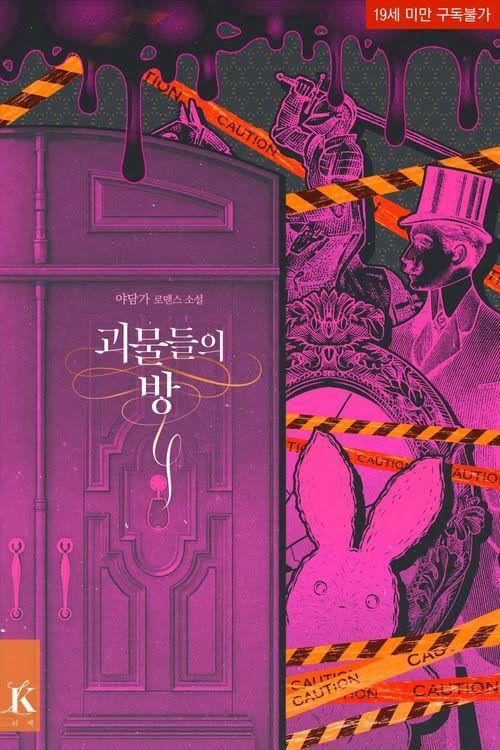
... Read More
Okay so let me just say this opening hit me like a truck. Marie Garcia gets adopted, her whole family gets wiped out, her creepy uncle tries to FORCE MARRY her, she accidentally shoots him, gets framed for EVERYTHING including his actual crimes, gets sentenced to death — and THEN the SCP Foundation shows up and offers her a deal that's literally "help us or die"? The plot compression here is insane. Like, we go from orphanage to death row to clandestine anomalous research facility in seven chapters? Who does this girl need to call to file a complaint? But what's actually impressive is how the narrative stakes keep escalating without feeling unearned. Each chapter hands her a worse scenario, but we understand WHY she accepts each one because we've seen how completely the world has failed her. The Andrew Garcia setup especially — he's introduced as this grotesque figure who proposes marriage to his underage niece while holding a gun, and the way the author doesn't soften him at all? Brutal. It makes Marie's desperation when the SCP recruiter approaches feel completely justified. She's not making choices; choices are making her. The structure of her first mission is also clever — five blacked-out SCP designations, we get zero context, just a vague warning about a bathtub entity. The reader is right there with her, trying to make sense of something the system keeps hiding. That ambiguity creates this constant low-level anxiety that never lets up. And the ending? She's in a tub, her suit is being erased, and the jelly is... doing things. Whatever comes next, I need to know.
... Read More
I have to take a moment to just Appreciate the writing in this section, specifically the dialogue. The gramophone and the marionette troupe leader have this absolutely chilling way of speaking—like a children's nursery rhyme that's been dragged through hell. 'You've come in before the theater even opened.' 'Such rudeness.' 'It only opens on Friday nights, so you must be careful!' It's delivered with this sing-song, musical quality that makes it infinitely worse than if they'd just been menacing. The contrast between the cheerful tone and the fact that they're systematically murdering a special ops team is one of the most effective horror techniques I've read in a while. And then the leader saying '' while casually dropping a severed head—that line alone is going to stay with me for weeks. Marie's dialogue, by contrast, is sparse and fragmented, which perfectly reflects her psychological state. She's mostly reacting, stammering, trying to assert her humanity ('I'm a person. I'm Marie Garcia. I'm twenty years old.') while simultaneously unravelling. The operative who stabs her muttering 'D, die. Die. Because of this, I, ahhh!'—that broken, half-formed desperation is so raw it hurts. Kevin's dialogue is all clipped commands and exposition, which tells you everything about what kind of person he is. He doesn't waste words. He doesn't perform emotion. He just... delivers information and gives orders. It makes you wonder if he even knows what he's feeling or if he's just too good at his job to allow himself that luxury.
... Read More
Okay, I need a minute. I thought I was reading a tactical infiltration story, and then BOOM—Marie is an SCP? Like, actually an anomalous entity? The pivot from "team gets slaughtered by monsters" to "wait, the girl they were sent to meet IS the monster" is chef's kiss. Absolutely brutal narrative misdirection. And then she just... negotiates? With Kevin? While surrounded by her "lovers" who are clearly Keter-class nightmares? The plot doesn't just twist, it does a full 180 and then some. I loved how her demand for John Doe's downfall wasn't asked as a plea but as a notification. "It wasn't a suggestion. It was a notification." Chilling. And then the ending? The anomalies turning on EACH other because they can't share her attention? That's not just plot progression, that's character-driven chaos. The story went from action-horror to psychological tragedy in three chapters. I'm not even mad. I'm just impressed.
... Read More
Okay so this entire batch is basically the calm before the storm for Marie, and then BAM everything explodes. The plot structure here is doing something really interesting—it starts with a personal confrontation (Kevin showing up to capture Marie), spirals into a massive action set piece through the F-49 sector, and then circles back to Marie at the critical moment when everything falls apart. I love how the author uses the team's advance through the SCP rooms as both actual plot progression AND a way to remind us why Marie matters. Every room they hit gets harder, every team member drops, and meanwhile Marie is just standing there learning the truth about herself. The pacing is genius in a twisted way—you're reading about flaming cotton dolls and jelly erasers and head-twisting mirror horrors, and then suddenly it's back to Marie being stabbed by her own teammate. The reveal about John Doe being the one who brought her into the Foundation, the failed Thaumiel project, the faction wars over what to do with her—it all slots together like puzzle pieces. And that ending? The plush cotton doll appearing beyond the containment door, the marionette leader malfunctioning, the air changing? I literally had to put the book down and stare at the wall. The plot has been building to this moment where Marie's anomaly reveals itself to everyone, and I am so ready for what happens next.

Leave a comment

You must be logged in to leave comments. or
