The Money Pit - Reviews

The Money Pit
+Add to Custom List
Sort
Add review
... Read More
"The leaves are very small." "..." "Do you like flowers, Mr. Cox?" I literally gasped. That pause after 'The leaves are very small'—the ellipsis is doing SO much work there. Selene is standing there in her thin cardigan smoking from a pipe and absolutely dismantling Theron's romantic performance with the verbal equivalent of a yawn. And then she hits him with the whole maid thing: 'the maids take care of the flowers, not me, so it's fine even if you don't teach me.' SHE'S RIGHT AND SHE KNOWS IT. Every time Theron thinks he's being smooth and romantic, Selene undercuts him with brutal honesty that strips away all the pretense. Even her lunch invitation is pure business—no pleasantries, no 'dear Mr. Cox,' just straight to the point with the time and place. That's such a character-revealing detail. Meanwhile Theron's dialogue is all over the place—he's constantly performing, crafting the right words, rehearsing confessions in his head. He even admits he used the piano as a 'shallow trick.' His voice is that of a man who's always two steps behind his own impulses. And the narration itself? Sometimes it dips into this really observant, almost clinical mode when describing Selene—the silk gloves, the pipe smoke, the 'strange atmosphere just by standing still'—and then it completely loses composure when Theron starts fantasizing about her. The author's voice shifts depending on whose head we're in, and honestly? It works beautifully. Selene's silence speaks louder than Theron's speeches every time.
... Read More
The central metaphor here is SO obvious and I mean that in the best way possible. Selene is a pianist trying to understand love the way she understands music—through technique, observation, practice. Not through feeling it directly. There's something both beautiful and heartbreaking about that approach. Theron literally tells her: "You need to experience various emotions to express the sound richly." He's basically offering himself as a case study. A living, breathing emotional instrument for her to study. It's the most romantic and most clinical proposition ever. The recurring motif of stones—Selene calling Theron a "handsome stone"—is doing heavy lifting here. Stones are beautiful to look at but cold to the touch. They don't change. They don't respond. But Selene is slowly realizing that even stones can crack if you press long enough. And Evelyn's entire speech about erotic love vs practical love—it's almost like she's reading from a different genre than Selene lives in. Evelyn understands love as fire and madness. Selene understands it as... data collection. The gap between them isn't just personality, it's fundamentally different ways of experiencing the world. The image of wiping your mouth and throwing away a napkin—that's Selene's emotional philosophy in one simile. Efficient. Temporary. Clean. No mess left behind. But is that really living?
... Read More
I keep coming back to this one moment where Theron's secretary, Gary, hands him a report that's basically blank except for two useless facts. A monthly museum visit and a fondness for moles. The stakes have never been clearer: Theron walked into this situation thinking he was the predator, the smooth-talking connoisseur of women, and Selene is already dismantling his entire framework before he's even begun. But here's what makes the conflict so thick—you can practically feel it pressing against your ribs as you read. Theron is desperate for this to work. Not just because of the money (though the 100,000 pounds figure keeps floating around like a phantom limb), but because his pride is tied up in winning. Every time Selene does something unpredictable—grabbing his wrist, pressing against him, then immediately dismissing it—he stumbles. The reader is left hanging on whether he'll recover or fold entirely. The escalating tension hits peak comedy-drama when he's trying to confess his 'sincere' feelings and momentarily forgets whether her earrings were pearl or something else. He's out here delivering some poetic 'I fell in love at first sight' speech and he can't even remember the jewelry she wore. AND SHE NOTICES NOTHING. Of course she doesn't. She's already planning the next meeting like he's a recurring appointment on her calendar. The stakes keep climbing: will he crack under her emotional immovability? Will she actually care about him, or is he just another notch? And most importantly—what happens when she finally decides to stop playing harmless and reveals what she's really up to? Because I'm telling you, this woman is NOT as simple as a duke's daughter who likes moles.
... Read More
Okay so the whole reception sequence is basically a masterclass in escalating tension wrapped in high society glitter. You've got Theron asking Selene to dance—fine, expected, the tension is already thick enough to cut with a knife—and then the dance itself where he's all weirdly formal at first, like a stiff wooden robot, and then suddenly he's pulling her in close and doing those turns that are clearly meant to say something without actually saying it. And then. THEN. He goes and kneels in front of her with a bouquet like some kind of romantic lead who somehow wandered into the wrong genre. But here's the thing that actually got me: Selene doesn't just accept it emotionally. She does the math. She thinks, okay, if I take this bouquet, other men will leave me alone, I can go back to practicing piano in peace. That is such a Selene move. It's not rejection, it's not acceptance, it's tactical compliance with a side of emotional self-preservation. And then she just walks away saying 'the dance was enjoyable' like a polite NPC who just finished her quest dialogue. Theron is left standing there. The crowd is buzzing. And she's already gone. What a power move or what a tragedy, depending on how you look at it. The chapter then pivots so sharply from that public spectacle to this quiet scene with Gwendolyn bringing scones that it almost catches you off guard—which I think is exactly what the author wanted. The big dramatic gesture on the outside, the hollow ache on the inside. Classic misdirection, and I ate it up.
... Read More
There are so many layers beneath the surface of this chapter that I keep finding new ones. Let me try to unpack some of the symbolism and thematic threads that are running through. The title reference to 'The Forbidden Fruit' is doing enormous work here. Lysander's postcard warns Theron that this fruit 'can kill you if you eat it,' and what's fascinating is that the warning comes too late. Theron has already taken a bite — he's already fallen for someone who could destroy him, and he's not even aware that it's happening. The forbidden fruit metaphor works on multiple levels: Selene as dangerous temptation, as something beautiful that kills you, as knowledge that changes you irrevocably. But also — and this is the part that really got me — the fruit is FORBIDDEN for a reason. Not because it's bad, but because it's powerful. Selene isn't dangerous because she's evil; she's dangerous because she sees through everyone. She's the truth-teller in a world of performers. The piano is another massive symbol, and it's tied directly to grief. Selene didn't choose the piano — the piano chose her, at the moment of her greatest loss. Her parents died 'side by side' in the war, and overnight she went from having everything to having nothing. The piano became her voice when she couldn't speak, her tears when she couldn't cry. Gwendolyn's words to her — 'If you can't cry, why don't you try playing this piano? These keys will cry out for you' — are one of the most heartbreaking lines in the entire book. This is a child given an instrument to process trauma she doesn't have the vocabulary to name. The critic's review adds another layer to this symbolism. He says Selene plays with 'precision' but lacks 'expression' — that she 'recites rigid letters' instead of singing. But isn't this exactly what the piano has become for her? A tool for control, a way to process emotion without actually feeling it? She's been using music to cry for herself, but she's never learned to cry OUT. The precision is armor. The lack of expression isn't a technical failure — it's emotional self-preservation. And then there's the fountain itself, which is such a rich symbol. Water as cleansing, as drowning, as emotional release. Theron falls into the fountain literally, but he's also being submerged by truth — by the realization that everything he thought he knew about this woman was wrong. The fountain is both punishment and baptism. After this scene, he can't go back to who he was. The 'gentle heat' that replaces his shame is the beginning of something he can't yet name. The pearl earrings are another symbol I can't stop thinking about. They represent everything Theron got wrong — not just a factual error, but a fundamental misreading of who Selene is. Pearl earrings suggest delicacy, tradition, femininity — things Selene actively rejects. The fact that he imagined them on her says more about HIS fantasies than about HER identity. He wanted her to fit a certain archetype, and when she didn't, he just kept the fantasy and dropped the details. The contrast between the public world and the private world runs through everything here. Theron performs for Selene at the fountain; Selene performs for the world as the perfect pianess. But their private selves are completely different — Theron, alone at midnight, feeling something genuine for the first time; Selene, alone in her piano room, terrified of mediocrity. The public personas are shells. The private moments are where the real story lives. I'm also struck by the theme of TIME — waiting, duration, anticipation. Selene waits a month for a magazine. Theron waits for the weekend. The critique warns that if her problems persist, 'her heyday may end here.' Everything in this book is about moments that haven't happened yet, futures that might unfold. The anxiety of potential loss — of parents, of reputation, of love — is what drives both characters. The incomplete ending — 'the piano room transformed in' — feels like the perfect note to end on. Transformation is happening. It's just not finished yet. And that's where we are with these characters: suspended in the middle of becoming someone new.
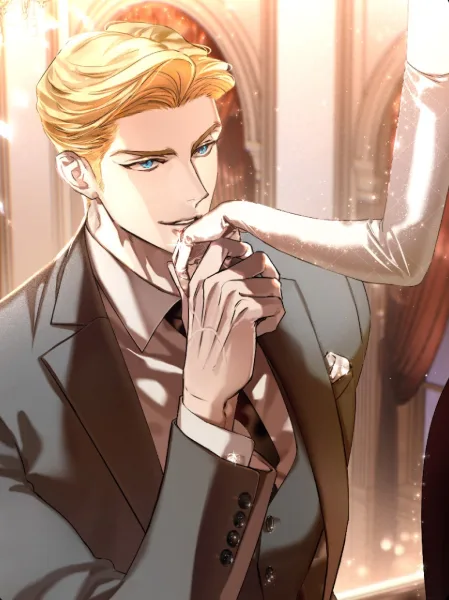
... Read More
There's a butterfly in this chapter and somehow it became the most important thing that happened all day. Let me explain. Selene spots a butterfly with peculiar coloring, tells Theron to walk faster, presses her body against his—and then the butterfly is gone and she's completely unfazed. Meanwhile Theron is over here having an existential crisis about his own libido and the butterfly has already flown away, unnoticed by both of them except in passing. It's such a perfect metaphor for everything going on here. The forbidden fruit nickname echoes through the text like a dark undertow. What is she, exactly? A temptation? A puzzle? A crime scene? Lysander knew something about her, and whatever it was, it made him call her that. Theron has no idea what he's walking into. And then there's the time itself—4 PM, neither lunch nor tea, deliberately ambiguous. She's setting a meeting that exists outside normal social conventions, a liminal space where rules don't quite apply. It's almost ritualistic. The garden with the fountain becomes another symbolic threshold: water, movement, beauty that conceals depth. The most striking symbol though is probably her indifference itself. Throughout these chapters, everything Theron does is performative—his smiles, his gentlemanly posture, his carefully constructed confession. Selene's lack of reaction is its own language, and it keeps translating his efforts into something meaningless. The real tragedy isn't that she doesn't feel anything for him yet. It's that he's falling for someone who may never learn his name.
... Read More
This chapter threw me right in at the deep end—literally. The whole water trauma thing is such a juicy plot device. We get this quick glimpse of Theron, who's supposedly got no fear in the world, freezing up at the sight of deep water. And then he still tries to jump in to save Evelyn. That's a character-defining moment wrapped up in five lines, and it works. It immediately creates a hole in the plot armor we'd otherwise assume he has. He's this polished, perfect guy, but here's a crack. Then right after, Selene notices his smile at Evelyn feels off. That's the second beat. The plot isn't just about him being a schemer; it's about the disconnect between his outward performance and his internal reality. And the dinner scene? Masterclass in using side characters to reveal the main plot. He's not just flirting with Evelyn; he's conducting a symphony, pulling strings for Rupert, and positioning himself as a helpful, connected asset. Every line of dialogue at that table is a move on a chessboard. The author isn't just showing us he's a strategist; he's making us watch him play the game in real-time. The flashback to the party on the balcony is a brilliant structural choice. It doesn't just give us backstory; it reframes everything. The “Forbidden Fruit” nickname, Lysander's cynical push, Theron's blunt “she's the only money pit that can save me.” It turns the present-day interactions into a high-stakes performance. We're not watching a man fall in love; we're watching a man execute a plan. And the final question hanging over Selene's head—“Why did the party end so early?”—is a perfect little hook. It suggests the surface-level charm is a facade, and there's a raw, unvarnished truth he's only showing now. The plot is tightly wound: every action has a motive, every smile a calculation, and every quiet moment a potential rupture.
... Read More
I have never wanted to be Selene Ashcombe more than I do in this chapter. The woman speaks and I am BELONGING to her. Let me start with Theron's dialogue because it's fascinating in its craftsmanship — or lack thereof. He's a LIE detector who can't tell his own lies. Listen to this: 'That day, you yourself, Miss Selene, were engraved in my eyes. Not just your face, but your entire appearance standing under the chandelier, and the rich scent of roses…' This sounds romantic IF you don't actually know the person it's describing. It's generic romancer boilerplate — chandelier, roses, engraved in my eyes. It's the kind of speech someone gives when they've never really looked at anyone. And the tragedy (and comedy) is that Theron DELIVERS it with absolute conviction. He believes his own performance until the moment Selene dismantles it. His internal voice is equally entertaining. 'I thought it was going too easily.' 'This woman knew how to wield her tongue like a fist.' These parenthetical thoughts show us a man who is smart enough to recognize when he's out of his depth but too arrogant to step back. His dialogue with Selene is a series of increasingly desperate attempts to maintain control, and each one fails more spectacularly than the last. But Selene — oh, Selene. When she opens her mouth, everything changes. 'You're blabbering about being in love with me, but you don't remember a single thing correctly.' BLABBERING. She doesn't say 'you're lying' or 'you don't mean it.' She reduces his entire romantic declaration to THE SOUND OF NOISE. This is a woman who weaponizes precision. Her enumeration of his errors is devastating in its clinical detail: no pearl earrings, no chandelier, no roses (she despises perfume). Each correction is a small death for Theron's fantasy. And her voice doesn't waver. There's no anger in the delivery — just cold, surgical fact. Then she UNLOADS: 'Two-faced hypocrites who are controlled by their lower body but pretend not to be, evil cancers that eat away at society. Narcissists who think they're the best in the world.' This is not a woman rejecting a man. This is a woman giving a TED TALK on male toxicity and using this specific man as her case study. The rhythm of it — three charges, escalating in severity, building to that final 'narcissist' like a judge's sentence. And she delivers it all while he's SITTING IN HER FOUNTAIN. What I love most is how Selene's voice changes when she's alone. The transition from the fountain scene to the piano room is a transition from public performance to private vulnerability, and the dialogue reflects this completely. With Gwendolyn, she's quiet. 'Did it arrive?' Four words. No ornamentation, no performance. This is the real Selene — the one who waits a month for a magazine, who is anxious, who cares deeply about her craft. Gwendolyn's voice is its own thing — warm, grandmotherly, knowing. 'Must you read it…?' 'There are no geniuses who are perfected at once.' She's the emotional anchor, the voice of reason and comfort. But even her dialogue is careful — she places a hand on Selene's shoulder rather than saying more, sensing when words would be useless. Theron's internal monologue at the end is where his voice really cracks. 'So that's her true self. Then wouldn't this be the real beginning?' This is the first time we hear him without the performance, and it's raw. The 'gentle heat' he feels — that's not manipulation anymore. That's something he can't name, and the text refuses to give him words for it. The dialogue in this section does so much heavy lifting. Every conversation reveals character. Every silence speaks volumes. And the contrast between what these two say out loud versus what they're thinking internally is where the real drama lives.
... Read More
I need to talk about hands in this chapter because they are EVERYWHERE. Theron's hand is described as firm, veins prominent, knuckles impressive. Selene's hands are protected by gloves except when she plays piano — the one time she allows herself to be vulnerable, to make contact with something real. When she asks to touch his hand, it's almost like she's asking to play a piece she's never heard. There's a parallel between music and human connection here that I think the author is building toward. The piano sonnet she's working on is called "The Age of Love and Romance" and she can't imagine the narrator properly until she physically connects with Theron. What does that mean? That love can't be understood through observation alone? That you have to touch, to feel, to risk being hurt? Then there's the car accident — a moment of violence that accidentally creates intimacy. Theron wraps his arms around her to save her, and later she touches his hand to understand him. Both moments involve physical contact born from something larger than romance. The old him — the smiling, polite, controlled Theron — couldn't survive that car crash. The real him came out. Selene called him two-faced before, but maybe the truth is he's just guarded. Maybe every man she's known has worn a mask, and she's only now meeting someone whose mask slipped in front of her.
... Read More
Let's talk about how Selene has absolutely no escape from any of this. Her cousin basically holds her hostage at this launching ceremony with the grandmother card—oh you don't want to disappoint grandma? Too bad, sit there and be pleasant. And then Theron Cox walks into her SHADOW CORNER on the ship like it's his home. She's hiding to avoid people, he just... appears. Of course he does. The man has zero concept of personal boundaries and honestly I'm here for it because the tension is UNREAL. The stakes here are so interesting on multiple levels. Socially, if Selene keeps being rude to Theron, rumors will spread and her reputation tanks. Personally, she's trying to protect her dream of being a pianist and not get distracted. And there's this whole layer about her grandmother and family expectations that she's constantly navigating. But the best part? Theron essentially offers to be her friend as a backup plan. Like he's saying 'fine, I'll wait.' That's either genuinely sweet or manipulative and I can't tell which. He even says 'you can use me however you want' which honestly sounds like something only a very confident or very manipulative person would say. Selene's internal debate about whether keeping him around could actually help her piano skills is the most practical romance decision I've ever read. She's literally considering dating a man she calls a 'handsome stone' for professional development.
... Read More
The whole flower motif in this section is giving me chills and I need to unpack it. Theron sends flowers as an excuse to see Selene. She says they withered and were thrown away. He sends MORE flowers. She says her maids handle it and she'll just buy new ones when the old ones die. It's like... she's holding up a mirror to his entire approach. His gestures are replaceable. His grand romantic acts? They wilt just like any cut flower. The flowers were never about HER—they were about HIS need to perform devotion. And yet Theron keeps going back to this language of flowers because it's the only vocabulary he has. There's also the fountain incident mentioned repeatedly—that moment where he was pushed into the water, humiliated, and now he's coming back like nothing happened. The mansion itself feels like a character. Theron walks through it and immediately notices the 'elegance and refinement that no riff-raff could imitate,' the paintings, the old ornaments. He's acutely aware of the class gap. Selene represents everything he can't buy, everything he can't orchestrate. And then there's the pipe—the cigarette smoke billowing from it, the way she casually stubs it out and moves on. It's such a decadent, almost dangerous image. A noblewoman smoking privately on a balcony, untouched by the social expectations that bind her. The rose perfume mention early on ties back to this whole floral symbolism, but Selene's version of a rose is thorny, cold, and entirely on her own terms. Not the romantic cliché Theron is reaching for.
... Read More
Okay so this whole chapter is basically a masterclass in how to build tension without it ever feeling forced. Let me just say — the moment with the car was genuinely shocking. One second they're having this polite little chat at the museum, the next Theron is shoving Selene out of the way like he's some kind of action hero and then absolutely LOSING IT toward the driver. And Selene's reaction? She doesn't just let it roll. She says straight up that she was surprised — she called him two-faced earlier in the book, and now she's literally seeing a completely different side of him in real time. What I love about the structure here is how the author uses the museum setting almost as a pressure cooker. They go in, they're a little off-kilter because of the accident, they sit down to rest, and then — BAM — the hand-touching scene happens. It's like the whole chapter is one long rising action that leads to this tiny but enormous moment of physical contact that changes everything between them. And the piano piece at the end? Selene realizes her playing improved because she finally had a concrete image for the narrator of her sonnet. That's such a clever callback to how the chapter started — she went in looking for piano inspiration and ended up finding something way more complicated than that. The plot threads are tying together in ways that feel earned, not convenient.

Leave a comment

You must be logged in to leave comments. or
