The Money Pit - Reviews

The Money Pit
+Add to Custom List
Sort
Add review
... Read More
There are some scenes in this book that just LINGER in your mind, and the fountain scene is definitely one of them. Let me tell you why this particular moment is so Visually striking. The setting opens with this impossibly clear sky — the text specifically mentions it might seem clear because of his mood, but really 'the weather didn't matter to him at all.' This is such a Theron detail. He's so consumed by his own scheme that the external world is just background noise. But the narrative still takes time to paint it: wind in his hair, hand out the car window, whistling. There's a whole cinematic sequence here of a man who feels like the protagonist of his own life, arriving at the grand estate like he's walking into his happily ever after. Then the fountain appears. The angel statue spouting water, described as looking 'particularly holy' — which the narration immediately undercuts by noting Theron doesn't believe in God and feels no guilt. The juxtaposition of the sacred imagery with the profane deception is chef's kiss. This is a ducal family fountain, historic, ancient, witnessing whatever unfolds. And then — SPLASH. Theron goes in. The water that was supposed to be atmospheric decoration becomes the instrument of his humiliation. I keep coming back to the water imagery in this section. The fountain, the drowning, the 'tidal wave of emotions' that killed Selene's parents, the piano keys that 'cry' — water is clearly a motif here. It represents both destruction and release. Theron is literally submerged by Selene's truth. Selene's trauma is described as a flood she couldn't swim through. And the piano? It's her life raft. The transition to the piano room scene creates such a different atmosphere. Where the fountain scene is bright, outdoor, chaotic and loud (splashing, shouting, insults flying), the piano room is private, indoor, and suffocatingly quiet. Selene is alone with Gwendolyn, turning pages of a music journal, and the tension comes from silence and expectation rather than from conflict. The critic's words are devastating precisely because they're written in calm, clinical language — 'it seemed as if she were reciting rigid letters' — the opposite of Selene's volcanic outburst by the fountain. The description of the piano room itself is sparse but evocative. It's where she spent her days, her refuge, her prison. When the memory surfaces of her parents dying and the piano becoming meaningful — the text says 'the piano room, where she was alone, transformed' — and then it cuts off mid-transformation. That fragment is doing so much work. The room transforms from a space of grief into something else, but we don't get to see what it becomes. The incompleteness mirrors Selene's own emotional incompleteness — she started transforming, started finding her voice through music, but we don't know if she finished. There's also this incredible sensory detail about the music journal arriving after a month of waiting, imported from abroad. The Kingdom of Velora has its own publishing world with its own critics (Jean Gabin, apparently terrifying). The fact that Selene can't get this journal locally tells us something about her isolation — she's cut off from the broader musical world, dependent on imports, waiting. Her entire existence is measured in waits: waiting for reviews, waiting for competitions, waiting to feel something she can't name. The contrast between these two scenes — the violent public confrontation and the quiet private vulnerability — creates this incredible emotional whiplash that keeps the whole section alive. One moment you're laughing at Theron in the fountain, the next you're aching for this girl who doesn't know how to cry.
... Read More
I need to talk about how the author structures these chapters because the pacing is NEATLY tuned. We start in Selene's POV getting Gwendolyn's letter, then immediately cut to Theron waiting—'A week and three days.' That specific detail! It's such a small thing but it immediately tells you everything about his impatience and obsession without any exposition dump. Then we get his internal monologue about the dance, about how he noticed 'the idiots who couldn't take their eyes off her,' and THEN the hospital call drops in like a ton of bricks. One second he's scheming romantic coincidences, the next he's dealing with his wife's worsening seizures. The author just... switches gears and it's jarring in the best way. It reminds you that this isn't just a romance—there's a whole life happening outside the love triangle. And then the lunch scene! Selene stubbing out her cigarette and just moving on from that 'I'll buy new flowers' comment like it was nothing. Theron missing the timing to ask what she meant. That's masterful tension-building through omission. The author knows exactly when to give you information and when to withhold it. My only complaint—if there IS one—is that some of Theron's internal monologues run a bit long. I found myself wanting to skip ahead to see what Selene would say next. But then again, maybe that's intentional? Making us feel his restless anxiety?
... Read More
Okay, so this section is basically the moment the whole delicate house of cards Theron built comes crashing down, and honestly it is SO satisfying to watch. Let me break down why this works so well structurally. First, we have Theron's entire internal monologue at the beginning — the little scheming, the planning his approach, the way he prepares his gentle gentleman routine. The author spends real time here building up his confidence, making us think this is going to go smoothly. And then—splash. Selene literally throws him into the fountain. What a perfect physical manifestation of the entire dynamic: he thinks he's in control, and she reminds him that she can dunk him anytime she wants. But here's what I really love about the structure of this scene: Selene doesn't just reject him — she REJECTS HIM WITH EVIDENCE. Every single detail he got wrong about their first meeting, she corrects him on. The pearl earrings he remembered? Wrong. The chandelier? He made that up. The rose scent? She despises perfume. This isn't just a romantic rejection — it's a forensic dismantling of his entire narrative. She's showing him that every word he said was a lie, and she knows exactly which parts because she was actually paying attention while he was busy performing. Then the transition to her backstory hits like a freight train. One second she's being viciously brilliant at tearing apart his act, and the next we're pulled back to the piano competition critique, and suddenly everything about her makes more sense. The coldness, the precision, the way she controls everything — it's not just personality, it's survival. Her parents died, her nanny gave her the piano as an emotional crutch, and now she's channeling everything into becoming a perfect pianist because that's the one thing in her life she can actually control. The parallel editing between these two timelines is masterful. We see Theron getting emotionally wrecked in the present, then we cut to Selene receiving criticism about her playing, and suddenly we're understanding WHY she is who she is. The critique says she plays with technical perfection but lacks expression — that she recites "rigid letters" instead of singing. And I couldn't help but think: isn't that EXACTLY what's happening in her relationship with Theron right now? She's playing a role, performing the cold duchess, reciting rigid letters instead of letting herself feel anything. The ending of this section is haunting — "the piano room transformed in" and then it cuts off. The incomplete sentence feels deliberate, like Selene's emotions are about to break through and the narrator can't quite contain them yet. This plot has so many layers happening simultaneously: the romantic deception, the social climbing, the grief, the ambition, the class dynamics. And it's all woven together so tightly that every detail matters. The pearl earrings aren't just a mistake Theron made — they're evidence that he was looking at someone else entirely, or fabricating the whole thing. The fountain scene isn't just funny physical comedy — it's the moment his performance collapses under the weight of his own lies. I'm genuinely invested in what happens next. Both of these people are hiding something massive from each other, and the reader knows it. That dramatic irony is delicious.
... Read More
Everyone's talking about Theron's flowers and the kneeling and all that surface-level romance drama but can we please talk about what's actually happening underneath? Because the real conflict in this chapter isn't whether Selene will accept Theron or not. It's that Gwendolyn drops this line like it's nothing: 'You're just afraid.' And it hits so hard because it's true. Selene pushed everyone away after her grandparents died. She turned to the piano because the piano doesn't leave. It's predictable. It doesn't betray you. But here's the brutal irony—the piano piece she chose for the competition is based on a sonnet about love and romance, about情感, and she literally cannot access it. She can't play what she can't feel. So what are the stakes here? If she can't break through her own emotional armor, she's going to win every technical competition in the world and still sound like a beautifully tuned music box. Empty. And Theron, for all his flashy public gesturing, is basically holding up a mirror saying 'feel something, anything.' The stakes aren't about romance. They're about whether Selene can become a real artist instead of a perfect machine. That scene where Gwendolyn says 'you need empathy and understanding to persuade people' and Selene just sits there poking at her scone because she genuinely doesn't know if she can find someone who makes her feel anything—that's the moment the whole book's central question crystallizes. Can someone crack her open? Or is she destined to be brilliant and frozen forever?
... Read More
I need to talk about the dialogue in this chapter because the subtext-to-text ratio is absolutely insane. Every conversation between Selene and Theron on that dance floor reads like two people speaking different languages while pretending they're having the same conversation. He says 'I was worried you might be uncomfortable' and what he actually means is I'm nervous too and I don't know how to do this. She says 'This is how you're supposed to waltz' and what she means is stop making this weird and just dance like a normal person. And then he says 'It is my fault as an escort for making my partner sleepy because of that consideration' which is such a formally wound-up way of saying I backed off too much and now I'm regretting it. The man speaks in proper sentences like he's taking dictation for Parliament. Meanwhile Gwendolyn comes in and immediately cuts through all the nonsense with 'You're just afraid.' Three words. That's it. No ornamentation, no dancing around it. The contrast between Theron's elaborate verbal gymnastics and Gwendolyn's blunt surgical precision is honestly one of the best dialogue dynamics I've read in a while. And Selene's responses—'Not bad.' 'The dance was enjoyable.' 'I'll gratefully accept the bouquet.'—these are the verbal equivalent of a smile that doesn't reach her eyes. She's always performing, even when she's just answering a simple question. The author's voice in the narrative descriptions is also doing a lot of work here. Lines like 'his hand was wrapped around Selene's waist in an awkward manner' and 'the shape of his tense eyebrows made him look slightly displeased' are the narrative equivalent of a camera zooming in on micro-expressions. The writing trusts you to read between the lines instead of spelling everything out.
... Read More
Let me just say the pacing of this chapter is chef's kiss. The author takes the dance scene and stretches it out over roughly three or four thousand words of actual prose but it doesn't feel slow at all because every paragraph is a tiny pivot—Theron steps back, then pulls her in, then gets stiff again, then whispers in her ear, then the music builds and the turns get faster and suddenly they're pressed together and Selene's brain is short-circuiting and the paragraph ends and you just HAVE to keep reading. The waltz becomes this perfect metaphor for their entire relationship: close but not close enough, moving together but each person heading somewhere different, full of rules and formality masking something raw underneath. And then BOOM—public confession. The pacing accelerates again, the crowd becomes a character, the flowers appear out of nowhere like some kind of romantic grenade, and then just when you think it's going to tip into full melodrama, Selene deflects with that devastatingly casual 'the dance was enjoyable' and exits stage left. The deceleration after that is genius. From the loudest possible moment in the entire chapter to absolute silence—Selene alone at her piano, the sound of a knock on the door, Gwendolyn entering with scones. The sensory shift from the ballroom's noise and lights to the buttery smell of baked goods and tea is so deliberate it practically glows. You can feel the chapter exhaling. And then Gwendolyn drops the emotional bomb at the end and the chapter closes on Selene's unresolved inner conflict instead of any kind of tidy conclusion. No cliffhanger, no big statement, just her sitting there with a half-eaten scone and a question she can't answer. Perfect. Just perfect.
... Read More
The atmospheric details in this chapter are what make it stick with me. Let me paint the scene: it's getting close to summer, humid enough that couples walking arm-in-arm seem almost unbearable, and Selene's in a car watching the capital city of Cantora blur past. The world feels lived-in — people don't actually visit art museums anymore because everything's about money and flash. This tiny detail tells you so much about the society they live in without the author ever stopping to explain it. Then there's the museum itself. Weekday, not crowded, paintings that aren't in the current Art Deco or Futurism trend. Selene sees it as a strength — she doesn't follow trends, she finds inspiration everywhere. But Theron can't focus. His hands keep clenching and unclenching. He's physically present but mentally still recovering from the near-accident. The rest area in the corner of the museum — that's where everything shifts. He leans against the wall, buttons parting, chest rising and falling, and Selene notices. Really notices. The lighting, the intimacy of the space, the way her own curiosity overrides years of emotional caution. And then the sunset at the end, her closing her eyes and feeling the wind. It's not romantic in a cheesy way. It's quiet. It's real. It's the kind of moment that sits in your chest long after you've turned the page.
... Read More
There's something almost cinematic about how this chapter constructs its spaces. Let me start with the piano room at the Ashcombe ducal estate. The text opens with us hearing piano music drifting through closed doors, and that acoustic detail does more worldbuilding than paragraphs of description ever could. Selene's world is one of locked doors and muffled sound. She's playing for an audience of one, or maybe for no one at all. When Evelyn bursts in, the contrast is immediate—the music stops, the door opens, and suddenly there's cigarette smoke, casual intrusion, the collision of two different worlds. Then cut to Colonel Ashcombe's private residence. Smoke fills the drawing-room. Cigars, ashtrays, the crackle of conversation. It's a man's space—heavy furniture, expensive habits, the kind of room where deals are made and information is traded. Theron declines the cigar. That small refusal tells us everything about his current state: he's distancing himself from pleasures, from distractions, from anything that isn't Selene. The Colonel notices. The reader notices. The tension lives in what's not offered. The pub memory is where worldbuilding becomes character history. Theron at twelve, mopping floors, learning piano in corners of establishments where jazz played and wine smelled sharp. It's gritty, warm, alive—everything his current aristocratic world isn't. When he refuses to use piano with Selene, he's protecting that memory. The pub was his. The music was earned. Giving it to her would make it transactional. And then there's the cruise ship launching ceremony—a social event everyone in the capital will attend. It's mentioned casually but planted deliberately. This is where Selene will perform, where Theron will see her play, where the next collision happens. The world feels vast but interconnected: ducal estates, graduate schools across seas, cruise ships, piano competitions. Every location serves the central theme—distance between people who want to bridge it.
... Read More
The dialogue in these chapters is absolutely lethal and I need to talk about it. Selene Ashcombe has the most devastatingly calm voice in all of fiction, I'm convinced. Watch this exchange: "You're very good with words." That's it. That's all she says and it's the verbal equivalent of someone gently placing a knife on the table between you and walking away. And then later: "In a world where parties are held every day and men and women mate like animals as soon as the lights are out." Coming from a duke's daughter, THIS is a grenade. She's basically handing him a mirror and showing him that his entire persona—the polite gentleman, the careful seducer—has zero originality. She's seen it all before and she's completely unimpressed. The fact that she lets him catch himself calling her by his own first name and just... lets it slide? That's not obliviousness. That's permission. Or maybe it's indifference. The ambiguity is what makes her voice so compelling. Theron's internal monologue contrasts beautifully with her sparseness. He's all frantic energy and self-justification, while she speaks in measured, almost clinical observations. When she says "I don't have a bad memory, I just don't bother with things I don't care about," it's the kind of line that lands like a physical blow. The author has created two completely different languages here—his is performative and noisy, hers is quiet and surgical. That's why their conversations feel like a collision rather than a chat.
... Read More
This chapter is doing some serious narrative plumbing, laying out parallel tracks that feel destined to collide. On one side, we've got Selene—completely isolated in her practice room, choosing repertoire for the Nordica International Piano Competition. The structure here is classic: a prestigious goal, a ticking clock (one year left), and an internal obstacle (her own over-caution). The piece she picks, 'The Age of Love and Romance,' is a deliberate literary device. It's about a man so obsessed with providing that he misses his wife's illness until it's too late. That's not accidental writing—that's thematic foreshadowing. Selene can't relate to the characters, yet she chooses it hoping emotional depth will elevate her performance. The tragedy is she might be right to worry. Meanwhile, Theron gets his own arc. He's bounced back from rejection stronger, weaponizing his trauma. His auditory hallucinations—'society's cancer,' 'two-faced hypocrite'—are supposed to be damaging, but instead they fuel him. He visits his uncle, Colonel Ashcombe, not to commiserate but to gather intelligence. And here's where the plot thickens: the Colonel reveals Selene became a recluse after her parents died twelve years ago. That's the missing context. Then there's Evelyn, the foil cousin. She exists to force exposition without feeling forced—her jewelry brand pitch naturally leads to the Theron question. And when Selene recalls precisely how many minutes each visit lasted (thirty minutes once, ten the next), it's a tiny detail that screams: she pays attention even when she tries not to. The chapter's structure is tight because every thread feeds the central mystery: who is Selene, really? We get her playing piano, we get her rejecting men, we get her isolation—but we're still missing the core. Theron knows this. The Colonel knows he's missing pieces. And the reader knows they're about to get burned. Is this enough? The pacing works because each scene ends on a note of unanswered questions. Theron leaves to plan his next move. Selene practices a piece she doesn't understand. Evelyn leaves with an unfinished request. Nothing resolves here—and that's the point.
... Read More
The opening description of that cruise ship is gorgeous. "A giant whale" and "a cloud that had been torn and thrown into the sea"—I can literally see this. The author clearly put thought into making this setting feel real and alive, not just some generic fancy venue. And I love the detail about everyone immediately starting to price everything. "This cruise ship cost over 10,000 pounds, right?" Yeah, Selene notices this too and it's one of the reasons she avoids these events. The contrast between the poetic imagery of the ship and the vulgarity of people discussing prices is honestly brilliant social commentary wrapped in atmosphere. Selene hiding in "the darkest, most secluded corner" while everyone else is showing off—they've been glancing at her, waiting for an opening to approach. This gives such a clear sense of high society as this predatory ecosystem where everyone's performing and watching. The champagne moment is perfectly cinematic. Theron walking into her space, wet hair, just casually chatting like he owns the place. You can picture the light, the sound of waves, the isolation of that corner. It's a scene that feels like it was designed for an adaptation. And then later, Selene looking down at the churning waves from the top floor cabin, thinking about love and music. The ocean imagery throughout this passage mirrors her emotional state so well—restless, deep, unpredictable.
... Read More
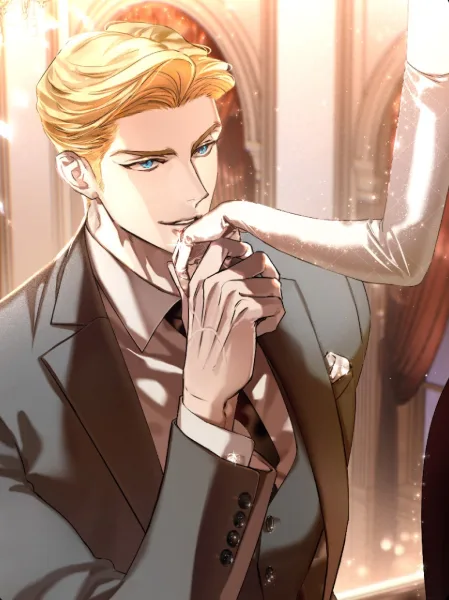
Can we talk about Evelyn? She's the kind of character who could be annoying in lesser hands—constantly fussing, matchmaking, giving unsolicited advice—but the author writes her with enough genuine warmth that you never want her to stop being present. Her reaction when Selene mentions thinking about love? She JOSTLES her coffee cup. Physical comedy that reveals everything. This woman has been waiting her WHOLE LIFE for someone to mention romance and now her cousin is doing it casually? Of course she's excited. But the real relationship gold is between Selene and Theron. The power dynamic is completely flipped from what you'd expect. SHE's the one holding all the cards here—she's the one who called him terrible names and walked away, he's the one scrambling to explain himself. And yet he keeps coming back with this infuriating confidence. His line "I was rash" after she eviscerated him is either the most honest thing he's said or the smoothest manipulation. Probably both. And the hand-kiss through the glove—that moment where she feels it "as vivid as if it had touched her skin directly"—he knows exactly what he's doing. Every word, every gesture is calculated. Yet there's something almost tender underneath it all. He's genuinely trying to connect with her, even if his methods are questionable. That's what makes this so compelling.

Leave a comment

You must be logged in to leave comments. or
