The Missing Child - Reviews

The Missing Child
+Add to Custom List
Sort
Add review
... Read More
"Learn it properly. Once you've got the knife down, you'll pick up the grill in no time." That's how the chapter starts—domestic, almost cozy, like we're watching a cooking tutorial. Three paragraphs later he's on his knees in a loan office while a detective flicks cigarette ash onto his delivery box. The pivot is so abrupt it made me choke on my tea. What I love about this pacing is that it refuses to let you settle. Just when you think you've got the rhythm—a kid learns knife skills, learns to read, says his name out loud for the first time—they cut him from dishwasher to shadow detective in the span of a paragraph. No montage, no hand-holding. He's just there, standing in the Mia gang's den, and the stakes have already doubled. Then comes Poet. Her introduction is sudden, visceral, and then she's gone again, leaving only a scorched book and a frozen girl in a temple. The structure mirrors his life: no safety nets, just the next alley, the next shift, the next decision that might get you killed. And that ending—"There's a witness. Come to the station."—cuts off mid-sentence like a door slamming in your face. I swear I actually gasped. The author knows exactly when to stretch a moment (the killing of Second, described with surgical calm) and when to sprint (the entire middle section where information about the rat leaks out like blood from a wound). It's not elegant. It's hungry. And I'm still chasing it.
... Read More
This author does NOT mess around with atmosphere. From the very first paragraph—"the smoke filling the cramped room"—I was IMMEDIATELY somewhere. I could feel the heat, the burning throat, the blur of vision. But let me just spend a moment on Mia Market. "Bathed in crimson glow." I love that description. It sounds almost poetic until you realize what's actually happening underneath that light. And the underground tunnels—"a grave built by people who lived and died for money." With stacks of blue-tinted cash piled on top of rotting bodies? The sensory detail here is SO precise I could smell it. Then the shift to THE HOUSE. This is where the worldbuilding becomes genuinely chilling. The frozen pipes. The ice at the bottom of the sink. Her breath coming out in "pale puffs." The blue light slipping through the door gap. The floor that's somehow warmer than the streets but colder than anywhere she's ever known. This is a home that's trying to kill you slowly. And the radio! The broken radio that becomes THIS SYMBOL of connection—her lying on the floor, holding the antenna between her toes, coaxing music out of dead static. The songs, the DJ voice, the weather warning—these small fragments of normalcy in a world that has gone completely wrong. When she says "Although all we ever did when we saw each other was argue and shout, I felt less lonely when he was around," it reframes EVERYTHING about that space. It's not just a prison. It's the closest thing to a home she's ever had. The contrast between the warmth of Mia Market's floors ("if customers were going to be rolling around naked on the floor, it had to be kept warm") and the freezing house where the real emotional violence happens—brilliant. Every setting serves the story.
... Read More
Let me just say: this chapter structure is wild. You have the protagonist in active flight at the inn, then the police station interrogation building tension, and then—bam—full flashback into childhood abuse and island life right in the middle of a present-tense crisis scene. Most authors would never do this because it risks pulling the reader out of the immediate stakes. But here it works because the flashback is triggered organically: the detective mentions the word 'Poet,' and that's the domino that knocks down every other wall. The pacing within the interrogation itself is also well-managed. Short, staccato dialogue from the detective→longer, more fragmented internal monologue from the protagonist. The text slows down exactly when she's most paralyzed, and speeds up when she's running. The sentence structure mirrors her mental state. But I do want to flag that the restaurant scene at the end feels slightly rushed compared to the weight of everything that came before. We go from 'I lived wishing that every ocean in the world would dry up' to 'The Chinese restaurant in Dongdaemun Market was infested with cockroaches. I worked sixteen-hour days' and it's like the author is saying: yeah, she's still trapped, move along. It's effective in a brutalist kind of way, but I wanted to linger in that emotional aftermath a bit more. The cliffhanger ending—'I can't leave this place'—after she's apparently been released from the police station is also a great structural beat. It reverses the expected outcome. You think the interrogation is over, but it's actually just beginning. The real captivity hasn't even started yet.
... Read More
'You only run when there's hope. You only struggle when there's still something to hold on to.' That line has been living rent-free in my head since I finished this batch. I kept replaying it like a broken record. Because it's TRUE and it breaks my heart that SHE knows it and HE doesn't. Lee Chun-hee didn't give up. Not even when the pipes froze. Not even when she had nothing. She kept going to that radio, adjusting the antenna with her TOES because her arms were too numb. That image—this fragile girl lying on her side, trying to catch a song with her foot—my chest actually ached. And then the dream sequence. Walking through thorns. They literally grow around her ankles, her legs, her waist, climbing to her neck. When he shakes her awake and she BLEEDS from the nose—this physical manifestation of everything she's carrying finally breaking her body. That's not just a plot event, that's EMOTIONAL PHYSIOLOGY. What kills me most is the contrast. He's the one who seems dangerous—beating men, running an underground operation, locking her up. But she's the one showing up. She's the one starving herself waiting for someone who doesn't come back fast enough. She's the one making breakfast even when he's not there. Who's really the captive here? The scene where she warms her hands over the gas flame and turns it DOWN because she's worried about running out—it's this tiny, domestic gesture of CARING for someone who has given her nothing. That's the kind of love that doesn't ask for anything back. That's the kind that destroys you.
... Read More
Seriously, the way this book paints its world isn't just setting—it's a character that suffocates you. I kept thinking about that temple scene where Poet is found shivering, her hands blue, cigarette burns on her back, and he just drops his coat over her like it's nothing. But the cold? It's described as "sharp as a blade, clinging like debt." That's not scenery, that's the whole damn theme baked into the weather. And earlier, when he's walking through the market alleys at closing time, merchants pulling black tarps over stalls, the trot song dragging somewhere in the distance, and he just quickens his pace because the silence feels heavier than any noise. You can taste the damp, smell the fish guts and fried oil, feel the ache in his wrists from chopping onions until his arms go numb. Even the loan office isn't just a room—it's a power dynamic carved in smoke and spilled jajangmyeon sauce. The boss's pupils small like a snake's, the second guy hiding behind underlings, the way ash falls like snow onto Poet's poetry book before he burns it. This world doesn't breathe; it holds its breath until something snaps. And I swear, by the time he's pressing the flat of the blade against Poet's cheek, I could feel the blood on my own skin. It's not glamorous. It's gritty, damp, and relentless. Which is exactly why I couldn't put it down.
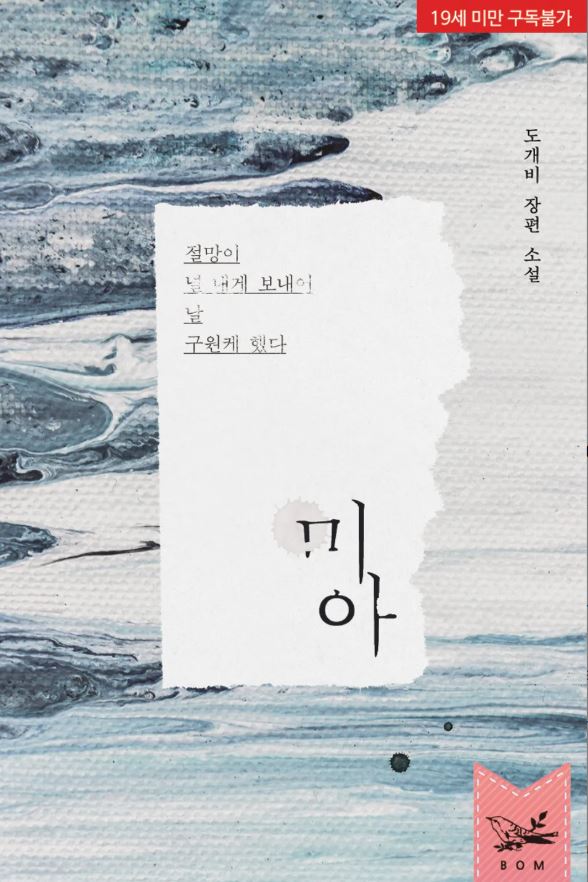
... Read More
The entire arc of these chapters is built on a single question: what happens when the person holding all the power decides to let you go, even for three seconds? The climax hits at the door. She's been thrown to the floor, dragged by the ankle, held down — and then he says "Alright." Just one word. He flicks his fingers. And she understands: go. Walk out that door. Step into the snow and freeze. Die if you want. She rises slowly, every muscle screaming, and walks toward the open door. The wind rattles it. Snow drifts between them. She takes one step. Then another. This is the most terrifying moment in the entire book because the stakes have shifted. She's not fighting to escape captivity anymore — she's fighting the instinct to survive versus the will to die, and the author makes you feel every inch of that journey from floor to doorway. Her legs tremble. Her body shakes. She knows this is pointless. She knows she'll either be dragged back or she'll die in the snow. But then he speaks. "You think you survived because you're tough, because you're something special… don't you?" And the temperature drops again. Not physically — the snow is still falling, the door is still open — but emotionally. He's cutting through her narrative. She's been telling herself she's resilient, that she's fought too hard to give up now, and he's saying: you're not special. You should be grateful you didn't freeze at the temple. Your toughness is just desperation wearing a different name. And what does that mean for her choice? If she's not tough, if she's not special, then why is she standing in that doorway choosing death? The stakes haven't lowered — they've transformed. Now it's not about escaping a captor. It's about whether she believes she has any reason to stay at all.
... Read More
Let's talk about conflict because this woman has NONE. In the washroom scene—oh my god. This senior woman grabs Chun-hee by the hair, calls her a bitch, and Chun-hee's response is not to shrink. She lunges. She tackles the woman's waist, stomps on her hand repeatedly while saying "They say if your hand or arm breaks here, you're fired on the spot, right? Guess you're confident you won't lose your job?" And then she HURLS A WASHBASIN at her. I screamed. I actually made noise reading this. This woman has survived being sold into a brothel, being stripped of her only possession, being treated like garbage her entire life—and she still knows how to fight. She weaponizes the factory's own rules against the people trying to crush her. But here's what makes the stakes so much higher: even her victories are temporary. The foreman laughs about it the next day, sure, but that's just workplace gossip. The REAL stakes are looming. She goes back to the inn not for glory or revenge but for a book. A book she'd memorize line by line. And what does she walk into? A man having his arm mutilated, another man killing him with a knife to the mouth, and then THE ASSASSIN COMING FOR HER. The contrast is brutal. She was confident enough to break someone's hand over a washbasin—and now she's on her knees, trembling, begging a knife-wielding stranger for her life. "I didn't see anything. Really, I didn't see anything! Please—just let me live!" What does she have left to lose? She's already lost everything. Her home, her possessions, her sense of safety. And now this man is telling her to run to a TEMPLE. Why the temple? What happens if she doesn't run fast enough? The stakes just went from workplace hierarchy to literal survival, and I am NOT ready for what comes next.

Leave a comment

You must be logged in to leave comments. or
