The Male God Has A Crush On Me - Reviews

The Male God Has A Crush On Me
+Add to Custom List
Sort
Add review
... Read More
I need to talk about the imagery in this passage because it's sitting heavy on my chest. Half a door embedded with glass — that's the first image and it's loaded. Glass is transparency and violence at once. You can see through it, but it can also cut you. Shi Yi is watching through a fractured barrier, which is basically his entire relationship with his brother: partial visibility, constant risk of harm. Then the hair — 'jet-black hair hanging down, looking just like the lacquered silk fence, cage-like, circling the teenager on the bed.' A cage made of hair. The word choice is deliberate. Lacquered silk suggests luxury and artificiality, and the cage metaphor does the rest. Who's imprisoning whom here? And the red marks on the neck. The narrator goes out of its way to explain why they're visible — pale skin, custom clothes, sensitive skin — as if the text itself is defending the scene from interpretation. But the reader knows. The red marks are visible precisely because they can't be hidden. They're proof. Evidence. The body keeps score even when the characters pretend nothing happened. The chain mentioned — 'the chain is back in its place' — this could be literal medical equipment, but in context it reads as something darker. Who chains whom? And who decides what's 'in its place'?
... Read More
The pacing in these chapters operates on a principle I've come to deeply appreciate: the author understands that tension isn't created by acceleration, but by the deliberate management of attention. Chapter 87 opens with a high-intensity scene — Jian Ren, furious, violent, throwing things. It's loud and immediate. But then it deflates quickly: no one to throw at, no one to blame, just him alone in a hospital bed. The scene ends not with a bang but with the quiet revelation from the other patient. The drop in volume is intentional. The story lets us sit in the silence after the explosion. Then Chapter 88 begins with a complete tonal shift — a new day, a new location, a different emotional register entirely. Piano lessons. Small talk. The gentle rhythm of a routine. This isn't filler; it's the breath before the scream. The author gives us domestic normalcy so that when it's disrupted, the disruption has weight. And the disruption doesn't come all at once. It comes in tiny increments: the mask stays on. He doesn't catch up. The teacher notices he's tired. The auntie brings soup. The mask comes off partially. The spoon trembles. The lips are wrong. The sleeve is rolled up. The bruise. The needle hole. Each detail is a small door that opens onto the next. None of them are standalone revelations — they accumulate. By the time Shi Qingning asks "What's wrong with your hand?" we've already been carrying dread for several paragraphs, and that question is just the final click of the lock. The ending — "Where's the doctor?" — is perfectly placed. No aftermath. No comfort. Just a single sentence that holds so much panic it barely fits on one line. The structure here is basically a slow descent. The author could have rushed to the reveal, but instead chose to make us walk every step of the way. That's craft. That's trust in the reader. That's why I can't put this book down.
... Read More
I don't even have words for the Shi Qingling and Bai Yexi dynamic right now. The hand warmer scene — this is the kind of moment that lives in my head rent-free. Bai Yexi's fingers are "bloodless, cold white" and Shi Qingling presses the hand warmer against them, lowers his head, asks softly "how did this happen?" The physicality of it, the gentleness, the way Shi Qingling is trying so hard to be calm even though his voice is clearly strained inside — and Bai Yexi just says "drawing of blood" like it's nothing, like any of this is nothing. But here's what kills me most: Bai Yexi's internal monologue when he's lying. He notices Shi Qingling's hair, feels the warmth, and then just... deflects. He doesn't push him away. He doesn't reject the care. He accepts the hand warmer and the concern and wraps it into a lie. That means something. It means Bai Yexi WANTS this warmth but doesn't know how to ask for it honestly. And Shi Qingling — he sees through it immediately but plays along because he knows confronting Bai Yexi directly won't work. This unspoken dance between them, this protective silence on both sides, is making my heart ache in the best possible way. I need them to communicate but neither of them knows how.
... Read More
The hands keep coming back. Bai Yexi stretches them out 'showing all of them without hiding anything'—this is him offering evidence, proof that the thing Shi Qingning praised actually exists. In a life where he's been treated as disposable, as property, as a servant whose needs don't matter, his hands being 'okay' becomes this monumental validation. The fingers are 'slender' and 'straightened,' described like 'cold white jade' under moonlight. Jade is precious but cold—perfect metaphor for someone who has value but has never been treated as valuable. Then there's the silver chain. He ties it into his hair unconsciously, a self-soothing gesture that also marks ownership, like a dog with a collar but chosen by himself. The piano itself is another symbol—he learned it by EAVESDROPPING, pressed against a window while the An family's sick son got lessons. Music was always accessible but never given to him. It had to be stolen, overheard, claimed in secret. And now he's agreeing to share it openly with Shi Qingning. That shift—from偷来的 to shared—is the whole arc compressed into one sentence. The backstory also reveals something darker about the theme of families: the An family adopted him and made him a slave; his biological father turned out to be a fraud who exploited him. Both versions of 'family' are traps. Shi Qingning's family is different—not perfect, but they ground him out of protection, not control. The novel keeps asking: what makes a family? And every answer so far has been complicated.
... Read More
I need to talk about the emotional opening of this chapter because honestly it wrecked me. The way Mother Shi is described — wiping tears with her hands while trying to pretend everything's fine, saying 'Mom won't say anything,' being cautious and even humble with her own son... This is a woman who's watching her child slip away and she knows she's losing him. And the worst part? Shi Qingning's response is just 'um.' That single word says everything about their relationship. He doesn't argue. He doesn't push back. He just agrees because he's too tired to fight anymore. And then later, the bodyguard notices how calm and polite Shi Qingning is — thanking the bodyguard when getting into the car, not angry about being followed. This man has been through something devastating, whether it's the surgery or the fallout with his family, and instead of lashing out, he just... endures. Meanwhile Jian Ren is in a completely different emotional register. He's cold, calculating, turning lime slices between his teeth, thinking about how this 'unexpected harvest' could help him make a comeback in the Jian family. But then there's this moment — 'When the man laughed, it indeed looked quite beautiful' — and suddenly I see a crack in that ice. Jian Ren is genuinely affected by Shi Qingning. Not just fascinated by his wealth or status, but actually moved by the memory of his smile. That's the emotional core of this whole thing: two damaged people circling each other, one playing a game and the other too exhausted to play along, and the space between them full of things neither of them can say out loud yet.
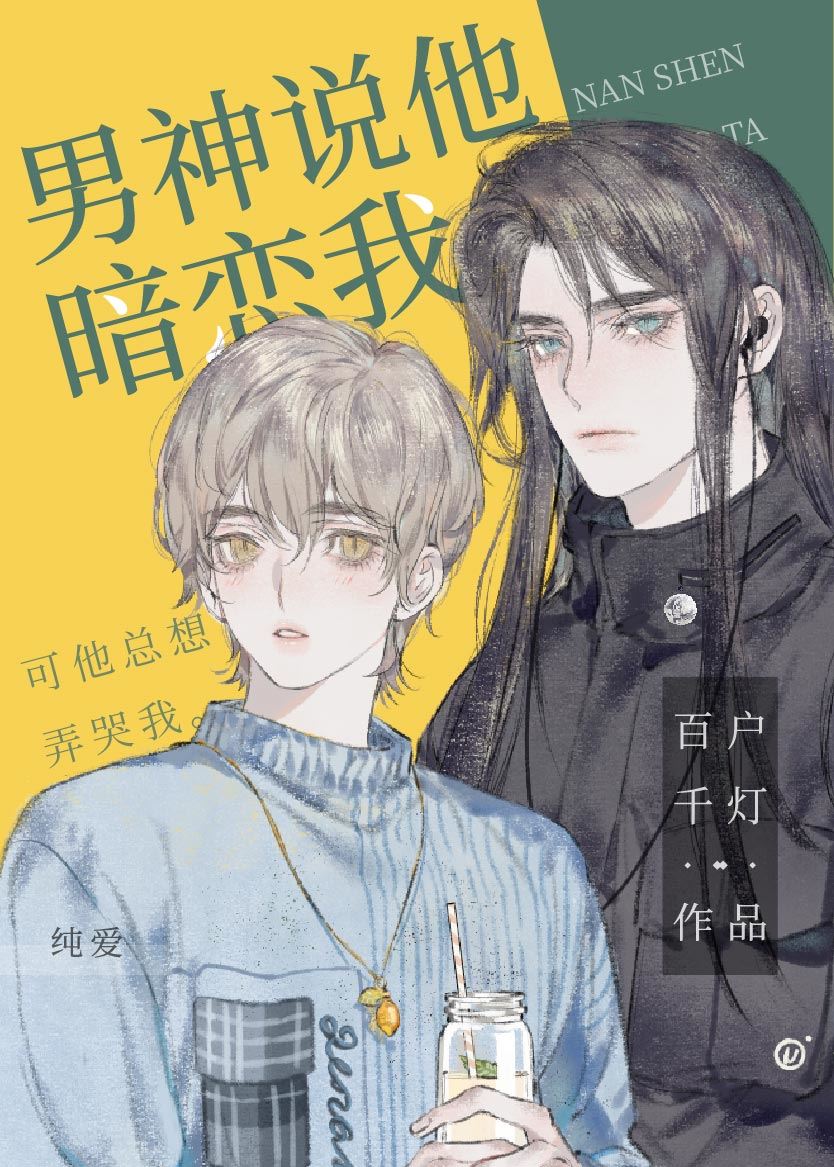
... Read More
I have to talk about the stakes in this section, because something fundamental shifts between the beginning and the end of these chapters. On the surface level, the conflict is medical: Bai Yexi has a bruised arm from blood extraction, Shi Qingling is dizzy and pale, Dr. Zhao is giving instructions. This could have been a low-stakes scene—just two characters recovering from medical procedures. But the author builds the tension slowly, layering physiological details with psychological dread until the reader understands: this isn't about bruises. This is about survival. The external conflict is clear—the An family is systematically exploiting Bai Yexi's rare blood type. But the internal conflict is where the real stakes live. Shi Qingling is watching someone he cares about be used as a resource, and he's realizing he doesn't know how to stop it. His physical weakness—his congenital heart condition, his recent surgeries, his current dizziness—is both literal and metaphorical. He can't protect Bai Yexi as well as he wants to. The rising stakes are marked by a single sensation: the coldness. The text repeats this word in different forms—"coldness gradually climbed up Shi Qingling's back," "coldness that was already penetrating into his bones was now getting colder and colder." This isn't just atmosphere. It's the physical manifestation of dread, the realization that the situation is worse than anyone suspected. What makes this scene so tense is that the reader understands the threat before the characters fully process it. We know what "pre-prepared blood" means. We know the An family has been planning this. But Shi Qingling is still connecting the dots, still moving from confusion to horror. The gap between what the reader knows and what the protagonist understands creates dramatic irony that keeps us hooked. The stakes are personal, not abstract. This isn't about political intrigue or family drama—it's about one boy being treated as a blood bank and another boy realizing he might not be able to save him. The question hanging over the entire scene: how much longer can Bai Yexi keep giving before there's nothing left?
... Read More
Okay can we just talk about Jian Ren for a second because this character is genuinely unsettling in the best way. The translator's note mentions the silver chain as something that restrains Bai Yexi, but honestly? I think the real cage is Jian Ren's obsession. He's not fighting over territory or respect—he's fighting a ghost. The grandson of the Jian family who forced Jian Ren to grow his hair and imitate someone he clearly resents. This isn't bullying; this is personal mythology. Every time he says "men with long hair are all bastards" with that hypocritically gentle voice, you can feel the rot underneath. And Bai Yexi? The way he stares at Jian Ren's hands like they're the only thing in the world—that's not fear. That's calculation. These two are locked in something that goes way deeper than a street fight. I need to know what happened at that banquet. I need to know who the old man's favorite grandson is. This rivalry has ancient roots and I am HERE for it.
... Read More
I literally had to put the book down after the tissue scene. That's it. That's the review. He wiped the honey water from Shi Qingning's lips like it was the most natural thing in the world and I am NOT okay. Like — think about the power dynamic for a second. Everyone else, including Shi Qingning himself, keeps framing it as if the sickly cousin is the one being taken care of, but Bai Yexi is clearly the one whose small gestures carry the most weight. He produces a tissue from nowhere. He wipes Shi Qingning's mouth. He says I'm okay with it when someone made that terrible joke about keeping him as a mistress, and he means it — not because he doesn't care, but because he trusts this person completely. "I won't do that, don't worry." And Bai Yexi just... absorbs it. His breath quickens. His Adam's apple bobs. He doesn't say much but every tiny physical tells you he felt every word. The restraint here is what kills me. He could've said something sharper, something dismissive, but he just says I know and that's it. And then he wipes Shi Qingning's lips like nothing happened. What is this man doing to my heart.
... Read More
Let's talk stakes, because this chapter raises them beautifully without ever breaking a sweat. On the surface, the conflict is simple: a kid gets accused of breaking a piano he didn't touch, and a tuner proves him wrong. But the real stakes are so much bigger. The boss isn't just risking embarrassment—he's risking his livelihood. These are parents who 'have some advance knowledge of pianos,' who know Steinway prices, who can walk away from a class contract in seconds. The author makes it clear that in this community, reputation is currency, and the boss just spent it all. 'As soon as the tuner's true identity was revealed, all the business that the music store wanted to discuss was cancelled.' One revelation, zero business. And the suspense? It's not about whether Wen Ming will prove his point—that's guaranteed from the moment he walks in. The tension is in watching the boss dig his own grave. Every angry word he utters makes his position worse. Every denial makes the parents more suspicious. By the time he realizes who Wen Ming is, it's too late. 'Only deep regret remained.' But here's what keeps me hooked beyond the immediate conflict: the unresolved thread with Shi Qingning. That chilling glance between them. Wen Ming's half-step retreat. Something is building there, and I have no idea where it's going. The external conflict resolves neatly, but the internal, interpersonal conflict is just getting started.
... Read More
Honestly the opening of this section drags a little—manager scrambling, blame-shifting, all that corporate survival nonsense. But then the light hits and everything changes. The transition from comedy to dread is so sudden it almost knocks you over. One moment you're reading about a middle-aged manager looking for a scapegoat, next moment someone's having a nosebleed from emotional shock. And the information drops are perfectly spaced. First you get Jian Ren's cold threat about long-haired men. Then the bodyguard worry about Shi Qingning's heart. Then the memory flood from seeing Bai Yexi. Then the whole tragic backstory arrives in one wave. By the time Shi Qingning has that untimely thought—'seems nice to touch'—you're completely swept up. The pacing here is almost like a horror movie where the tension builds quietly and then something terrifying walks into frame. The fact that the protagonist's greatest moment (three encores, standing ovation) is immediately framed as 'And also his last' is brutal. Never have I wanted to throw a book at an author more than right now.
... Read More
The way the light swept across that wall—this one scene is worth a thousand paragraphs of description. You've got the beam spinning through the crowded hall, catching the young man standing there, and then it moves away and he's gone again but you can't stop seeing him. 'It was as if time had suddenly slowed down, with traces of astonishment clearly visible on many faces.' I don't know how to even describe how cinematic this is. The bar setting itself feels real enough—waiters, managers scrambling, staff bringing the wrong guitar, all this background noise that makes the place feel lived-in. But the moment the light hits Bai Yexi, the whole world seems to hold its breath. And then later when the lights come up and he's still standing there, 'the protagonist was able to easily stand out' despite the crowd. There's something almost unfair about it—the way genius and suffering make you visible even when you're trying to stay hidden. The bodyguard's reaction to the nosebleed was hilarious though. 'Is your heart uncomfortable?' No, it's just beauty. Sir, you are so far above this.
... Read More
This scene is a masterclass in plotted revenge disguised as politeness. Let me tell you about the recording moment—Shi Qingning deliberately asks 'Is it recorded?' right when Jian Ren threatens him. That question hits like a hammer. The bodyguard plays back the video, and suddenly Jian Ren's own words echo through the hall. 'If you go today, I will never see you again.' Those words become his own weapon against him. What made this work so well for me was the setup: Shi Qingning pretends to be leaving casually, puts on his coat slowly, acts like this is all just a normal exit. But the reader sees the trap being sprung piece by piece. Then there's the twist of why he's really doing this—it's not about vengeance or embarrassing Jian Ren. No, the real motive comes later when we learn Shi Qingning 'wanted to completely fall out with him, so that he will no longer entangle himself with me in the future.' That revelation changes everything. The entire bar scene transforms from a petty social clash into something heavier, more desperate. He's not trying to win; he's trying to survive. And that's what made me sit up straighter than expected. The pacing here is perfect because we get the surface level first—the public spectacle, the shocked faces, the awkward silence—then the deeper truth unravels afterward when the bodyguard realizes what actually happened. That double-layer reveal is exactly what keeps me coming back to this story.

Leave a comment

You must be logged in to leave comments. or
