The Male God Has A Crush On Me - Reviews

The Male God Has A Crush On Me
+Add to Custom List
Sort
Add review
... Read More
I'm not even gonna pretend the fight scene was the emotional peak of these chapters. It was the middle-aged aunt bringing honey water. She's so careful, so terrified of upsetting him, and he just says 'thanks' and then walks into the kitchen himself to drink the medicine. And the aunt cries. I literally sat there like—this person has been treated like a ghost in their own home and the simplest act of kindness breaks them. But then the bodyguard drops the bomb that Madam called but told him NOT to tell Shi Qingning. The mother is alive and caring and hiding it. That's the kind of quiet devastation that stays with you. Meanwhile Bai Yexi is out there wrapping a silver chain around his hair like a warrior preparing for battle, and I just want both of them to have someone bring them warm drinks and stay.
... Read More
I've been reading this story and I'm constantly surprised by how the author manages to raise the stakes even in chapters that feel calm on the surface. On paper, this is a story about a guy looking for his family. Pretty simple premise. But the conflicts are layered in ways that make every chapter feel dangerous, even when everyone's just sitting around a dining table. Let's talk external conflict first: Tian Wenlong. He's caught, yes, but the fact that he has no information about the An family creates a new problem. If the original scammer (whoever hurt Mint) used Tian Wenlong as a tool, then who pulled the strings? That's the conflict that keeps me up at night. The author is playing with the idea that solving one problem just reveals another, deeper one. Then there's the internal conflict, and this is where the author really earns their keep. Shi Qingning is chronically ill. He's pushing his body to the limit—barely eating, barely sleeping, studying physics at an inhuman pace—because he believes knowledge is the only way to protect Mint. But his own body is failing him. That tension between determination and physical limitation is the engine of the whole story. Jian Ren's conflict is even more visceral. He's physically injured in a hospital bed, mentally obsessed with someone who doesn't want him, and emotionally trapped in a cycle of denial. When he says "It could never be love," the stakes are enormous because he's not just lying to others—he's lying to himself. And self-deception is the most dangerous conflict of all because it means the character can't even articulate what they're fighting against. The social conflict is also worth noting: Shi Qingning is part of a wealthy family with connections, but he's also vulnerable. Mother Shi worries about him; Sun Ming watches his back; but there's an entire world of people (creditors, scammers, maybe even the An family themselves) who could cause him harm. The power dynamics are constantly shifting. And the central mystery—the An family—acts as a gravitational pull on every other conflict. Why are they so important? Why can't Shi Qingning find them? What happened to Mint? These questions create a background hum of tension that never quite goes away. What I love most is that the author refuses to give easy answers. Every conflict that gets resolved (Tian Wenlong is caught) just opens up new, more complicated ones (who is behind him?). The stakes aren't just rising; they're multiplying. And I'm completely hooked.
... Read More
I have to talk about this piano shop scene because the author absolutely nailed the atmosphere shift. One moment you're in a suffocating suburban house where your mother agrees to you romantically involving yourself and the next you're transported to this crowded music store on a winter vacation weekend. The sensory details are insane — three pianos in the lobby, the noise of elementary school students, the whole place buzzing with the chaotic energy of a business trying to market itself. And then Bai Yexi sits down and the entire room goes silent. Not gradually. Instantly. Like someone hit mute on the world. The description of him — white shirt, black trousers, long hair like a waterfall, fingers like carved jade under warm light — this isn't just visual, it's almost sculptural. The author makes you feel like you're standing in that hall, surrounded by people who've stopped breathing. 'He seemed to be in a place where all the lights gathered together on him.' That line. Just — stop. The contrast between the noisy, commercial space and this transcendent moment of art doesn't feel manufactured. It feels like the world itself is making room for something rare. And then he pays for his own hour, leaves two banknotes on the stand, and walks out without a word. No bow, no acknowledgment, just gone. The staff is trying to hire him, the manager is throwing out discounts, and he's already disappeared into the crowd like he never existed. That image of him walking away from a room full of awestruck people — that's the kind of scene that gets bookmarked and re-read.
... Read More
I keep coming back to the image of that needle. It's everywhere in this passage—on Shi Qingning's hand, a constant reminder of his physical state, and yet he doesn't remove it even for his own birthday party. That detail hit me harder than it should have. He's at a social event, surrounded by people, and the one thing connecting him to his suffering is still physically attached to his body. It's like he's carrying his illness as openly as possible, almost defiantly. There's also this recurring theme of memory and identity that runs through the whole scene. Shi Qingning is trying to recall something—where he read the novel, what the plot was—but his own memories have become hazy. The brain stimulation from this body is affecting him passively, forcing memories out in fragments. This feels like more than just a plot device. It's almost like the novel is asking: who are you when you can't trust your own mind? When the memories that should define you are slipping away? And then there's the whole 'ownership' motif with Hong Mao and the younger brothers. They're claiming Jian Ren as 'their brother,' claiming Shi Qingning as 'Jian Ren's person.' It's this performative, toxic masculinity display that treats people like property. But the text undercuts it completely—Shi Qingning's reaction isn't fear or flattery, it's pure dismissal. The irony is delicious: these guys trying to assert dominance end up looking like the idiots, while the supposedly weak person in the cashmere sweater holds all the actual power in the room.
... Read More
The green diamond buttons on Shi Qingning's coat kept running through my head after I finished reading. The text literally tells us: "Green diamonds symbolize health and safety." Health and safety. What a profoundly tragic symbol when you consider what Shi Qingning is actually dealing with — he's a transmigrator recovering fragmented memories, trapped in a body that's supposed to be a stepping stone in someone else's story, surrounded by people whose intentions range from manipulative to predatory. "Health and safety" is exactly what he does NOT have. The diamonds are the Shi family's attempt to buy him protection, to armor him against a world that clearly wants to consume him. And the fact that they're set into a winter coat — something worn close to the body, hidden under layers until someone notices — speaks to how this doting is both real and suffocating. His family loves him enough to spend 20 million on buttons for his coat, but they've apparently never actually *seen* him. Then there's Jian Ren himself as a kind of walking symbol. The text keeps反复 describing him as a "low-end version" of someone Shi Qingning is familiar with. Is Jian Ren a mirror? A replacement? A warning? The whole dynamic between them feels like the novel is asking: when someone looks like the person you lost but acts nothing like them, do you project your grief onto them or do you see them as their own person?
... Read More
The Player bar in Haicheng is one of those settings that immediately tells you everything you need to know about this story's world. On one hand, it's a place where young masters throw birthday parties and guests compete to impress — neon purple numbers, background music, people surrounding Jian Ren with envy in their voices. But on the other hand, there's this underlying sense that Haicheng itself is 'crude and vulgar,' as Jian Ren himself calls it, and that everyone here is performative in some way. The author builds this world through sensory detail rather than exposition dumps. You can see the amber light reflecting in the wine glass, the foam settling on the cocktail, the lime slice hanging precariously on the rim. These details matter because they ground us in a physical space that feels real. Even the car ride sequence has texture — the bodyguard sitting rigidly straight, the warm white down jacket being offered, the tension of someone who 'must protect the young master' even if the young master refuses. The world feels alive because every character inhabits it differently: the gossipy crowd sees social climbing, Jian Ren sees opportunity, the bodyguard sees danger, and Shi Qingning sees another obstacle to navigate. I also love how the mother's dimly lit room contrasts with the bar's neon glare — two different worlds connected only by this one young man moving between them.
... Read More
Okay, I need to just... sit with this for a second. Shi Qingning tests his mother with increasingly absurd requests, and the first one is bitter melon — fine, weird but explainable as post-illness craving. Then he goes nuclear with 'I still want to fall in love.' And Mother Shi — calm as day, no blink, just 'Okay. As long as our baby is happy and doesn't harm his body, mother won't object.' This isn't doting, this is some kind of reality glitch. Like the universe just accepted that sentence without processing it. Meanwhile, all he's trying to do is detect whether this world has stable rules. He's not asking for permission to date, he's running a physics experiment using his own life as the lab equipment. And the fact that he immediately messages Bai Yexi after going home empty-handed — [Lemon: My re-examination results are out. Everything is normal. You can come to practice piano today!] — that switch from existential crisis to casual plan-making? That's the kind of detail that shows he's already found something to ground him. Someone to do normal stuff with. The contrast between the surreal family scene and then seeing Bai Yexi's bare-minimum WeChat profile (white picture, just the letter B) hits so hard. This boy who plays like heaven opened its mouth and sang through his fingers, and his entire digital presence is... nothing. Minimalist to the point of invisibility. I keep thinking about how Shi Qingning noticed his phone was old and looked used — someone who saves every penny but can produce music that makes strangers weep in a piano shop. That alone tells you everything you need to know about who this character is.
... Read More
This whole dynamic between Shi Qingning and Bai Yexi has me feeling... things. Not romantic things, not yet anyway, but something tender and complicated. Like, Shi Qingning starts noticing all these tiny details—how Bai Yexi eats, how he never seems to enjoy food, how he just exists at the table like he's waiting for something. And it makes Shi Qingning *worried*. Not in a dramatic way, but in that quiet, everyday way where you keep bringing up subjects hoping the other person will open up. Remember when he asked about food trauma? That's a vulnerable question! You don't ask someone 'do you have trauma related to eating' unless you're already emotionally invested in their wellbeing. And then there's Shi Yi—ugh, why is the protective brother always such a downer? He shows up with sour jujube cakes (which is sweet, I'll give him that) but then immediately pivots to warning about danger. 'You cannot judge a person just by their appearance.' Sure, bro, but you're also the one bringing homemade snacks while delivering threats. The contrast is killing me. And Bai Yexi just sits there, pale and quiet, looking like he might vanish if anyone looks at him wrong. That description at the end where Shi Qingning sees him from above, sunlight unable to warm the picture, felt like my chest got squeezed. What is this boy carrying? And why does Shi Qingning seem to sense it even before he understands it? I need to know more.
... Read More
Okay, can we talk about Wen Ming's internal reaction? Because this one moment hit me harder than I expected. So he's surrounded by all these admiring parents, people begging for his contact info, and instead of soaking it in, he feels a chill. 'But Wen Ming suddenly felt a chill down his spine.' Why? Because he looks up and catches the long-haired young man's gaze. And what does he do? He takes half a step back. Half a step. That's it. That's all it takes to show me everything I need to know about this relationship dynamic. The boy—Young Master Shi—he's the one who hired him, apparently, and there's this undercurrent of something unsettled between them. Wen Ming is thinking, 'He shouldn't have said something just to amuse himself.' What does that mean? Did Shi Qingning do something earlier to draw attention to them being together? Is there history? Tension? I don't know yet, but this single beat—this half-step retreat—made me obsessed with figuring it out. And then the kids! The kids are just staring at the good-looking people, judging based on vibes. 'That brother with long hair has such a stinky face...' Meanwhile Wen Ming is internally agreeing, 'He does look stinky.' But there's affection underneath that irritation, isn't there? Because he notices. He cares enough to observe. This slow burn of unspoken things between them—it's giving me life. I need to know what's going on in Shi Qingning's head.
... Read More
I need to talk about Jian Ren because... wow. I walked into these chapters not knowing who this guy was, and now I'm sitting here feeling genuinely unsettled about him. The hospital scene is just brutal in the best way. Here's this guy, injured, alone in a dark room, and he's being haunted by Shi Qingning's memory. Not in a romantic way—at least not in a way he'd admit. He keeps telling himself "he was just attracted to the wealth of the Shi family" but the text makes it crystal clear that's a lie he's trying to sell himself. When he says "It could never be love," I literally said "could it though?" out loud to my Kindle. What's fascinating is the power dynamic shift between these two. Shi Qingning, our protagonist, is the one being pursued and stalked, but he's also the one holding all the cards—he's wealthy, he's connected, he's got Sun Ming watching his back. Jian Ren is sick, helpless, and fixated on someone who couldn't care less about him. That's delicious revenge writing, and the author is serving it up warm. But here's what really got me: the way Shi Qingning reacts to all of this. He's not panicked. He's not scared. He's calculating. When Sun Ming asks why he's so interested in these matters, Shi Qingning's answer is "It's because of my new friend... I'm afraid he will be deceived, so I wanted to help him." This is a person who is protecting someone while simultaneously being protected himself. The relationship between Shi Qingning and the protagonist (Mint, I think?) is the emotional anchor of the whole story. And Mother Shi! Don't forget Mother Shi, coming in checking on her son, worrying about his health, not noticing he's barely eaten half his breakfast. The parent-child relationship here is so tender and real. She says "If you feel uncomfortable, please tell me" and I just... felt it. That maternal instinct, that quiet love. It grounds the whole story when everything else feels like a web of deception. The An family mystery is still lurking in the background, but it's the human relationships that are making this story stick with me.
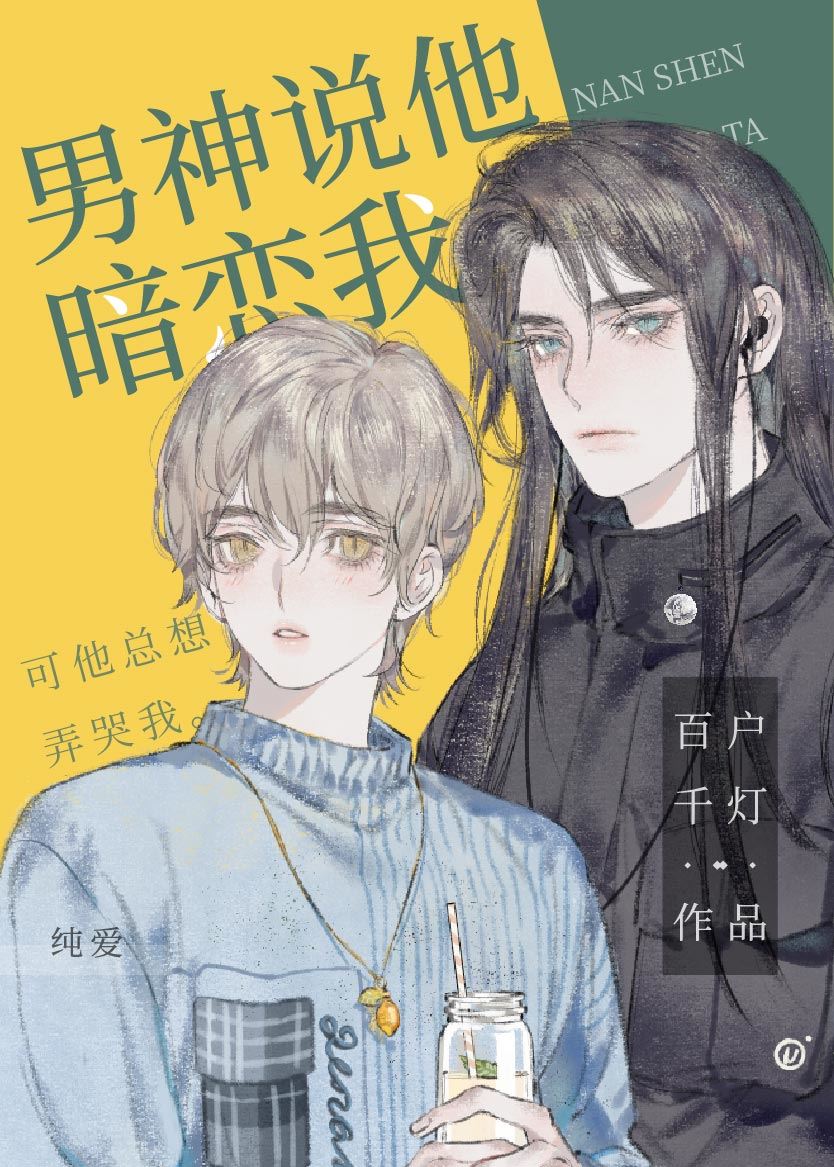
... Read More
There's a moment right at the beginning of this passage where the author paints such a vivid picture that I actually stopped reading and just stared at it. The flashing lights, the golden reflection in short soft hair, the way the loud music seems to recede around this one person so that everyone's attention is locked on him. It reads like a cinematic slow-motion shot—like the camera just pushes in while the background noise fades out. And the contrast is everything. This is a nightclub or bar, right? Usually these places are about loud colors and reckless energy, but Shi Qingning walks in wrapped in layers of white down, cashmere, silk, fleece—and somehow makes everyone else look like the background extras. That's a powerful visual statement. Then the text drops you into the physical reality: the thin wrist, the dimples above the wrist bone, the light blue veins, the needle still attached. It's a image that simultaneously tells you he's fragile and that he's enduring something. I found myself imagining this scene as a close-up in a drama, the way the camera would linger on his hand before panning up to his calm face. The Hong Mao confrontation scene shifts the lighting entirely. From warm golden tones to harsh club brightness, from intimate observation to loud public performance. The wall slams, the screams, the bodyguard moving with cold precision—it all creates this sharp sensory contrast that keeps the scene alive. And that final image of Hong Mao being half-conscious and pushed against the same wall where the waiter was, facing the wall no less—that's visual poetry in its own dumb, brutal way.
... Read More
Okay, I need to talk about Shi Qingning because this boy is something else. He shows up to a party with an IV needle still in his hand and basically walks around like nothing is wrong. Like, most people would be hiding their sickness, but no—he's layering cashmere, silk, fleece, making himself look thin and warm while his wrist is literally exposed with blue veins showing. And Jian Ren notices. Of course he notices. The way the text describes Jian Ren watching him, that little anger melting away into something unfamiliar and sweet—bro, Jian Ren is so down bad it hurts. But the real masterpiece here is the Hong Mao scene. These guys come in with their 'swearing of ownership' act, all possessive and dramatic, expecting Shi Qingning to blush or get flustered. Instead, he looks at them like they're idiots. And then the bodyguard arrives and things go downhill fast for the red-haired boy. But the moment that absolutely destroyed me was the rabies vaccine line. "How much does the rabies vaccine cost?" And when the bodyguard confirms it's useful after a dog bite, Shi Qingning just casually hands over a thousand yuan as a tip for the waiter, saying it counts as injury compensation. Not a single swear word. Just pure, refined, cultural disrespect delivered with a smile. Meanwhile the younger brothers are standing there realizing they've been publicly called dogs by a frail-looking guy who can't even stand properly.

Leave a comment

You must be logged in to leave comments. or
