The Male God Has A Crush On Me - Reviews

The Male God Has A Crush On Me
+Add to Custom List
Sort
Add review
... Read More
"Pianos are easily affected by air humidity, especially in such an open space. The intonation can easily be affected by moisture." This line did so much heavy lifting for me. The author didn't just drop technical info for the sake of it—they used it to build the entire atmosphere of the scene. You've got this piano store in Haicheng, a peninsula city with high humidity, and that environmental detail becomes a weapon. Wen Ming uses the physics of the place to expose the boss's negligence. The setting isn't background; it's part of the plot. And the visual contrast is striking. You've got this noisy, crowded space full of parents and kids, all buzzing with outrage, but then Wen Ming and Shi Qingning are this calm center within the chaos. 'Young Master Shi looked at the piano intently for a while, then raised his head and asked...' While everyone else is screaming, he's quietly observing. It creates this layered texture—public spectacle versus private composure. The author also nails the sensory details without overdoing it. You can feel the damp air, hear the boss's sputtering rage, see the trembling hand pointing at Wen Ming. And that closing image of the cancelled classes, the withdrawn forms, the threat of a parents-group exposé—it paints this entire ecosystem of consequences. The piano store wasn't just losing money; it was losing trust, reputation, community standing. The world feels alive because every element connects.
... Read More
Let me start by saying: the joke Kong Que makes about keeping someone as a mistress is apparently treated as disposable by the other characters, but the text specifically calls out that for Bai Yexi — a character who went through several terrible emotional experiences in the original novel — these kinds of comments are not something you laugh off. That line hit me like a truck because it reframes the entire scene. Shi Qingning feels compelled to explain himself three separate times. Three. He says he doesn't have that intention. He says they've always been equals. He says I won't do that, don't worry. And Bai Yexi's responses are these tiny, controlled things — I know. It doesn't matter. I'm okay with it. Each one smaller than the last, like he's deliberately making himself disappear so the other person doesn't feel guilty. But then he says I'm not going to high school, and suddenly we see the walls go up. This is where the conflict lives — not in dramatic arguments but in the spaces between what people say and what they're actually feeling. Bai Yexi has experienced terrible emotional situations. He doesn't trust easily. And Shi Qingning, for all his warmth, is still navigating uncharted territory with someone whose trauma response is to minimize himself. The stakes here aren't about life or death — they're about whether two people who clearly care about each other can find a way to be honest without breaking.
... Read More
The translator specifically called out that 'Yexi' can mean 'mint' and that the silver chain functions as a restraint on Bai Yexi's emotions. But I think the symbolism runs deeper than either of those notes. Hair. It's always been about identity, isn't it? Jian Ren hates long-haired men because the family's favorite grandson had long hair—and was loved. Jian Ren was FORCED to grow his hair to imitate him. So the hair becomes a brand of inferiority, a daily reminder that he's the copy, not the original. And Bai Yexi? When he ties his hair back with that silver chain before fighting, he's literally armoring himself. The chain restrains him so he won't do something he regrets—but also, it transforms him. Loose hair = vulnerability. Tied hair = Shura, warrior, something dangerous. And mint—the herb that's refreshing, healing, but also strong enough to overwhelm. Shi Qingning drinks honey water with mint leaves while the world tries to break him. Everything in this text is pointing at the same question: what do we do with the bodies and identities handed to us by people who loved someone else more?
... Read More
Okay so this party scene in Chapter 10-11 is genuinely one of those moments where I could literally *see* it like a film set. The way the author described the dim lighting, the heaters blasting because it's winter, people in flamboyant leather and flesh-toned clothes everywhere... I could feel the stuffy heat of that hall. And then Shi Qingning takes off his heavy coat and you're just left with this image of this apricot-colored cashmere thing on this delicate-looking young master while everyone else is basically dressed for a rave. The contrast hit me so hard. But what really made the world feel alive to me was the sheer *status signaling* woven into every detail. The band arriving late, dropping their tuning forks — this tiny awkward moment that suddenly makes the whole hall go silent. The DJ killing the background music because Young Master Jian is talking. You don't even need exposition dumps about how powerful Jian Ren is; the author just shows us the room responding to him and we get it. That's skillful worldbuilding, honestly. And then the diamond buttons. Green diamonds. From a 20-million set at Christie's. Used as *decorations on a winter coat*. This is the kind of detail that makes me stop and re-read because it's telling you everything about the Shi family's obsession with their youngest son in one line. "Forest of Dreams" — that name alone should've been a red flag waving at me. The world feels opulent but also suffocating, and that's clearly intentional. This isn't just a rich-person party, it's a cage with gilded bars.
... Read More
I swear the description of that winter night outside the bar gave me actual chills. The author really knows how to paint a scene — the long-haired boy with his back to the door, the red glow from the overhead light, the corners of his eyes slightly reddened by wind. You can just feel the cold. And then there's this image of him like some lone flower blooming in desolation. Ch.30 continues that atmosphere with the fallen leaves rustling and Bai Yexi sneezing. It's such a small detail but it makes the whole scene feel alive, not just a backdrop but something you can step into. The contrast between the warm interior of Jian Ren's party and the freezing outdoor confrontation is brilliant. Makes the moment where they finally go inside and chat feel like coming in from the cold, you know?
... Read More
Okay I need to just sit with this moment for a second because my heart is actually beating faster thinking about it. Bai Yexi has a wound on his arm. His sleeve got pulled, revealing the bandage inside. He's sitting there in the hospital waiting area, watching the operating room door, and he looks at his bandage and thinks: "There was plenty of blood in there, gurgling inside, and more could be extracted right away by tearing open his bandage." He has the blood. The rare blood type that Shi Qingning needs. He could save him right now. He could rip it open and give everything he has. But then — and this is what absolutely destroyed me — "But those bandages were tied by Shi Qingning. He couldn't bare to tear them open." Not because of the pain. Not because of the risk. Because Shi Qingning tied them. That piece of cloth, that act of care, is more sacred to him than his own willingness to bleed for the person he's watching die behind that door. I don't even know what to say about that. It's such a small, quiet detail but it contains so much. Bai Yexi would give his life in a heartbeat — literally — but he won't destroy something that Shi Qingning touched with his own hands. That's not romantic in some glossy way. That's devastating. That's the kind of love that hurts to witness. And meanwhile Shi Qingning is collapsing from blood loss and probably has no idea what Bai Yexi is sitting right there, full of the exact medicine he needs, choosing to keep the bandage intact instead.
... Read More
The dynamics here are SO loaded. Let me just say it — Shi Yi and Shi Qingning's relationship is clearly not normal sibling energy, and the book is weaponizing that ambiguity for everything it's worth. Shi Yi barging in without knocking, demanding to see the wound, ordering doctors around like a general, calling the previous caretaker 'that garbage called Jian Ren' — this is a brother who sees his sibling as something to possess and protect, maybe even something he's jealous of losing. And then Bai Yexi. Oh my god, Bai Yexi. 'His eyes the same as his breath, indifferent.' That description alone should come with a warning label. This is a character who watches, who doesn't react, who gently covers the quilt after being publicly reprimanded. He's the kind of person who exists in the margins of everyone else's drama and somehow still controls the room. The mother is the third invisible force here. She calls him 'Xiao Bai' — diminutive, affectionate — and she's already decided he's good for her youngest son. Meanwhile Shi Yi is standing there doing background checks on him. The triangulation is beautiful. Every glance, every withheld word, every '...' of silence between these three people carries more weight than a thousand pages of exposition.
... Read More
The chapter title is literally 'Three Minutes' and I think that's the entire structure of this passage compressed into that concept. Shi Qingning collapses. Nosebleed. Blackout. Sun Ming yelling. Bai Yexi making that call in one fluid motion — "Second Young Master has a nosebleed and is unconscious from blood loss, we're on the second floor now, we'll be there in five minutes." Five minutes to get to the thirteenth floor. Three minutes to decide whether to tear open his own wound and give blood or wait. The pacing here is breathless but the author never loses control. Every transition is sharp. The collapse → the carrying → the elevator → the operating room door → Bai Yexi sitting alone on the bench. It moves like a camera panning from chaotic close-ups to a single wide shot of one boy waiting. And then we cut to Chapter 13.1 and suddenly we're in rumor territory — gossip voices overlapping, speculating about the Shi family, the blood bank in Australia, the surgeries every three days. This shift from intimate urgency to public noise is such a deliberate structural choice. The story pulls back the camera and shows us how much of their private agony is becoming public entertainment. The chapter ends on Jian Ren, locked in his room, haunted by nightmares, unable to stop thinking about someone he's clearly losing. Three separate threads — Shi Qingning on the operating table, Bai Yexi waiting with blood inside him, Jian Ren spiraling — all moving at different speeds but all pointing toward the same collapse. I couldn't look away. I want to know what happens behind that door.
... Read More
The dialogue here is SO distinctly voiced per character, and I love it. Shi Yi barely says anything, but when he does, it cuts. 'Say.' Just one word, delivered coldly, and you know someone's about to report something important. His entire personality is in those sparse sentences - 'Go and drive,' 'Two,' 'Bring a jacket.' This man communicates through commands and actions, never through warmth. And yet, that's how his care shows up. Brilliant character writing. Then there's Shi Qingning, who's more expressive but still restrained. When he's trying to explain himself to his brother, it's almost defensive - 'Now Jian Ren may do something, I have the responsibility to go and see him.' He's worried about being misunderstood, which tells us everything about their relationship. The older brother doesn't trust easily, and Shi Qingning knows it. The assistant is the comic relief, but with an edge. That internal sneer about 'that dog man'? We don't get to hear that dialogue, but we get to read it, and it colors our understanding of how everyone else views this situation. He's the audience surrogate in some ways - judging, impatient, but also observant. And Mint! '...I'm fine.' Three words that carry so much weight. The ellipsis before it? The way he says it while looking away? That's not just dialogue - that's a character portrait. He's damaged, he doesn't know how to accept kindness, and every word comes out guarded. The author doesn't need to explain his trauma through exposition; the dialogue does it for him. Even the background characters have distinct voices - Jian Ren's minions laughing about pushing someone into a pool, completely casual about cruelty. Their dialogue makes them hateable without any narration telling us to hate them.
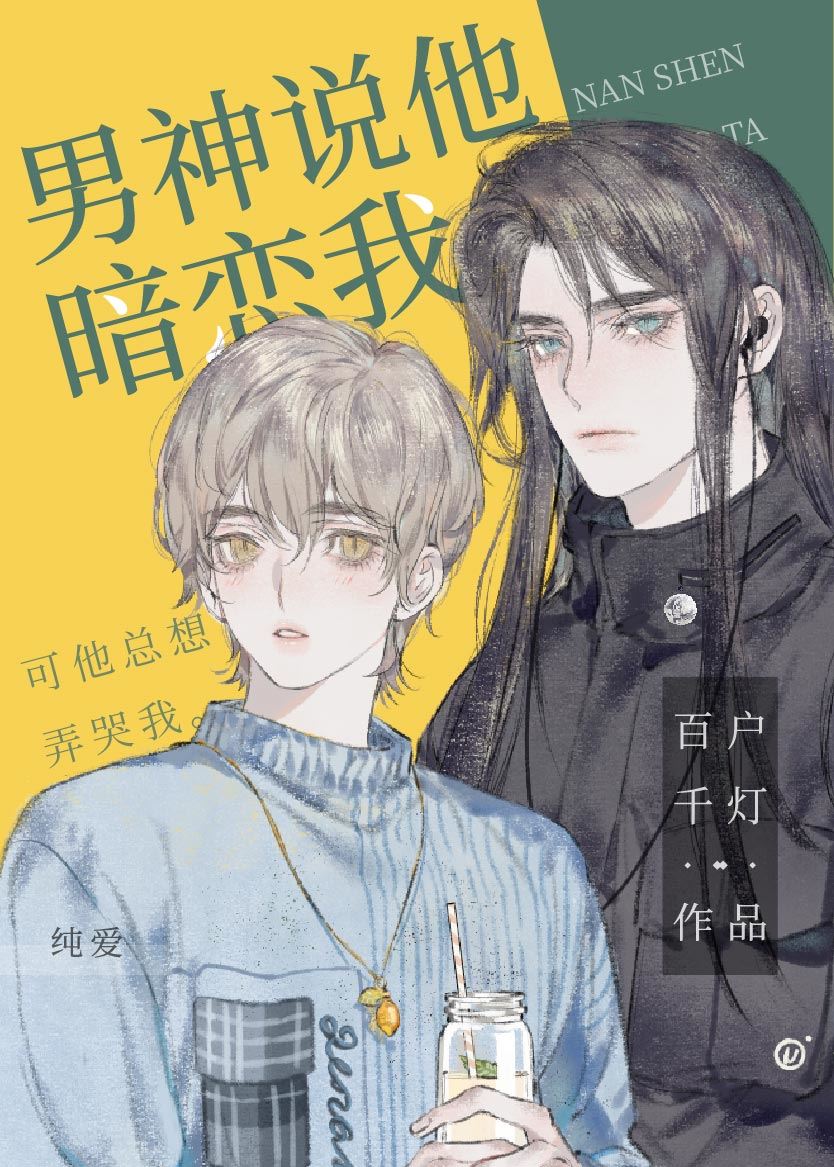
... Read More
I need to sit with the symbolism in this chapter because it's not subtle and it's also not heavy-handed. That's the rare balance. The lemongrass seedling in a paper cup is the central image, obviously. Two green leaves growing in darkness. But what makes it work is that the author doesn't tell us what it means. We see Bai Yexi notice it, study it, move it into the closed closet where it's warmer. That's all the author does. The meaning builds itself. There's a pattern running through this entire chapter: false fathers versus chosen family. Tian Wenlong claims biology. He uses words like “your father,” “my son,” “Xiao Ye.” These are biological claims dressed up as emotional ones. And Bai Yexi dismantles them not with arguments but with facts: “My old man died seven years ago.” Biology is dead. What remains is choice. The building itself is a symbol. Half-repaired. New house numbers hand-made but not yet fixed. A dozen of them, abandoned. This is a space between states — not destroyed, not completed. Bai Yexi lives in this building because he is also in between. The past life is dead. The new life hasn't taken root yet. Even the lemongrass is a symbol of persistence without permission. It didn't ask for soil. It didn't wait for perfect conditions. It grew in a paper cup on a window sill and the author calls it “so lonely” — which is the truest description of existence I've read this year. The piano at the end ties it together. “To be a piano partner. He needs to get his hands back in shape.” Music requires two people. Not father and son. Partner and partner. Equal. Chosen.
... Read More
Okay, I need to talk about this moment where Bai Yexi takes a half step back after agreeing to be Shi Qingning's piano partner. At first I thought it was fear, you know? Like, classic traumatized kid retreats. But then the narration hits you with 'shyness.' SHYNESS. This kid has been through hell—trafficked, sold, treated like a servant in his own adopted home—and the first real soft thing someone does for him and his instinct is to step back in sheer embarrassment? I literally slammed the book on my chest. That half-step-back detail is one of the most devastatingly accurate portrayals of what it looks like when someone has never experienced kindness and doesn't know what to do with it. He doesn't know how to protect himself from vulnerability, he just… freezes and retreats. And Shi Qingning, bless him, figures it out almost immediately and holds back his laugh instead of making it worse. Their dynamic right now is this weird fragile thing—Shi Qingning is this sunshine boy who got kidnapped and rescued and immediately started caring about someone else, and Bai Yexi is this ice sculpture slowly cracking because someone noticed his hands were okay. Also the silver chain detail!! He tied it into his hair himself after Shi Qingning gave it to him. That's not casual, that's sacred. He's holding onto this small token like it's the only proof he's been seen.
... Read More
Okay so let me just—Bai Yexi. That's his name. Shi Qingning sees him across the crowd and everything clicks into place. The whole novel suddenly feels like it's breathing around you. This guy had his first performance at some huge concert hall, got three encores, and the applause literally wouldn't stop. And then the author—wait, the *original* author—just ruined him. Three suitors. One after another. First one ruins him, second one forces him onto the street, third one kills him. That's it. That's the entire plot of this book. A genius gets systematically destroyed by men who treat his talent like something they own. And now Shi Qingning is standing there watching him in the flesh, remembering all of this from the movie adaptation, and the weight of knowing what's coming hits him like a truck. What gets me is the parallel with Jian Ren. The text literally calls him 'a group of advanced Jian Ren.' Same energy. Same obsession with control. Same disgust toward long hair on men. The fact that Shi Qingning had it backwards before—he thought his own connection to events was about how much he influenced Young Master Shi, but really it was because he was sensing the protagonist himself—this is such a smart reveal. It recontextualizes everything. The story isn't just about surviving your own plot; it's about staring down the people who wrote suffering into someone else's face and deciding whether you intervene.

Leave a comment

You must be logged in to leave comments. or
