Summary

... Read More
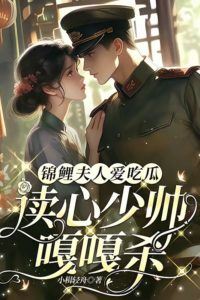
Liu Xiyin, a scientific genius from the twenty-first century, dies from overwork and transmigrates into the body of a peasant girl in an alternate Republican Era. She discovers she has become the original wife of Yan Changye, the novel's great villain who is destined to become a warlord and later have an affair with his father's Ninth Concubine. Because the Liu family replaced her with a fake heiress, Marshal Yan, a brutal warlord, forces the real Liu Xiyin to marry his son to fulfill an old promise. Liu Xiyin's only goal is to survive, avoid the villain's romantic entanglements, and eventually secure a divorce to escape her fate as cannon fodder.

On her wedding day, Liu Xiyin is immediately framed by Song Shiyun, the niece of the favored Second Concubine, for pushing the Third Young Master down the stairs. Marshal Yan demands that Liu Xiyin break her own leg in retribution. Just as she is about to be punished, Yan Changye returns from the battlefield. Unbeknownst to everyone, Yan Changye has discovered that he can hear Liu Xiyin's inner thoughts. While she appears demure and obedient, her mind is a chaotic stream of modern gossip and scientific calculations. Using a primitive voice recorder she built, Liu Xiyin plays back the true events, revealing that Song Shiyun and the Third Young Master were involved in an illicit affair and that Song Shiyun pushed him to frame her. Yan Changye protects his bride, shooting Song Shiyun's leg to enforce his father's own rule of retribution, and takes Liu Xiyin back to his private villa.

At the villa, Yan Changye suspects Liu Xiyin is a spy due to her advanced knowledge and strange device. He searches her and finds a roll of film, which he orders developed. During this time, Liu Xiyin learns that Yan Changye is also the target of an assassination plot involving a time bomb. Knowing the plot from the novel, she attempts to subtly warn him without revealing her knowledge. When they depart for the Marshal's mansion, a bomb under their car explodes prematurely, injuring no one because Yan Changye had already moved them based on his own suspicions. This incident deepens Yan Changye's curiosity about Liu Xiyin's origins.

At the Marshal's mansion, Liu Xiyin serves tea to the family. She observes the toxic dynamics between Marshal Yan, the Second Concubine, and the ambitious Second Young Master, Yan Changzhuo. Liu Xiyin internally critiques the Marshal's favoritism, predicting his gruesome death at the hands of his own children. To her shock, the Marshal suddenly rebukes Yan Changzhuo for his disrespect, an action that contradicts his established character. Liu Xiyin fears that the Marshal can also read minds, but realizes he likely merely reacted to the absurdity of the situation. Yan Changye, however, remains convinced that his wife holds secrets from the future. He begins to investigate her past, noting that her presence seems to alter the course of events predicted in the novel. As political tensions rise in Ancheng, Yan Changye decides to keep Liu Xiyin close to uncover the truth behind her abilities, while Liu Xiyin struggles to maintain her cover as an ignorant country bumpkin while navigating the deadly web of warlord politics.

Novel Items

More
Device
A small horn-shaped metal object resembling a miniature gramophone with two metal buttons on the base. Liu Xiyin pulled it from her wide sleeve to use as evidence. She claimed it could record and play back sounds, representing the power of science and technology.
Jewelry
A Christmas present from Meng Chu to Tao Wanxing. She was disappointed it was not a ring, feeling it was more suitable as a gift for a mistress. Meng Chu became angry when she questioned the nature of their relationship.
Clothing
Traditional Chinese wedding attire worn by Liu Xiyin. She had not yet changed out of the red bridal robe when Yan Changye arrived; only her crown had been removed. The heavy set included cascading black hair falling around her shoulders.
Artifact
A palm-sized device built by Liu Xiyin that can play back captured sounds from the past without needing a record. It has a button on the left to capture and a button on the right to play. Liu Xiyin had to build a primitive engraving needle due to lack of microchip manufacturing facilities. It recorded Song Shiyun and Yan Changyue's forbidden encounter including screams and the sound of falling down stairs.
Weapons
A firearm used by the crew-cut Yihe Society man. Cao Yang disarmed him by kicking a stone at his wrist, then snatched the pistol mid-air and fired three shots to scare him behind cover.
Clothing
Held by Sister Zhang. Shen Qingci says it's for a special day - her battle attire for the grand opening of the stage play.
Latest Release
DateGroupRelease
2026-08-11shanghai fantasy c26
2026-08-11shanghai fantasy c25
2026-08-11shanghai fantasy c24
2026-08-11shanghai fantasy c23
2026-08-11shanghai fantasy c22
2026-08-11shanghai fantasy c21
2026-08-11shanghai fantasy c20
2026-08-11shanghai fantasy c19
2026-08-11shanghai fantasy c18
2026-08-11shanghai fantasy c17
2026-08-11shanghai fantasy c16
2026-08-11shanghai fantasy c15

Community Reviews

Rating(4 / 5.0, 24votes)
5 stars
6(25%)
4 stars
12(50%)
3 stars
6(25%)
2 stars
0(0%)
1 stars
0(0%)

Popular reviews

... Read More
Yan Changye is genuinely the best husband and I will die on this hill. The way he reads Liu Xiyin's inner monologue and just... accepts it all is chef's kiss. She's internally panicking about divorce and remarriage and finding someone better-looking, and he's over there strategically dismantling her toxic mother-in-law. But what I love most is that he doesn't just blindly protect her. He actually sees her. When he calls her a coward after she wilts the second he's about to get himself involved in their mess, that's not mean - that's accurate and almost affectionate. He knows she's all talk internally but soft in practice. And she knows he's doing it for her but also knows she needs to handle her own battles sometimes. The dynamic where she tugs his sleeve to stop him from being too aggressive, then internally complains about his straight-male-bashing energy? That's a relationship. Their banter through her inner thoughts and his external actions creates this really layered connection. She's not just a damsel he saves; she's the one keeping him from burning bridges she still needs to maintain.
... Read More
The stakes in this story are layered like an onion and I am here for it. On the surface, Liu Xiyin's stake is survival. In the original novel, she's "cannon fodder who was eventually minced into meat filling by the male lead to feed the fish." That's not a metaphor. She knows this. She's read the book. And now she's married to the man who's supposed to kill her. The existential dread is palpable. But then there's the spy angle — and this is where it gets genuinely tense. She has a roll of film on her person in a restricted military area. In any era, that's arrest-worthy. Yan Changye suspects she might be a foreign spy. He searches her, he interrogates her, he takes the film to develop before dawn. The threat is real and immediate. What makes the stakes so compelling is that they're constantly escalating and shifting. Just when you think it's about her secret identity, it's about the Second Young Master's assassination attempt. Just when you think it's political intrigue, it's about whether he'll believe her about the film. Just when you think she's safe for the night, he threatens to make her never bathe again. And Yan Changye's own stakes! He barely escaped death himself — ambushed on the road, returning late to his own wedding. His family is divided, his father favors another son, his authority is contested. He brought Liu Xiyin back partly as a wife, partly as a subject of investigation. He's playing a dangerous game on multiple fronts. The scene where he reads the confession that the Second Young Master orchestrated the ambush, but decides to keep it secret because "we can't move against him for now" — that's a masterclass in rising stakes. He's restraining himself, biding his time, and the reader knows this conflict is far from over. Every chapter ends on a note that makes you want to immediately read the next one. The tension doesn't drop. It coils tighter.
... Read More
There's something deeply symbolic about the salt in this story. Liu Xiyin, a modern person accustomed to refined, pure salt, is forced to confront the bitterness of an era that ordinary people lived with every day. But it's not just about taste—it's about class, about privilege, about how different worlds collide. Her internal monologue actually acknowledges this: '[Of course the bitterness of the salt isn't the salt's problem; it's a problem of material backwardness, a problem of the era, and a problem of the ruling class!]'. She's aware she's in a novel, aware of the social structures, and yet she's trapped inside them. The 'cannon fodder' identity she keeps referencing is itself a metaphor for how characters in stories have predetermined fates—and how hard it is to fight against a narrative that wants you dead. Yan Changye, the 'great villain,' represents the ultimate authority in this world, the kind of person who controls salt monopolies and has armies. But even he can't control everything—his 'villain plot armor' doesn't protect him from the fact that the plot has already changed because of one girl from the future trying to survive. The recurring imagery of snow and cold versus the heated floors and warm food creates this constant tension between survival and comfort, between the brutal world outside and the fragile safety inside.
... Read More
The pacing across these chapters is honestly masterful. You've got Liu Mingyue's POV opening - weak, vomiting, secretly pregnant, hearing about how the Young Marshal treats the Second Miss better. Then BAM, switch to Liu Xiyin's POV at the banquet, internally screaming about wanting chicken noodle soup and wanting to leave this chaos. Then Yan Changye's investigation reveal, then the confrontation. Four mini-arcs in two chapters and none of them drag. The author knows exactly when to escalate and when to let a scene breathe. That moment where Liu Xiyin goes quiet and Yan Changye looks back at her, and she's just internally planning her second marriage? Perfect comic relief that actually deepens their relationship before the next conflict hits. And the chapter ending - Liu Xiyin just walking away after delivering her final verdict to Bai Manman. No dramatic cliffhanger, no 'but then something happened!' Just her stepping out of the door. The story trusts us to understand that this is the real climax. Sometimes the most powerful moment is when someone finally leaves.
... Read More
I need to talk about how vividly this world comes alive, because the atmospheric details in these chapters are absolutely incredible. The main hall scene is painted with such specific, sensory detail. You can practically smell the cigar smoke hanging in the air around Yan Ting. The way Liu Xiyin hides behind Yan Changye, clutching his sleeve, then quickly pulling her hands behind her back when he moves — these tiny physical details make the space feel so tangible. I can see the sofa, the teacups, the power dynamics playing out in who stands and who kneels. And the worldbuilding around the gramophone is genius. It's not just a plot device — it's a window into this entire era of foreign influence, scientific competition, and social hierarchy. The fact that wives of high-ranking officials have never seen such technology tells you so much about the time period. The references to Hong Kong ladies connected with foreigners, the American biomedical delegation, the pharmaceutical company — all of these details construct a rich, layered world that feels historically grounded even while being fictional. The contrast between the traditional family structure (concubines, kneeling, filial piety demands) and the modern elements (democratic government references, foreign scientists, advanced technology) creates this fascinating tension that defines the entire setting. Liu Xiyin's countryside upbringing versus her scientific genius adds another layer — she's caught between two worlds, just like the society around her. The ending scene with the Chief Adjutant bursting in — the sudden shift from the quiet main hall to the shock of the explosives discovery — changes the entire atmosphere in an instant. One moment it's oppressive family drama, the next it's full-on thriller. The author knows exactly how to use setting and atmosphere to control mood.
... Read More
The stakes in this story just escalated from 'don't get killed by the villain' to 'the entire narrative has shifted and you might die instead of the original characters.' That moment when Liu Xiyin realizes 'the lines of the book were all screaming Liu Xiyin is going to die fast' is genuinely chilling. She escaped one pit only to enter another. The original plot had Yan Changye going to the wharf to pick up his brothers—completely unrelated to her. But because she took out the gramophone and got suspected as a spy, the plot diverted and NOW she's the one who should have been blown up. This is the core conflict: she's not just trying to survive a dangerous man, she's trying to survive a story that wants her dead. And Yan Changye? He's both the threat and potentially her only ally. He heard her thoughts about the bomb, he knew about the explosives, and he used that information to save them both—but he did it in a way that makes her even more suspicious in his eyes. The internal conflict is just as intense: she feels guilty complaining about food when people are starving, she's terrified of being discovered as a spy, and she's constantly calculating whether her actions are making things better or worse. Every scene is a tightrope walk. One wrong thought, one wrong move, and she's done.
See all reviews

Characters

See all characters

Custom lists

Oops…There is nothing here.