The Little Merman Demands Legs from the Sea Witch - Reviews

The Little Merman Demands Legs from the Sea Witch
+Add to Custom List
Sort
Add review
... Read More
That opening image—Iko bracing herself for a merperson visitor—immediately dropped me into this whole underwater civilization without any exposition dump. The fact that striking a deal with the merfolk was something even Dalibaya hadn't accomplished told me everything I needed to know about the social dynamics between witches and merpeople. There's this underlying tension, right? The merfolk tolerate witches because Dalibaya was too dangerous to mess with, but now that she's dead... what happens when the power balance shifts? The world feels lived-in and politically complicated. And the boat! The small boat overturning when Kashmir splashes back into the water—such a vivid physical moment. Iko clinging to that overturned hull, gasping, coughing up seawater, unable to swim... it made me feel the disorientation and vulnerability of being in your enemy's domain. She's a witch, supposedly powerful, and yet here she is, helpless in the water. The contrast between her professional confidence and physical helplessness was almost comedic but also deeply tense. The beach scene where Kashmir waits impatiently, lying on the sand and splashing his tail, felt so cinematic. You could picture the contrast—the pale skin against dark hair, the jet-black eyes, the sheer arrogance of someone who owns the sea. And then inside Iko's workspace, the potion turning deep pink, the book's instructions about lighter pink meaning longer effects... these sensory details grounded the magic system in something tangible. I kept imagining the textures, the colors, the bitterness of that potion. The world felt real enough that I could taste the sea spray.
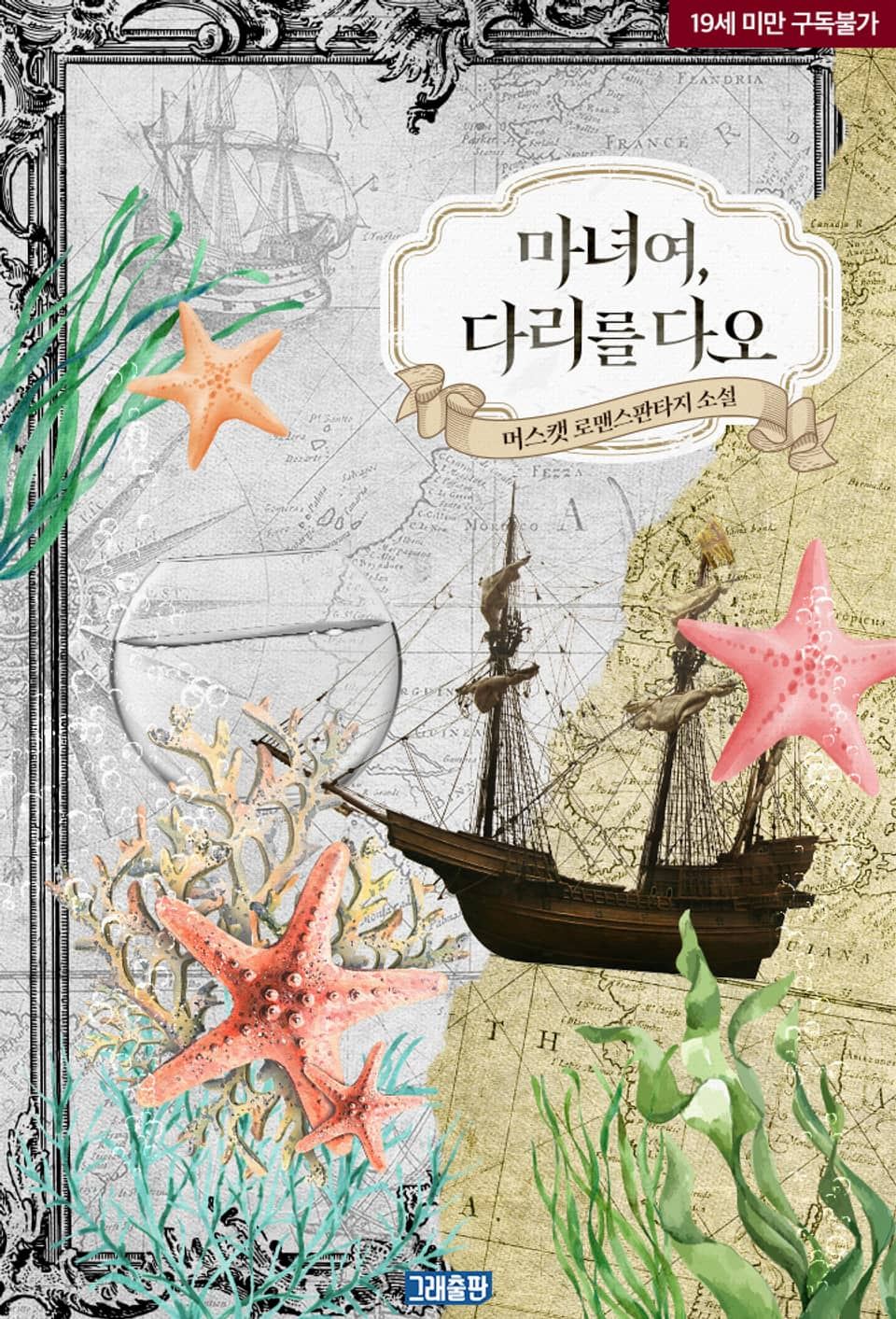
... Read More
The opening hit like a freight train—Kashmir losing consciousness from a transformation so brutal it felt almost medieval in its cruelty. The witch hadn't expected him to pass out, which immediately established that even professionals make mistakes, and that mistake becomes the entire engine of the narrative. What follows is a masterclass in using physical helplessness as plot fuel. Every scene derives from one simple premise: a powerful merman prince who cannot stand, cannot walk, and cannot leave. The plot structure operates on escalating pressure rather than traditional arcs. Iko shoves Kashmir into the sea, he bangs on her fishbowl until she emerges, he offers a pearl bracelet worth six months of her expenses, and she reluctantly agrees. Each beat raises the stakes while simultaneously deflating them with humor. The fishbowl threat was genuinely tense—I could feel the glass shaking. But then Kashmir's request about learning to use his new anatomy undercut the gravity so perfectly that I laughed out loud. What stood out most was how the narrative refuses to let Kashmir recover his dignity. He goes from being described as the fastest swimmer in the sea, strong enough to lift boulders, to a man who cannot even coordinate his own legs. The weakest moment becomes the strongest plot device. When he demands food by throwing a pearl bracelet, that's when the real transformation happens—not in his body, but in the power dynamic. He's no longer the dominant prince; he's a dependent paying rent in jewelry.
... Read More
OK so this entire scene is basically Kashmir trying to negotiate intimacy while also being his usual shameless self, and Iko being simultaneously angry, scared, and unable to actually stop him. And somehow it WORKS as character work? Hear me out. Kashmir keeps making these offers like he's running some weird deal—"If you forgive me, I'll give you the Sea King's beard." A BEARD. He's half-inside her and offering her literal body parts from sea creatures as bribery. That is such a Kashmir move. It reveals everything about him: he doesn't know how to be genuinely vulnerable or apologetic without turning it into a transaction, but he's also genuinely trying, just in his own messed-up way. Iko on the other hand—she's so layered in this chapter. She punches him. Like actually punches him when he moves too fast. And the narration specifically says these punches were powerful and she was holding back earlier. So she's not some fragile damsel here. She's restrained violence the whole time because she's choosing to stay. That choice matters. When she finally whispers "Please make me feel good"—that's her taking agency in the only way she knows how in this moment, because she can't exactly say what she really wants, which is probably "don't go to the village." The power dynamic here is messy as hell and I love it. He has physical dominance obviously but she's the one steering the emotional direction, even when she's being terrible at it. And that ending where she yells "No touching my chest" after remembering he hurt her before—that's such a tiny detail but it shows she STILL has boundaries and trauma responses even in the aftermath. She's not软化 into some perfect compliant partner. She's a mess. They both are. That's why it feels real.
... Read More
Let me just say this author knows how to paint a picture. The beach scene where Kashmir is lying there with his tail half-submerged in the water, waiting for Iko to emerge from this impossibly small house — I could SEE it. It's got this cinematic quality like a Studio Ghibli opening shot. Wide ocean, tiny figure, tiny house, and this massive orca merman just chillaxing on the sand like it's normal. Then BAM — he transforms into a full orca and the scale of everything changes. That contrast between the intimate beach setting and this enormous sea creature emerging from the water? Chef's kiss. The detail about his back having scales unlike a typical orca is such a small worldbuilding touch but it makes the merfolk feel REAL and distinct. This isn't just generic fantasy fish-people. And the fishbowl wall! Iko's house has a SLUICE GATE with a handle that connects to the ocean. She's literally living in a modified fishbowl on the beach. That's such a specific, quirky detail that makes the world feel lived-in. Plus Bolo swimming frantically toward her boat — the urgency of his movement against the calm beach setting creates this brilliant visual rhythm. The merfolk lore drop about clownfish changing sex based on size and hierarchy? That's the kind of detail that makes you want to immediately google whether real clownfish do that (they do, by the way). It grounds the fantasy in something almost scientific, which is what makes Dalibaya's obsession with cataloguing everything feel so natural. A scholar would absolutely lose her mind over creatures that can shapeshift between humanoid and animal forms.
... Read More
The dialogue here is where the passage truly sings. Iko's voice is instantly recognizable—short, sharp, and wrapped in layers of sarcasm that conceal genuine care. Lines like 'You look a bit dumber than before, but maybe that's just how you were all along' and 'Even a one-year-old can stand' arrived with the precision of a comedian delivering setup and punchline in the same breath. Her lazy 'Just put some strength into your legs' perfectly captured someone who'd rather be anywhere else but was too invested to actually leave. Kashmir's voice contrasts beautifully—he's demanding, bewildered, and increasingly desperate. 'Witch, how do humans walk?' isn't just a question; it's the sound of a powerful being confronting his own helplessness. His transition from royal commands ('Prepare a meal for me') to negotiated bargaining ('Take this and serve me until I can walk') shows his voice evolving in real time, adapting from entitlement to strategy. The narrative voice strikes an excellent balance between third-person omniscience and close characterization. It slips into Iko's thoughts about her afternoon tea schedule, into Kashmir's internal calculation of the bracelet's value, creating a dual perspective that enriches both characters. The humor emerges naturally from dialogue rather than narration—the author trusts the voices to carry the comedy without needing to explain the joke.
... Read More
I need to talk about how the author handles pacing in this sequence because it's actually masterful. Most romance novels would just skip to the good stuff and call it a day. But this? This takes its TIME. We go from finger exploration → tongue → entry → pause-and-check-in → more entry → position change → second round → post-coital tension with the breast thing. It's a full arc with rising action, a climax (literally and narratively), and then a denouement that immediately sets up the NEXT conflict. What I appreciated most is how the author uses physical discomfort as a plot device, not just erotic decoration. Iko's pain isn't glossed over or played for laughs—she winces, she cries out, she literally punches him. The author makes you feel the awkwardness and the risk. When Kashmir asks "Should I pull out?" three times, it creates genuine tension. Will he stop? Will she say yes? The fact that she keeps saying no (indirectly) makes the eventual consent feel earned rather than assumed. And then the pivot at the end! They reach physical climax and the author IMMEDIATELY undercuts it with Kashmir reaching for her chest and Iko snapping about past trauma. That's a plot beat disguised as a sexual moment. It's not resolution—it's complication. The scene ends not with a tidy bow but with the same old wounds still open. I read that last paragraph twice because the shift from post-orgasm vulnerability to defensive anger is so sudden and so honest. The story isn't done with these two and neither is the author.
... Read More
Okay so let me just start by saying—I absolutely lost my mind over the scene where Iko opens that bag and realizes every single thing she bought was for Kashmir. The herbs, the rum, the melon, the meat pie, the clothes... and she's literally pedaling back thinking about him nonstop and then BOOM, the physical evidence is right there staring at her. I had to pause and re-read that part because the way the author wrote it was SO understated but also so devastating. She just closes the bag like it's gonna explode and her face flushes. Like girl, we see you. We see your heart hammering against your ribs. And then Kashmir literally swims up and says 'I've been waiting for you' and I ko's entire emotional state just implodes in the best way. The narrative keeps comparing the weight of the bag to the weight in her chest—"making it feel heavier than the bag she carried"—and I just sat there fanning myself. This author understands how young love actually feels, right? It's not grand gestures, it's you being annoyed by something and then realizing you've been buying gifts for someone and you can't even pretend anymore. The kiss scene though—oh my god. Iko literally walks into the water and says "Aren't you going to do anything?" and I nearly screamed. This is the same woman who used to be all sharp words and emotional walls and now she's basically saying "come on, prince, I'm right here." And Kashmir's reaction? He's been holding back because he thought she was horrified after the first kiss. All this time he was walking on eggshells and she was over here losing her damn mind.
... Read More
Can we just appreciate how these two actually TALK to each other? Most romance novels have dialogue that sounds like everyone's reciting the same generic wooing script. But Iko and Kashmir? They sound like actual people who are frustrated, horny, angry, and trying to figure each other out. Kashmir's voice is unmistakable. He's shameless, quick-witted, and constantly testing boundaries with humor. "Everything you make is always delicious" after tasting her—that's either the smoothest line ever or the most unhinged thing I've read this year, and I respect that it's probably both. His jokes about the Sea King's beard and her being a "wicked witch" are his deflection mechanism. He can't just BE sweet, he has to wrap it in sarcasm first. But the author writes his dialogue so naturally that it never feels like he's performing. It feels like a guy who's had seventeen lifetimes of practice at talking his way out of trouble. Iko's voice is shorter, sharper, more reactive. "How shameless." "I'll rip out all your hair." "No touching my chest." She doesn't do monologues. She does verbal jabs and boundary-setters. And that contrast between them—his long flowing banter vs her short bursts of defiance—is what makes their dialogue feel like a actual conversation instead of two people taking turns delivering romantic speeches. The narration itself also has a distinct voice. It's close third person, deeply embedded in Iko's physical experience, and the author doesn't shy away from the ugly parts—drool, swelling, the word "smack" used for bodily collision. The prose is unapologetically visceral. It reads like someone who has actually felt these things, not someone who's only read about them.
... Read More
I keep coming back to the crutch metaphor and I think it's THE central symbol of this chapter. Iko is literally building something for Kashmir to lean on — both physically and emotionally. But here's the thing that got me: she frames it transactionally. "I'm not giving it to you for free." Witches don't do free. She wraps care in commerce because maybe that's the only language she knows. And Kashmir? He leans on it. On the crutches. On HER. His whole arc has been about a boy who couldn't be restrained by anyone — not his father's authority, not the palace walls, not even his own will. But Iko? She's different. She scolds him. She ignores him. She sets boundaries. And somehow that's what he needed. Not someone who feared him or indulged him, but someone who treated him like a person who could be told no. The silence around Dalibaya's death is its own kind of symbol. Iko held onto that grief for three months and never spoke it aloud. Why? Was it protection? Punishment? She'd just lost her master, her teacher, her friend — the person who helped her understand the world. Telling Kashmir would mean making the loss real again. But hiding it meant building their friendship on a foundation of omission. Every laugh, every teasing exchange, every shared cup of tea was haunted by what she hadn't said. There's also the recurring motif of transformation — Kashmir shifts from prince to orc to a friend to an angry betrayer-accuser. Iko shifts from detached witch to someone who makes crutches for a merman. Even Bolo transforms from grief-stricken friend to panicked accuser in seconds. Nobody stays the same in this chapter. Which makes me wonder: what does it cost to keep pretending you're unchanged?
... Read More
'Just kidding. You're cute.' — four words that destroyed an entire protagonist's emotional regulation. Kashmir's dialogue voice is absolutely brilliant because it operates on two frequencies simultaneously. On the surface, he's all casual banter and quick jokes. 'Sorry if my ugly face entertains you.' 'Thanks, but the prince is ugly.' 'Liar. You're always lying whenever you open your mouth.' He throws these lines out like he's barely trying, and Iko is over here having full psychological breakdowns. The gap between what he means and what she hears is where the entire romance lives. But here's what's actually genius about his voice—he's not manipulative. He genuinely doesn't seem to realize the impact his words have. When he says 'just seeing your face makes everything interesting again,' he's being earnest. When he calls her cute, he means it. He's not playing games. He's just a person who expresses affection through teasing because that's the only vocabulary he has. And Iko, who has spent her entire life preparing for threats and calculating risks, has no defense against someone who is simply... kind without agenda. Iko's voice, meanwhile, is all deflection. 'What else would I say about someone who's ugly?' She can't just receive a compliment. She has to immediately rearm herself. Her dialogue is sharp, defensive, occasionally funny in a self-sabotaging way. The exchange where she tries to ask if he meant something by the kiss but instead asks about his family looking for him—that is the most realistic portrayal of romantic panic I've read. She wanted to ask 'Did you mean that?' and her brain output 'Are your parents searching for you?' The humor in this section comes from that mismatch. He's effortlessly sincere; she's catastrophizing everything. And the author never lets us forget which one is the actual tragedy.
... Read More
The cliffhanger in this batch is absolutely savage and I am not okay. Up until the market scene, the stakes feel almost too comfortable. These two are living together, having sex, going to markets like a married couple who forgot they're in a fantasy novel. But then Kashmir casually compliments another woman's chest, walks over to her, and starts braiding her hair like he's got zero concept of what his presence does to Iko. The external conflict is minimal — some guy bumps into him intentionally at the market, and Kashmir literally chooses restraint because of a promise. That's character growth framed as conflict avoidance, which is honestly more interesting than a fight would've been. But the REAL conflict is entirely internal, and it hits like a truck. Iko's spiral from "I'm so happy to be here with him" to "was I just a guide?" happens so fast and so completely. The line that destroys me is: "For the first time, Iko began to question why he had asked her to come to the village with him." She never questioned it before. She just accepted it as mutual desire. But this one moment of blindness from Kashmir cracks her entire certainty open. And the ending — she feared that if she continued feeling this way, she'd lose herself. The stakes just went from romantic comedy to something much more fragile. What does she stand to lose? Her pride, sure. But more than that — she stands to lose the version of herself that believed she was wanted for who she is, not just what she provides.
... Read More
There's a detail in this text that I can't stop thinking about. Iko's one and only nightgown — reduced to rags because Kashmir tore it apart during sex. This isn't just erotic description. It's worldbuilding through destruction. She doesn't have multiple nightgowns. She has ONE. And it's already gone. That tells you everything about her life before Kashmir — sparse, functional, probably self-made. She's a witch selling medicine in a human village, living out of basically nothing. And Kashmir, this prince type who shows up with legs again and immediately starts devouring her clothes, represents everything she didn't have. The market scene at Kokoya Village is also beautifully rendered. "It's like a school of sardines, packed together" — Kashmir's childlike wonder at a crowded human market contrasts perfectly with Iko's practiced ease navigating it. The food stall with its thick pungent spice smell, the mothers nursing babies, the elderly with canes, the women in revealing clothing — this is a world that feels lived-in, not staged. And then there's that one devastating image: Iko in her torn nightgown, fluttering around preparing for bed, while Kashmir watches her and wants to pull her back into his arms but decides she looks too happy to disturb. The domesticity of it all — the mismatched emotions, the unspoken care — paints a picture more vivid than any elaborate scene description could.

Leave a comment

You must be logged in to leave comments. or
