Summary

... Read More

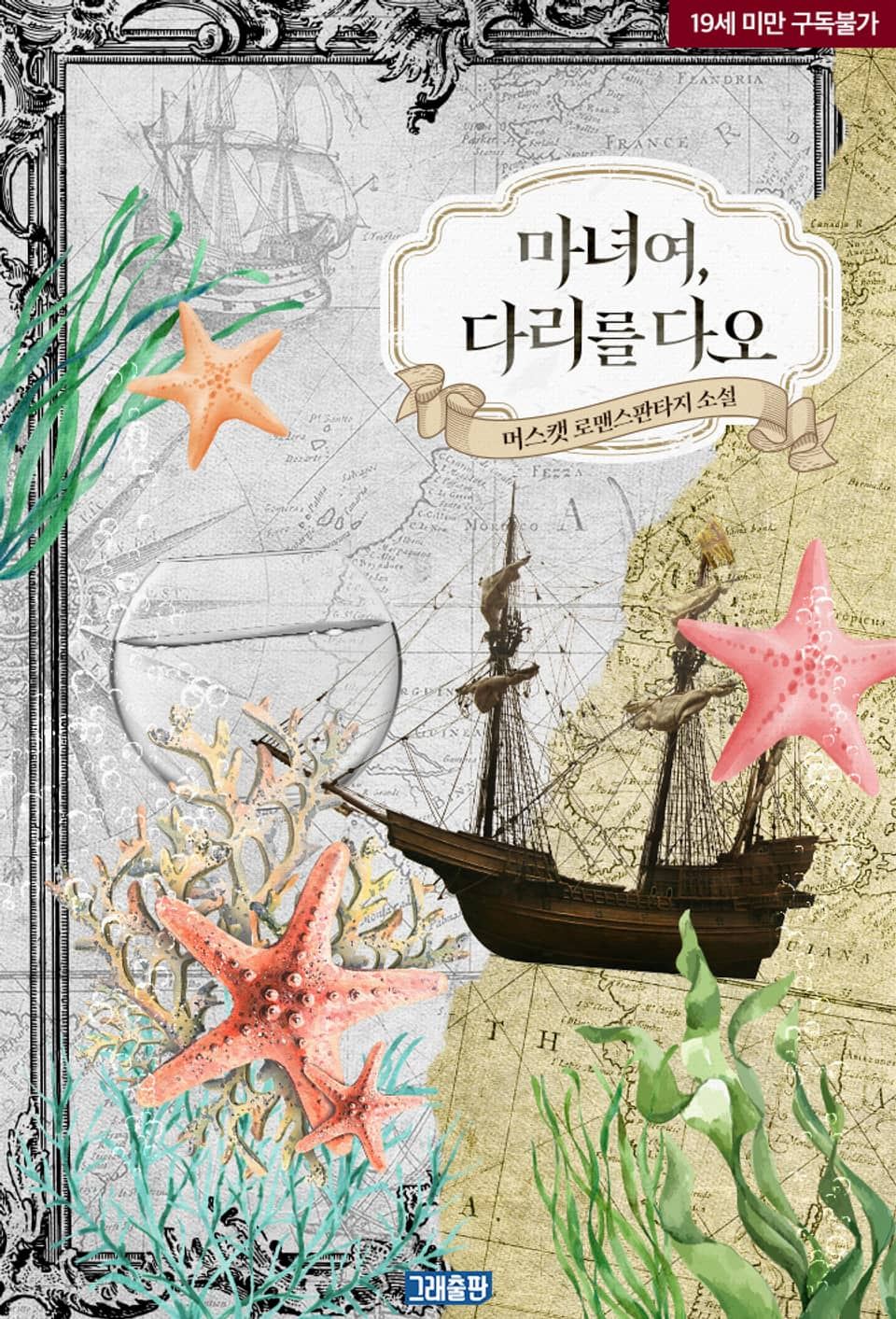
Iko was the sole apprentice of Dalibaya, the renowned sea witch who lived in a large fishbowl deep in the southern sea. From childhood, Iko learned the nature of magic and the dangers of love through Dalibaya’s stories, particularly the tragedy of the mermaid princess who turned into foam after a foolish deal. After Dalibaya passed away, Iko lived a solitary, strictly scheduled life, maintaining her master’s legacy while avoiding outside contact. The merfolk generally despised witches, viewing them as blasphemous for defying natural laws, yet they maintained a wary distance due to Dalibaya’s former power.

Years after her master’s death, Iko’s isolation was broken when Kashmir, a merman prince and the son of the mer-king, arrived at her fishbowl. Kashmir was notorious throughout the sea as a violent and destructive outlaw who sank ships and tormented coral villages. Unlike the romantic legends surrounding his ancestor, Kashmir sought Iko’s help not out of love, but out of a childish desire to visit a human village and consume alcohol. He requested a potion that would grant him human legs temporarily, offering his voice as payment, though Iko dismissed this idea as unprofitable.

Iko instead demanded a scale from Kashmir’s tail, a rare ingredient needed for a legendary potion capable of reviving the dead—a feat even Dalibaya had failed to achieve. Kashmir agreed easily, unaware of the value he was relinquishing, and drank the potion. The transformation was agonizing, causing him to lose consciousness, but he awoke with human legs. However, lacking any knowledge of how to walk, he collapsed and begged Iko for instruction. When she refused, threatening to leave him to drown or starve, Kashmir used his dangerous reputation to intimidate her by shaking the fishbowl until it cracked. Reluctantly, Iko agreed to teach him, demanding another scale as payment.

Kashmir moved into Iko’s house, wearing a tablecloth as clothing since he had no human garments. His inability to walk forced him to depend on Iko, creating an awkward dynamic between the rigid, routine-oriented witch and the chaotic, boredom-prone prince. Iko attempted to drive him away by serving poorly cooked meals, but Kashmir’s lack of refined taste meant he enjoyed even the saltiest stews. Over time, their interactions shifted from hostility to a strange companionship. Kashmir watched Iko tend her garden and cook over fire, finding fascination in the miracles of witchcraft that he deemed neither blasphemous nor evil.

As months passed, Kashmir’s behavior revealed the source of his ruthlessness: a chronic, crippling boredom that drove him to destruction whenever he was unstimulated. Iko, initially viewing him as a nuisance, found herself accommodating his needs, crafting crutches to aid his walking and engaging in intellectual exchanges about merfolk biology. She discovered that merfolk could transform into their animal forms, such as Kashmir becoming a massive orca, and learned about his diverse siblings, including a clownfish sister who changed gender as she grew.

The fragile peace was disrupted when Bolo, Dalibaya’s forgetful fish friend, arrived bearing news of the old witch’s death. In his grief, Bolo mistakenly accused Kashmir of murder upon seeing the orca form, fleeing in terror. Kashmir, furious that Iko had concealed Dalibaya’s death for years, confronted her. The revelation that Iko had lied to him from their first meeting shattered his trust. Kashmir’s anger was not merely about the deception but stemmed from a deeper sense of betrayal, as he had begun to view Iko as his only source of stimulation and companionship in an otherwise empty existence.

The conflict escalated as Kashmir grappled with his emotions, oscillating between rage and a reluctant desire to protect Iko from the consequences of her lies. Iko, realizing the gravity of her situation, faced the prospect of losing the only person who had broken her isolation. The story concluded with the tension between truth and survival hanging in the balance, as Kashmir’s patience wore thin and the consequences of Dalibaya’s legacy threatened to engulf them both.

Latest Release
DateGroupRelease
2026-09-27citrus aurora c38
2026-09-27citrus aurora c37
2026-09-27citrus aurora c36
2026-09-27citrus aurora c35
2026-09-27citrus aurora c34
2026-09-27citrus aurora c33
2026-09-27citrus aurora c32
2026-09-27citrus aurora c31
2026-09-27citrus aurora c30
2026-09-27citrus aurora c29
2026-09-27citrus aurora c28
2026-09-27citrus aurora c27

Community Reviews

Rating(4 / 5.0, 37votes)
5 stars
13(35%)
4 stars
12(32%)
3 stars
10(27%)
2 stars
2(5%)
1 stars
0(0%)

Popular reviews

... Read More
That opening image—Iko bracing herself for a merperson visitor—immediately dropped me into this whole underwater civilization without any exposition dump. The fact that striking a deal with the merfolk was something even Dalibaya hadn't accomplished told me everything I needed to know about the social dynamics between witches and merpeople. There's this underlying tension, right? The merfolk tolerate witches because Dalibaya was too dangerous to mess with, but now that she's dead... what happens when the power balance shifts? The world feels lived-in and politically complicated. And the boat! The small boat overturning when Kashmir splashes back into the water—such a vivid physical moment. Iko clinging to that overturned hull, gasping, coughing up seawater, unable to swim... it made me feel the disorientation and vulnerability of being in your enemy's domain. She's a witch, supposedly powerful, and yet here she is, helpless in the water. The contrast between her professional confidence and physical helplessness was almost comedic but also deeply tense. The beach scene where Kashmir waits impatiently, lying on the sand and splashing his tail, felt so cinematic. You could picture the contrast—the pale skin against dark hair, the jet-black eyes, the sheer arrogance of someone who owns the sea. And then inside Iko's workspace, the potion turning deep pink, the book's instructions about lighter pink meaning longer effects... these sensory details grounded the magic system in something tangible. I kept imagining the textures, the colors, the bitterness of that potion. The world felt real enough that I could taste the sea spray.
... Read More
The opening hit like a freight train—Kashmir losing consciousness from a transformation so brutal it felt almost medieval in its cruelty. The witch hadn't expected him to pass out, which immediately established that even professionals make mistakes, and that mistake becomes the entire engine of the narrative. What follows is a masterclass in using physical helplessness as plot fuel. Every scene derives from one simple premise: a powerful merman prince who cannot stand, cannot walk, and cannot leave. The plot structure operates on escalating pressure rather than traditional arcs. Iko shoves Kashmir into the sea, he bangs on her fishbowl until she emerges, he offers a pearl bracelet worth six months of her expenses, and she reluctantly agrees. Each beat raises the stakes while simultaneously deflating them with humor. The fishbowl threat was genuinely tense—I could feel the glass shaking. But then Kashmir's request about learning to use his new anatomy undercut the gravity so perfectly that I laughed out loud. What stood out most was how the narrative refuses to let Kashmir recover his dignity. He goes from being described as the fastest swimmer in the sea, strong enough to lift boulders, to a man who cannot even coordinate his own legs. The weakest moment becomes the strongest plot device. When he demands food by throwing a pearl bracelet, that's when the real transformation happens—not in his body, but in the power dynamic. He's no longer the dominant prince; he's a dependent paying rent in jewelry.
... Read More
OK so this entire scene is basically Kashmir trying to negotiate intimacy while also being his usual shameless self, and Iko being simultaneously angry, scared, and unable to actually stop him. And somehow it WORKS as character work? Hear me out. Kashmir keeps making these offers like he's running some weird deal—"If you forgive me, I'll give you the Sea King's beard." A BEARD. He's half-inside her and offering her literal body parts from sea creatures as bribery. That is such a Kashmir move. It reveals everything about him: he doesn't know how to be genuinely vulnerable or apologetic without turning it into a transaction, but he's also genuinely trying, just in his own messed-up way. Iko on the other hand—she's so layered in this chapter. She punches him. Like actually punches him when he moves too fast. And the narration specifically says these punches were powerful and she was holding back earlier. So she's not some fragile damsel here. She's restrained violence the whole time because she's choosing to stay. That choice matters. When she finally whispers "Please make me feel good"—that's her taking agency in the only way she knows how in this moment, because she can't exactly say what she really wants, which is probably "don't go to the village." The power dynamic here is messy as hell and I love it. He has physical dominance obviously but she's the one steering the emotional direction, even when she's being terrible at it. And that ending where she yells "No touching my chest" after remembering he hurt her before—that's such a tiny detail but it shows she STILL has boundaries and trauma responses even in the aftermath. She's not软化 into some perfect compliant partner. She's a mess. They both are. That's why it feels real.
... Read More
Let me just say this author knows how to paint a picture. The beach scene where Kashmir is lying there with his tail half-submerged in the water, waiting for Iko to emerge from this impossibly small house — I could SEE it. It's got this cinematic quality like a Studio Ghibli opening shot. Wide ocean, tiny figure, tiny house, and this massive orca merman just chillaxing on the sand like it's normal. Then BAM — he transforms into a full orca and the scale of everything changes. That contrast between the intimate beach setting and this enormous sea creature emerging from the water? Chef's kiss. The detail about his back having scales unlike a typical orca is such a small worldbuilding touch but it makes the merfolk feel REAL and distinct. This isn't just generic fantasy fish-people. And the fishbowl wall! Iko's house has a SLUICE GATE with a handle that connects to the ocean. She's literally living in a modified fishbowl on the beach. That's such a specific, quirky detail that makes the world feel lived-in. Plus Bolo swimming frantically toward her boat — the urgency of his movement against the calm beach setting creates this brilliant visual rhythm. The merfolk lore drop about clownfish changing sex based on size and hierarchy? That's the kind of detail that makes you want to immediately google whether real clownfish do that (they do, by the way). It grounds the fantasy in something almost scientific, which is what makes Dalibaya's obsession with cataloguing everything feel so natural. A scholar would absolutely lose her mind over creatures that can shapeshift between humanoid and animal forms.
... Read More
The dialogue here is where the passage truly sings. Iko's voice is instantly recognizable—short, sharp, and wrapped in layers of sarcasm that conceal genuine care. Lines like 'You look a bit dumber than before, but maybe that's just how you were all along' and 'Even a one-year-old can stand' arrived with the precision of a comedian delivering setup and punchline in the same breath. Her lazy 'Just put some strength into your legs' perfectly captured someone who'd rather be anywhere else but was too invested to actually leave. Kashmir's voice contrasts beautifully—he's demanding, bewildered, and increasingly desperate. 'Witch, how do humans walk?' isn't just a question; it's the sound of a powerful being confronting his own helplessness. His transition from royal commands ('Prepare a meal for me') to negotiated bargaining ('Take this and serve me until I can walk') shows his voice evolving in real time, adapting from entitlement to strategy. The narrative voice strikes an excellent balance between third-person omniscience and close characterization. It slips into Iko's thoughts about her afternoon tea schedule, into Kashmir's internal calculation of the bracelet's value, creating a dual perspective that enriches both characters. The humor emerges naturally from dialogue rather than narration—the author trusts the voices to carry the comedy without needing to explain the joke.
... Read More
I need to talk about how the author handles pacing in this sequence because it's actually masterful. Most romance novels would just skip to the good stuff and call it a day. But this? This takes its TIME. We go from finger exploration → tongue → entry → pause-and-check-in → more entry → position change → second round → post-coital tension with the breast thing. It's a full arc with rising action, a climax (literally and narratively), and then a denouement that immediately sets up the NEXT conflict. What I appreciated most is how the author uses physical discomfort as a plot device, not just erotic decoration. Iko's pain isn't glossed over or played for laughs—she winces, she cries out, she literally punches him. The author makes you feel the awkwardness and the risk. When Kashmir asks "Should I pull out?" three times, it creates genuine tension. Will he stop? Will she say yes? The fact that she keeps saying no (indirectly) makes the eventual consent feel earned rather than assumed. And then the pivot at the end! They reach physical climax and the author IMMEDIATELY undercuts it with Kashmir reaching for her chest and Iko snapping about past trauma. That's a plot beat disguised as a sexual moment. It's not resolution—it's complication. The scene ends not with a tidy bow but with the same old wounds still open. I read that last paragraph twice because the shift from post-orgasm vulnerability to defensive anger is so sudden and so honest. The story isn't done with these two and neither is the author.
See all reviews

Custom lists

See all custom Lists